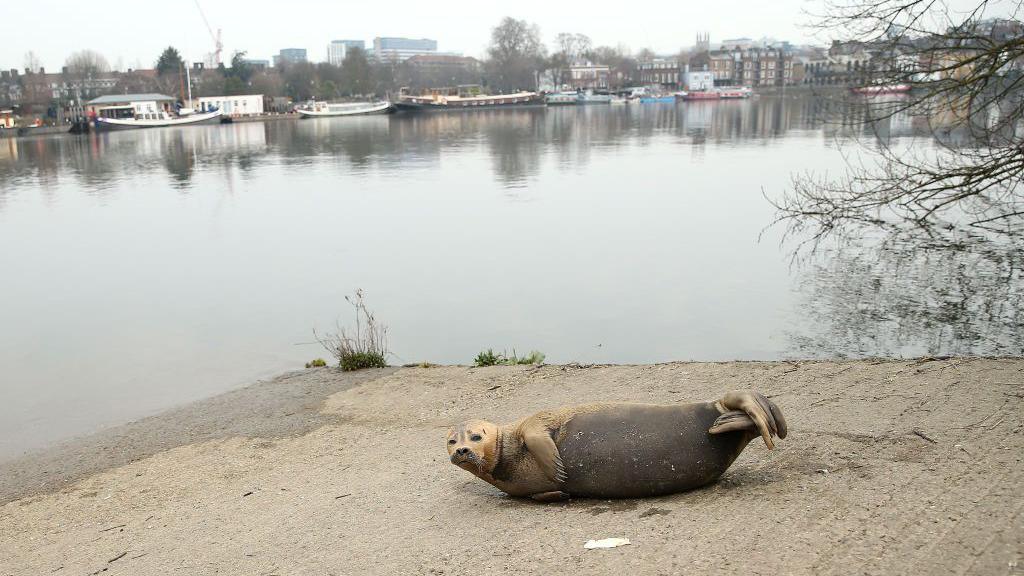
Image source, Emma KellyImage caption,
 Marmalade was so-called because of her golden-coloured coat
ByThomas MagillReporting fromGreenwich- Published56 minutes ago
Marmalade the harbour seal was a familiar visitor to the River Thames, often popping up at Greenwich and Rotherhithe in south-east London.
She was given her nickname because of her bright golden-coloured coat.
However, as the number of seal sightings along the river increases, charity Thames Seal Watch has urged members of the public to give the animals space.
Despite looking cute, Emma Kelly from the charity says: "They can bite and they carry zoonotic diseases which are not very pleasant if you were to suffer a bite.
"They will do that to protect themselves."
She says getting close to the animals can cause them distress and stress, which could lead to their death.
 Image caption,
 Emma Kelly, from Thames Seal Watch, warned members of the public that seals can bite to protect themselves
The charity says more and more of the seals are travelling further up the river, with one spotted as far west as Windsor.
It is thought there are about 3,500 seals living in the Thames and that they mostly stay around the estuary, east of London.
Marmalade was considered rare because there are only 500 harbour seals living in the river, compared with about 3,000 of the more common grey seals.
Gareth Richards from UK Seal Alliance says "seals are very transient, and will basically go to where there is good fish stocks".
He says "seals can swim from anything between 60 and 80 miles a day".
Because they are being spotted more frequently, Richards says he would like to see further protection of the animals in law.
Neither grey nor harbour seals are protected from intentional or reckless disturbance under the Wildlife and Countryside Act 1981.
In May, UK Seal Alliance launched its Give Seals Space, external campaign, calling on the government to reconsider previous recommendations and provide the two species "with the legal protection they deserve".
The campaign warns that they are highly sensitive to disturbance from the public, animals and drones.
It states these can have long-lasting consequences to the animals' health and that it can lead to pup abandonment, wasted energy from staying alert and injuries from panic fleeing.
The Department for Environment, Food and Rural Affairs (Defra) says: "We have a suite of legislative protections in place which make it an offence to take, injure, capture or kill a seal."
 Image source, Emma KellyImage caption,
 A memorial was held for Marmalade after she died
As for Marmalade, she contracted a parasite disease and died in May.
Some volunteers from Thames Seal Watch, including Kelly, gathered at one of her favourite spots near the University of Greenwich for a short memorial.
Flowers were thrown into the river and a small plaque in her memory was erected.
Kelly says: "Marmalade was really special to the community.
"We created a community around Marmalade where there was lots of us to keep an eye on her and ensure she stayed safe."
Marmalade also helped attract a number of new volunteers to the charity, and all those at the memorial made a commitment that they would continue to help London's wildlife in the best way they can.
Listen to the best of BBC Radio London on Sounds and follow BBC London on Facebook, external, X, external and Instagram, external. Send your story ideas to [email protected], external
Related topics
People urged to stay away from seals on beaches
- Published3 August

Seal spotted on a Thames beach goes viral
- Published13 March
Thousands of seals making Thames Estuary their home
- Published27 September 2024