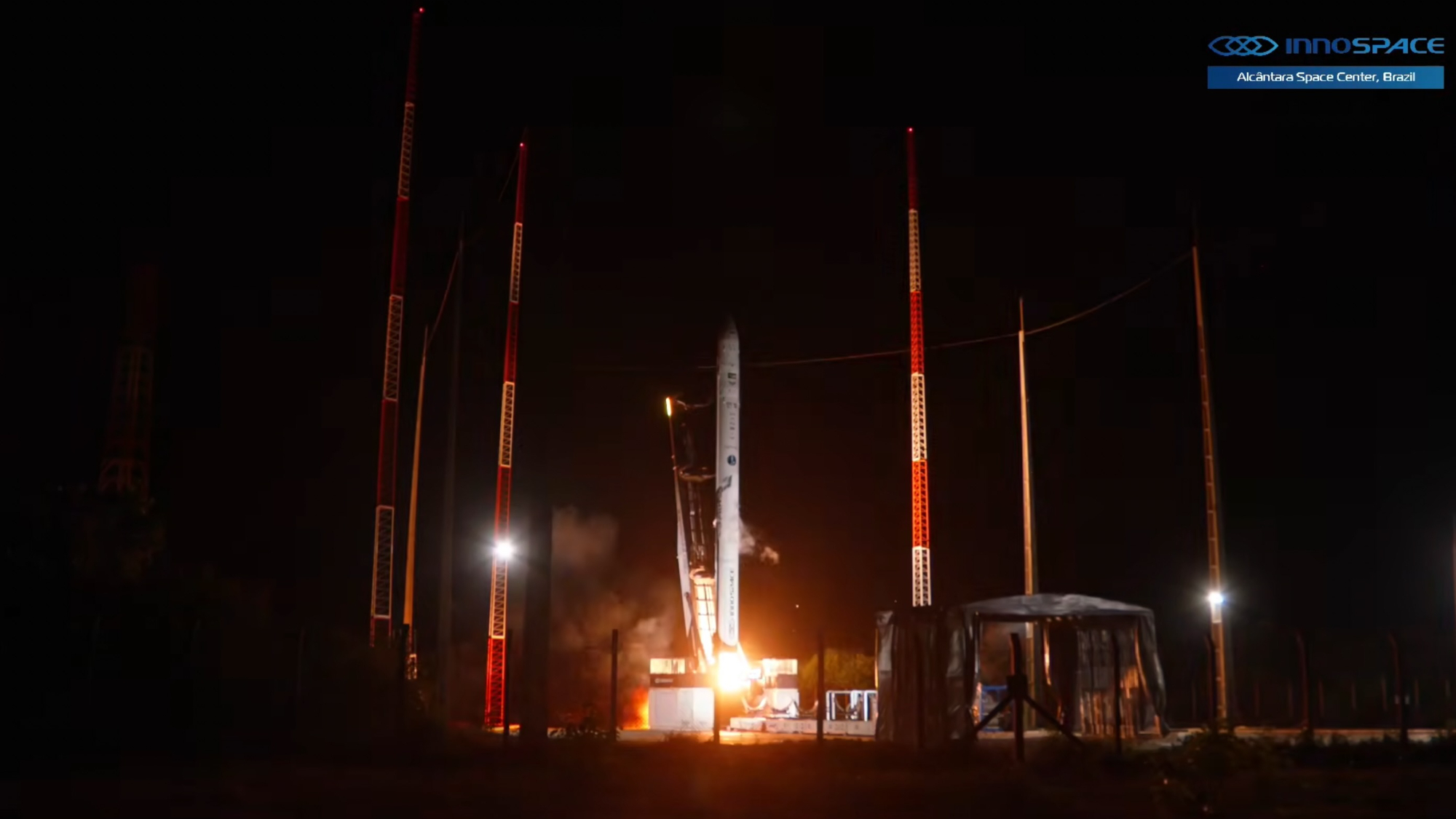
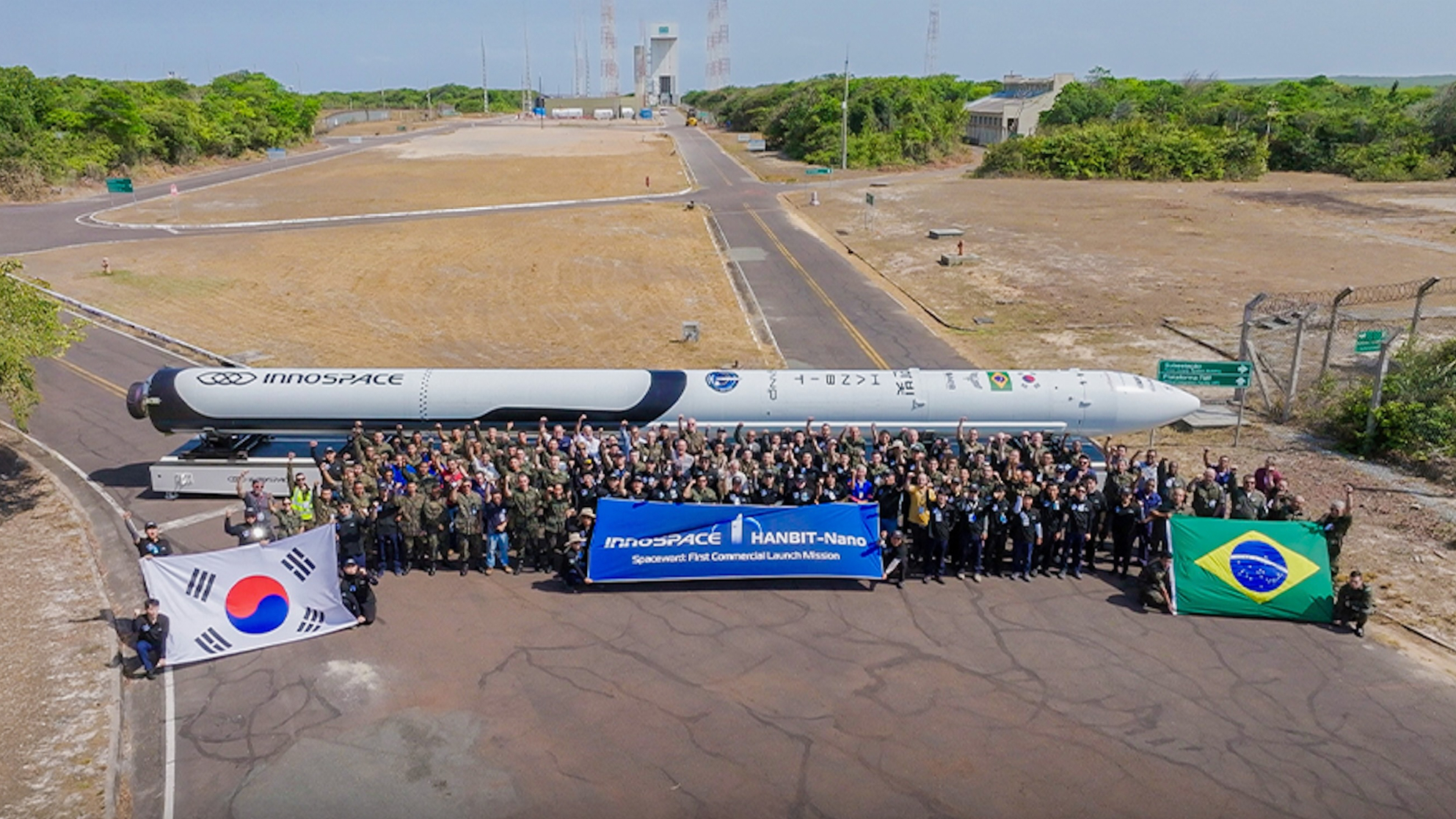
 The South Korean rocket company Innospace has closed its investigation into the failure of its Hanbit-Nano rocket in December and is targeting the third quarter of 2026 for its next launch. (Image credit: Innospace) Share this article 0 Join the conversation Follow us Add us as a preferred source on Google Newsletter Get the Space Newsletter
 Breaking space news, the latest updates on rocket launches, skywatching events and more!
Contact me with news and offers from other Future brands Receive email from us on behalf of our trusted partners or sponsors By submitting your information you agree to the Terms & Conditions and Privacy Policy and are aged 16 or over.You are now subscribed
Your newsletter sign-up was successful
Want to add more newsletters?
An account already exists for this email address, please log in. Subscribe to our newsletterSouth Korean startup Innospace says it knows what went wrong on its first-ever orbital launch attempt.
Innospace sent its Hanbit-Nano rocket skyward for the first time ever on Dec. 22, from the Alcantara Space Center in Brazil. But the landmark flight — the first-ever orbital launch attempt by a South Korean company — didn't last long, as the Hanbit-Nano exploded less than a minute after leaving the pad.
Article continues belowA gas leak in the forward section of Hanbit-Nano's first-stage hybrid rocket combustion chamber triggered a rupture, ultimately leading to mission failure, according to a March 17 Innospace update.
The leak "was caused by insufficient compression and uneven sealing performance resulting from plastic deformation of sealing components during the reassembly process following the replacement of the forward chamber plug during launch preparation activities in Brazil," the update reads.
INNOSPACE has identified the cause of the mission termination of its first commercial HANBIT-Nano launch through a joint investigation with Brazil’s aerospace accident investigation authority, CENIPA.The cause was determined through analysis of flight data, video records, and… pic.twitter.com/giMIM42K0RMarch 17, 2026
Hanbit-Nano is a two-stage rocket powered by a mixture of liquid oxygen (LOX) and paraffin, a solid rocket fuel. The rocket's upper stage is designed to fly in two configurations, one that burns the same LOX-paraffin fuel, and another powered by LOX and liquid methane.
On its failed flight in December, Hanbit-Nano was carrying five payloads for customers in Brazil and India, as well as three technology-demonstrating payloads. The 57-foot-tall (17.3 meters) rocket is designed to deliver nearly 200 pounds (90 kilograms) to a sun-synchronous orbit from its Brazilian launch pad.
Get the Space.com NewsletterContact me with news and offers from other Future brandsReceive email from us on behalf of our trusted partners or sponsorsInnospace conducted its investigation into the mission's failure alongside CENIPA, the Brazilian Air Force authority responsible for aerospace accident investigations. Innospace says it is already implementing design improvements to affected components and introducing additional verification steps to prevent similar failures in future launches.
"This process has provided valuable technical assets that will contribute to further advancing our launch vehicle technologies," said Innospace CEO Soojong Kim in the update.
The company plans to move ahead with a follow-up launch, pending authorization from the Korea Aerospace Administration (KASA). That next attempt is currently targeted for the third quarter of 2026, with Brazil expected to remain the launch site.
Innospace is part of a growing wave of international startups aiming to compete in the small satellite launch market, where reliability and turnaround time are critical.
A successful return to flight in 2026 will be key for the company to demonstrate it can recover from early setbacks and move toward regular orbital launch capability.
 Josh DinnerStaff Writer, Spaceflight
Josh Dinner is the Staff Writer for Spaceflight at Space.com. He is a writer and photographer with a passion for science and space exploration, and has been working the space beat since 2016. Josh has covered the evolution of NASA's commercial spaceflight partnerships and crewed missions from the Space Coast, as well as NASA science missions and more. He also enjoys building 1:144-scale model rockets and human-flown spacecraft. Find some of Josh's launch photography on Instagram and his website, and follow him on X, where he mostly posts in haiku.
View MoreYou must confirm your public display name before commenting
Please logout and then login again, you will then be prompted to enter your display name.
Logout MORE FROM SPACE...- 1Private South Korean rocket exploded last December due to hardware failure, investigation finds
- 2Lego's first-ever Tintin set is coming next month and it's a space-themed Lego Tintin Moon rocket
- 3I talked to Andy Weir about the astrobiology behind 'Project Hail Mary'
- 4NASA peers inside an asteroid | Space photo of the day for March 19, 2026
- 5Ohio fireball may have dropped meteorites between Akron and Canton — should you pick it up if you find one?