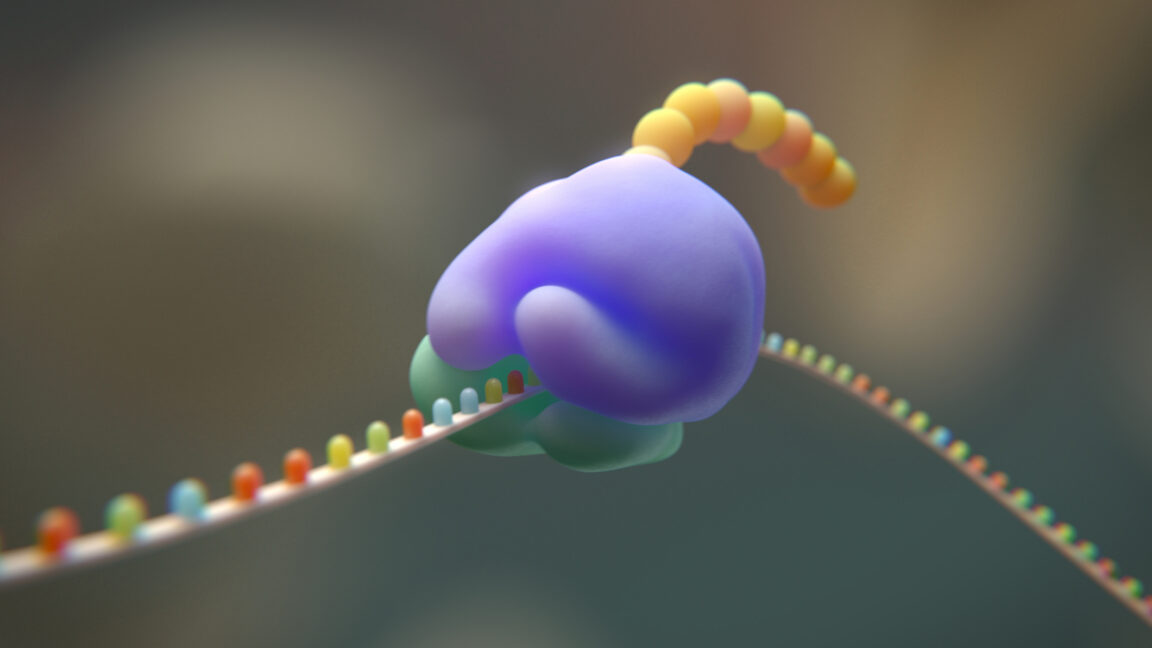
The genetic code is central to life. With minor variations, everything uses the same sets of three DNA bases to encode the same 20 amino acids. We have discovered no major exceptions to this, leading researchers to conclude that this code probably dated back to the last common ancestor of all life on Earth. But there has been a lot of informed speculation about how that genetic code initially evolved.
Most hypotheses suggest that earlier forms of life had partial genetic codes and used fewer than 20 amino acids. To test these hypotheses, a team from Columbia and Harvard decided to see if they could get rid of one of the 20 currently in use. And, as a first attempt, they engineered a portion of the ribosome that worked without using an otherwise essential amino acid: isoleucine.
Changing the code
First off, why would you do this? Most work in the field has focused on altering the genetic code in ways that are useful, such as using more than 20 amino acids to enable interesting chemistry.