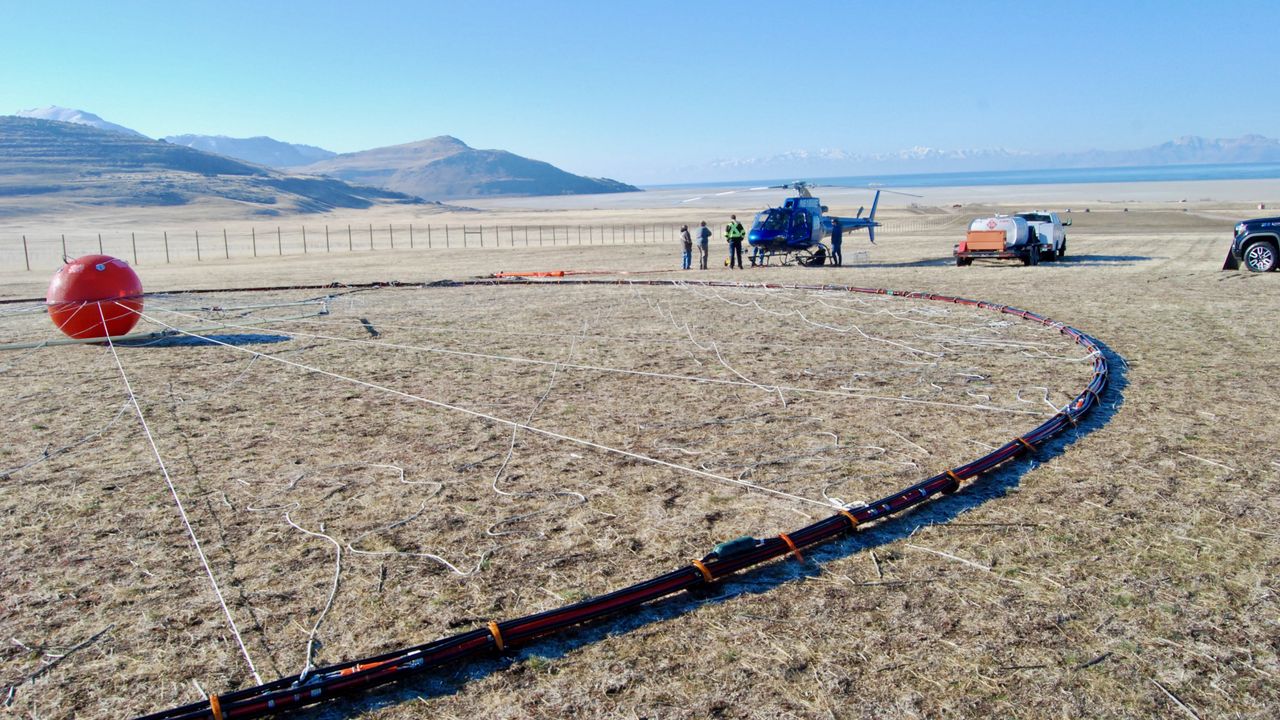
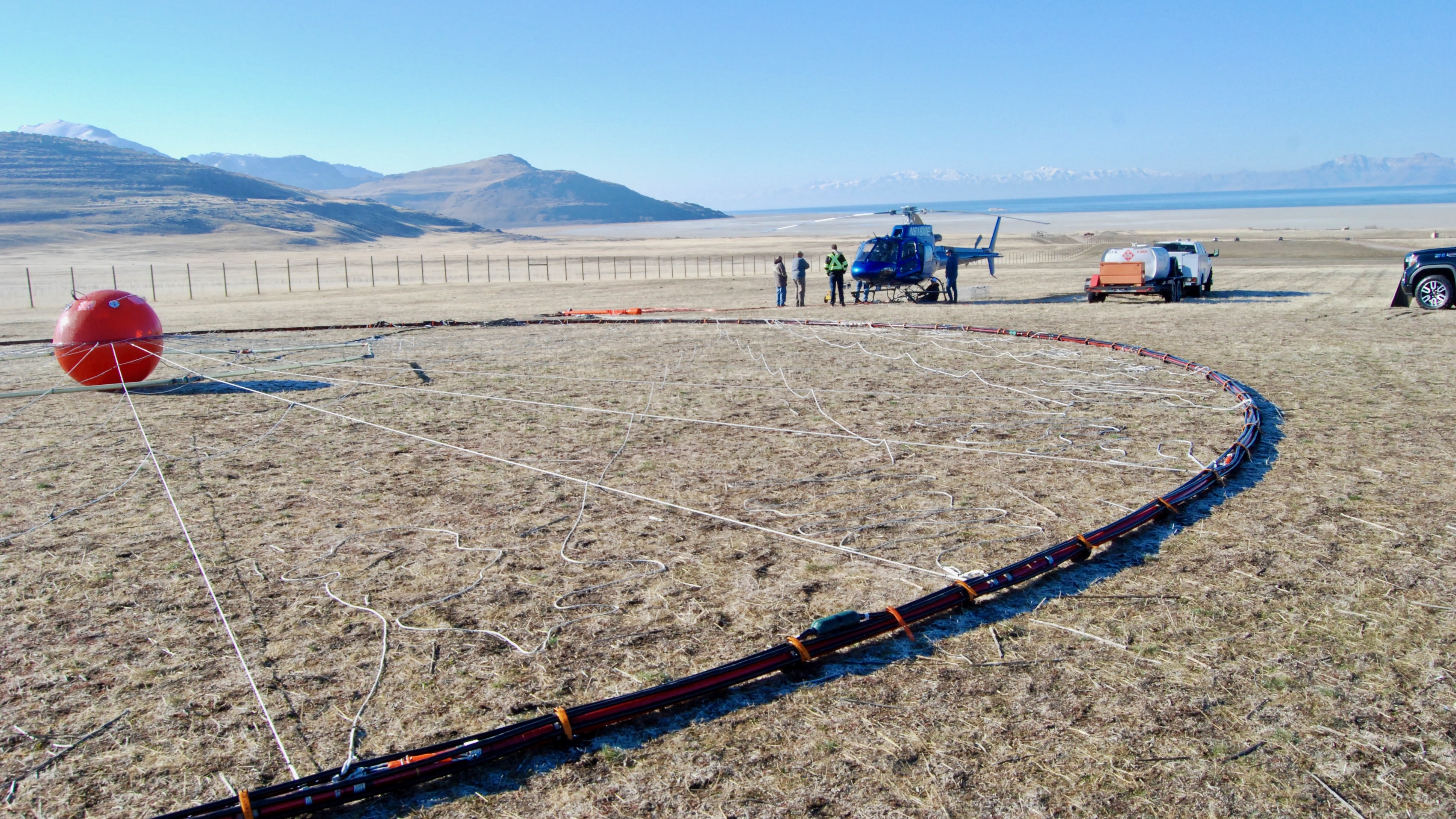
 Researchers conducted an airborne electromagnetic survey to map freshwater deposits beneath Great Salt Lake. (Image credit: Brian Maffly, University of Utah) Share this article 0 Join the conversation Follow us Add us as a preferred source on Google Newsletter Sign up for the Live Science daily newsletter now
 Get the world’s most fascinating discoveries delivered straight to your inbox.
Become a Member in Seconds
Unlock instant access to exclusive member features.
Contact me with news and offers from other Future brands Receive email from us on behalf of our trusted partners or sponsors By submitting your information you agree to the Terms & Conditions and Privacy Policy and are aged 16 or over.You are now subscribed
Your newsletter sign-up was successful
Want to add more newsletters?
Join the club
Get full access to premium articles, exclusive features and a growing list of member rewards.
Explore An account already exists for this email address, please log in. Subscribe to our newsletterScientists have discovered a freshwater reservoir beneath Utah's Great Salt Lake that could span the entire area of the lake and beyond, a new study shows.
The reservoir extends up to 2.5 miles (4 kilometers) deep beneath specific spots in the lake's eastern margin, where strange, reed-covered mounds have sprouted from dried-up surfaces in recent years. If future studies can confirm that the reservoir is as large as the preliminary results suggest, its fresh water could help to restore the lake bed in places where it is cracking and creating toxic dust, the researchers said.
Article continues belowResearchers have suspected a source of fresh water beneath Great Salt Lake for years, thanks to the appearance of mysterious mounds choked with common reeds, or phragmites, on a dried up patch in the lake's southeast corner. Phragmites need abundant fresh water to grow, prompting researchers to think groundwater must be rising beneath the dry lakebed in Farmington Bay.
Samples from the mounds showed fresh water is present, Zhdanov said. "So the question was, where does this water come from? And the hypothesis was that probably it's underground water, which comes from the surrounding mountains," he said.
To understand the plumbing beneath the mounds, Zhdanov and his colleagues conducted an airborne electromagnetic survey over a 10-square-mile (25 square kilometers) portion of Great Salt Lake. With the help of the company Expert Geophysics, the researchers flew a helicopter with a hanging circular device that sent electromagnetic pulses downward in long lines over the lake. A ball suspended at the center of the device intercepted these signals as they bounced back, producing data that could then be deciphered with software to map freshwater deposits beneath the lake.
Great Salt Lake is a huge saltwater lake with a surface area of around 1,700 square miles (4,400 square km). Saline water is very conductive, so the scientists weren't sure if the electromagnetic pulses would penetrate the lake and the sediments beneath to give a crisp picture. "It was just a pilot project to see if really we can get this result," Zhdanov said.
Sign up for the Live Science daily newsletter nowContact me with news and offers from other Future brandsReceive email from us on behalf of our trusted partners or sponsorsBut when the maps came back, they showed an underground layer of fresh water across the entire survey area. The sediments beneath Great Salt Lake are saturated with fresh water that likely trickled down from the surrounding mountains as snowmelt and accumulated there for thousands, if not millions, of years, Zhdanov said.
"The result was amazing," he said. "Of course, it was a very small fraction of the entire area of Great Salt Lake. In order to make any definitive conclusions that this water reservoir is located under the entire area, we need to expand the survey."
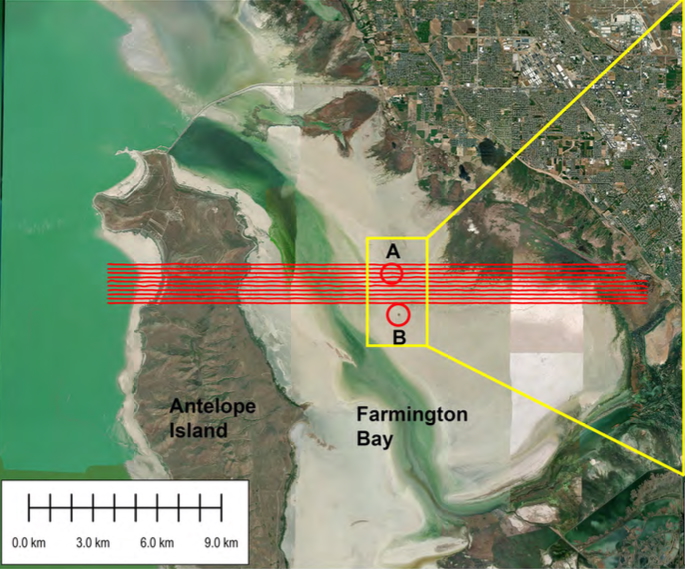
The results, published Feb. 27 in the journal Scientific Reports, showed a layer of fresh water in the sediment beneath the lake ranging between 330 feet (100 m) and 2.5 miles deep. Some kind of "cap" rock likely prevents the fresh water from mixing with the lake's salt water, but more research is needed to figure this out because fresh water can rise beneath the reed-covered mounds, Zhdanov said.
In addition to capturing electromagnetic data, the airborne survey collected magnetic data, which the scientists used to map the geology deep beneath the lake. They discovered that watertight "basement" rocks form the lower boundary of the freshwater reservoir, with faults in these rocks potentially explaining abrupt changes in the reservoir's depth, Zhdanov said.
If the reservoir spans the entire area of Great Salt Lake, it could provide a solution to clouds of toxic dust that emanate from stretches of the exposed lake bed. Since 1986, the lake has dropped by about 22 feet (6.7 m) due to human water consumption, drought and high evaporation rates from climate change.
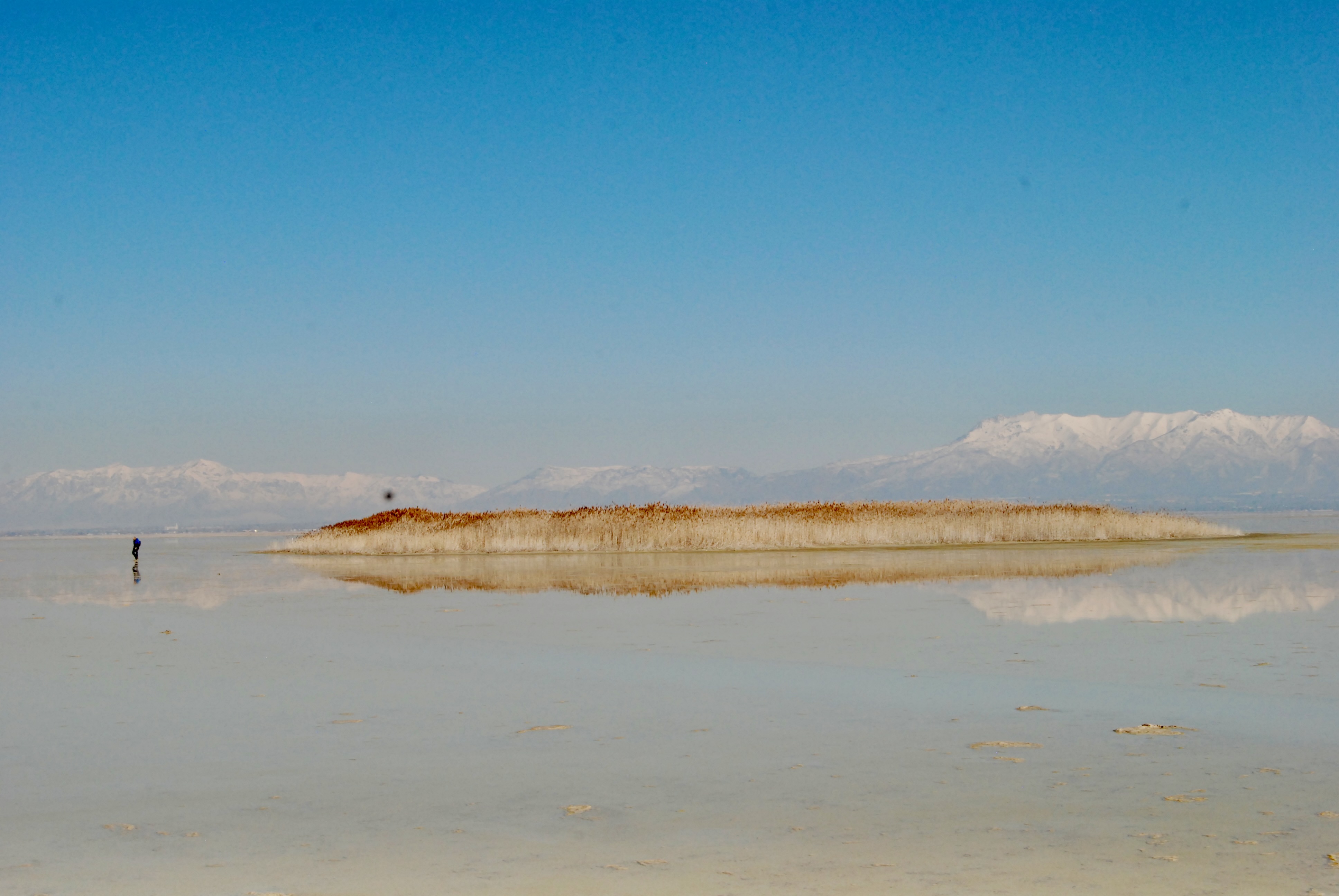
Exposed patches of the lake bed have dried to a crisp and eroded, generating dangerous dust pollution for populated areas nearby. For example, Salt Lake City is directly downwind of the lake and could see a huge increase in poisonous air pollution in the coming years, according to a 2023 study.
RELATED STORIES—There's 13 Great Lakes' worth of water hidden beneath the contiguous US, new map reveals
Fresh water from the reservoir could be used to dampen the lake bed and mitigate pollution, Zhdanov said. Farmers in the region could also potentially extract the water for irrigation, but more studies are needed, he added.
The results imply that there may be freshwater reserves hiding elsewhere in Utah or beyond, Zhdanov said. "The bottom line is that this project demonstrated that airborne geophysics work can be used to identify these groundwater reserves in deserts like Utah," he said.
Article SourcesZhdanov, M. S., Jorgensen, M., Cox, L., Johnson, W. P., & Solomon, D. K. (2026). Airborne geophysical imaging of freshwater reservoir beneath the eastern margin of Great Salt Lake. Scientific Reports. https://doi.org/10.1038/s41598-026-40995-5
 Sascha PareStaff writer
 Sascha is a U.K.-based staff writer at Live Science. She holds a bachelor’s degree in biology from the University of Southampton in England and a master’s degree in science communication from Imperial College London. Her work has appeared in The Guardian and the health website Zoe. Besides writing, she enjoys playing tennis, bread-making and browsing second-hand shops for hidden gems.
View MoreYou must confirm your public display name before commenting
Please logout and then login again, you will then be prompted to enter your display name.
Logout LATEST ARTICLES 1Concentric rocky rings adorned with ancient artwork wear a magma 'hat' in the Sahara — Earth from space
- 2Tasmanian tigers discovered in Indigenous rock art in Australia, suggesting these marsupials lived there much longer than thought
- 3'Something really big is going to happen': NASA's historic Artemis II mission approved for April 1 launch
- 4Pig semen molecule could deliver chemotherapy to hard-to-reach eye cancer, mouse study suggests
- 5'We are getting very, very close': NASA makes final Artemis II preparations as expectation grows for Wednesday launch