Using data from the James Webb Space Telescope (JWST), astronomers have unraveled some of the atmospheric secrets of a bizarre, blisteringly hot world that has the consistency of marshmallow.
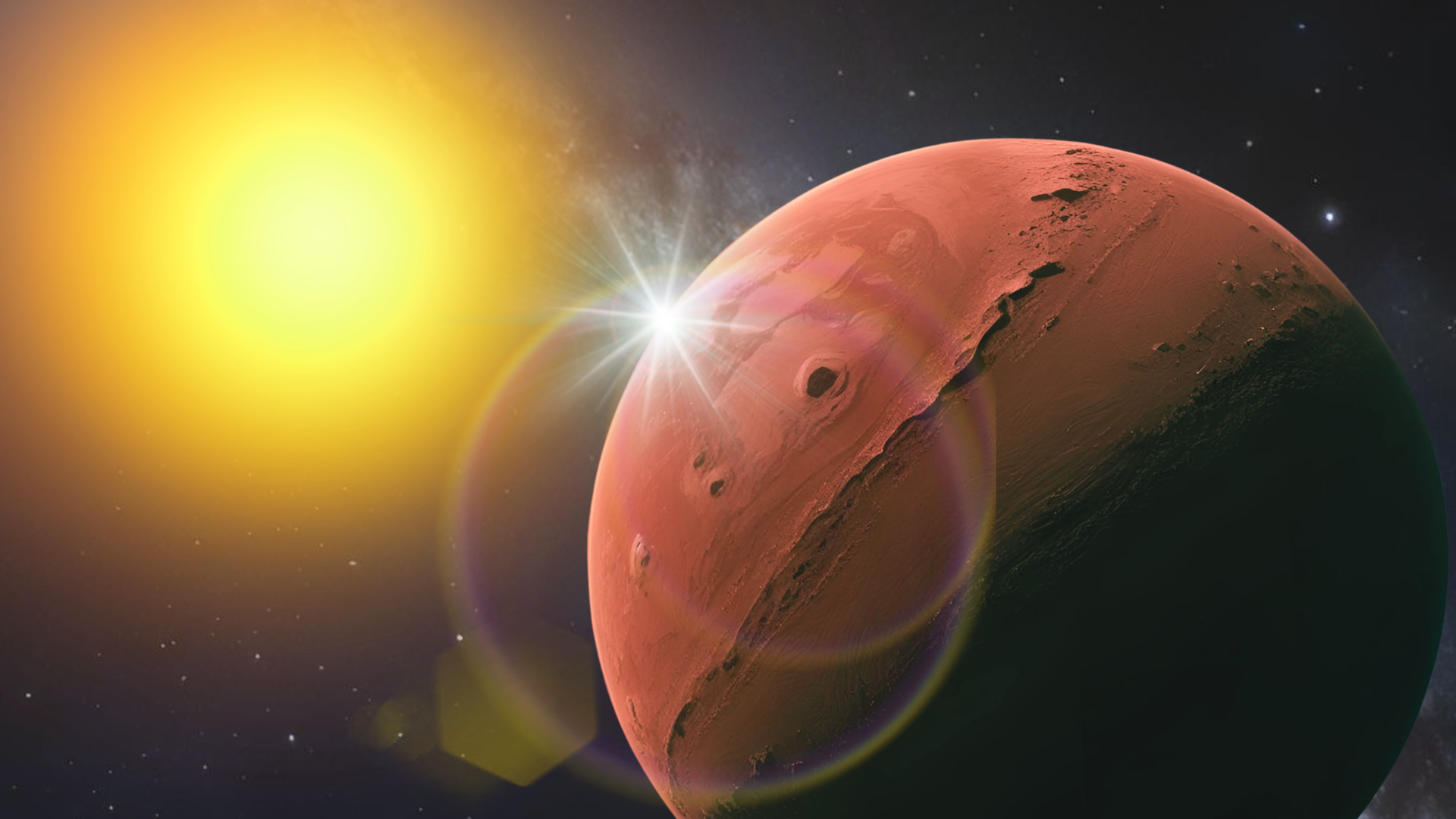
The extrasolar planet, or exoplanet, under the watchful infrared eye of the JWST, is WASP-17b, located around 1,300 light-years away. The exoplanet has a mass around 0.8 times that of Jupiter, but it is around twice as wide as the solar system's largest planet, giving it a "super-puff" consistency comparable to the Earth-based treat. WASP-17 b is so close to its parent star that it completes an orbit in under four Earth days, with this proximity also making the temperature of this "hot Jupiter" skyrocket.
Given the extreme conditions of this exoplanet, it is little wonder that its atmosphere is pretty unusual too. Using a new technique called transmission strings, a team of scientists mapped the contours of the atmosphere of WASP-17b. They found that the atmosphere is shaped like a ring with prominent "gems" rising from it.
"Planets are temperamental, their atmospheres complex and chaotic," team member Hannah Wakeford of the University of Bristol said in a statement. "The fact that all of these numbers came together and showed us this very structured, dynamical picture of this giant world over 1,000 light-years away was just really exciting."
Astronomers like WASP-17b so much they put a ring on it
WASP-17b is so close to its parent star that it is tidally locked, meaning one side permanently faces the star; its dayside is constantly bombarded with stellar radiation. In contrast, the planet also has a cooler nightside, which faces out into space in perpetuity.
By creating incredibly comprehensive 3D views of this exoplanet's atmosphere, researchers found that WASP-17b's atmosphere has a chemical composition and temperature that shift between dayside and nightside according to theory and modelling.
This was possible because the transmission strings technique tracked WASP-17b as it crossed or transited in front of its star, capturing the composition of light around the edge of the planet's atmosphere, or limb, from different angles. This method trumps standard approaches because traditional modelling only maps light as an average across the entire limb.
"Rather than assuming your atmosphere is a circle with the same radius all the way around, our technique allows you to pull out different distances from the center to the edge of the planet," Lili Alderson, of Cornell University, said. "We're able to go around the edge.
"So, we've gone from a ring to understanding where on the ring the gemstones are, so to speak."
The modelling showed just such a "gem," that occurs where hot winds from the planet reach the equator and the nightside of WASP-17b, the atmosphere of the cooler side inflates.
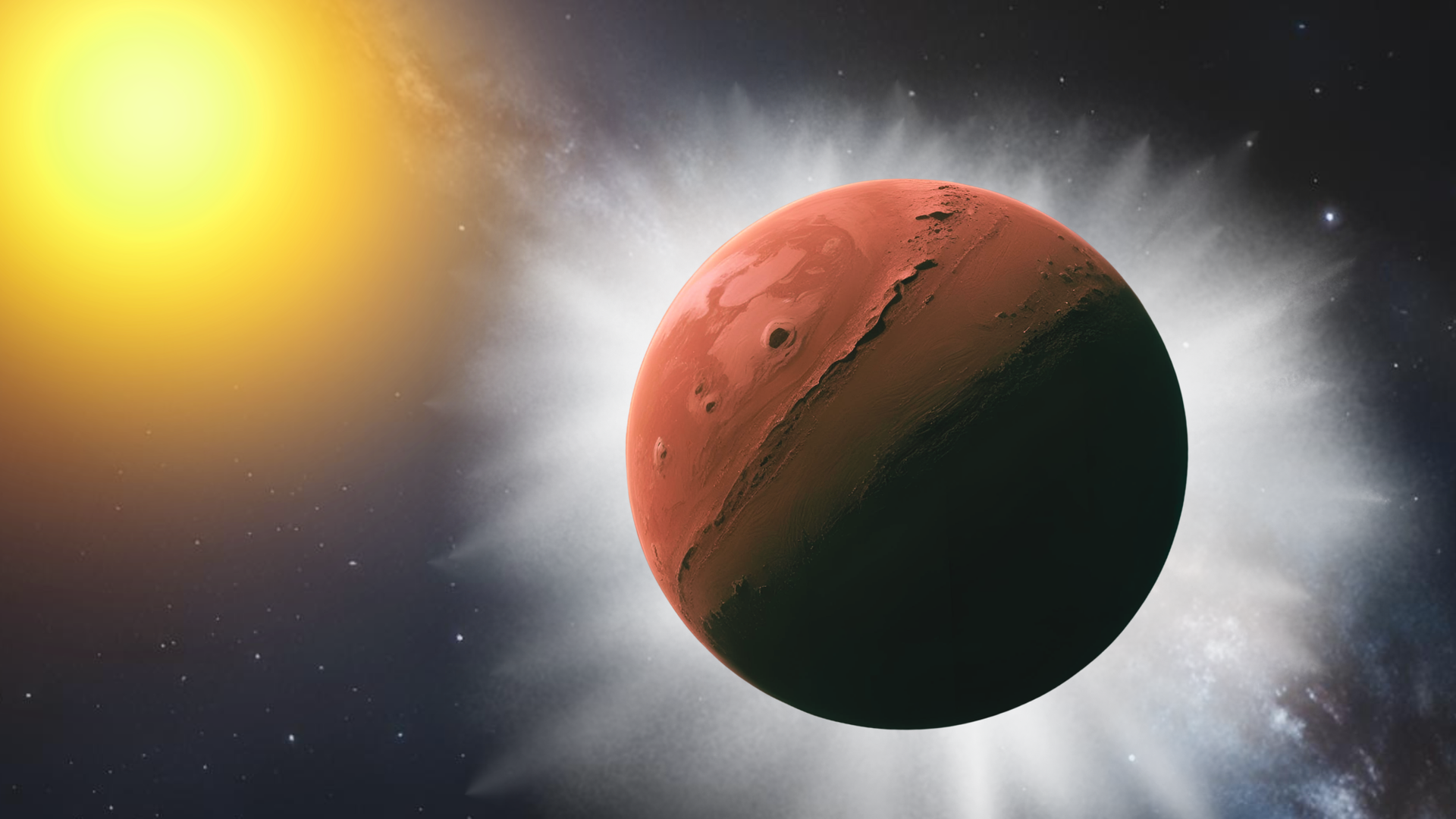
"Theory predicts that the morning and the evening sides should have a strong temperature difference, and WASP-17b fits really nicely in that trend – pretty much bang-on what we thought it would be," Alderson said.
The successful application of the transmission strings method is an exciting step forward in the modelling of the atmospheres of the over 6,000 worlds in NASA's exoplanet catalog. "This is proof of concept that planets are, in fact, 3D objects, and that, consistently, as they go around their star, what we predict should be happening is happening," Alderson concluded. "To move beyond computational exercises and see it for real is a different matter."
The team's research was published on Wednesday (Oct.14) in the journal Nature Astronomy.