
News
Senate Democrats say banks turned blind eye to suspicious moves by Jeffrey Epstein August 4, 20261:43 PM ET
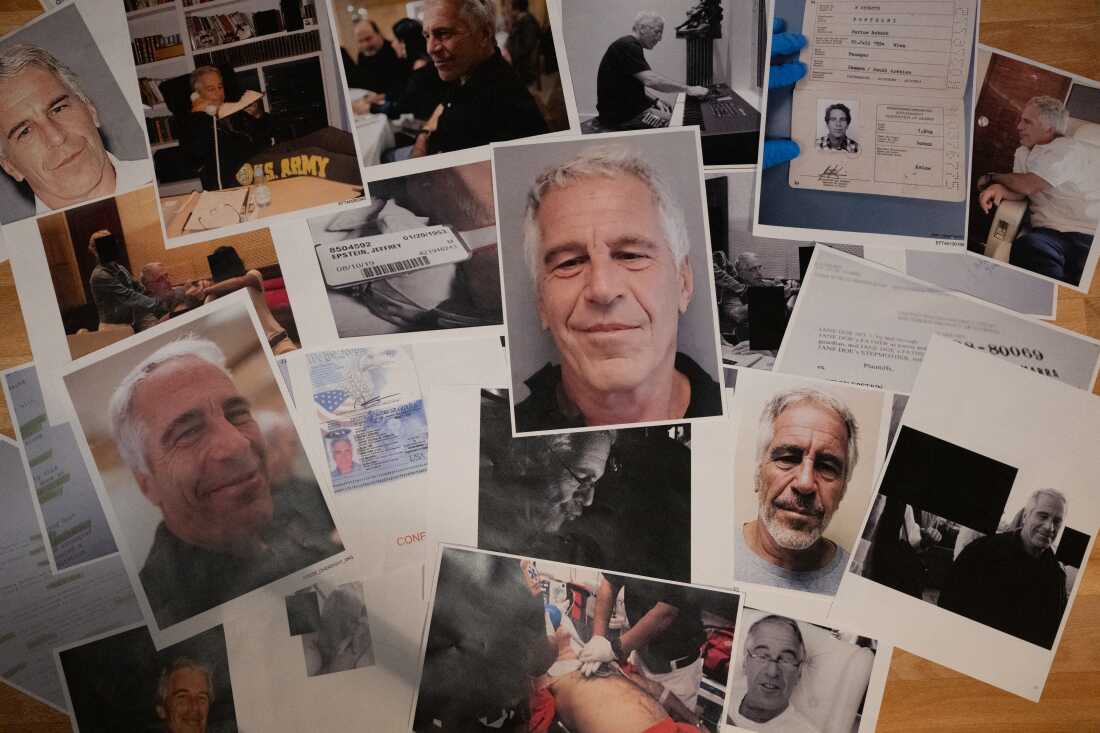
A report from Senate Democrats says big banks had concerns for years about suspicious money transfers made by Jeffrey Epstein. But in most cases those worries went unreported until Epstein was charged with sex-trafficking. Martin Bureau/AFP hide caption
toggle caption Martin Bureau/AFPA report from Senate Democrats says big U.S. banks had concerns for years about money moves made by Jeffrey Epstein — but largely kept those worries to themselves until after Epstein was arrested on sex-trafficking charges in 2019.

Law
Powerful people, random redactions: 4 things to know about the latest Epstein files
The report from Democrats on the Senate Finance Committee, which was released by Sen. Ron Wyden of Oregon, says more than a dozen bankers at JPMorganChase, Bank of America and Deutsche Bank were aware of suspicious transactions Epstein made as far back as 2002.
But in most cases, the report alleges bankers failed to alert the Treasury Department until years later, after Epstein was arrested and charged with sex-trafficking. The report is based on a review of Treasury reports, internal bank records and legal filings.
Under the Bank Secrecy Act, bankers are supposed to notify the government whenever they suspect a client is moving funds to launder money or carry out other illegal activities.
"By failing to report—or choosing not to report — his suspicious financial transactions to federal law enforcement, these banks allowed Epstein to send cash payments and wire transfers to his victims, friends, and collaborators around the world," the report says. "The bankers who needed to be asking questions didn't ask them. Jeffrey Epstein's crimes were hiding in plain sight."
Dems are seeking answers
The report points to thousands of transactions over nearly two decades and totaling more than a billion dollars. Some of the claims were previously reported by The New York Times, The Wall Street Journal and Bloomberg.

National
How Epstein and Maxwell used an elite Midwest arts school to prey on girls
Committee Democrats want the Justice Department to investigate why suspicious activity reports were not filed about Epstein in a more timely manner. They also call for tightening reporting requirements in the future.
"If federal prosecutors are serious about preventing the next Jeffrey Epstein, they must hold Wall Street accountable," the report says.
Deutsche Bank responded to the report with a statement saying it regrets its historical connection to Epstein.
"The bank takes its legal obligations seriously," a spokesperson said in a statement to NPR. "We have cooperated with regulatory and law enforcement agencies regarding their investigations and have been transparent in addressing deficiencies and investing in strengthening our control environment in parallel."
Bank of America denied any wrongdoing.
"We take our legal and regulatory obligations seriously and, as we have previously said, the bank did not facilitate wrongdoing," a spokesperson said in a statement to NPR.
JPMorganChase did not respond to a request for comment. The bank dropped Epstein as a client in 2013 due to human trafficking concerns, the report says, but the bank didn't report suspicious transactions to the government until six years later, shortly after Epstein's arrest.


