
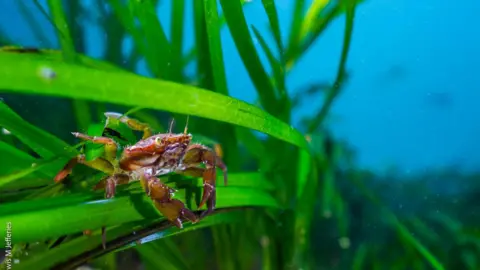
 Lewis M. JefferiesSeagrass meadows are usually teeming with life, like this shore crab
Sewage and agricultural pollution in rivers is having an "alarming" knock-on impact on marine life in underwater forests along the British coastline, according to new research.
Scientists found seagrass meadows affected by excessive nutrients in the water - caused by sewage, fertilisers, manure and industry wastewater - had far fewer and less variety of small invertebrates like crabs, shrimps and snails.
"People don't want to swim in seas polluted by sewage," said Dr Benjamin Jones from Project Seagrass, which carried out the research with Swansea University.
"But this is one of the first studies of its kind to show that some of those nutrient inputs... are having an impact on the animals too."
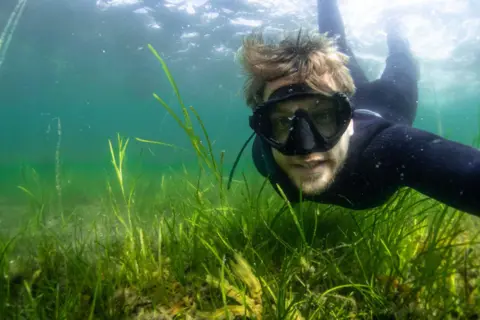 Project SeagrassDr Benjamin Jones described seagrass beds as underwater forests
Seagrasses are flowering plants that live in shallow, sheltered areas of the coast, forming dense underwater meadows.
They help fight climate change by absorbing vast amounts of carbon dioxide and are considered incredibly important habitats.
It is estimated that a single hectare can harbour as many as 100 million invertebrates.
"If we think of seagrass meadows as forests, those invertebrates are basically insects that help it function in the marine environment," explained Jones.
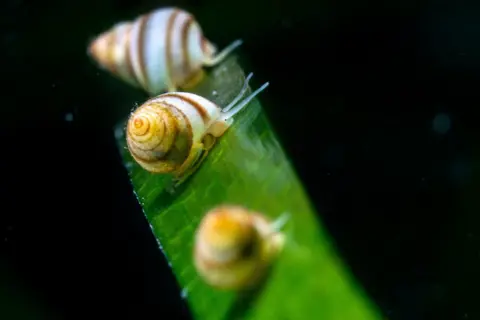 Lewis M. JefferiesThe study examined seagrass meadows in 16 different marine environments, including estuaries, lagoons and islands
The researchers examined 16 different sites along the British coast which were affected to varying degrees by eutrophication - the enrichment of water by nutrients like nitrogen and phosphorus.
Sewage discharges, runoff of fertilisers and manures from farms and wastewater from industry can all increase nutrient levels in rivers and estuaries.
Extra nutrients lead to the growth of algae, smothering seagrass beds, blocking sunlight and depleting the water of oxygen.
In recent years the situation has led to limits on housebuilding in some coastal areas and restrictions on spreading and storing slurry on farmland.
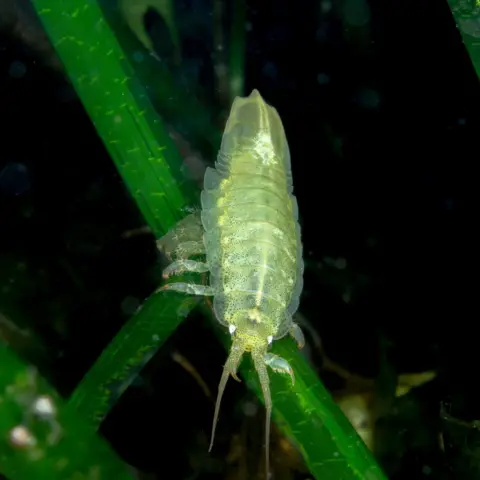 Lewis M. JefferiesIdotea balthica is a species of marine isopod which lives on seaweed and seagrass
"We picked particular areas to enable us to see a gradient of high nutrients to low nutrients," said Dr Richard Unsworth from Swansea University, adding that the team's findings were "stark".
Higher concentrations of nitrogen were consistently associated with reductions in animal abundance and species richness.
The research found "an increase of nitrogen could correspond to an approximately 90% decrease in the abundance of life per unit of available habitat area".
Increased levels of phosphorus were shown to be having "a devastating negative effect on life within lagoon environments" in particular.
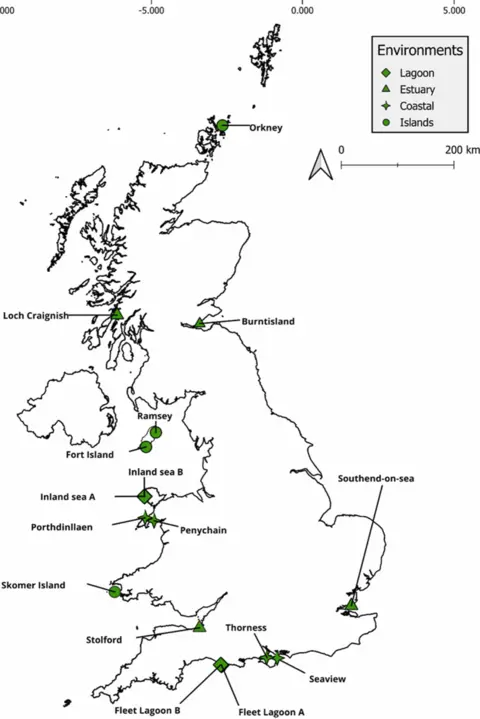 Swansea UniversityThe research sites ranged from the Orkneys Islands and the Firth of Forth to the Solent and the island of Skomer
Algae-smothered seagrass meadows in the Thames estuary along the Essex coast and the Firth of Forth on the east coast of Scotland were among those worst affected.
In Wales, issues were also flagged at Skomer Island, internationally renowned as a wildlife haven, though seabird poo alongside "human impacts" were thought to be part of the picture there.
At sites with "healthy, clear water" like the Isles of Scilly off Cornwall and the Orkney Islands "we were finding much more life", Unsworth said.
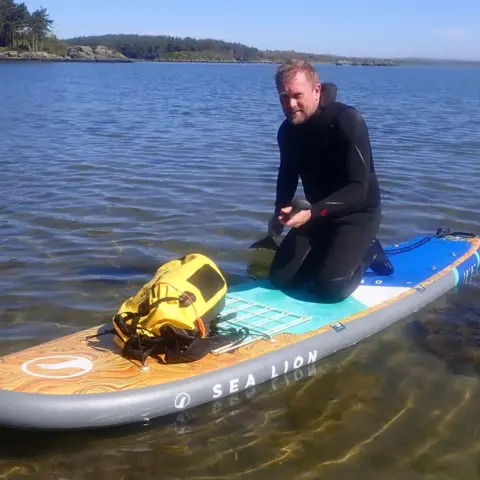 Swansea UniversityDr Richard Unsworth says we must "look towards the land" to protect marine life
"I think it's quite alarming that all this riverine input in terms of sewage, in terms of poor fertiliser use... is all coming out onto our coasts and influencing the amount of food available for fish, the amount of food for birds," Unsworth said.
"We want that biodiversity, we want that productivity in our oceans."
Jones said there was a "lot of talk around sewage".
"If we want to protect the marine environment we need to look towards the land and there needs to be some integrated thinking - that's a conversation that's very rarely had," he argued.
The research is published in the Global Ecology and Conservation journal.
More top stories