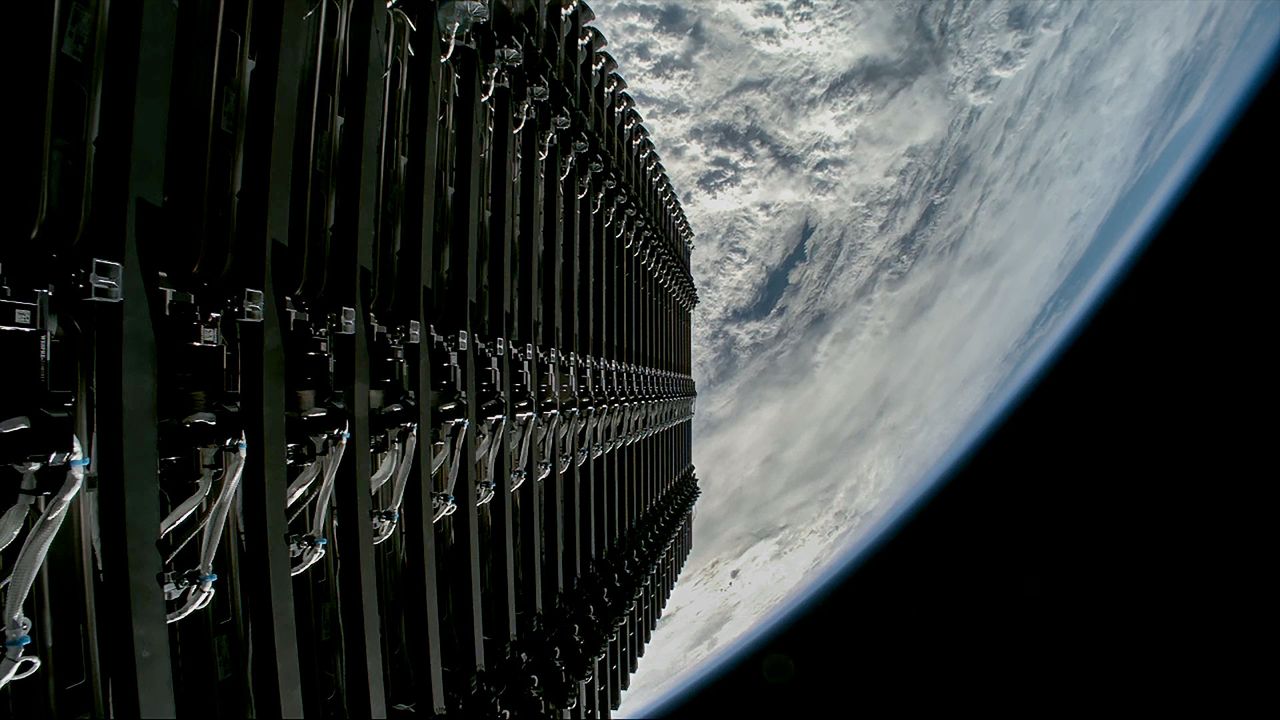
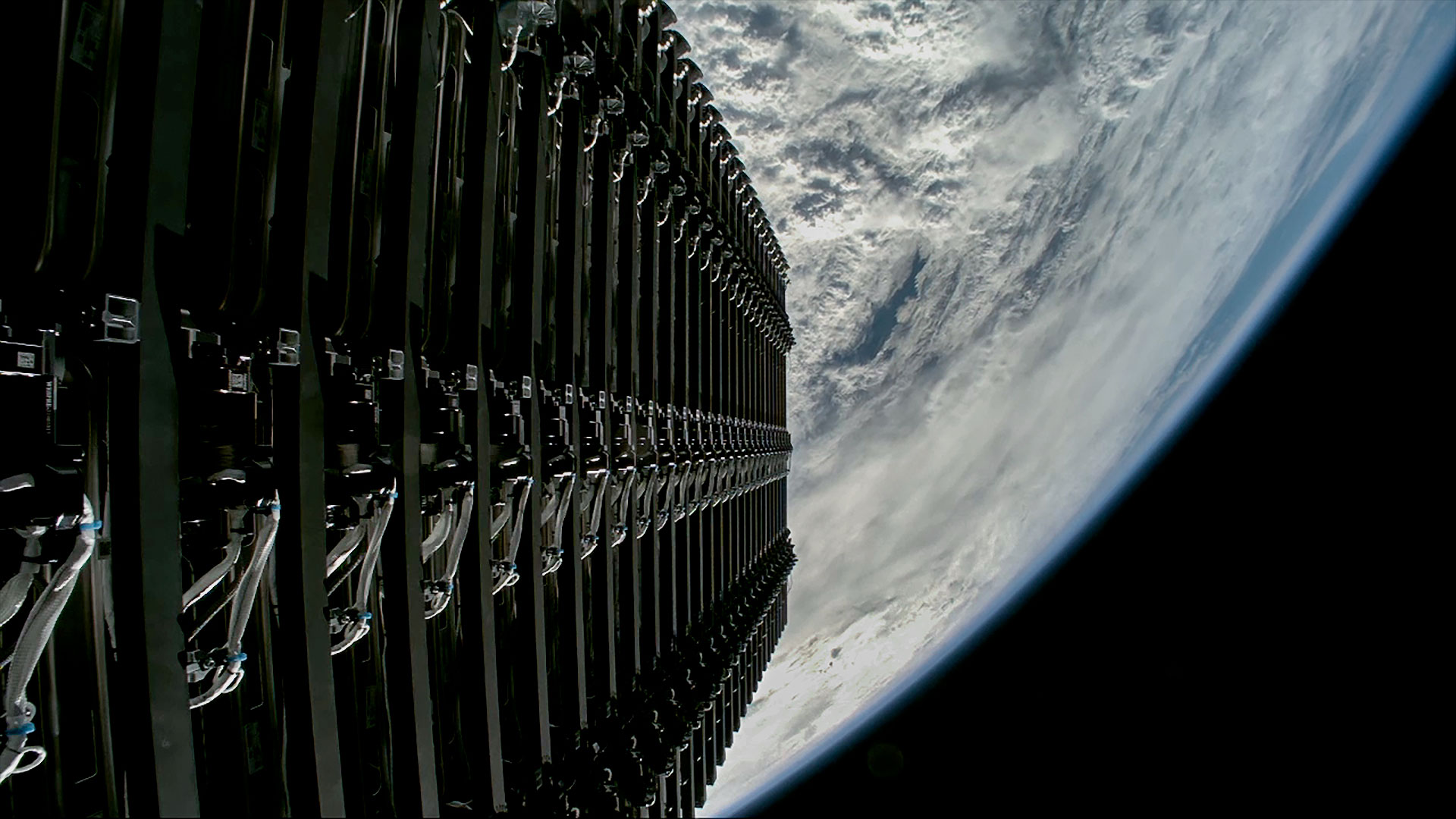
 A stacked group of SpaceX Starlink satellites are seen prior to their deployment into low Earth orbit after launching from Cape Canaveral Space Force Station in Florida on Tuesday, April 14, 2026. (Image credit: SpaceX) Share this article 0 Join the conversation Follow us Add us as a preferred source on Google Newsletter Get the Space.com Newsletter
 Breaking space news, the latest updates on rocket launches, skywatching events and more!
Contact me with news and offers from other Future brands Receive email from us on behalf of our trusted partners or sponsors By submitting your information you agree to the Terms & Conditions and Privacy Policy and are aged 16 or over.You are now subscribed
Your newsletter sign-up was successful
Want to add more newsletters?
An account already exists for this email address, please log in. Subscribe to our newsletterSpaceX began and ended the day with Starlink launches.
The company sent two Falcon 9 rockets soaring, first from Florida before sunrise on Tuesday (April 14), and then from California after sunset the same day (by local time zone). Both launches were successful, according to SpaceX.
Article continues below 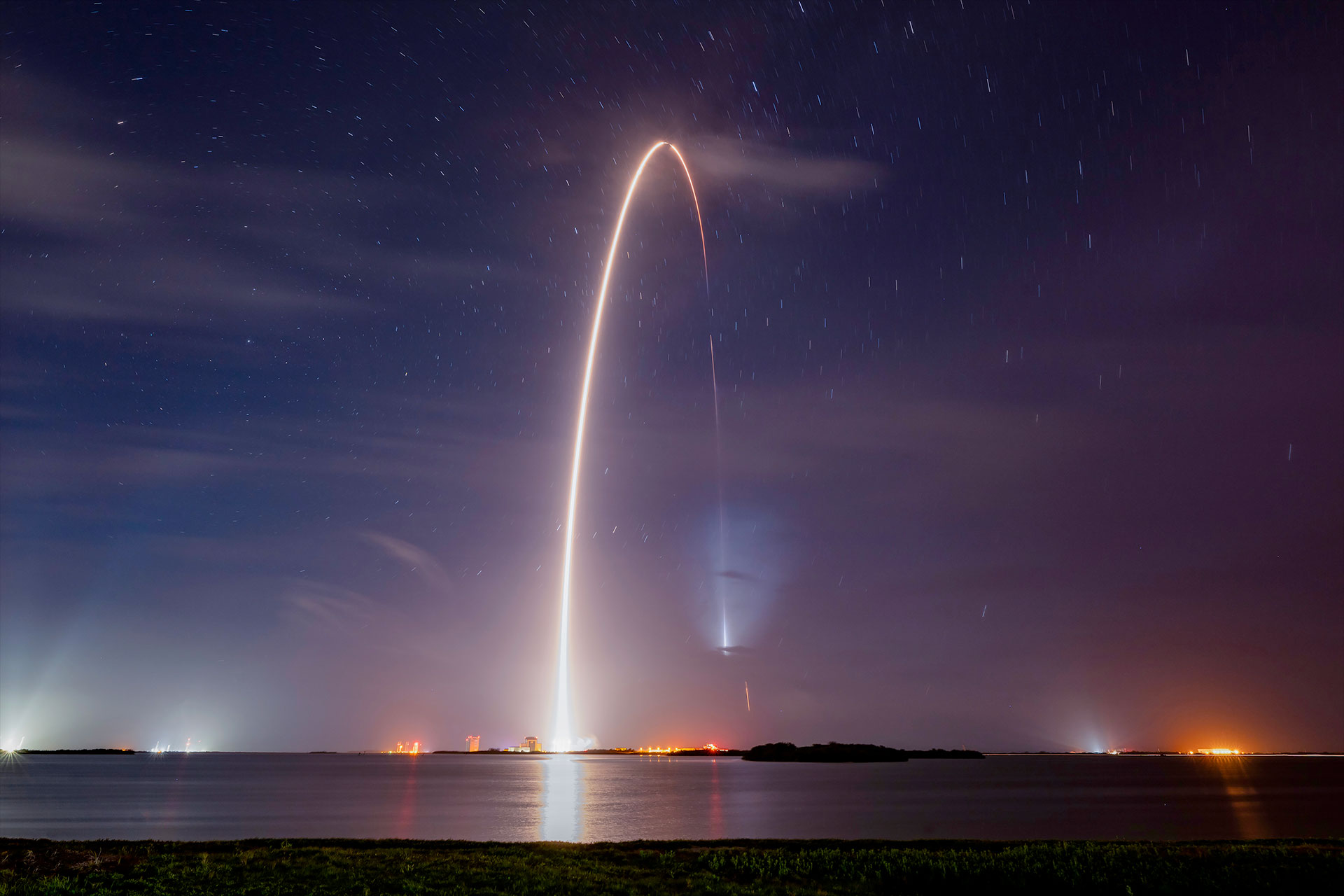
Ax-2 | Euclid | Ax-3 | CRS-30 | SES ASTRA 1P | NG-21 | 19 Starlink launches
Past Booster B1082 missions:USSF-62 | OneWeb Launch 20 | NROL-145 | 16 Starlink missions
About an hour after each launch, the Falcon 9 upper stage deployed its cargo, sending the satellites on track to join the SpaceX low Earth orbit megaconstellation.
Both missions' Falcon 9 rocket first stages made it back to Earth to be reissued. Booster B1080 completed its 26th flight by landing on the droneship "Just Read the Instructions" based in the Atlantic Ocean. Then Booster 1082 touched down on "Of Course I Still Love You" stationed in the Pacific Ocean, raising its reuse tally to 21 flights.
After the doubleheader, SpaceX's Starlink network totaled more than 10,200 satellites, according to tracker Jonathan McDowell. The Vandeberg launch was SpaceX's 46th of the year out of 629 Falcon 9 missions 2010.
Get the Space.com NewsletterContact me with news and offers from other Future brandsReceive email from us on behalf of our trusted partners or sponsors Robert Z. PearlmancollectSPACE.com Editor, Space.com Contributor
Robert Pearlman is a space historian, journalist and the founder and editor of collectSPACE.com, a daily news publication and community devoted to space history with a particular focus on how and where space exploration intersects with pop culture. Pearlman is also a contributing writer for Space.com and co-author of "Space Stations: The Art, Science, and Reality of Working in Space” published by Smithsonian Books in 2018. In 2009, he was inducted into the U.S. Space Camp Hall of Fame in Huntsville, Alabama. In 2021, he was honored by the American Astronautical Society with the Ordway Award for Sustained Excellence in Spaceflight History. In 2023, the National Space Club Florida Committee recognized Pearlman with the Kolcum News and Communications Award for excellence in telling the space story along the Space Coast and throughout the world.
View MoreYou must confirm your public display name before commenting
Please logout and then login again, you will then be prompted to enter your display name.
Logout MORE FROM SPACE... 1NASA's Artemis 2 moonshot was just the 'opening act' for America's return to the moon, space agency chief says
- 2The 10 best Stargate SG-1 episodes, ranked
- 3NASA's Artemis 2 moon shot just landed on Saturday Night Live — space toilet jokes and all (video)
- 4Scientists use rare 'Einstein Cross' to learn about young galaxy with surprisingly old stars
- 5This Artemis 2 astronaut really loves Rise | Space photo of the day for April 14, 2026


