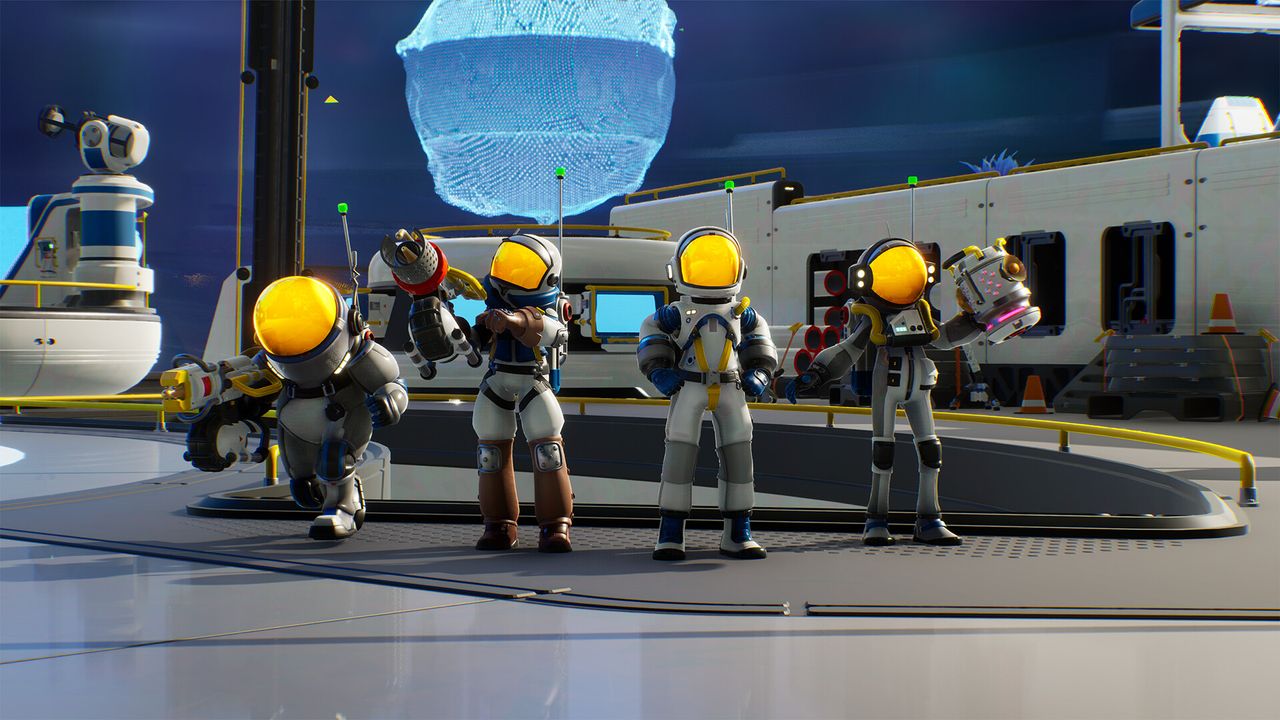
Starseeker: Astroneer Expeditions might look like a direct sequel to Astroneer on the surface, but it's a space exploration game with very different objectives. While its predecessor focuses (it continues to get updates and content packs) on base-building and creative tools, this second title instead takes players on shorter, breezier trips all about discovery and mission-based tasks.
Even in its early access state, Starseeker has the bones to eventually become one of the best cozy sci-fi games around, yet some Astroneer veterans might walk into a successor that isn't what they expected. This isn't Astroneer 2, System Era's Adam Bromell — the studio's creative director, CCO, and co-founder — explained to Space around Starseeker's launch.
Some quotes have been editorialized and lightly trimmed for better flow.
"I've been jonesing for video games that try to foster a sense of community amongst players. I think that when I play with other people, and you share in an accomplishment together, it's really special," explains Bromell. "This goes all the way back to building something with friends inside of Minecraft. When you finally have that moment where you step back, and you go 'Holy shit, look at what we did.' That's a good feeling."
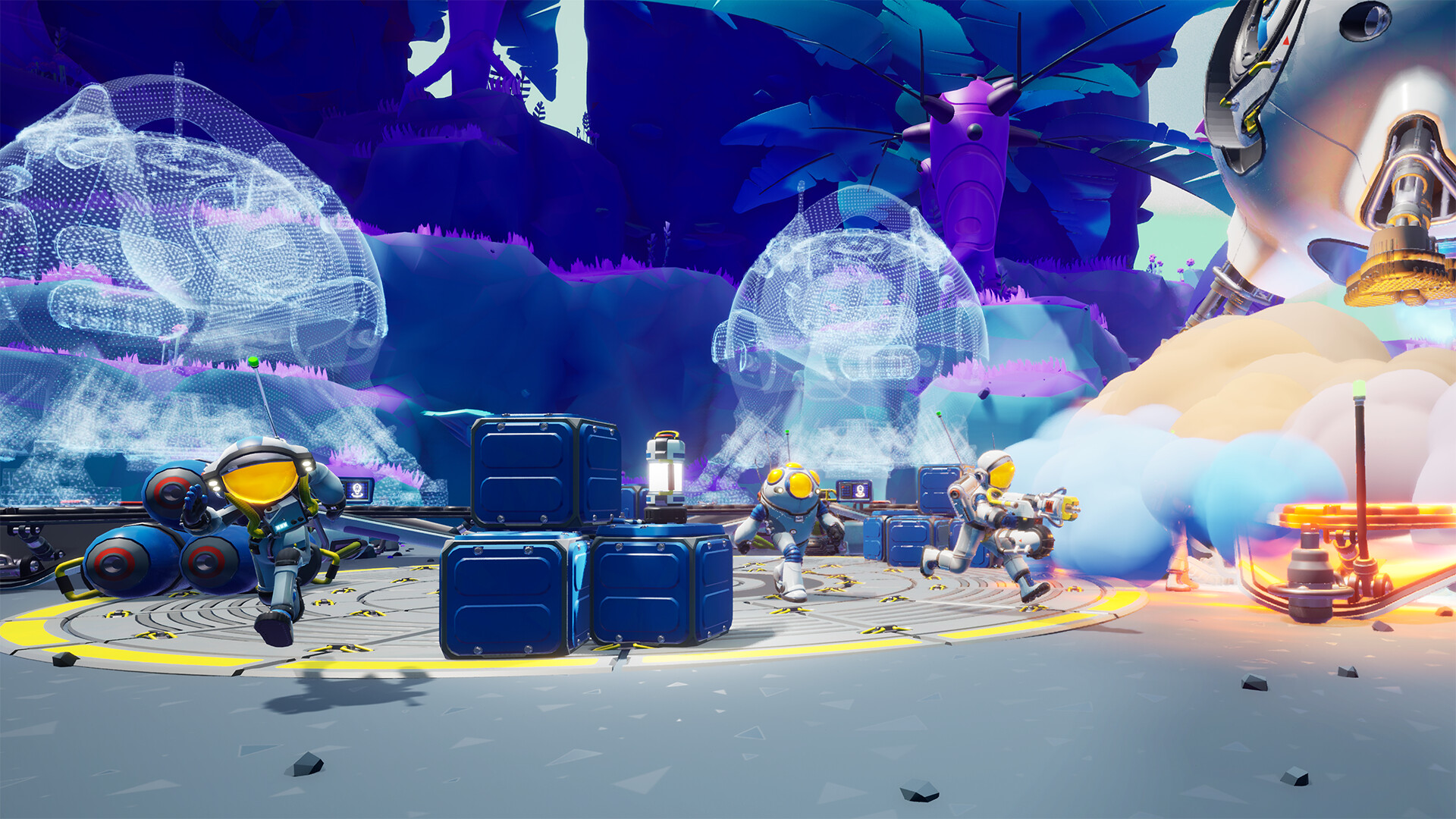
In a way, the original Astroneer already achieved that as a "chill base-building survival experience", yet Bromell and System Era wanted to build an experience with a stronger community element that connected everyone.
"My original inspiration with Astroneer was to pay homage to that feeling Gene Roddenberry gave me with Star Trek when I was a kid. Some hope for the future and also showing what it means to be selfless and lead with generosity, seek justice... I'm still a Trekkie at heart," he explained, showing me part of the Star Trek collection he keeps in his office as he talked.
Bromell's celebratory June 11 post on Medium explored many of the same ideas we discussed during our conversation, such as the game being defined from the get-go as "hopeful science fiction", a suggestion that's attributed to System Era's COO Veronica Peshterianu. A few hours with Starseeker make it very clear that it's a game about helping other players out versus venturing into the unknown solo or with a group of close space pals.
You can still play at your own pace or create a party of people you know, but what you do out there directly affects the global experience through community goals. In fact, a common occurrence is running into entirely different teams during an expedition.
After a short planetside tutorial, Starseeker takes players to the ESS Starseeker. This space station serves as the game's central hub, where players can meet other explorers before taking on missions that task them with recovering lost tech, scanning materials and life forms, or simply exploring more of a newfound planet.
It's a much tighter loop than Astroneer's by design, one that favors short play sessions over huge base-building marathons, and the roadmap shared around the game's early access launch is promising meaty (and free) updates over the coming months.
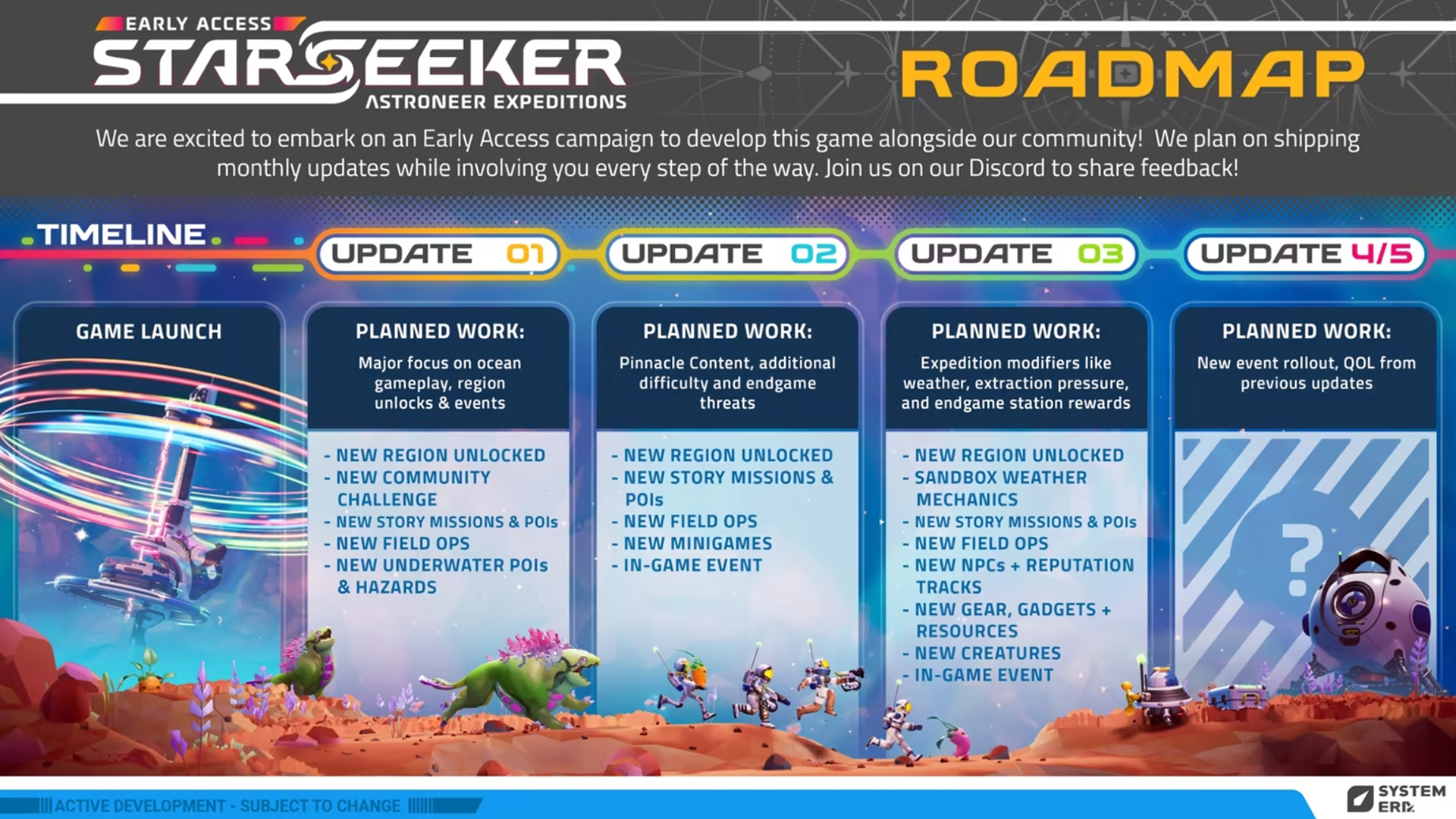
"Starseeker at early access is the foundation and the bedrock... We're building ourselves a platform for engagement to our community, to show them their accomplishments and to push them out onto these journeys together," Bromell explained. The early access tag will also enable the team to do playful experiments like "morning announcements on the station" or giving squads special rewards based on their performance out there. It sounds like a fluid process as the team "tries to engage with players in that space" based on the feedback it gets.
"Unlike other games in the extraction genre, which we're a piece of, we let you trade directly on the station. You don't have to go in and risk it. We're interested in themes like 'What does a take a penny, leave a penny system in a video game feel like?' Like, how do we even build for that kind of sense of camaraderie?"
Bromell doesn't shy away from comparisons to the booming extraction genre – commonly tied to shooters – but, as expected, losing the loot you find while adventuring isn't as punishing in Starseeker, as no one is actively trying to hurt you. Still, the natural hazards and alien fauna mean there's some real danger to setting foot on uncharted worlds.
A larger narrative — already teased by the game's opening cutscene — is in the works too, though Bromell was coy about revealing details there. When asked about the 'target window' for the culmination of that narrative arc, he confirmed the intention is to wrap it up by the time the game hits 1.0, even if the journey continues after that point. "Between now and 1.0, you'll be introduced to the different antagonists in this game and some of the more extrinsic motivations which the Astroneers have to keep exploring."
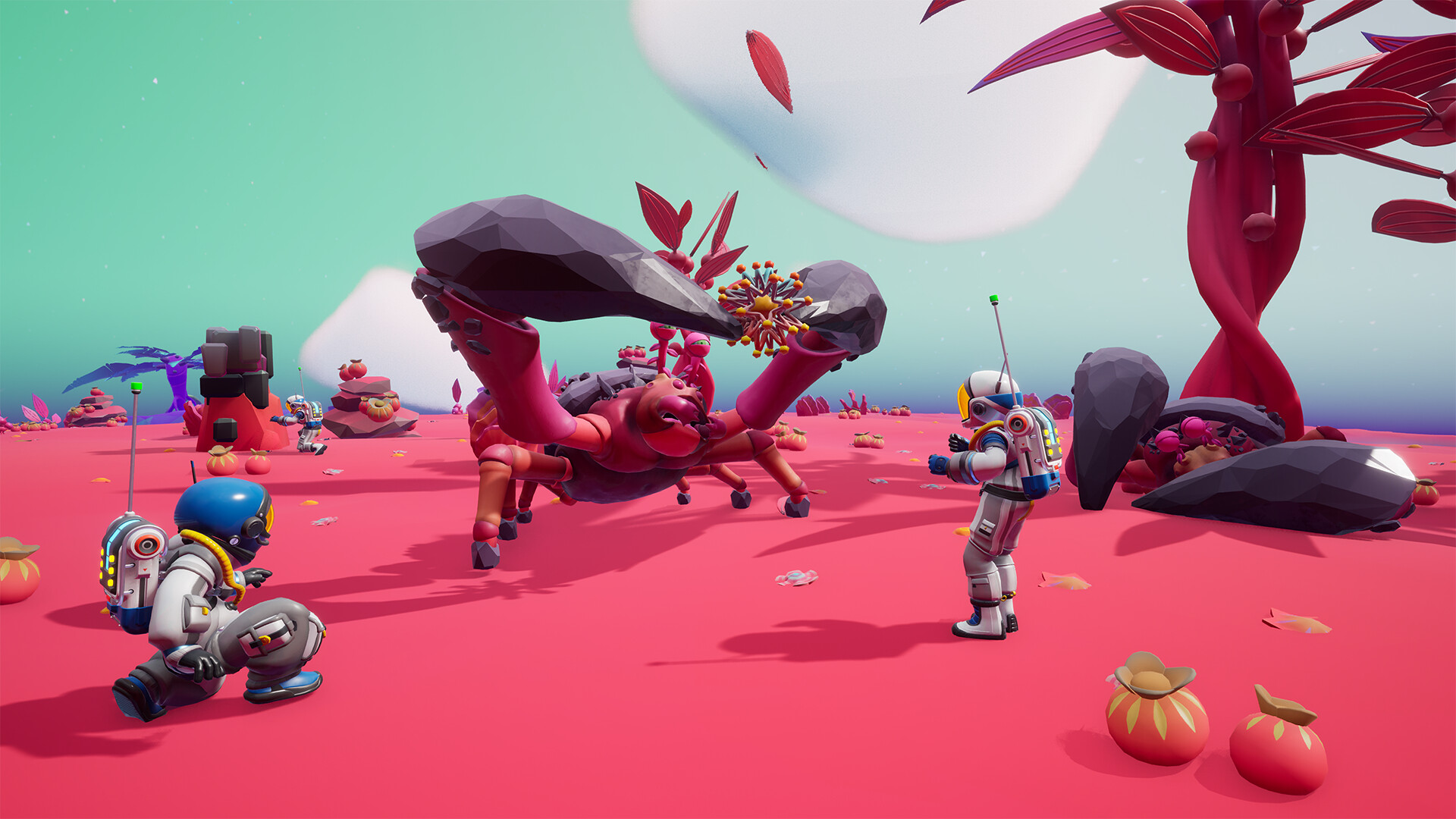
Astroneer's cartoony visuals don't make you think "simulation" at first glance, but despite that playful side, there's room for real-world influences and nods to real science. Bromell explained they made sure to put resources in the game that "are real things you can find in the world," even if they don't look the same when it comes to shape and how "they would physically grow and manifest".
He also brought up an example from the early Astroneer days: "When we first launched it, we just picked any color we thought was cool. And then all of a sudden, players were like, 'You're calling it malachite, but it's not the right color.' We're not trying to teach anybody anything with too much depth, but certainly, when we borrow from those things, we need to not alienate completely from the idea of what they are."
Such an approach also applies to the Astroneers themselves; Bromell and the team borrowed from the basic NASA aesthetic with "the whites and the grays" and some more elevated colors. "The core theming and palette of the Astroneers aren't unlike both the NASA and Russian space programs, because those were on my Pinterest board when I was drawing these things back in 2015." He added that System Era's goal always was to make games that are familiar and approachable, but more like "kids playing with toys" rather than "full-on simulations".
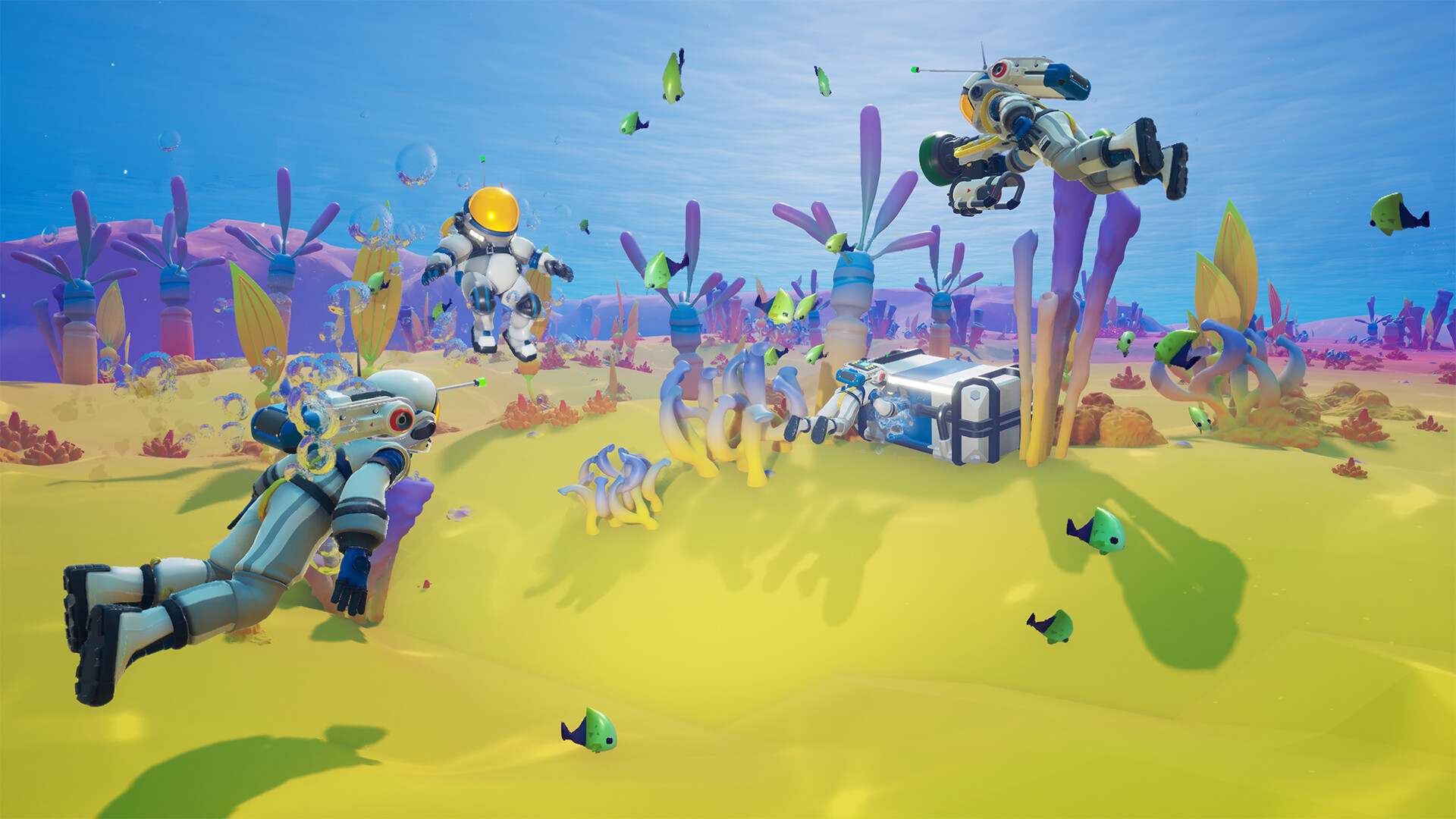
In fact, Bromell was quite vocal during our interview about the need for more "silly games" that aren't afraid of players breaking things: "We aren't afraid of our players exploiting the rules that we're putting in front of you... When we did PAX West, the mission we gave everybody was to bring an altimeter as high as you could go. There was one squad that cheesed the shit out of it with some of the tools, and that was my favorite run. That's how we want players to be thinking about this, not on the golden path that we laid them on."
Starseeker has been brewing for roughly seven years, Bromell told me. "The original year and a half was myself and one or two engineers just playing with the physics sandbox." The concept later grew into this focused experience set in the Astroneer universe that had players going on short treks and completing missions together.
"I feel like Astroneer 2 is always there for us to do. We can always do that. What I don't want to do — and thank God I'm not a business person — is not take a creative swing with the momentum that we have as a team that's learning how to make a game," he added. "We're trying to take the idea of the genre, turn it slightly in our direction, borrowing from games like Helldivers [a co-op shooter full of chaos and destruction], and then building our own thing that wraps it in this connective experience."
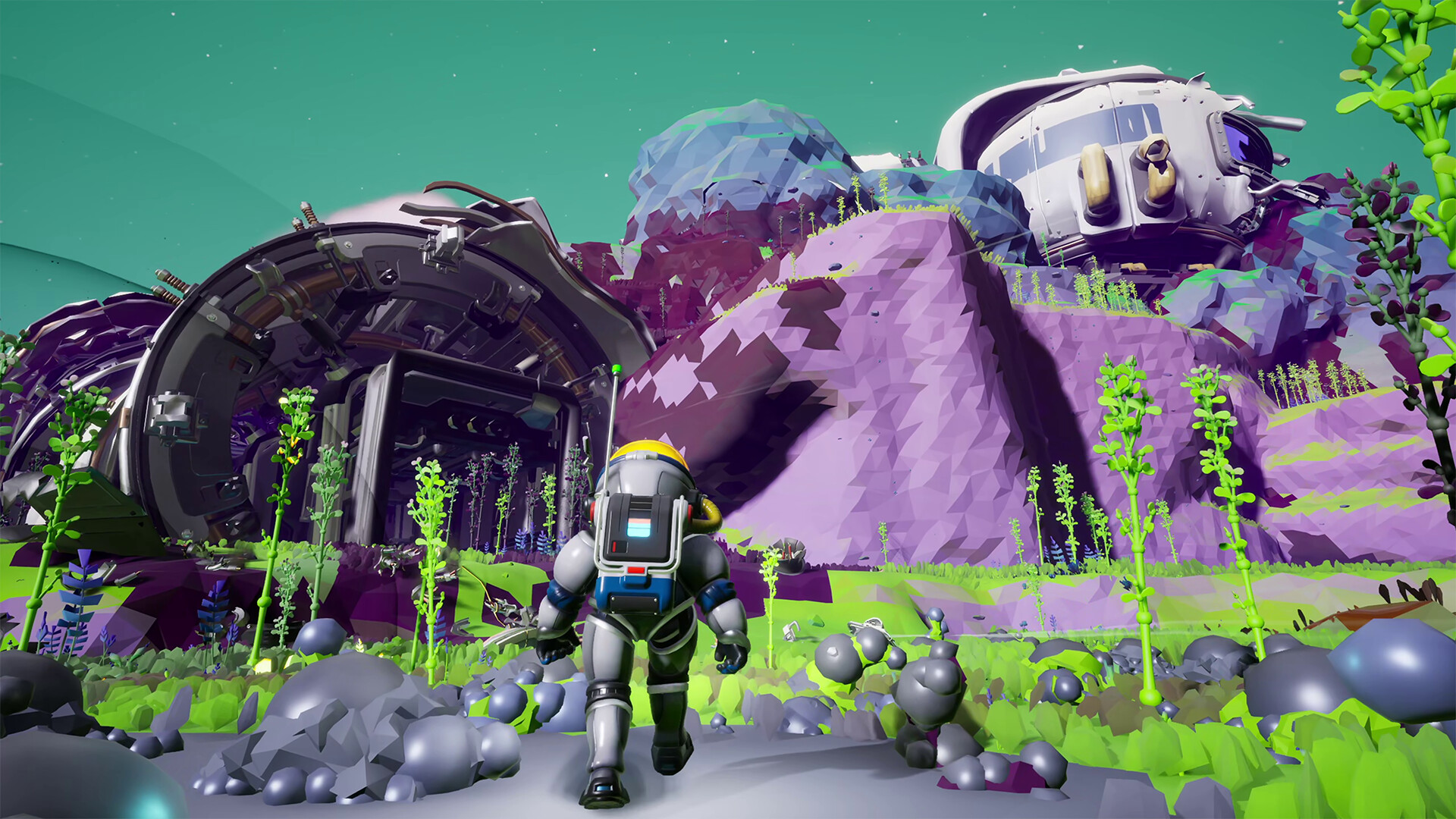
The conversation could've gone on for hours, I think, as the creative director's heart and mind are in the right place. It's always encouraging to come across developers happy to veer off the main path during an interview, and that sort of defines what Starseeker is as a cooperative online game; the best adventures usually are the ones you stumble upon, not the ones perfectly laid out in front of you.
The game's full vision might take a while to fully blast off, but it's a refreshing one that dares to dream of a better future for space exploration and humanity as a whole. We can always use more of that.
Starseeker: Astroneer Expeditions is now available on PC (Steam & Xbox App), PS5, Xbox Series X|S, and Nintendo Switch 2 in early access. A PC code for this article was provided by the publisher, Devolver Digital.