More than a month after its epic spaceflight, Starship is finally headed home.
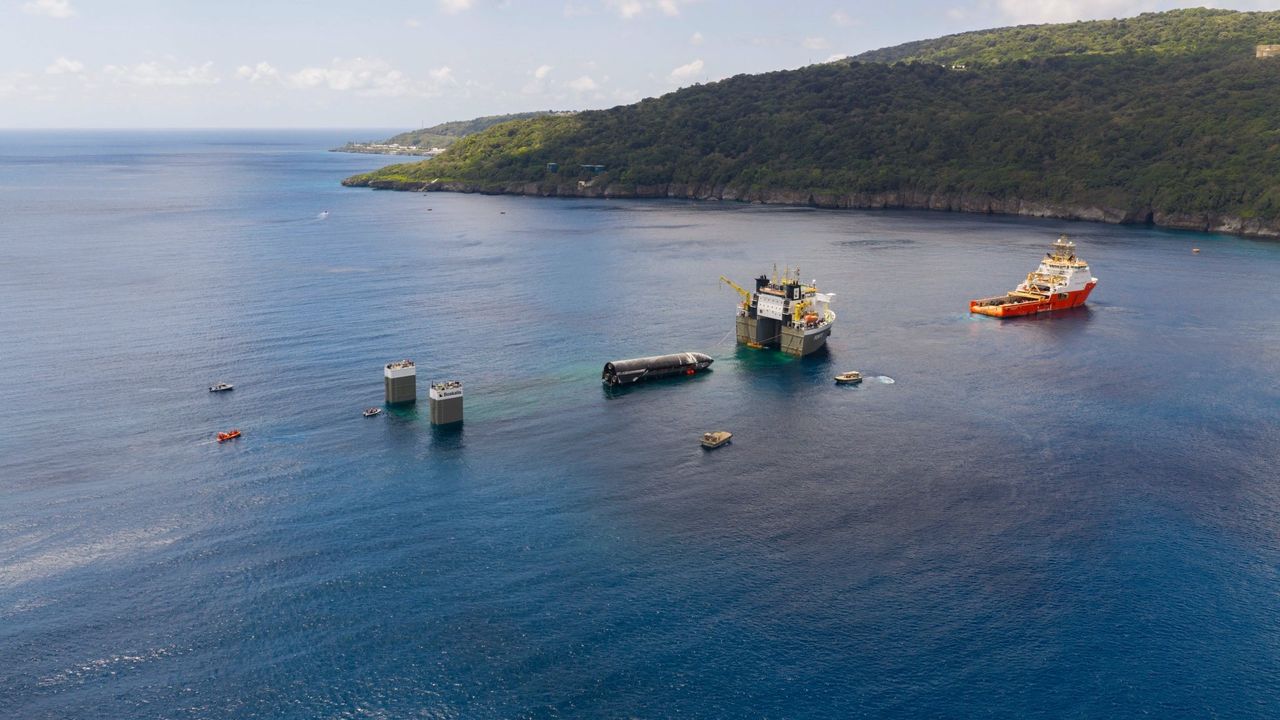
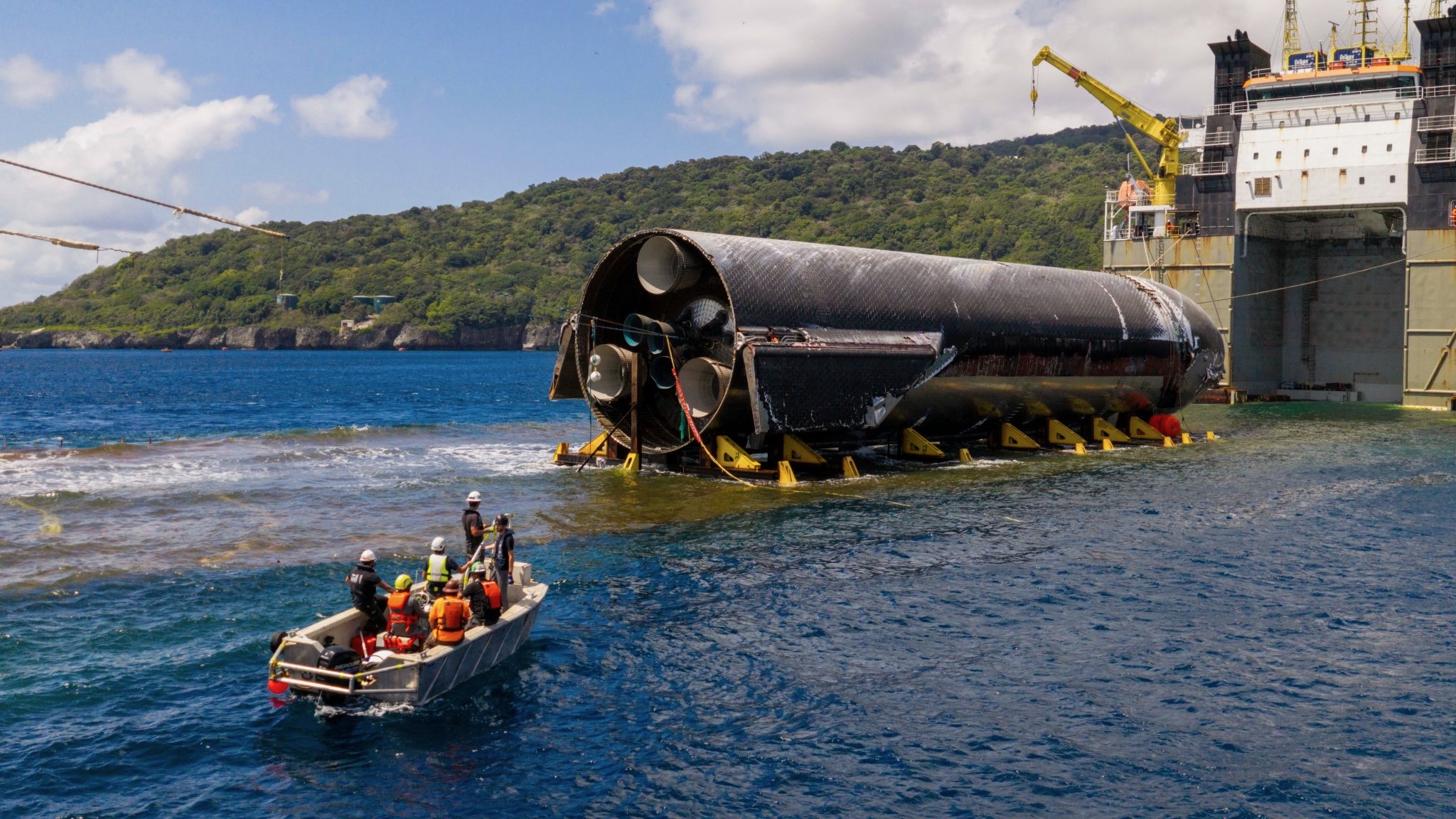
SpaceX announced today (Aug. 27) that it has loaded Starship's 171-foot-tall (52 meters) upper stage — known as Starship, or simply Ship — onto a huge "semi-submersible" ship in the Indian Ocean, off the coast of Christmas Island.
Ship had been in the water since July 24, when it splashed down to bring an end to the Starship program's 13th test flight. The vehicle will now head back to SpaceX's Starbase site in South Texas, a journey expected to take several months, according to the company.
Starship Flight 13 lifted off from Starbase, sending Ship on an hour-long suborbital jaunt that went quite well. The vehicle deployed its payloads — 20 of SpaceX's big, next-gen Starlink "Version 3" satellites — into space as planned and also managed to relight one of its six Raptor engines in the final frontier as well.
Ship then splashed down softly in the Indian Ocean off the coast of Western Australia — so softly, in fact, that it survived the ordeal intact. This was unprecedented; on every previous Starship flight, the upper stage had either broken apart during reentry to Earth's atmosphere or exploded shortly after splashdown, when it toppled sideways into the waves. (Starship's first-stage booster, known as Super Heavy, attempted a soft splashdown in the Gulf of Mexico during Flight 13 but suffered engine problems and hit the water hard.)
SpaceX determined to take advantage of this unexpected development. Getting an up-close look at Ship, the company said, would shed light on how its heat shield held up during the flight — key information that could advance the development of Starship, which is designed to be fully and rapidly reusable.
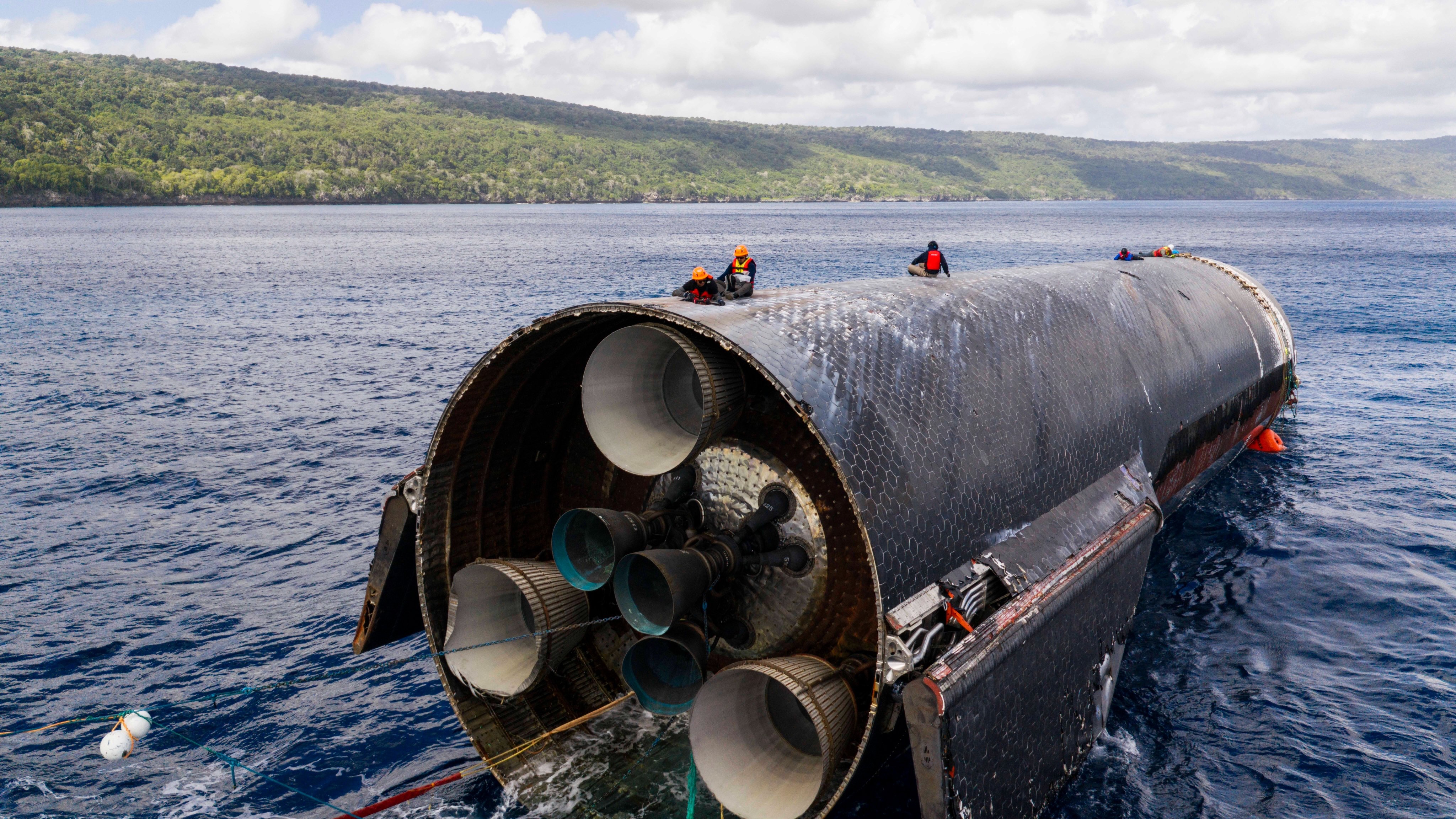
So the company began towing the Flight 13 Ship to shore — an endeavor that initially seemed doomed to failure.
"Unfortunately, ship recovery is not looking good right now," SpaceX founder and CEO Elon Musk said in an Aug. 7 post on X, the social media platform he bought in 2022. He was responding to a SpaceX post that same day, which cited "challenging conditions and increasingly rough seas."
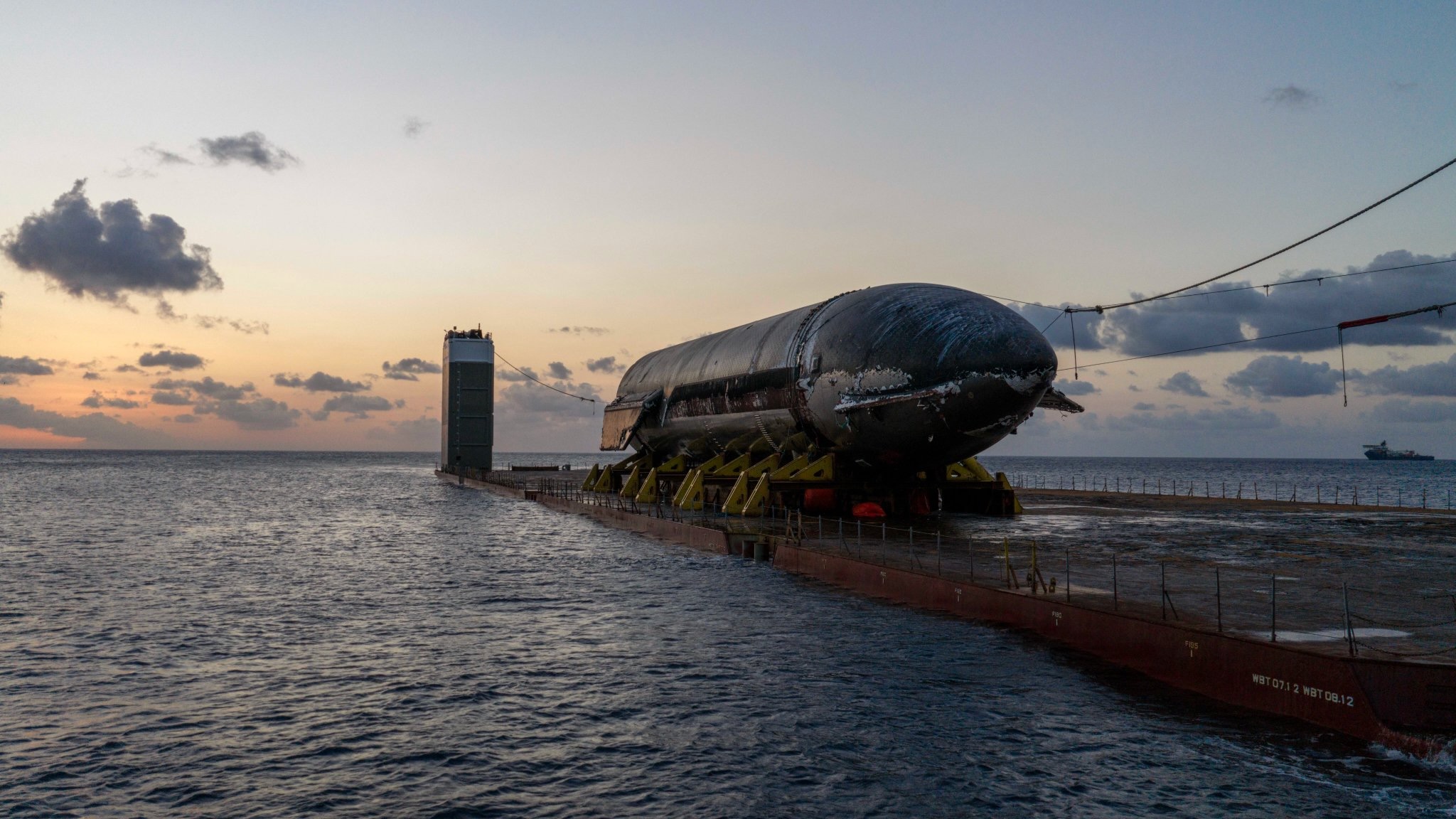
SpaceX persevered, however, and managed to tow Ship to Christmas Island, an Australian territory that lies about 1,200 miles (1,900 kilometers) northwest of the city of Broome. Once there, company engineers inspected the vehicle for several days as it bobbed in the waves, gathering valuable data, according to SpaceX.
"They collected heatshield samples and gained vital insight into how the vehicle handled reentry with improvements now planned on future vehicles," SpaceX said today in an X post that shared several photos of the operation.
Further analysis doubtless awaits, after the semi-submersible hauler vessel — so called because its deck goes underwater beneath heavy floating payloads, then rises up with them on board — arrives in Texas.
"Congratulations to the entire SpaceX Recovery team for battling through challenging conditions to give our engineers access to a wealth of data to continue rapidly developing Starship," SpaceX wrote in another X post today.