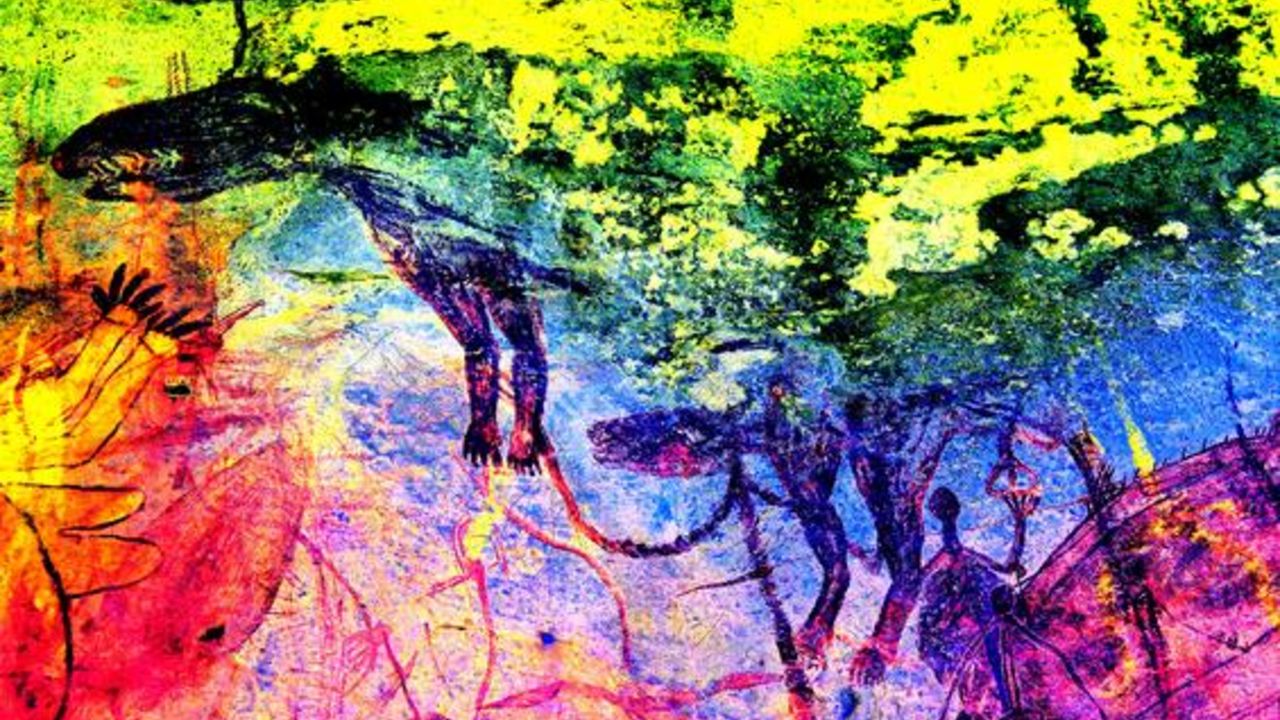
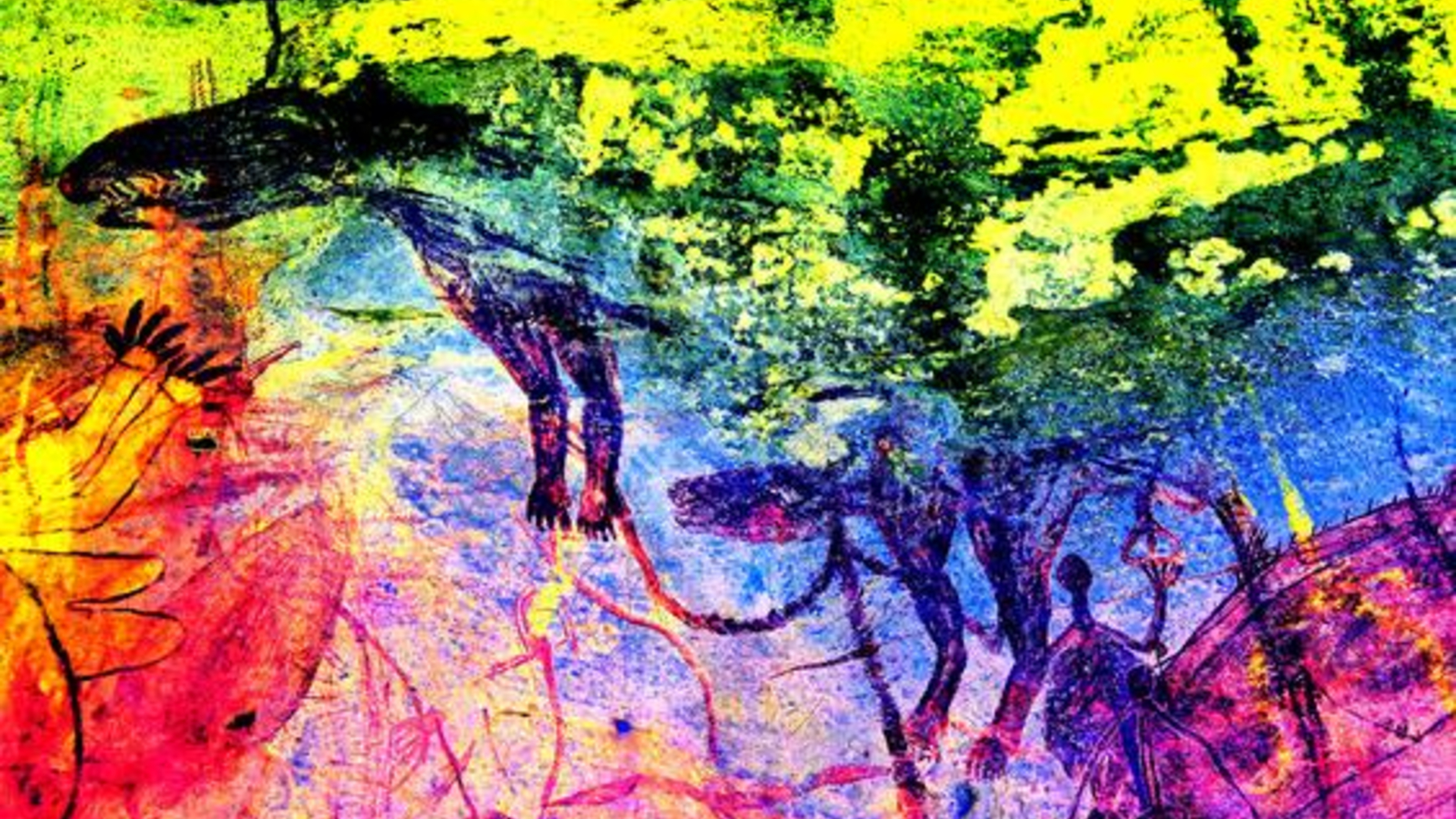
 A newly documented Tasmanian tiger rock-art image. Researchers used computer software to enhance its features. (Image credit: Craig Banggar) Share this article 0 Join the conversation Follow us Add us as a preferred source on Google Newsletter Sign up for the Live Science daily newsletter now
 Get the world’s most fascinating discoveries delivered straight to your inbox.
Become a Member in Seconds
Unlock instant access to exclusive member features.
Contact me with news and offers from other Future brands Receive email from us on behalf of our trusted partners or sponsors By submitting your information you agree to the Terms & Conditions and Privacy Policy and are aged 16 or over.You are now subscribed
Your newsletter sign-up was successful
Want to add more newsletters?
Join the club
Get full access to premium articles, exclusive features and a growing list of member rewards.
Explore An account already exists for this email address, please log in. Subscribe to our newsletterArchaeologists in Australia have discovered centuries-old Indigenous rock art depicting Tasmanian devils and the now-extinct Tasmanian tiger, a new study reports. The findings suggest that the Tasmanian tiger may have survived on the Australian mainland until much more recently than previously thought.
The team documented around 14 new rock-art drawings of the thylacine (Thylacinus cynocephalus), a carnivorous marsupial also known as the Tasmanian tiger, and two rock-art images of the Tasmanian devil (Thylacinus cynocephalus) in Arnhem Land, in northern Australia, the team said in a statement. The government of Arnhem Land is run by the region's Aboriginal people and, with a population of roughly 16,000 people, it has a relatively low population density with much of its environment preserved.
Article continues belowThe Tasmanian tiger may have survived on the Australian mainland until just under 1,000 years ago, according to the new study, published March 30 in the journal Archaeology in Oceania.
"The newly documented artworks — some of which may be less than 1,000 years old — raise the possibility that these species survived longer in northern regions than previously thought," the team wrote in the statement.
One painting, of a Tasmanian devil, was found in 2023 on a rock-art panel with figures of humans and other animals. The image of the Tasmanian devil is 1.3 feet (0.4 meters) long, with a painting of an eel-tail catfish (Tandanus tandanus) drawn over part of it, the researchers wrote in the study. It has a robust and short torso, a rounded head with "prominent whiskers," and dog-like back paws, they noted.
The other Tasmanian devil drawing was longer, at 2 feet (0.6 m), and has a slightly open mouth that shows its sharp, pointy teeth. It also has a fish painted over its legs.
Sign up for the Live Science daily newsletter nowContact me with news and offers from other Future brandsReceive email from us on behalf of our trusted partners or sponsorsMeanwhile, the Tasmanian tiger drawings show a dog-like animal with stripes, rounded ears and a long muzzle. The longest depiction measures 4.7 feet (1.4 m) in length Some of the drawings show the tiger with their stripes while others do not. This indicates that the ancient artists didn't always bother to draw the stripes, the researchers said in the paper.
One of the newly documented depictions of the now-extinct thylacine, also known as a Tasmanian tiger. The last known individual of this marsupial species died in 1936. (Image credit: Paul S.C. Taçon)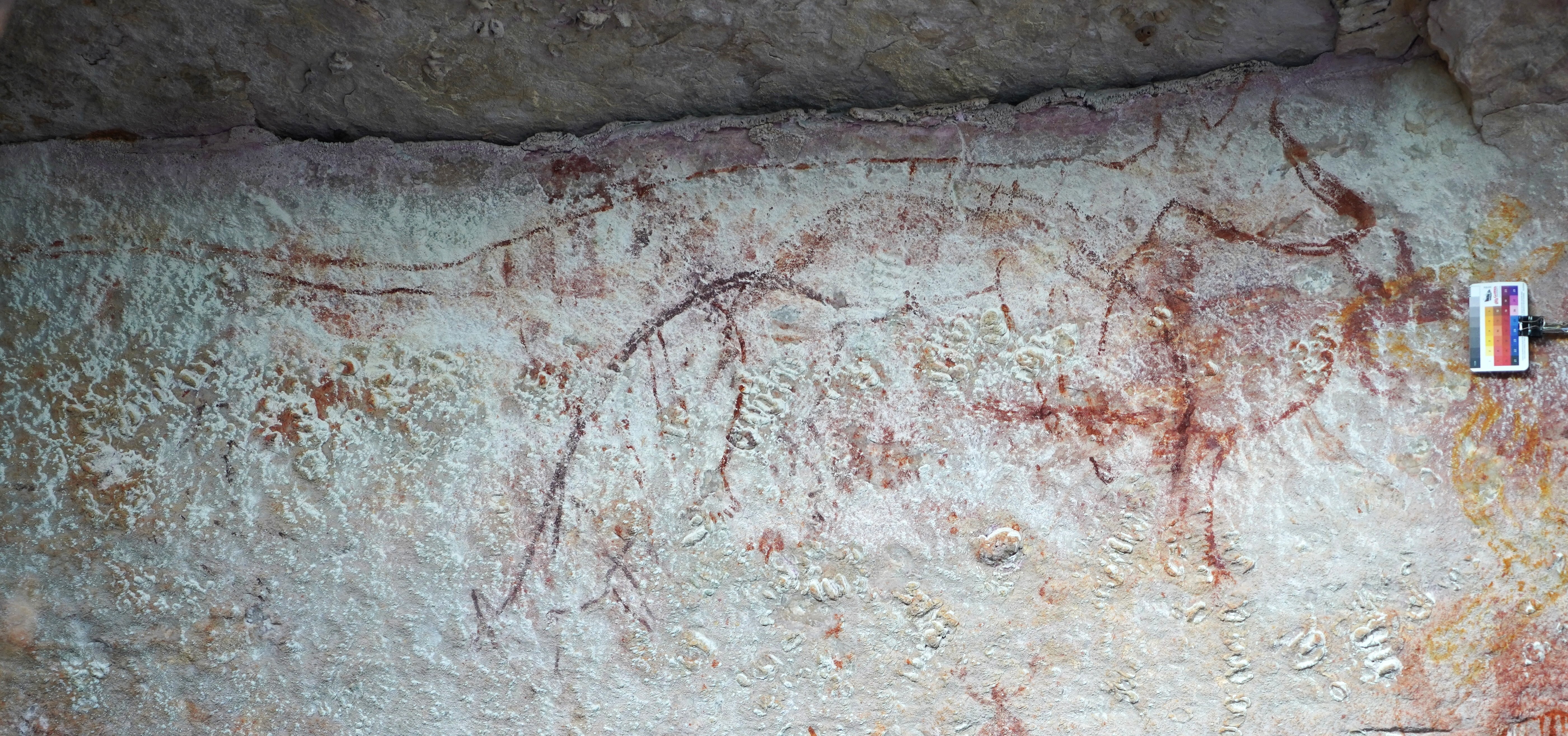
Some of the newly documented rock art shows Tasmanian tigers drawn with kaolin (also known as pipe clay), a white pigment that tends not to last as long as other colors, such as red ocher, the team wrote in the study. This raises the question of whether the people who drew some of these depictions may have lived in more recent times and actually saw a thylacine in northern Australia.
"The artists who made the more recent paintings may have seen actual living thylacines and some of these creatures may have survived longer in Arnhem Land," study first author Paul Taçon, a professor of anthropology and archaeology and the chair in rock art research at Griffith University in Australia, said in the statement. "Alternatively, artists may have been inspired by earlier paintings."
Recently documented rock art of a Tasmanian devil. The lower image has been enhanced with computer software. (Image credit: Paul Tacon)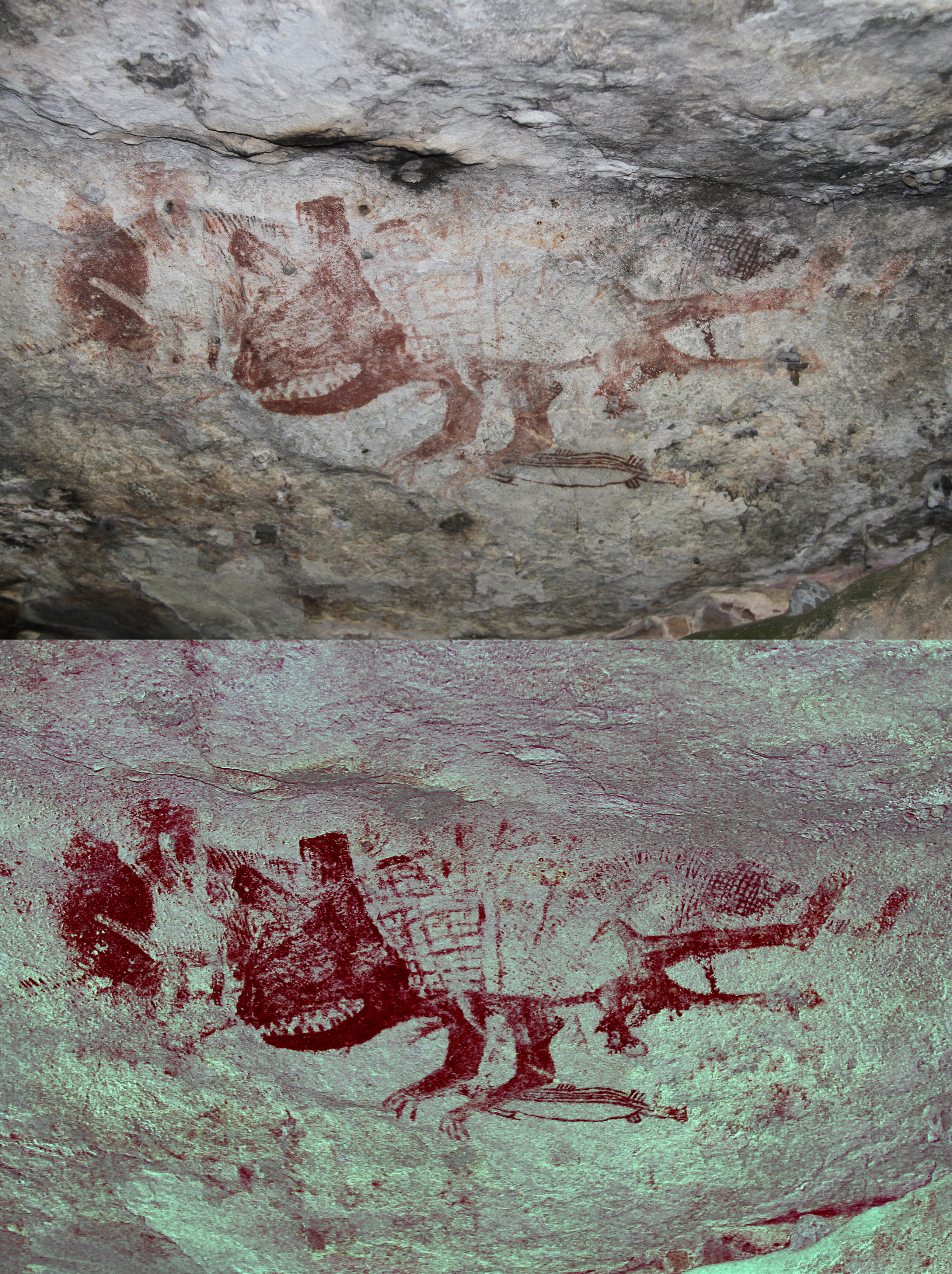
Cultural legacy
Prior to this research, there were about 150 verified rock-art drawings of Tasmanian tigers on the Australian mainland and 23 known drawings of Tasmanian devils. The difference in the number of "rock art depictions suggest thylacines were more widespread and more culturally important across mainland Australia than Tasmanian devils," the researchers wrote in the study.
The team is working with Aboriginal communities to further understand the importance the Tasmanian tiger and Tasmanian devil had for their ancestors. One of the study's co-authors, Joey Nganjmirra, is from an Aboriginal group known as the Djalama. He said in a video that some of the headdresses on people shown in the rock art near the Tasmanian tigers resemble headdresses that the Djalama use in modern-day ceremonies
RELATED STORIES—Mammoth RNA sequenced for the first time, marking a giant leap toward understanding prehistoric life
The oral histories of the aboriginal people say that the Tasmanian Tigers were, "pets of the Rainbow Serpent and lived in rock pools," the researchers wrote in the statement. Rainbow spirits are deities associated with creation and rainfall in aboriginal Australian beliefs.
Even today, the Tasmanian tiger "remains culturally important" for people in Oceana, Taçon said.
"The thylacine lives on in western Arnhem Land not as a ghost from the past but as a meaningful creature that still has present day relevance" the researchers wrote in the journal article.
Article SourcesTaçon, P. S. C., A.Jalandoni, S. K.May, J.Nganjmirra, and C.Mungulda. 2026. “The Devil Is in the Detail: Tasmanian Devil and Tasmanian Tiger Paintings From Awunbarna and Injalak Hill, Northern Territory, Australia.” Archaeology in Oceania. https://doi.org/10.1002/arco.70024
 Owen JarusLive Science Contributor
Owen Jarus is a regular contributor to Live Science who writes about archaeology and humans' past. He has also written for The Independent (UK), The Canadian Press (CP) and The Associated Press (AP), among others. Owen has a bachelor of arts degree from the University of Toronto and a journalism degree from Ryerson University.
View MoreYou must confirm your public display name before commenting
Please logout and then login again, you will then be prompted to enter your display name.
Logout LATEST ARTICLES 1'Something really big is going to happen': NASA's historic Artemis II mission approved for April 1 launch
- 2Pig semen molecule could deliver chemotherapy to hard-to-reach eye cancer, mouse study suggests
- 3'We are getting very, very close': NASA makes final Artemis II preparations as expectation grows for Wednesday launch
- 4Farthest, fastest and most diverse: 6 major records the Artemis II astronauts will smash as NASA returns to the moon
- 5Tudor Heart: A Renaissance gold necklace featuring a French-English pun on the love between Henry VIII and his first wife, Katherine of Aragon