Breaking space news, the latest updates on rocket launches, skywatching events and more!
Contact me with news and offers from other Future brands Receive email from us on behalf of our trusted partners or sponsors By submitting your information you agree to the Terms & Conditions and Privacy Policy and are aged 16 or over.You are now subscribed
Your newsletter sign-up was successful
Want to add more newsletters?
An account already exists for this email address, please log in. Subscribe to our newsletter The Moon and the Pleiades, a spectacular occultation: online observation – 19 April 2026 - YouTube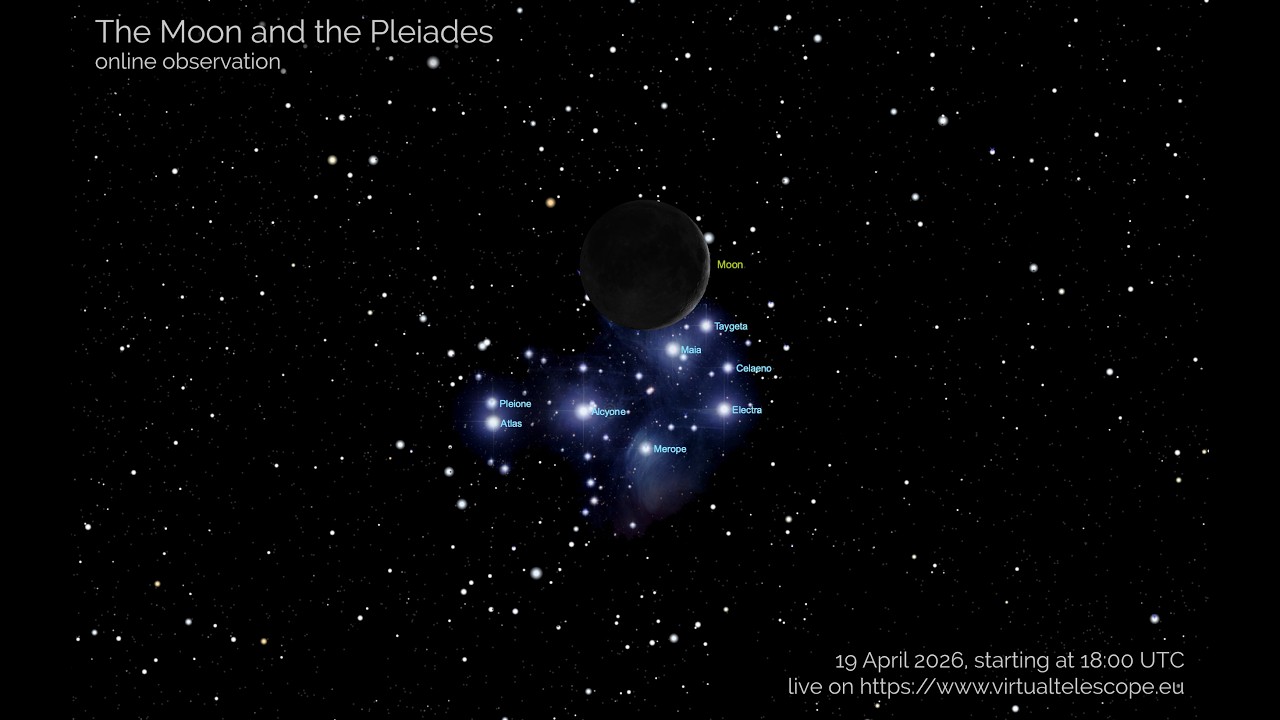 Watch On
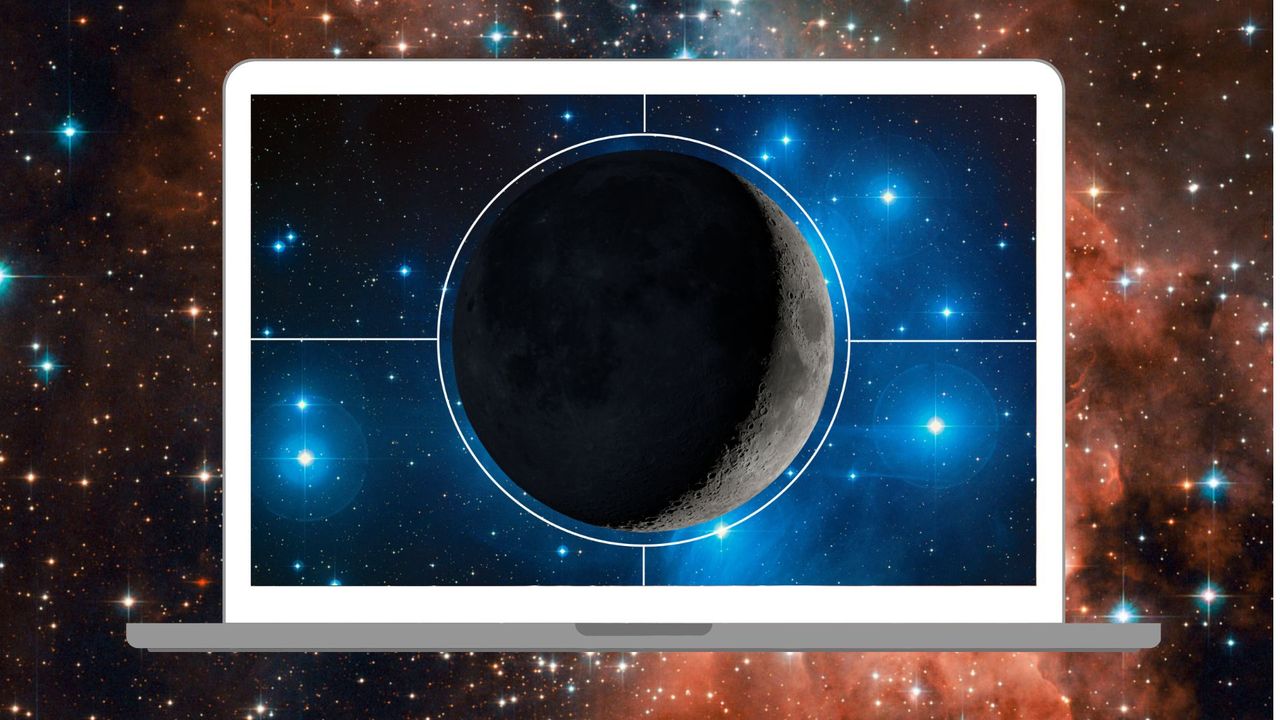
 Get ready for an amazing sight, as the waxing crescent moon passes in front of — and briefly occults —the blue-white stars of the Pleiades on April 19. Here's how to watch the alignment unfold in real time online with this Virtual Telescope Project livestream.
Viewers in Italy, on the other hand, will be perfectly positioned to witness the moon slip from the Pleiades in the hours following sunset, as the lunar disk arcs towards the western horizon, chasing the glow of the retreating sun.
When can I watch?
The Virtual Telescope Project's YouTube livestream will begin at 2 p.m. EDT (1800 GMT) on April 19, providing real-time telescopic views from its panoramic telescope as the crescent moon slips from the Pleiades in the skies over Italy, weather permitting.
"It will be a memorable sight involving our satellite, showing as a sharp crescent with its elegant 'earthshine' and one of the most iconic deep-sky gems, Messier 45," Virtual Telescope Project founder Gianluca Masi told Space.com in an email.
 Gianluca Masi
Gianluca Masi is a professional astronomer and founder of The Virtual Telescope Project, which provides access to several robotic telescopes, along with special events and other scientific outreach initiatives.
Earthshine occurs when sunlight bounces off our planet's cloudy atmosphere to strike the moon, bathing its unlit side in a subtle glow that can reveal the dark forms of lunar maria, vast plains where ancient lava once cooled and hardened into sweeping basaltic landscapes.
The occultation takes place just two days after the April 17 new moon. Earthshine is particularly easy to spot around this time and the relatively weak glow from the moon's sunlit crescent won't be enough to obscure the light of the Pleiades, as its stars — more than 1,000 in total —shine about 445 light-years away in the constellation Taurus.
Get the Space.com NewsletterContact me with news and offers from other Future brandsReceive email from us on behalf of our trusted partners or sponsorsEditor's Note: If you would capture a photo of the moon with the Pleiades and want to share it with Space.com's readers, then please send your photo(s), comments, and your name and location to [email protected].
 Anthony WoodSkywatching Writer
Anthony Wood joined Space.com in April 2025 after contributing articles to outlets including IGN, New Atlas and Gizmodo. He has a passion for the night sky, science, Hideo Kojima, and human space exploration, and can’t wait for the day when astronauts once again set foot on the moon.
View MoreYou must confirm your public display name before commenting
Please logout and then login again, you will then be prompted to enter your display name.
Logout MORE FROM SPACE... 1Synthetic universe allows you to 'see and hear' galaxies evolving from the dawn of time (video)
- 2Pragmata's tale of AI slop, humanity, & lunar conquest makes it the timeliest sci-fi game of the year
- 3How to see the Lyrid meteor shower 2026: Where to look in the night sky
- 4Artemis 2 and Tiangong space station astronauts set record for farthest distance between humans
- 5This Week In Space podcast: Episode 206 — I Want to Believe