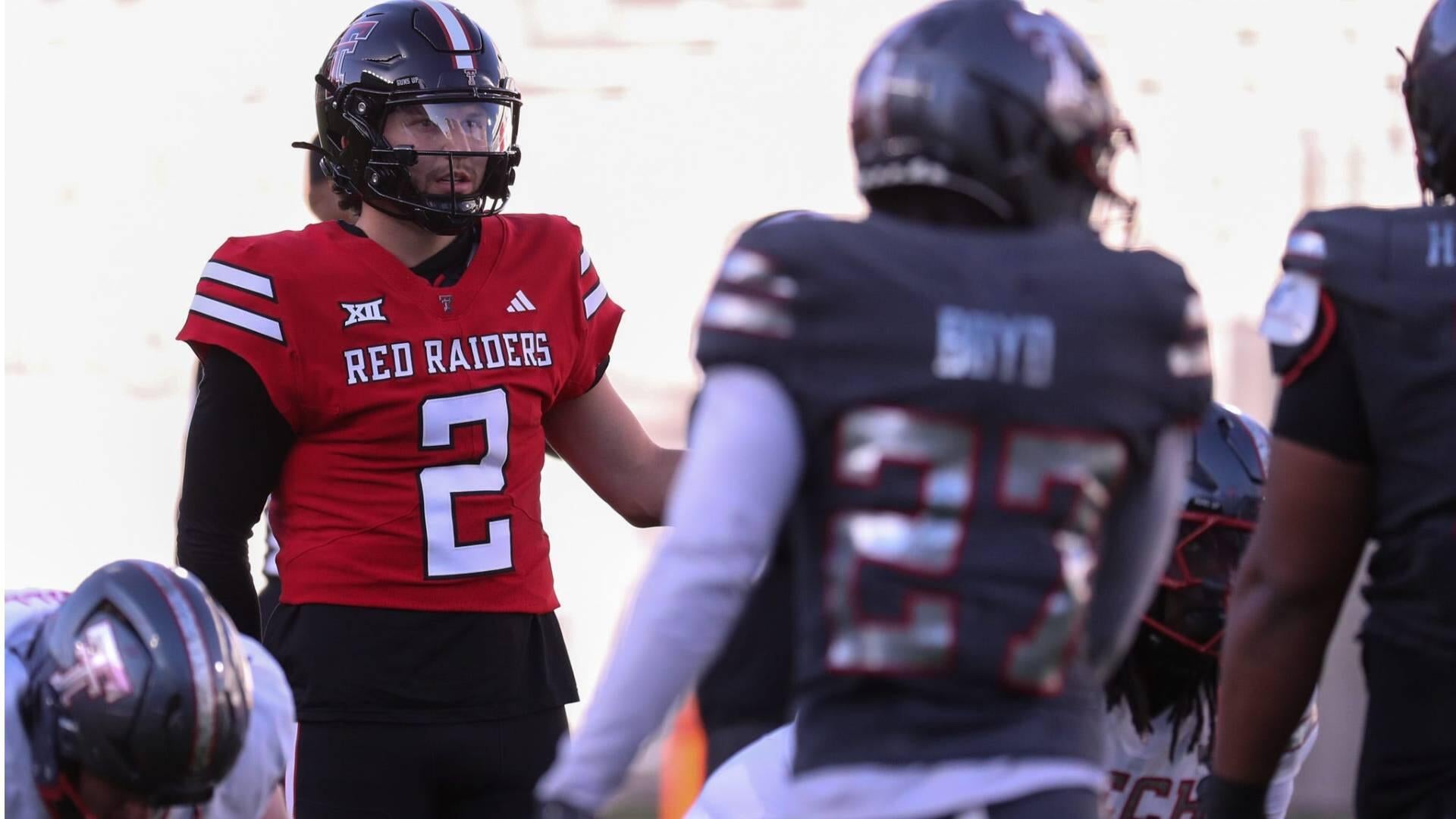
The Big 12 has gone radio silent. A meeting among athletic directors on Tuesday settled one thing -- only Texas Tech believes Brendan Sorsby should play this season.
As commissioner Brett Yormark calculates his next move and orders school leaders to remain silent, the pressure on Texas Tech is immense. The fallout could trigger a cascade of radical moves across college athletics.
The Big 12's athletic directors have drawn a line in the west Texas sand: the Red Raiders must pull their support of Sorsby, even after a Lubbock judge granted him a temporary injunction against the NCAA to play this season, despite his admission that he bet on the sport dozens of times.
Theoretically, the Big 12 can force Tech's hand with threats (though no one is seriously considering invoking a bylaw to kick Tech out of the league), and Yormark will consider his options after speaking to the league's presidents Thursday, but the onus is on Tech. Nothing is stopping the Red Raiders from ending this debacle by showing Sorsby the door.
The outrage among coaches, athletic directors and presidents is practically universal. Integrity is paramount to college athletics, and if Texas Tech and the Big 12 turn a blind eye to moral obligation, you can bet seismic changes within and outside the NCAA model are coming.
And the Big 12 is not equipped to handle those changes.
Georgia and Nebraska stood tall Monday and said they will no longer schedule Texas Tech, but it's only a warning shot, if not an empty threat. But what those proclamations reveal is a growing willingness among college leaders to make radical decisions as the House of NCAA burns to the ground. If the Big 12 and Tech are not careful, they might get burned, too.
Leaders are preparing for war if Tech plays Sorsby this season. The ideas pitched to me over the last two days have left my jaw on the floor. Blue-sky thinking? These feel more like nuclear winter.
The sport has become hyperbolic over the last six years, as administrators and the media have labeled nearly every court ruling against the NCAA an "inflection point." This time, the fallout feels different.
It feels real.
CBS Sports reported in May that the Big Ten and SEC are exploring self-governance models. It's not a clean breakaway from the NCAA, as it primarily focuses on streamlining an already-defined system, but it could pave the way for a deeper competitive imbalance if the Big 12 pours fuel on the fire.
What happens if the Big Ten raises the revenue-sharing cap within the House settlement terms? The gap between Big Ten programs and Big 12 programs -- already more than $40 million in average revenue -- would become insurmountable.
Forget about the Big Ten and SEC forming a Super League. If the Big 12 opts to ignore the foundational rules of the NCAA, what's stopping the other conferences from alienating the Big 12?
How would the Big 12 and ACC survive as power players if the Big Ten and SEC moved to conference-only football schedules? No more Big 12 vs. SEC/Big Ten games. Their media packages would dwarf anything the Big 12 and ACC hold, leaving both leagues to scrounge for scraps with the Group of Six until they met the Power Two in the CFP.
You want a 24-team playoff? Why would the Big Ten need it if it and the SEC send 12 teams to the postseason on their own terms?
These are hypotheticals, but ones brought up in conversation over the last two days as athletic directors consider the ramifications of allowing a confessed gambler -- one who bet on games involving his own team -- on the field. If Texas Tech refuses to see the world in black and white, there will be escalation in boardrooms and more radical thinking from the people who are usually the last ones to reach for a grenade.
Why is this different?
Leaders denounce the decisions, but they don't threaten to remove Ole Miss from the schedule because quarterback Trinidad Chambliss won an additional year after arguing in court that he missed a portion of a season due to a medical issue.
A Mississippi judge found the NCAA ignored its own medical evidence and acted in bad faith -- Chambliss wasn't asking for an exception to the rules; he was asking the NCAA to follow them. Curry's order makes no such finding. It cites breach of contract and hardship, grants Sorsby eligibility in part so he can make an informed decision about his NFL future, and does it all in four pages. One case corrected institutional failure. The other suspended the sport's most sacred integrity rule because a player had a draft deadline.
In the middle of the crosshairs is billionaire Cody Campbell, the chair of Texas Tech's board of regents and a deep-pocketed supporter. His approach over the last several years has been both holistic and contradictory. He wants to save college sports -- argue all you want about the details, but there are well-intentioned ideas within the "Protect College Sports Act" that he has helped fund with his own money. At the same time, he's funding record-breaking rosters at Texas Tech to ensure the program isn't left behind when the sport's next iteration takes shape, and media rights deals expire over the next five to 10 years.
The timing couldn't be more critical. The bill he helped push is moving through committee and could soon reach the Senate floor. The Big Ten and SEC already oppose it. Compound those philosophical disagreements with Tech's support of Sorsby, and the Red Raiders may soon find themselves an enemy of the state.
The fallout across college athletics could be immense.
I'm willing to bet on it.
Brandon Marcello is a senior college sports reporter for CBS Sports. You can follow him on X (@bmarcello).
Add CBS Sports on Google Join the Conversation comments