Curacao will become the smallest country to ever play at a FIFA World Cup this summer, and how they got there was far from conventional
 By Chuck Booth May 14, 2026 at 2:43 pm ET • 12 min read
 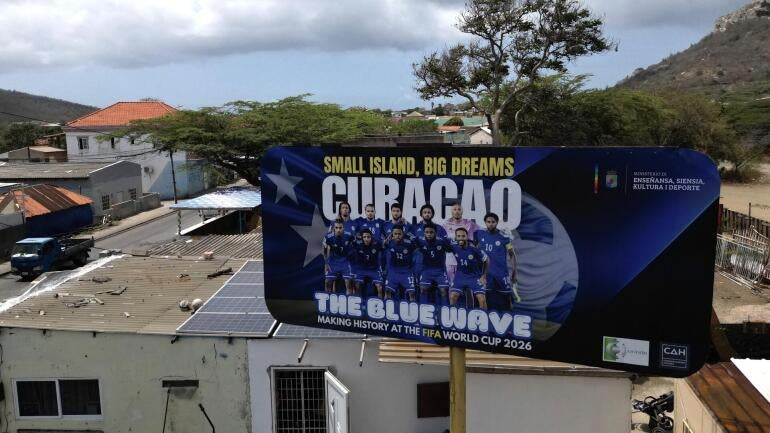 Getty Images
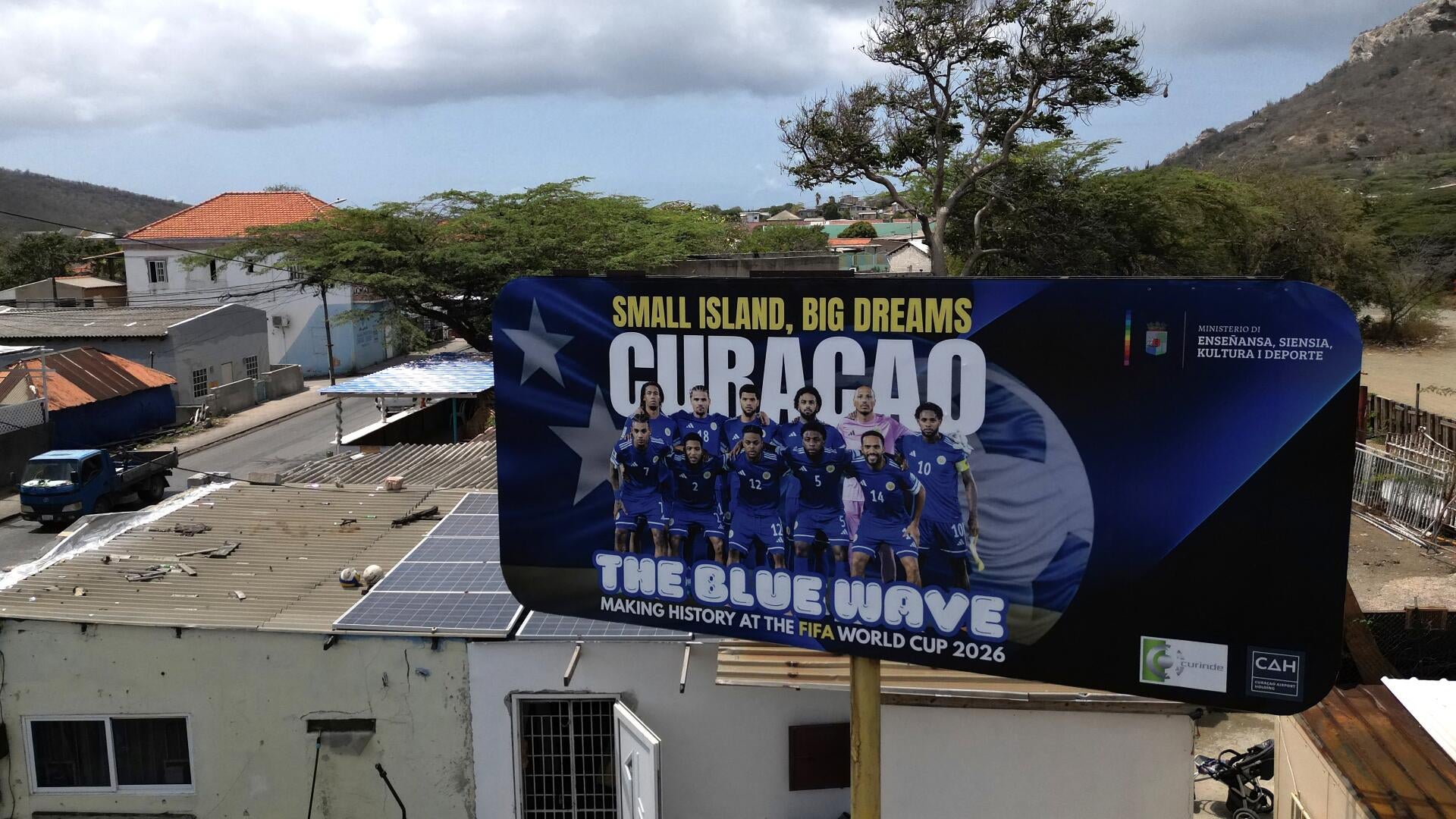
 WILLEMSTAD, Curacao -- The story of soccer in Curacao is a happy one. On November 18, a 0-0 draw with Jamaica sealed their qualification for the 2026 FIFA World Cup. The tournament is being held in the United States, Mexico and Canada, which meant that Concacaf's three biggest teams automatically qualified, opening up the door for some of the region's smaller nations. And while the biggest benefactors were expected to benefit sides like Jamaica and Costa Rica, it was Curacao who took advantage, winning their group and becoming the smallest nation to ever qualify for the World Cup.
Curacao's soccer journey really started in 2015 when a Dutch soccer legend, Patrick Kluivert, took the head coaching role. In the world of soccer, he wasn't a man who needed an introduction. A career spanning legendary clubs like Ajax, AC Milan and Barcelona, as well as over 70 appearances with the Netherlands national team, meant instant credibility. His tenure leading the squad may have been a short one, he left less than a year later, but it was impactful.
How the dual-national plan won over the skeptics
According to the Federashon Futbòl Kòrsou (FFK) president Gilbert Martina, Kluivert's time in charge was groundbreaking and opened the door for dual-national recruitment in the nation.
"Something changed when Patrick Kluivert became the coach because he opened the door for more professional players to choose to play for Curacao. Before that, it was a selection of mainly local players, and maybe three or four players from the Netherlands, which of course had no chance to succeed because professional football is another level," Martina said. "When Patrick came, some players chose to play for Curacao, Eloy Room, for example, and I remember at that time, there was a huge discussion on the island, why are you paying money to an external audience, because that's something we can do on our own, and that's a sentiment that we have."
Bringing Dutch players to Curacao wasn't always an easy sell, and not only on the player side. And Kluivert had to face down the resistance that Martina highlighted. He had an interesting way to deal with it. In 2016, he organized a friendly between players from abroad and the best that the island could offer. The local players lost 7-1.
That moment marked the end of those questions, and ten years later, now that the team has made it to the World Cup, no one is questioning where the players have come from. Room was there for that friendly, and now is the joint most-capped player in Curacao history.
When they signed up for the project, it was nothing but a dream. Now, it's been realized.
"Back then, when I made the decision, we were really at the beginning of the journey. It was not easy, but in the end, I always had confidence in us and also in the potential we had in Curacao," Room said. "I made the decision, and I never regretted it. There were tough times, but we also knew that we had to build something, and I had the confidence that we had the players and the potential to make it this far."
Room was part of a generation whose accomplishments in Curacao have paved the way for others. "The quality is going to be different right now," said Jurgen Locadia, another dual-national who made the jump. After starting his career in the Netherlands youth setup, Locadia played seven qualifiers for Curacao on their way to the World Cup. "The decision to make a switch from, let's say, if you play for the Netherlands youth teams, the conversation would be easier to have right now, to switch and play for Curacao. Like you see with Morocco, or like Suriname, Cape Verde, a lot of players are born in Holland, from those countries as well. So I think, with us qualifying, it makes the conversation easier."
An island uniting after a long colonial history
The local skepticism about Dutch players playing for Curacao is well-founded in the island's history. While Curacao gained a form of independence from the Netherlands in 2010 with the dissolution of the Dutch Antilles, the two countries are still closely and sometimes uncomfortably linked. Curacao is technically an independent country within the Kingdom of the Netherlands. Citizens receive Dutch passports, and the European nation is responsible for the military defense and foreign policy of the island that it ruled since the 17th century when Curacao became a hub in the colonial slave trade.
Those colonial roots have persisted across the centuries, persisting after a noted slave revolt in 1795, and the eventual abolishment of slavery within the Netherlands in 1863. Deep cultural divisions persisted across the island. Even today, around the capital of Willemstad you can see the difference between the part of the city historically inhabited by the Dutch and those areas which locals call home. That all said, as the nation reached independence, it has also managed to create one of the most welcoming places that I've ever set foot in. It's certainly easy to see the beauty in a country whose soccer team is called the Blue Wave, and it's no wonder that tourism remains their largest economic sector.
And the sports culture mirrors that journey. Soccer wasn't always king. Only a few years ago, it wasn't even a first-priority sport, as most on the island gravitated towards baseball. Names such as Kenley Jansen, Ozzie Albies, and Andruw Jones are still more known around the island than the current soccer team, but that is changing. In baseball, the best athletes from Curacao represented the Netherlands, so it's quite a reversal for the island to have Dutch dual-nationals coming the other direction.
And now, baseball will follow in the footsteps of soccer as Curacao will look to operate as an independent nation for the next World Baseball Classic. Across sports, an island that was once left to root for Brazil, Colombia, or the Netherlands, can now wear their own colors and cheer for their team.
Given all that history, is it any wonder that it took some time to get comfortable with the idea of Dutch dual-nationals?
Celebrating making it to the World Cup
That Curacao is so fully behind this version of the team is, in no small part, down to the respect that those like Locadia have shown their adopted soccer home. On the island of about 158,000, everyone knows one another and looks out for one another, and that's something that also extends to the national team players. Only one expected member of the World Cup squad may have been born on the island, but it doesn't mean that the current team doesn't understand and appreciate what Curacao has to offer and what it means to represent the Blue Wave at the World Cup.
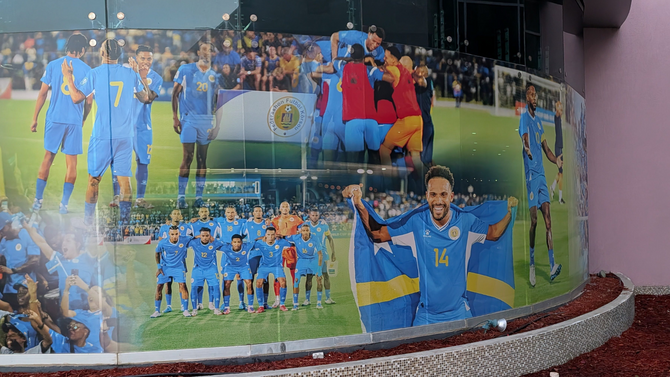 Chuck Booth
 "I feel honored to be a member of the squad," Locadia said. "I'm happy and grateful to represent Curacao. So I think the way we as a team show appreciation to the locals, I believe we are very humble, this team. We have conversations with the locals after the game, before the game, and when we have practice after practice, we take time for the locals. I think if we give them the respect, you're gonna receive the respect back."
Talking to people around Willemsted, about the team, they're just as likely to show you a picture of a member of the Blue Wave and share a fond memory of how they interact off the pitch as they are to break off into a story about where they were when Curacao qualified for the World Cup.
Curacao native Juni Obersi, who operates Step By Step to give tours of the island, summed things up succinctly. "Curacao has already won by making the World Cup."
That general feeling persists around the island. Even with the dual-national push, nobody expected the Blue Wave to be where they are. But then in November, when they capped off their unbeaten qualification campaign with that draw against Jamaica, everyone took to the streets in celebration, and it turned into a national holiday in the city.
It's not the World Cup without superfans, and when watching Curacao, you can't miss Brenton 'Curacao Captain Blue Face' Balentien, who is always, appropriately, covered in blue from head to toe. Growing up in soccer, he started to follow the team as a small kid before starting to paint his face in 2016, and everything kind of grew from there. Balentien's own journey mirrors that of the team as he'll now be one of the faces of their World Cup journey, and important representative for the island whose native-born population is only represented by a single player, Tahith Chong.
"My mind went blank, I was crying since the 80th minute, and then the penalty came and all the VAR thing [VAR overturned a late penalty that had been awarded on the field to Jamaica], and I think my heart stopped for like two seconds in the middle there," Balentien said about his own experience in Kingston and overcoming the final hurdle to qualify for the World Cup. "It was crazy, but when the final whistle came, it was pure joy, you see everything that you have been through and the glory days and the bad days, and finally we made it, it's pure joy."
A coaching carousel threatens stability
When Curacao qualified for the World Cup, they were led by Dick Advocaat, but due to the health of his daughter, he stepped down and was replaced by Fred Rutten, who was expected to lead the Blue Wave through the World Cup. Then things got messy. Rutten stepped down as well, with just a month to go until the World Cup, and the FFK has reappointed Advocaat to lead the squad for the World Cup.
At 78, Advocaat is set to make history in two ways: both as the oldest manager ever at a World Cup and as the first to lead three different nations at the World Cup, as he has done so with both the Netherlands and South Korea. This shift was one that the players reportedly caused, as they weren't happy with the tactics employed by Rutten during the March international window, which saw them lose to Australia and China, but now that that is behind them, everyone is ready to focus on the task at hand of performing and focusing on the World Cup.
"A lot of things have been going on in the past few days, but I think the most important thing is we need to make sure we can focus now on the World Cup, you know? Because it's like a month away, and obviously, it was a difficult situation," Room said. "We got a new coach [Rutten], and then, the old coach [Advocaat], there were rumors already that he wants to come back, but it's not easy for both sides. I think, like the most important thing for us as players is that we need to focus on the World Cup."
While the Blue Wave supporters may be happy to be here and the team is in a tough group alongside the Ivory Coast, Germany, and Ecuador, that doesn't mean that this journey isn't one without expectations. One eye is already on qualifying for 2030 and keeping this wave going, but that's not something that the players want to get too far ahead of themselves on with matches ahead of them.
Those expectations are exhibited around the island, as well as when speaking to the team. FFK president Martina, might be happy with this success, but his eyes are already on getting a result against Germany and going from there.
"Germany, we should not lose it. That's very important," Martina said. "You know the bible story, David and Goliath? Four-time world champion, 82 million people versus 155,000, so against all odds, but I was happy at the draw in Washington on December 5th when I saw Germany, and I'll tell you why, because the best game to play against Germany is the first game, because they're a team who will get better as the World Cup goes on."
While looking to pull off that result, the Blue Wave will also look good doing it as they have one of the best jerseys of the World Cup, although it was quite a process to get there. During the 2022 World Cup, you may remember Canada playing in plain black and red jerseys instead of the fresh new designs that most teams will sport. That's because most of the larger nations can take two years to get their World Cup designs set, an expense that can't always be afforded when a team, like Canada in 2022, doesn't know if they'll qualify for the World Cup.
Curacao's design process didn't start until the day after qualifying, but being the smallest nation to ever qualify, Adidas wanted to make sure that they had the best that they can get for the World Cup and knocked the design out of the park although it now means that the World Cup jersey won't be available until late May in the lead up to the tournament, despite how desired it is around the soccer world.
What comes next?
Getting to the World Cup and doing well is one thing, but if they're going to qualify again in 2030, the commitment to soccer needs to continue. Only a few years ago, the pitch at the national stadium, the Ergilio Hato Stadium, was redone, and facilities have improved, but watching the youth at C.R.K.S.V Jong Holland kick a ball around as the sun sets over the island, they'll be the future of the soccer in this country.
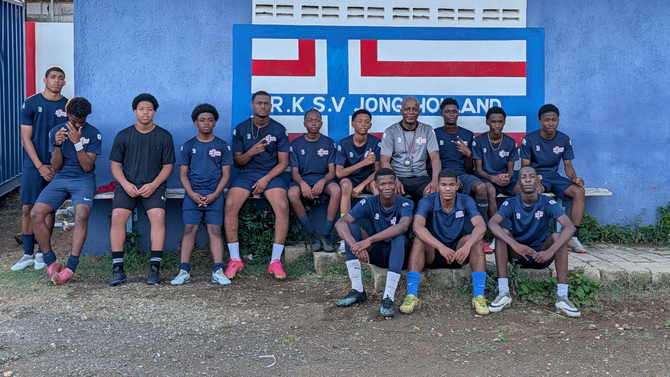 Chuck Booth
 For this project to be a true success, in 10 years time, more players born in Curacao will need to be in the squad. That doesn't mean doing away with dual nationals, as there's a balance with both, but when trying to contextualize what it means to qualify, it means that stage one of making it to the greatest soccer show in the world is done, but there are levels to this that the players understand.
"I think it's also going to help with the development of soccer in general in Curacao," Room said. "Obviously, a lot of eyes are coming to Curacao, and also more money is coming in with sponsors and stuff, so it's a big thing, and the soccer has to develop, it has to be better, the facilities have to be better, but I think this is really gonna boost it and hopefully it will help the infrastructure of the football in Curacao."
With a country united, both travelling to the United States to follow the team and also watching on big screens back at home, the World Cup is an event that will hold the attention of the island like never before, and that's one of many reasons why soccer is such a beautiful sport.
Join the Conversation comments