When it comes to the NFL offseason, June 1 is one of those dates that gets thrown around a lot, but not everyone knows what it means, so let's break it down.
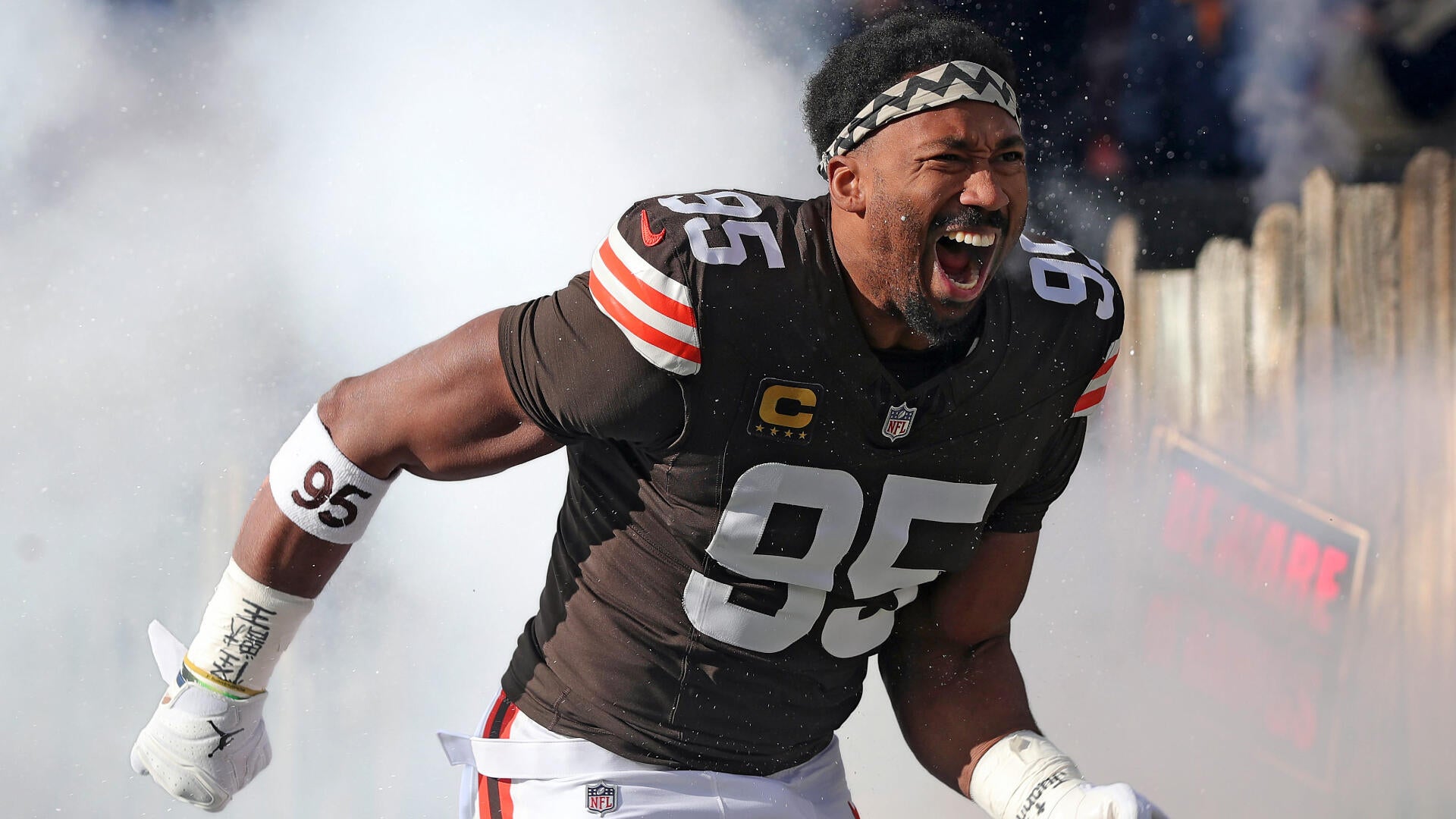
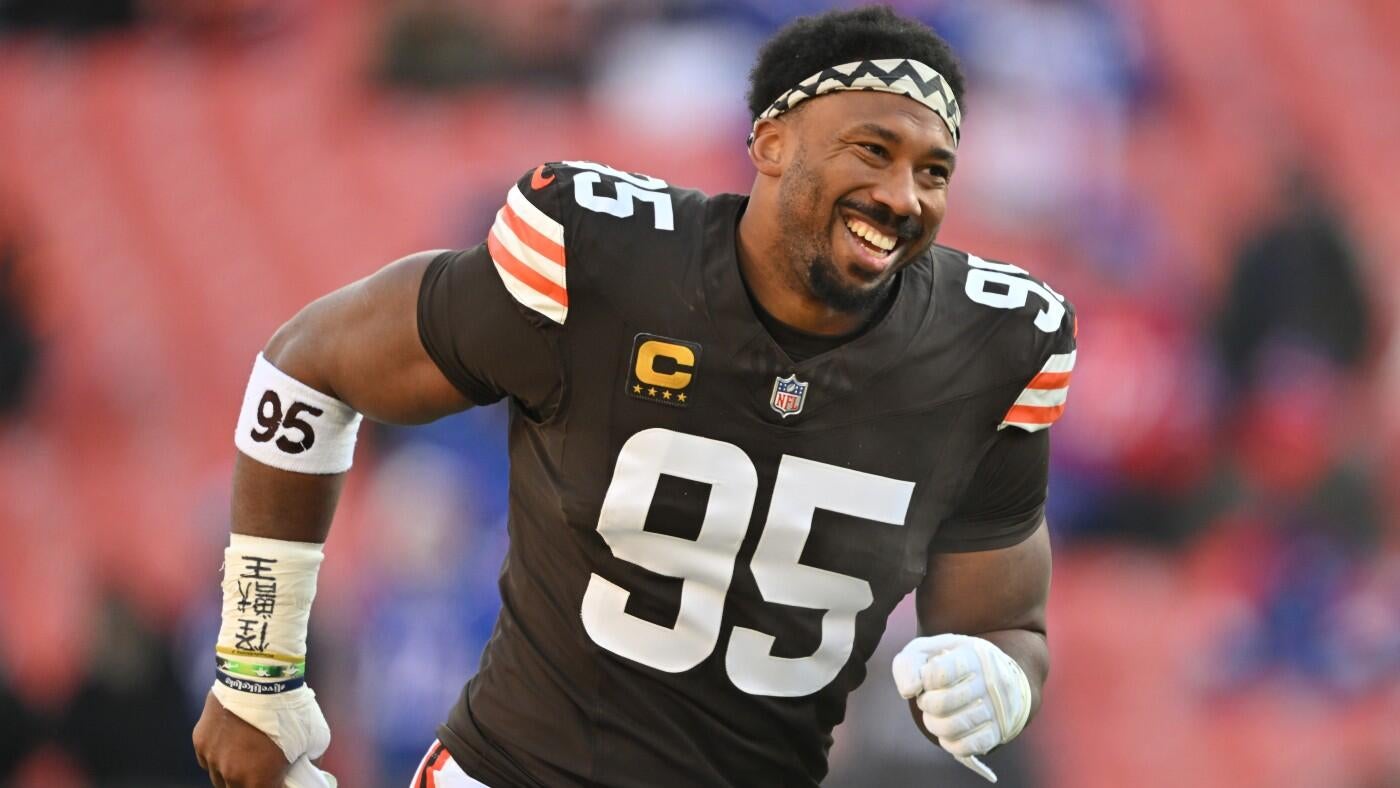
Not only is it a date that frees up salary cap space, but it also opens the door for blockbuster trades, and we saw that firsthand when the Los Angeles Rams acquired Myles Garrett in a massive trade with the Cleveland Browns.
The Browns will receive Jared Verse, a 2027 first-round pick and more, CBS Sports Lead NFL Insider Jonathan Jones has reported.
The Browns had to wait until June 1 to trade Garrett due to the massive salary cap implications, and we'll circle back to that. But first, let's go over why June 1 is such a key date.
Myles Garrett traded from Browns to Rams as Los Angeles goes all in for Super Bowl run Jonathan Jones
The importance of June 1
During the offseason, each NFL team is allowed to cut up to two players with a post-June 1 designation. When this designation is used, a team cuts a player but doesn't gain any cap space at the time of the move. So if a player gets released in March with a post-June 1 designation, the team doesn't gain any cap space until after June 1. Not only does the team gain cap space at that point, but the player's salary cap hit can also be spread over two years.
Let's look at Tua Tagovailoa as an example of how this works. The Dolphins quarterback was cut by Miami in March with a post-June 1 designation. If the Dolphins had not used the post-June 1 designation, they would have had to absorb Tua's entire dead cap hit of $99.2 million in 2026. However, because they gave him the post-June 1 label, they get to spread it over two years (2026 and 2027) with hits of $67.4 million in 2026 and $31.8 million in 2027.
Thanks to the NFL's post-June 1 designation rule, a total of five teams will pick up at least $5 million in cap space at the end of the NFL's business day on June 1, and seven teams will pick up at least $2 million. Since these teams are gaining cap space from players they cut in March, it's like finding money in your couch cushion two months after you left it there.
So who gained the most cap space? Glad you asked. We've listed each team below, along with how much cap space it gained and who it got rid of to gain it (all numbers via Over the Cap).
- Dolphins: $21.1 million (Bradley Chubb and Tua Tagovailoa)
- Vikings: $12.5 million (Jonathan Allen and Harrison Smith)
- Packers: $11.5 million (Brandon McManus and Nate Hobbs)
- Broncos: $8.2 million (Dre Greenlaw)
- Cardinals: $5.1 million (Kyler Murray)
The Dolphins had just $1.8 million in salary cap space right after the draft, but they'll now have some breathing room as soon as that $21.1 million in cap savings hits their account on June 2.
The Browns and Falcons also added cap space, but they didn't quite hit the $5 million mark.
- Browns: $3.4 million (David Njoku and Wyatt Teller)
- Falcons: $2.1 million (Kirk Cousins).
Those seven teams will add more than $60 million in combined cap space. Not only does June 1 help teams that are waiting for extra cap space, but it also opens the door for more trades.
Why June 1 helped the Garrett deal get done
The Browns surprisingly restructured Garrett's contract back in March in a move that didn't really benefit him, but it did benefit the Browns. The revised deal made it much easier for the Browns to trade Garrett, and they ended up doing just that on Monday.
From a salary cap standpoint, here's why a trade was now possible (via Over the Cap):
- Under Garrett's revised deal, the Browns would have taken a $41.09 million dead cap hit if they traded him before June 1. However, after June 1, the Browns are allowed to spread the cap hit over two seasons. In this case, that means they'll take a dead cap hit of $15.53 million in 2026 and about $25.56 million in 2027.
- Those are far more manageable figures, which is why they made the trade now. The Browns and Rams can't finalize the deal until the end of the business day on June 1, so the trade won't officially go through until sometime after 4:01 p.m. ET on Monday.
We broke down Garrett's full contract situation earlier this offseason, and you can check it out here. Even though the Browns put themselves in a position to trade Garrett, it was still a massive shock to see them make the move on Monday.
Why June 1 has been holding up a potential A.J. Brown trade
We've been hearing a lot about June 1 when it comes to A.J. Brown, and it's the same principle here. The Eagles would take a dead cap hit of $43.4 million if they traded Brown before June 1, but starting on June 2 (or technically 4:01 p.m. ET on Monday), the Eagles would be able to spread the dead cap hit over two seasons if they traded him. The hit would be $16.35 million in 2026 and $27.1 million in 2027.
From a salary cap perspective, it would make zero sense for the Eagles to trade Brown before June 1, but now that June 1 is here, look for the Eagles to deal him in the very near future.
There are several other notable players with contracts that will be easier to trade now that June 1 is here, so let's take a look at the biggest name on the list.
Agent's Take: The Eagles and A.J. Brown are headed for a split. Here's what comes next Joel Corry
June 1 trade candidate: Alvin Kamara
Let's start with Alvin Kamara. Back in March, Kamara restructured his deal with the team. The Saints took Kamara's $10.155 million base salary for 2026 and converted it into a signing bonus, allowing them to spread the cap hit over five years. This lowered Kamara's 2026 salary cap hit from $18.63 million to $10.45 million, but it didn't add any guaranteed money for the running back, so there was no upside for him.
For the Saints, not only did they pick up more than $8 million in cap space, but the restructure also made it easier to trade or cut Kamara this year, provided the move happens after June 1. If the Saints were to release Kamara before June 1, they would take a $24.40 million dead cap hit. However, if they cut him after June 1, they would take only a $10.07 million dead cap hit and actually save $376,000 against the cap.
If the Saints were to trade Kamara after June 1, they would pick up $3.38 million in cap savings, so moving on from Kamara after June 1 -- whether through a trade or release -- becomes a plausible option thanks to the restructure. We came up with a few landing spots for Kamara, and you can check those out here.
The bottom line is that now that June 1 is here, the Myles Garrett trade and the soon-to-be A.J. Brown deal might not be the only big trades we see this summer.
Add CBS Sports on Google Join the Conversation comments