
Technology
Trump administration sues three states over attempts to regulate prediction markets April 2, 20263:54 PM ET

An app for Kalshi, an online prediction market site, is shown on a phone. Multiple states have tried to block the company from operating, citing state gambling laws. But the federal government has sued to block those state laws to allow Kalshi and other prediction markets to operate. Scott Olson/Getty Images hide caption
toggle caption Scott Olson/Getty ImagesThe Trump administration on Thursday filed lawsuits against three states, arguing that the controversial prediction market industry should be solely regulated by the federal government, not by state gambling commissions.
The trio of legal actions against Illinois, Connecticut and Arizona is the furthest Trump officials have gone to try to override state laws and set the rules for a fast-growing industry that has run headlong into thorny questions about insider trading and profiting off war and suffering.
For months, Trump officials have voiced support for the prediction market industry, but experts say the federal suits represent a sharp escalation.

Technology
2 young billionaires are behind the prediction market boom. They hate each other
"This is not just telling the court what their views are, but trying to put a thumb on the scale for prediction markets," said Todd Phillips, a Georgia State University professor who focuses on financial regulation.
A wave of litigation has followed the gangbusters growth of leading prediction market sites Kalshi and Polymarket, which insist they are not gambling operations, but rather exchanges that let people place bets on the outcome of future events.
That position has riled states, including the three sued on Thursday, which say Kalshi and Polymarket are nothing more than unlicensed gambling sites that circumvent state laws and do not pay gaming taxes paid by competing services like DraftsKings, FanDuel and other online sportsbooks. Arizona filed criminal charges against Kalshi last month, alleging that it was violating state gaming laws.

Technology
Arizona AG files criminal charges against Kalshi over 'illegal gambling'
The Trump administration sees things differently. It argues prediction market sites are a somewhat obscure financial product known as a "swap," a derivatives contract in which people can wager money on future events. The three lawsuits filed on Thursday on behalf of the Commodity Future Trading Commission ask federal courts to declare that states have no business regulating these kinds of financial markets.
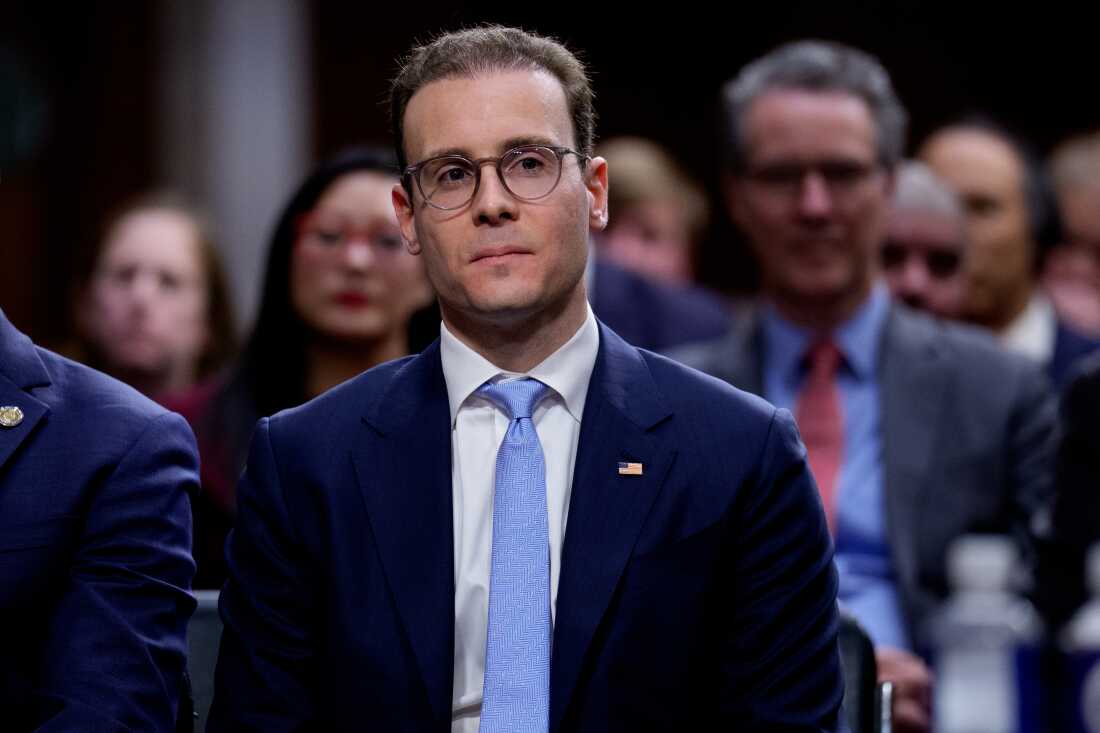
Michael Selig, seen here testifying ahead of his November 2025 confirmation hearing to lead the Commodity Futures Trading Commission, has emerged as a strong ally of the prediction market industry. Andrew Harnik/Getty Images hide caption
toggle caption Andrew Harnik/Getty Images"The CFTC will continue to safeguard its exclusive regulatory authority over these markets and defend market participants against overzealous state regulators," CFTC Chairman Michael Selig said in a statement.
Georgia State University's Phillips said the lawsuits just add to the flurry of pending federal cases, some of which are likely to eventually reach the Supreme Court.
"And the central question will be do prediction markets fit the definition of finance, or gambling?" he said. "I think it's very hard to say they are finance, but courts could come down differently."

Business
They quit their day jobs to bet on current events. A look inside the prediction market mania
People are betting billions of dollars a week on Kalshi and Polymarket. While the majority of betting on the apps is sports-related, they also allow wagers on what words President Trump will say, the outcome of elections and political developments, such as which White House official will be next ousted by the president.

Up First from NPR
Bet on Anything, Everywhere, All at Once
Donald Trump Jr., the president's son, has been a longtime advocate of prediction markets and is an advisor to both Kalshi and Polymarket.
Polymarket, which operates a sports-only exchange in the U.S. and a much larger one overseas in Panama, has had markets on military strikes in Iran, the extent of famine in Gaza and whether a nuclear detonation will take place.
After traders made hundreds of thousands of dollars on markets related to military strikes in Venezuela and Iran, lawmakers in Washington have been sounding the alarm, pushing legislation to ensure that U.S. officials and military personnel cannot profit off of classified government intelligence.
Controversies notwithstanding, Kalshi and Polymarket continue to lock in partnerships with news organizations and financial services firms, as tens of millions of users around the world flock to the lightly-regulated sites.
Amanda Fischer, former Securities and Exchange Commission chief of staff who is now the policy director at advocacy group Better Markets, said prediction market sites Kalshi and Polymarket are increasingly becoming mainstream by using the playbook harnessed by the cryptocurrency industry.
"Which is framing their disruption of industries as a technological disruption when I would characterize it more as just a legal disruption," Fischer said. "They're willing to take more legal risk and break the laws and essentially take the 'catch me if you can' approach," she said. "And they want to develop enough incumbency, enough customers, enough profitability and political power that the law is bent to fit their business model."
Representatives from Kalshi and Polymarket declined to comment.