Asia
U.S., South Korea and Japan to hold drill as North Korea ramps up pressure on U.S. August 28, 20261:46 AM ET
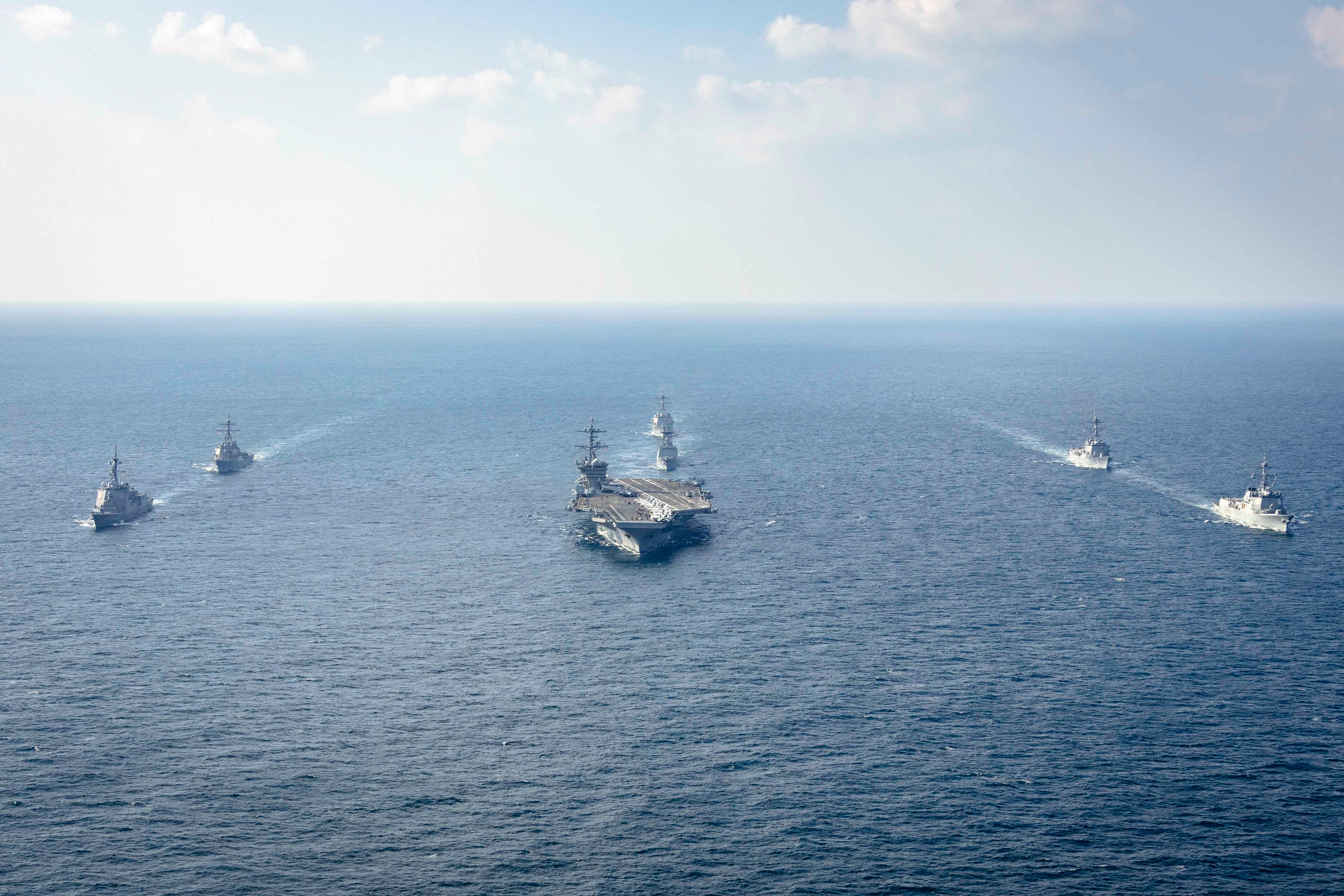
FILE - In this photo provided by South Korea Defense Ministry, warships of South Korea, the United States and Japan including the USS George Washington aircraft carrier, bottom center, take part in the trilateral Freedom Edge exercise in international waters off South Korea's southern island of Jeju, on Nov. 13, 2024. South Korea Defense Ministry via/AP hide caption
toggle caption South Korea Defense Ministry via/APSEOUL, South Korea — South Korea, the U.S. and Japan will go ahead with a trilateral military drill next month to better deal with North Korean nuclear threats, officials in Seoul said Friday, a day after North Korea vowed to retaliate against what it called U.S. hostilities.
Asia
Trump orders Pentagon to scale back joint military exercises with South Korea
The development further dims prospects for an early resumption of diplomacy between North Korea and the U.S., despite President Donald Trump's recent decision to scale back a major bilateral military drill with South Korea in an apparent goodwill gesture toward the North.
South Korea's military said in a statement the Freedom Edge exercise will start on Sept. 7 for a five-day run in the waters off South Korea's southern Jeju Island.
It said the exercise is defensive in nature and meant to respond to North Korean nuclear and missile threats as well as promote regional peace and stability.
North Korea has previously slammed the trilateral drill as a "reckless show of strength" that showed its adversaries' confrontational stance against it. Pyongyang has also said the drill contained a U.S. intention to lay siege to China and exert pressure on Russia.
The Freedom Edge drill, a U.S.-South Korea-Japan exercise, was launched in 2024. It's designed to increase the sophistication of previous exercises with simultaneous air and naval drills geared toward improving joint ballistic missile defense, anti-submarine warfare, surveillance and other skills and capabilities.
Last week, the U.S. and South Korean militaries ended their annual Ulchi Freedom Shield exercise six days earlier than originally planned, after Trump said he had ordered the Pentagon to "substantially reduce" the drill that North Korea views as an invasion rehearsal. Trump cited what he described as a good relationship with North Korean leader Kim Jong Un.
But North Korea rebuffed Trump's overture, saying just shortening the drill won't change its "provocative, aggressive nature." North Korea launched about 10 short-range ballistic missiles toward the sea, apparently delivering on its previous threat to respond to the U.S.-South Korean drill.

World, reordering
South Korea ditches 'denuclearization-first' strategy. What will Pyongyang do next?
Pyongyang has previously said it won't resume diplomacy with the U.S. unless it drops its demand for a North Korean denuclearization as a precondition for talks.
Since his earlier diplomacy with Trump collapsed in 2019, Kim has boosted his military and diplomatic credentials by enlarging his nuclear arsenal and aligning with Russia over its war against Ukraine. With greater leverage now, experts say Kim would likely aim to win big U.S. concessions like an international recognition of North Korea as a nuclear state and sweeping sanctions relief in return for a partial surrender of his nuclear arsenal.
On Thursday, North Korea's Foreign Ministry accused the U.S. of engaging in "a series of hostile moves" targeting the North, including a possible sale of air-to-air missiles and related equipment to South Korea. It said North Korea "will make a serious, immediate and powerful response to the hostile acts in different spheres."
NPR does not offer or accept money for coverage or interviews. Anyone who makes such an offer or request is not an NPR employee and does not represent NPR.