 Image source, ReutersByTabby Wilson
- Published28 June 2026, 00:06 BST
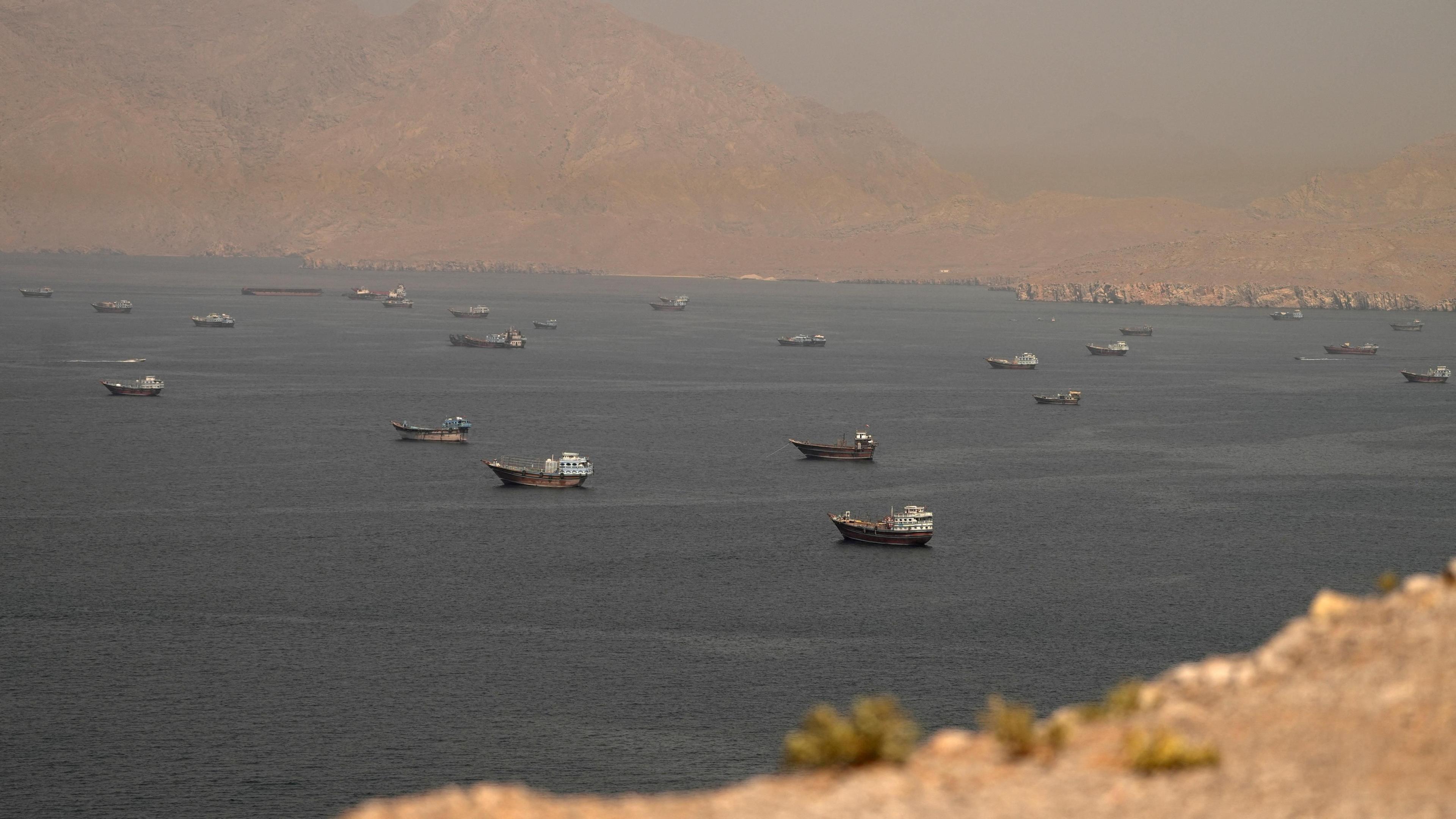
The US has conducted new strikes on Iran, following a drone attack on a Panama-flagged vessel in the Strait of Hormuz on Saturday.
US Central Command (Centcom) said it hit multiple targets across Iran in direct response to "continued aggression" against commercial shipping.
In retaliation, Iran's Islamic Revolutionary Guard Corps (IRGC) said it has launched missiles and drones at US infrastructure in Kuwait and Bahrain, in a statement shared to state media.
It warned that violating the ceasefire is against the agreement signed between the two nations and "will lead to a complete halt to the process".
Centcom said in a statement, "Iran was given a chance to honor the ceasefire agreement but elected not to when its forces launched a one-way attack drone that hit MT Kiku," a Panama-flagged tanker.
In response, it said it had hit military equipment, communication systems, air defense sites and drone storage facilities.
In the IRGC's statement, it said the US had attacked five coastal posts in Iran under what it called "the pretext of the IRGC Navy confronting the offending ship".
It said that under the Memorandum of Understanding signed earlier this month, Iran has arrangements for controlling passage and navigation in the Strait of Hormuz, and from now on, violating ships will be dealt with more forcefully than in the past.
"Any potential enemy aggression, under any pretext, even if the aggressions are against minor targets, as happened last night and tonight, will have a crushing response," read the statement.
Shortly after the latest strikes were announced, the US president took to Truth Social, where he said was it was "very possible" that Tehran would "never learn".
"There may come a point when we are no longer able to be reasonable, and will be forced to militarily complete the job that we very successfully started," he wrote on Saturday evening.
The post went on: "If that happens, the Islamic Republic of Iran will no longer exist!"
In the hours following the US strikes, Kuwait and Bahrain both reported that their air defence systems had been activated.
"Kuwaiti air defenses are currently confronting hostile missile and drone attacks," the Kuwaiti Armed Forces said in a statement shared to X, asking the public to adhere to security instructions.
Bahrain's Ministry of Interior has urged citizens to "remain calm and head to the nearest safe place".
Centcom has said that commercial vessels are continuing to operate in the Strait of Hormuz.
The latest strikes come less than a day after the US launched retaliatory strikes on Iran that it said were in response to a drone attack on Singapore-flagged cargo ship, MV Ever Lovely, on 25 June.
Centcom described the American strikes as "a powerful response" to the attack on the cargo ship, adding that the "unwarranted aggression against commercial shipping by Iranian forces clearly violated the ceasefire".
Tehran said the cargo ship was attacked because it was using an unauthorised route to transit through the Gulf waterway, and said that the retaliatory strikes qualified as a ceasefire violation by the US.
In a statement released on Saturday morning, Iran's foreign ministry said it had carried out more strikes against targets linked to American forces in response, and blamed the "treaty-breaking US regime" for the situation.
The US and Iran agreed on 17 June to end hostilities under a 14-point memorandum of understanding, which had also called for Iran to use its "best efforts for the safe passage of commercial vessels with no charge for 60 days".
The Strait of Hormuz is a key waterway for oil and gas shipments, and was effectively closed by Tehran after the US and Israel launched attacks on Iran at the end of February.
The shutdown of the critical channel caused a spike in global oil prices and prevented shipments of other crucial commodities such as fertiliser.
US-Iran memorandum of understanding in full
- Published18 June
In recent days, Trump and other US officials insisted negotiations with Iran were progressing well, saying Iran had given up any suggestion of tolling vessels transiting through the Strait of Hormuz.
In a Truth Social post on Wednesday, Trump said Iran had informed the US that there would be "no tolls, no insurance costs and no other charges of any kind being sought or received".
"If this is false information, negotiations would end, immediately," he added.
The US has condemned reports that Iran is charging fees to tankers going through the strait, and many see any tolling system as breaking with international maritime law.
On Tuesday, Iranian and Omani officials held talks in Oman's capital of Muscat to discuss "the future management of navigation", although Omani Foreign Minister Badr Al-Busaidi said both countries were committed to "toll-free safe passage".
However, Iran's chief negotiator, Mohammed Bagher Ghalibaf, told state-affiliated news outlets that "everyone should know that the administration of the Strait of Hormuz will never go back to the way it was before the war."
Related topics
Trump accuses Iran of ceasefire breach after Strait of Hormuz attack
- Published1 day ago
UN pauses Strait of Hormuz evacuation plan after cargo ship attacked
- Published1 day ago
Israel and Lebanon sign framework agreement after US-brokered talks
- Published1 day ago