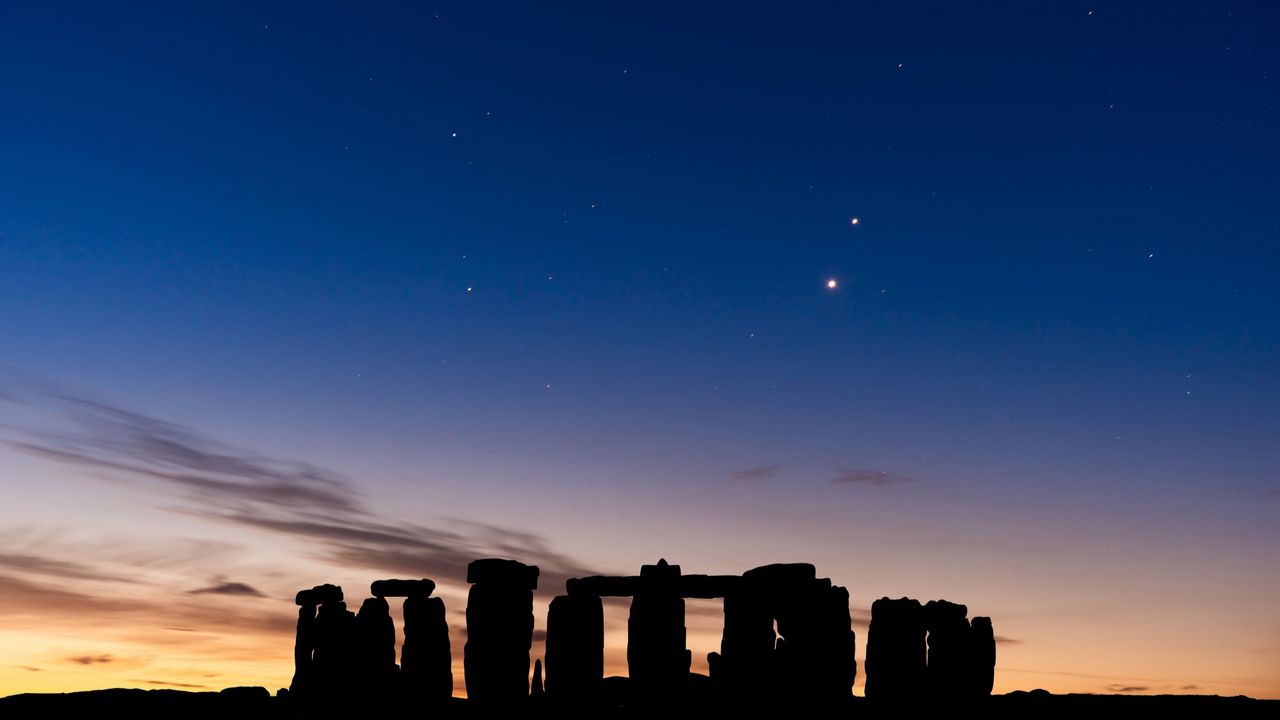
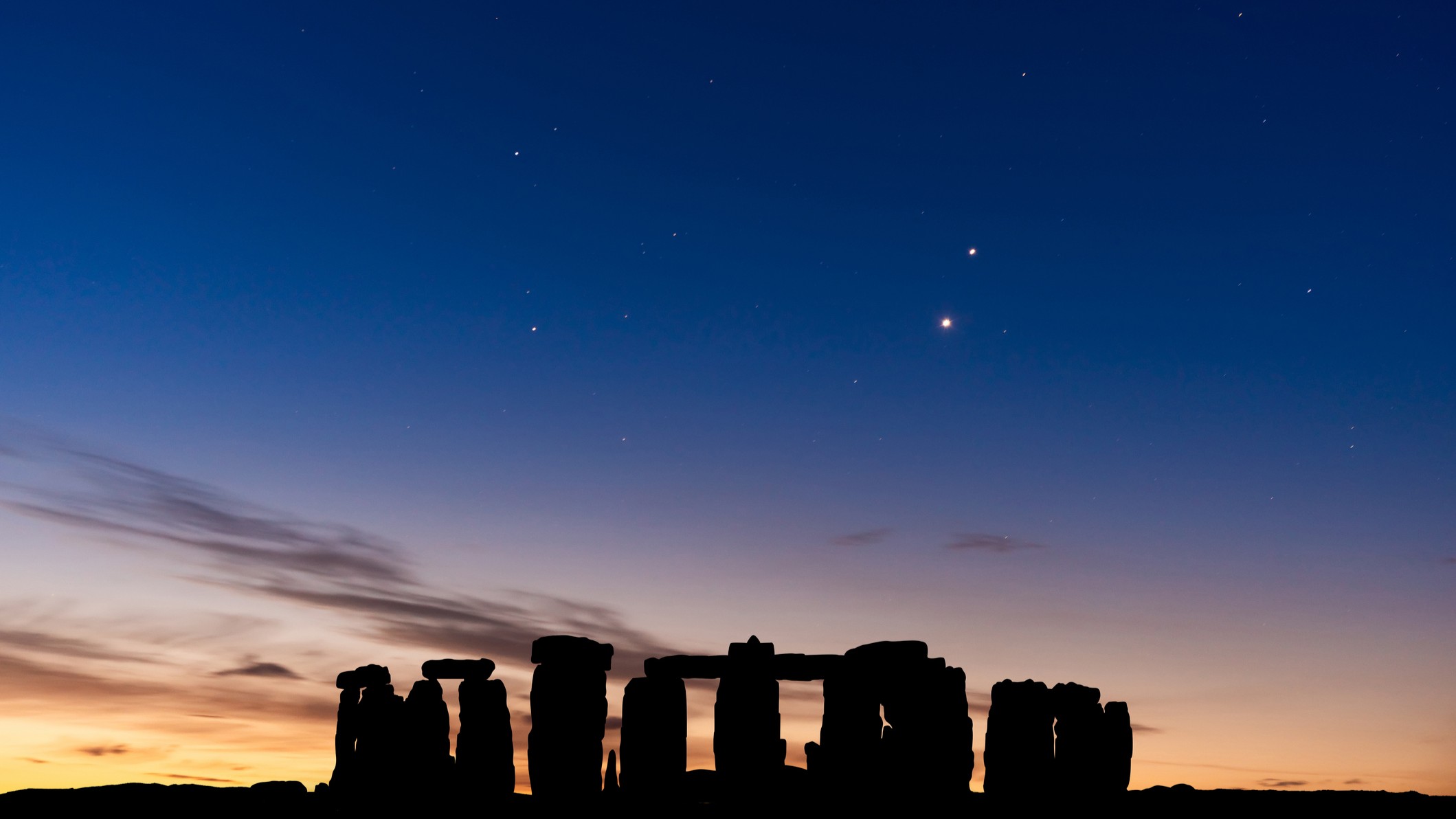
 The night sky above Stonehenge, the iconic Neolithic monument associated with the solstice. (Image credit: Anton Petrus via Getty Images) Jump To:
 - What's happening and when to look
- How and when I'm stargazing this month
- Stargazer's corner: June 19-25, 2026
Each November in the Northern Hemisphere, the astronomy world cranks up a gear. As Orion's Belt and the bright stars of winter appear in the east just after an early sunset, telescopes are added to Christmas lists. True darkness has arrived — long winter nights when stargazing sessions can go on for many hours. The blanket of stars has arrived.
I used to think beginners should start stargazing in winter. That's what astronomy books always imply: crisp, dark skies and brilliant stars, with the constellation Orion and its spectacular nebula dominating the heavens. My own book, A Stargazing Program for Beginners, outlines a month-by-month program to reveal all the night sky's biggest and most beautiful secrets in just one year — starting in January. Technically, it's all true. Winter skies are spectacular. But they're also cold enough to make most normal people give up after 15 minutes.
June is different. June is when the sky becomes readable. The nights are shorter, yes, and in the northern U.S., Canada and much of Europe, true darkness arrives very late near this weekend's solstice. But that softness is exactly what makes it approachable. You don't step into a black void filled with unfamiliar stars, shivering as you do so. You ease into it through lingering twilight, warm air, and a handful of large, obvious patterns that repeat night after night. Stargazing becomes a slow, easy, unrushed affair — and there's so much to see.
What's happening and when to look
Just as winter brings many hours of darkness that are hard to make use of — because of cold and clouds — summer brings the opposite problem. In June, you can stand outside in shirtsleeves, but only late at night. For example, in New York — at about 41 degrees north — sunset on the solstice is at 8:33 p.m. EDT, with astronomical night (defined as when the sun is 18 degrees below the horizon) between about 10 p.m. and 3:30 a.m. EDT. At 51 degrees north (much of Canada and the U.K.), astronomical night starts after midnight.
Wherever you are in the Northern Hemisphere, you can stargaze during the long twilight that begins about 45 minutes after sunset. With calmer weather compared to winter's haze and endless cloud systems, a clear sky is more likely — and so are camping trips under a dark sky.
There's another beginner advantage in summer that few mention: the learning curve is shorter. Summer constellations and asterisms rely more on large geometric patterns. You're not trying to memorize dozens of tiny stars, but instead you're learning shapes.
The Milky Way is now visible during astronomical night. (Image credit: Justin Paget via Getty Images)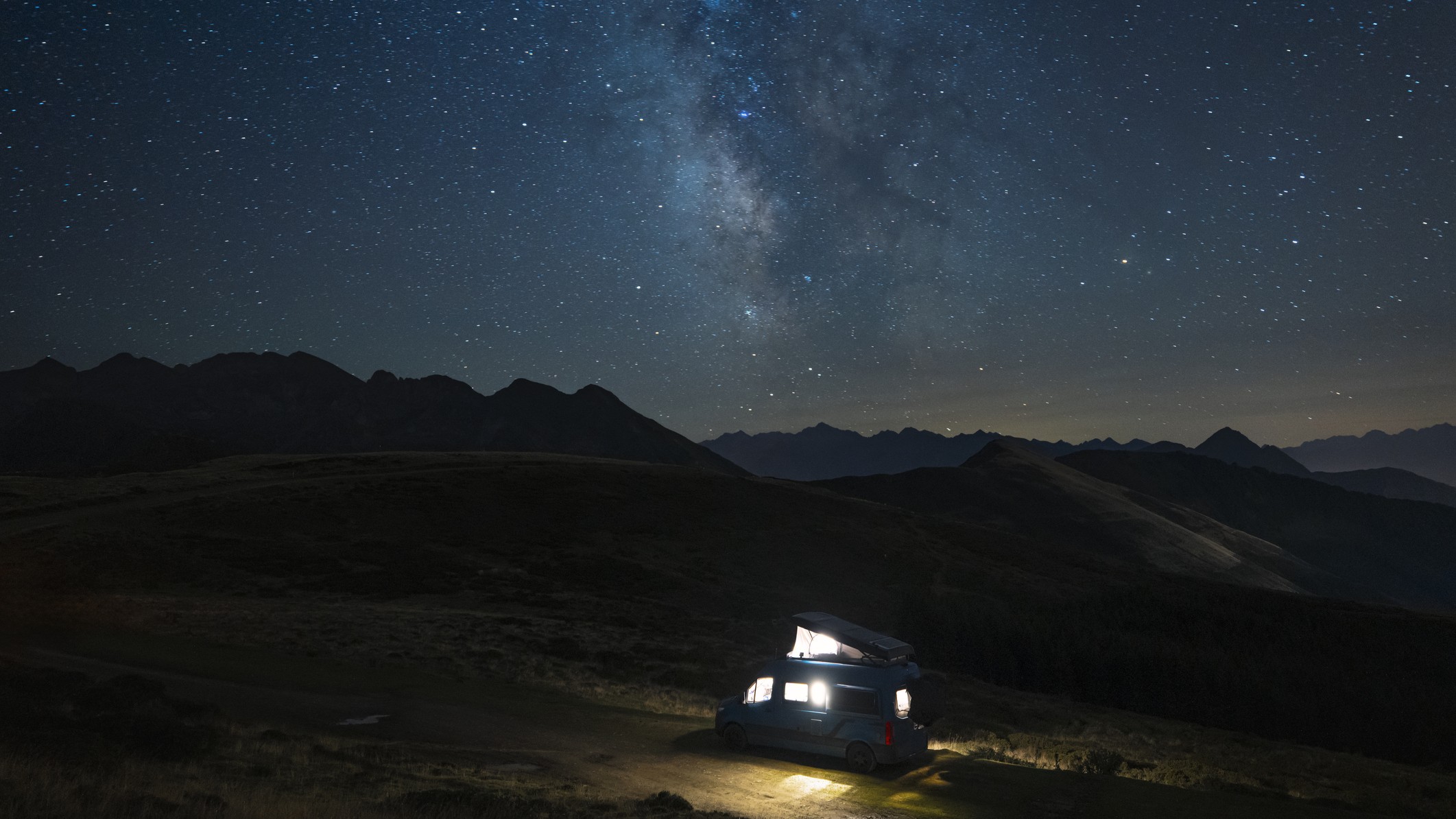
How and when I'm stargazing this month
Step outside around 10:30 or 11 p.m., depending on your latitude and face north to find the Big Dipper — the large spoon-shaped pattern high in the sky. Then use the curve of its handle. Follow the arc outward, and you'll arrive at a bright orange star low in the western half of the sky: Arcturus, in the constellation Boötes. Arcturus comes from the ancient Greek word Arktouros, meaning "guardian of the bear." It's an ancient star-hop, but now we know the science: Arcturus is a red giant star and the fourth-brightest star in the night sky. It's about 37 light-years away from the solar system and, at seven billion years old, it's older than the sun.
On June 23, use the Big Dipper to find Arcturus, then Spica and a waxing gibbous moon. (Image credit: Stellarium)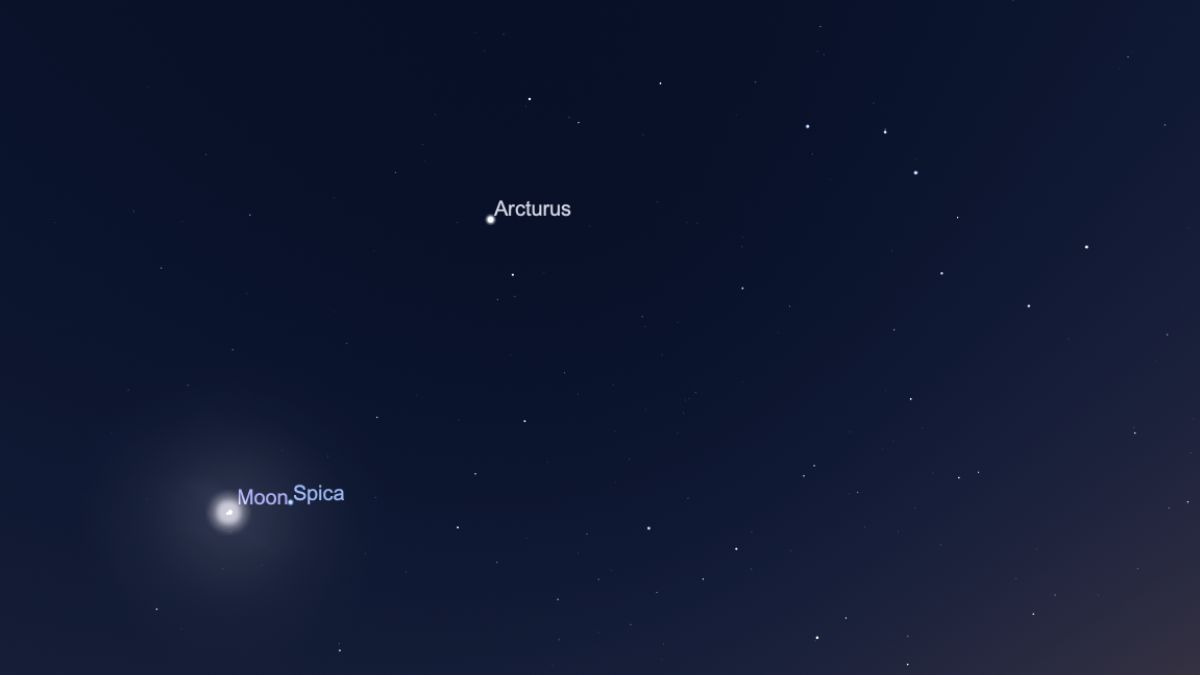
Even if you only find Arcturus, you've already learned a genuine navigation technique astronomers (and mariners) have used for generations. But there's more. Continue the same curve farther south, and you'll eventually reach Spica, a bluish star in the constellation Virgo. Its name means "ear of corn" because of its seasonal connection to agriculture and harvests. About 250 light-years distant, it's actually two massive young stars (12 million years old) orbiting each other.
Now turn eastward, where three bright stars dominate the summer sky: Vega, Deneb and Altair. Together they form the Summer Triangle, probably the single best beginner landmark in the Northern Hemisphere's summer sky. Vega is the easiest starting point because it's so bright and highest in the sky. Deneb sits below, and Altair appears lower. Once you can identify those three stars consistently, you've unlocked an enormous amount of the summer sky. Recognizing the Summer Triangle gives you orientation, confidence and a mental map.
Look east for the three bright stars of the Summer Triangle. (Image credit: Stellarium)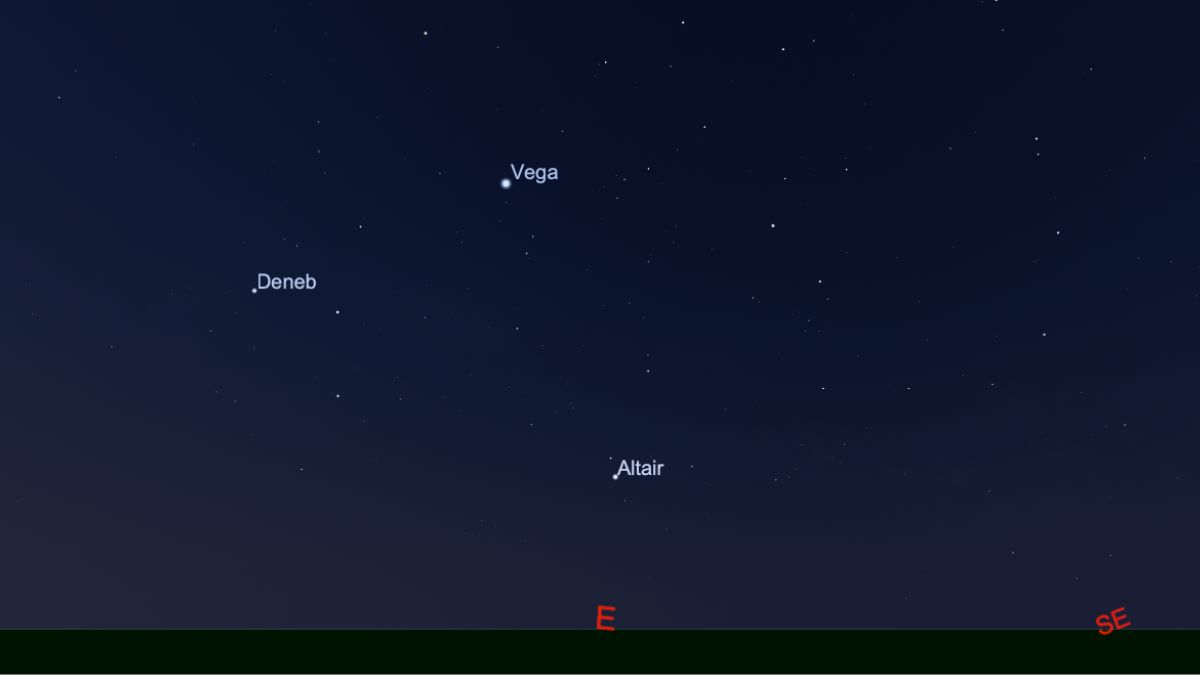
Under darker rural skies, you may also begin noticing the Milky Way stretching behind Deneb and Altair later in the night. If you can't see it, you either need to stay outside a little longer (it takes 20 minutes away from any light — particularly the white light from a smartphone — to see it properly) or else the sky conditions are poor (which could include light pollution).
But even from cities, the bright and vast patterns of the summer night sky remain visible. Learn one new asterism or constellation each session — such as the faint outline of constellations like Virgo, Ophiuchus, Hercules and Corona Borealis — and repeat the process during your next stargazing session.
So lean into the solstice this week, do some real stargazing and build your confidence gradually while the geometry of Earth's tilt turns in your favor.
Stargazer's corner: June 19-25, 2026
June 19 sees Venus within the Pleiades, a rare occurrence. (Image credit: Stellarium)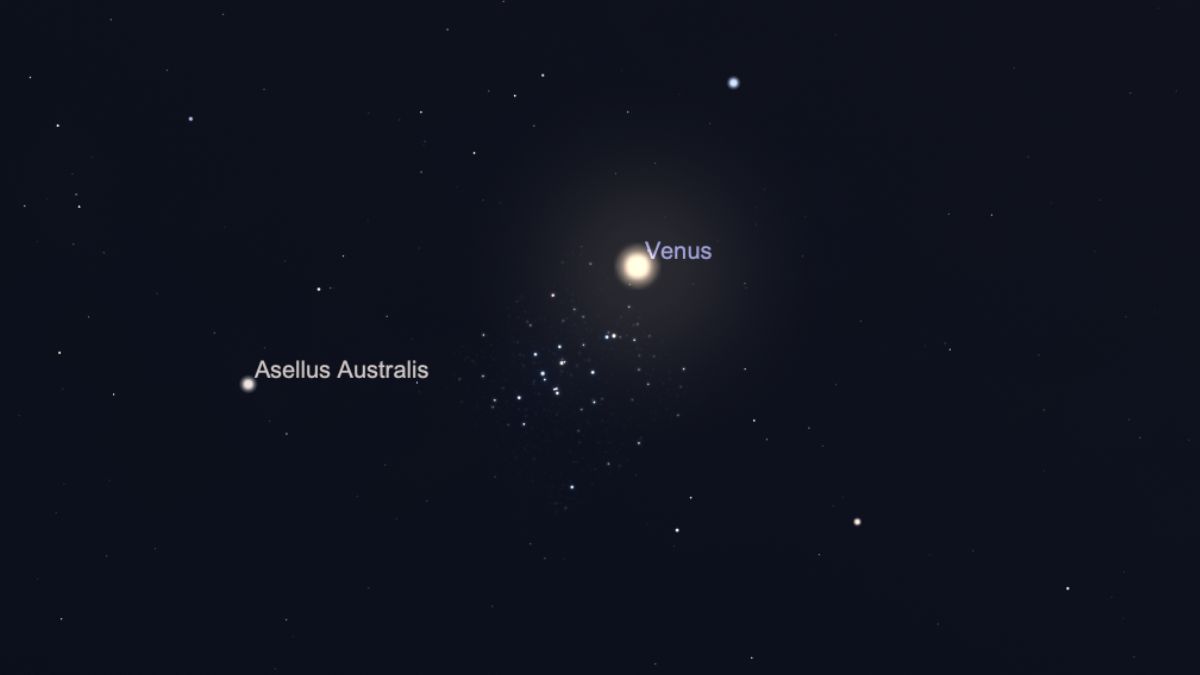
The June solstice arrives this week, marking the longest days and shortest nights of the year in the Northern Hemisphere. Darkness is now at a premium, with extended twilight lingering well into the night and returning early in the morning, but the moon is back in the evening sky. On Friday, June 19, a 29%-illuminated waxing crescent moon will shine just to the left of Regulus, the brightest star in the constellation Leo. At the same moment, Venus will pass through the Pleiades, an open cluster of stars. It's the latter that you don't want to miss — it's a rare occurrence. On Tuesday, June 23, a 70%-illuminated waxing gibbous moon will shine next to Spica.
Constellation of the week: Cygnus
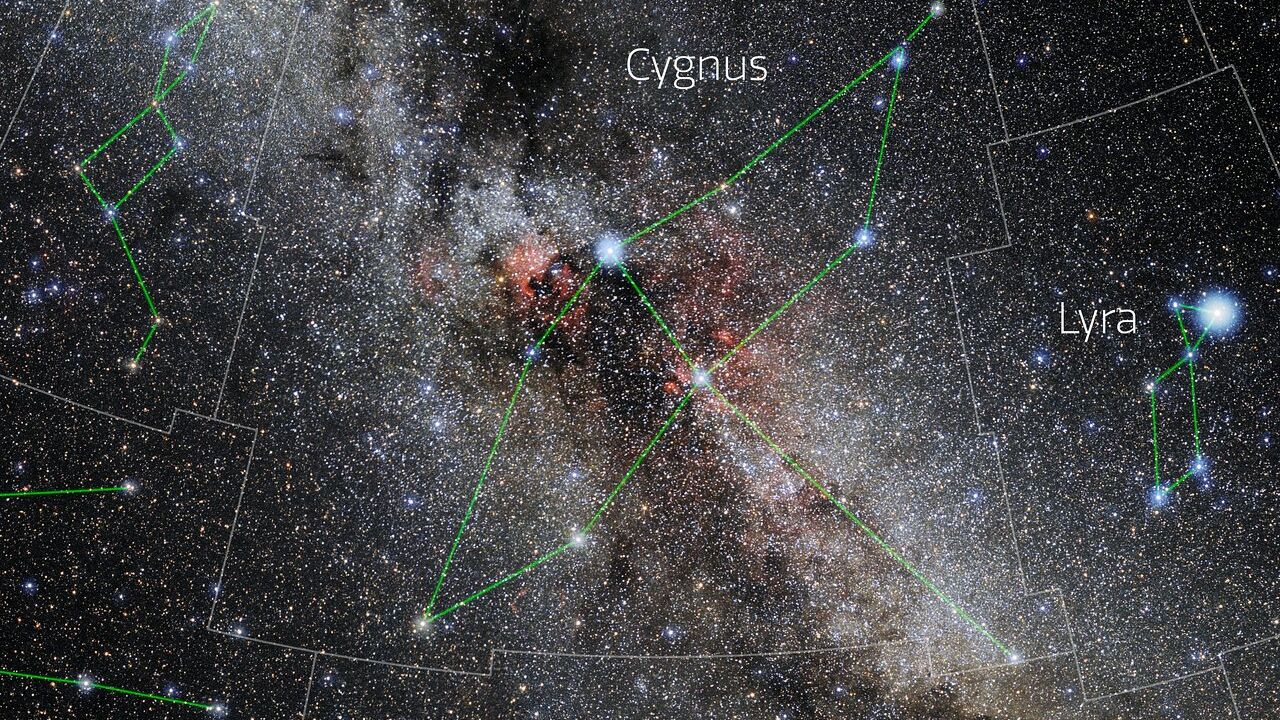
Is it a swan? Is it a Christian cross? Depending on how you look at the constellation Cygnus, it can be either, but its official name relates to the long-necked bird in flight. Positioned across the Milky Way, its most obvious star is Deneb — one of the anchor stars of the Summer Triangle — which marks either the body of the swan or the top of the cross.
Even in less-than-perfect skies, the shape of Cygnus is clear, and in darker conditions, it sits within a dense star field that hints at structure within the Milky Way.
View MoreYou must confirm your public display name before commenting
Please logout and then login again, you will then be prompted to enter your display name.
Logout Jamie CarterContributing Writer
Jamie is an experienced science and travel journalist, stargazer and eclipse chaser who writes about exploring the night sky, solar and lunar eclipses, the Northern Lights, moon-gazing, astro-travel, astronomy and space exploration. He is the editor of WhenIsTheNextEclipse.com, author of A Stargazing Program For Beginners, co-author of The Eclipse Effect, and a senior contributor at Forbes.