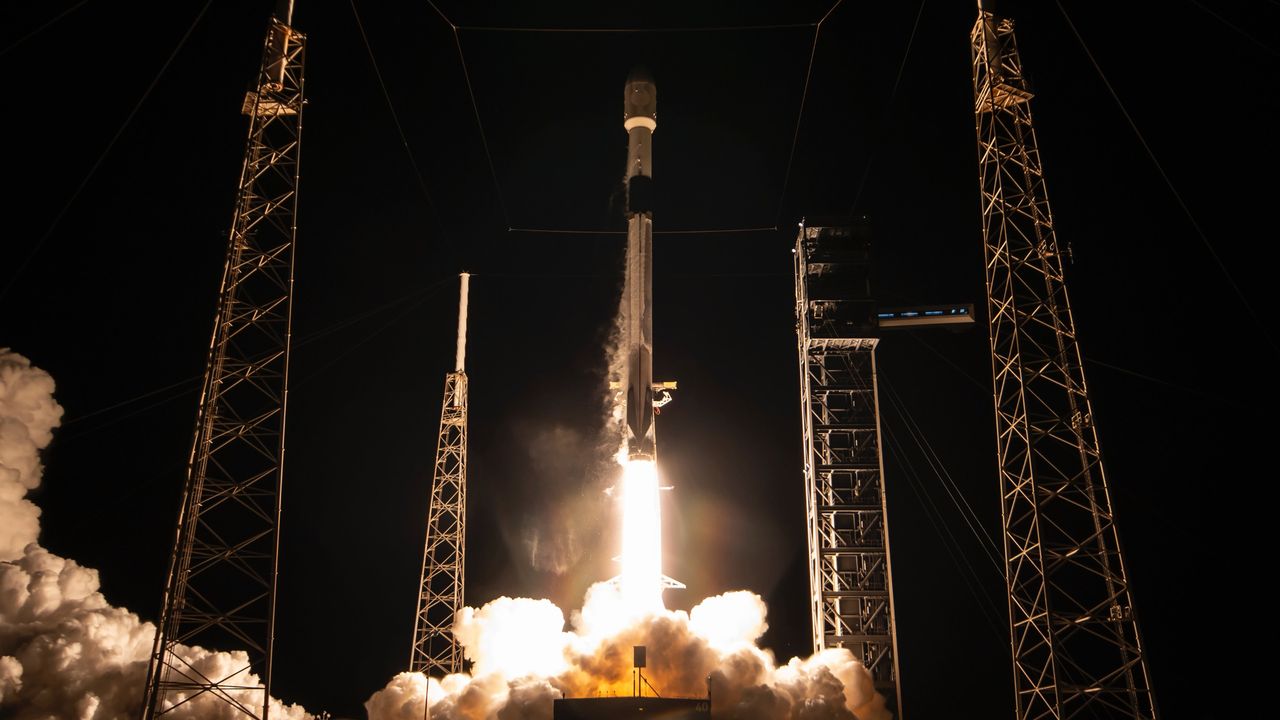
SpaceX will launch a big SiriusXM radio satellite to orbit from Florida's Space Coast tonight (June 28), and you can watch the action live.
A Falcon 9 rocket topped with the 15,400-pound (7,000 kilograms) SXM-11 spacecraft is scheduled to lift off from Cape Canaveral Space Force Station tonight during a four-hour window that opens at 10:25 p.m. EDT (0225 GMT on June 29).
You can watch it live via SpaceX. Coverage will begin about 15 minutes before liftoff.
If all goes according to plan tonight, the Falcon 9's first stage will come back to Earth for a landing about 8.5 minutes after launch. It will touch down in the Atlantic Ocean on the SpaceX drone ship "A Shortfall of Gravitas."
According to a SpaceX mission description, it will be the 17th flight for this particular booster, which is designated B1085.
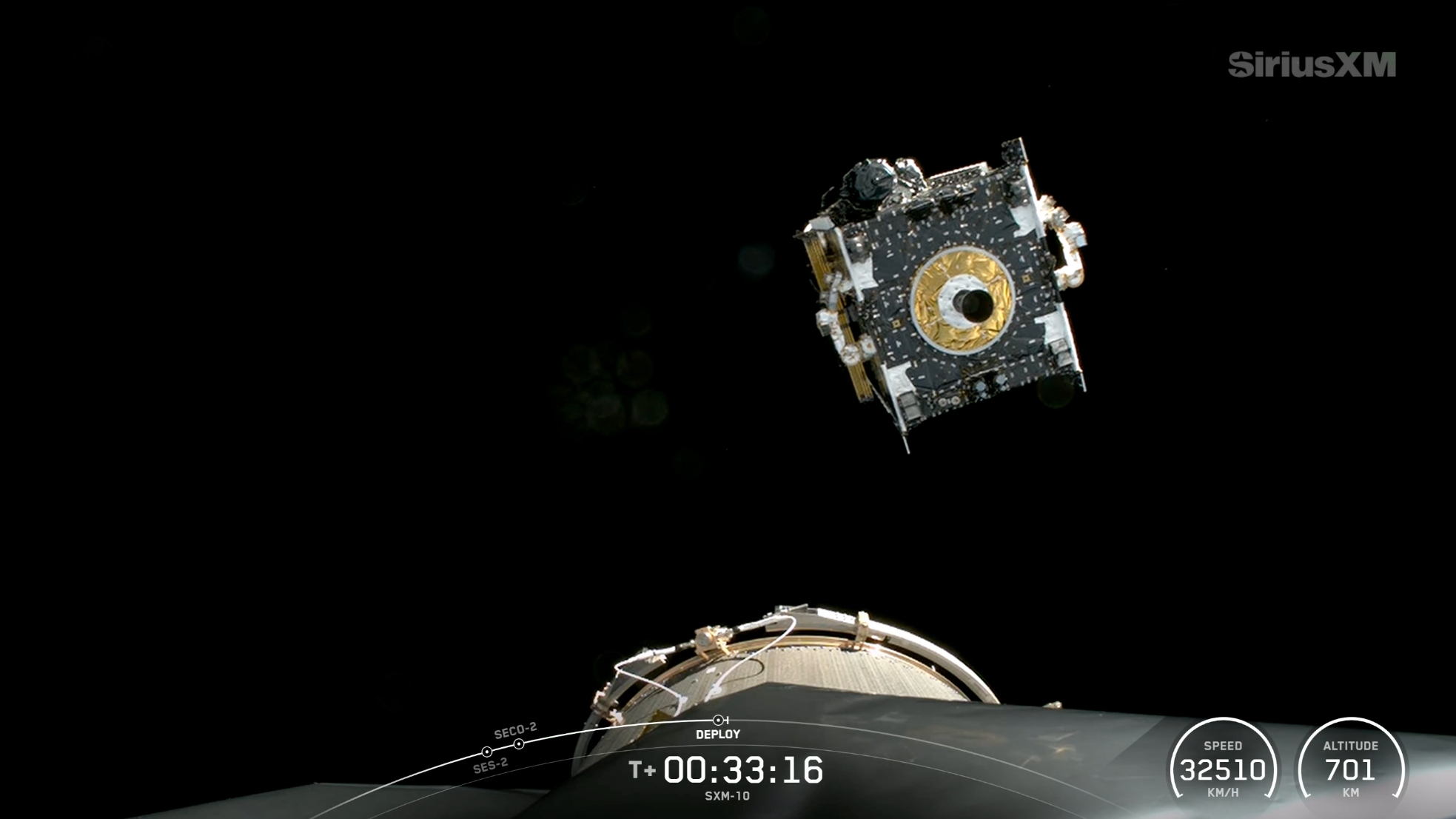
The Falcon 9's upper stage, meanwhile, will continue carrying SXM-11 to an elliptical geosynchronous transfer orbit, where it will be deployed 34.5 minutes after liftoff.
SXM-11 will then circularize its distant path around our planet and join SiriusXM's satellite-radio fleet, which currently consists of seven spacecraft.
Previous missions for Booster 1085Crew 9 | Fram 2 | RRT-1 | Blue Ghost Mission 1 | SXM-10 | MTG-S1 | EchoStar XXV | 9 Starlink missions
SpaceX has launched three of those spacecraft to date — SXM-8 in June 2021, SXM-9 in December 2024 and SXM-10 in June 2025. All rode to orbit on Falcon 9 rockets.
SpaceX has launched 75 Falcon 9 missions so far in 2026. The vast majority of those flights — 80% of them — have been dedicated to building out the company's Starlink broadband megaconstellation in low Earth orbit.