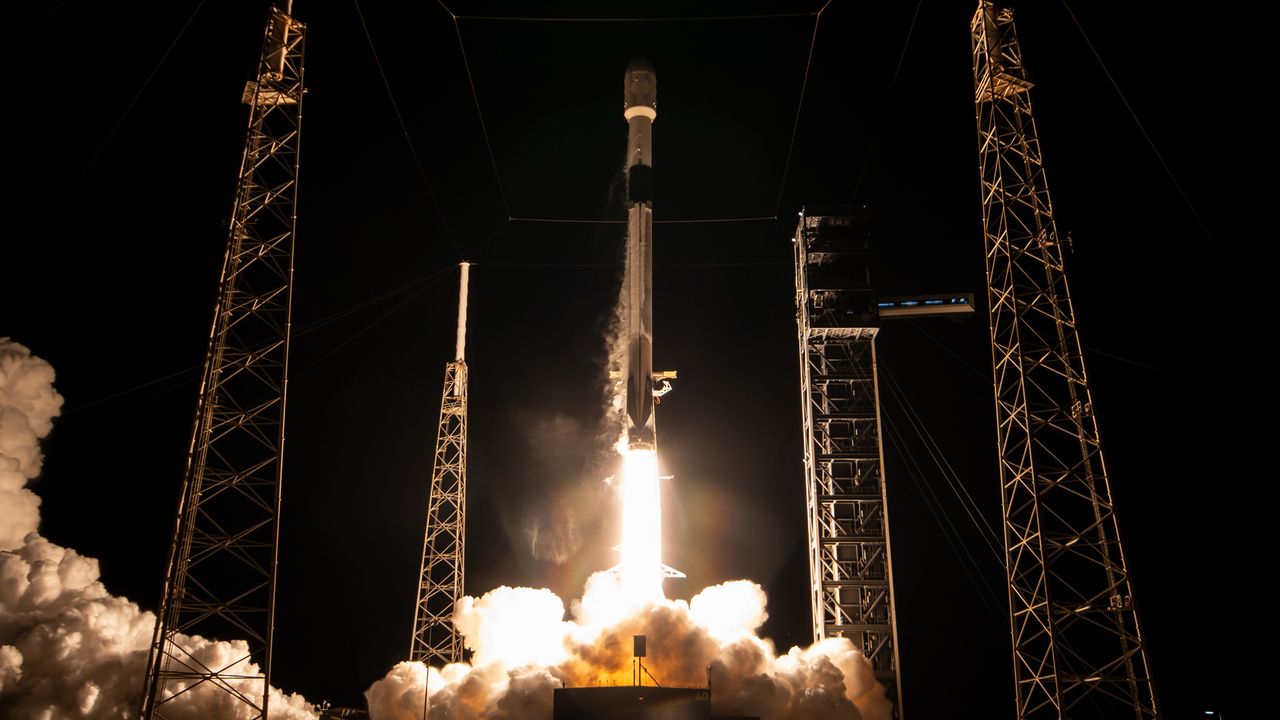
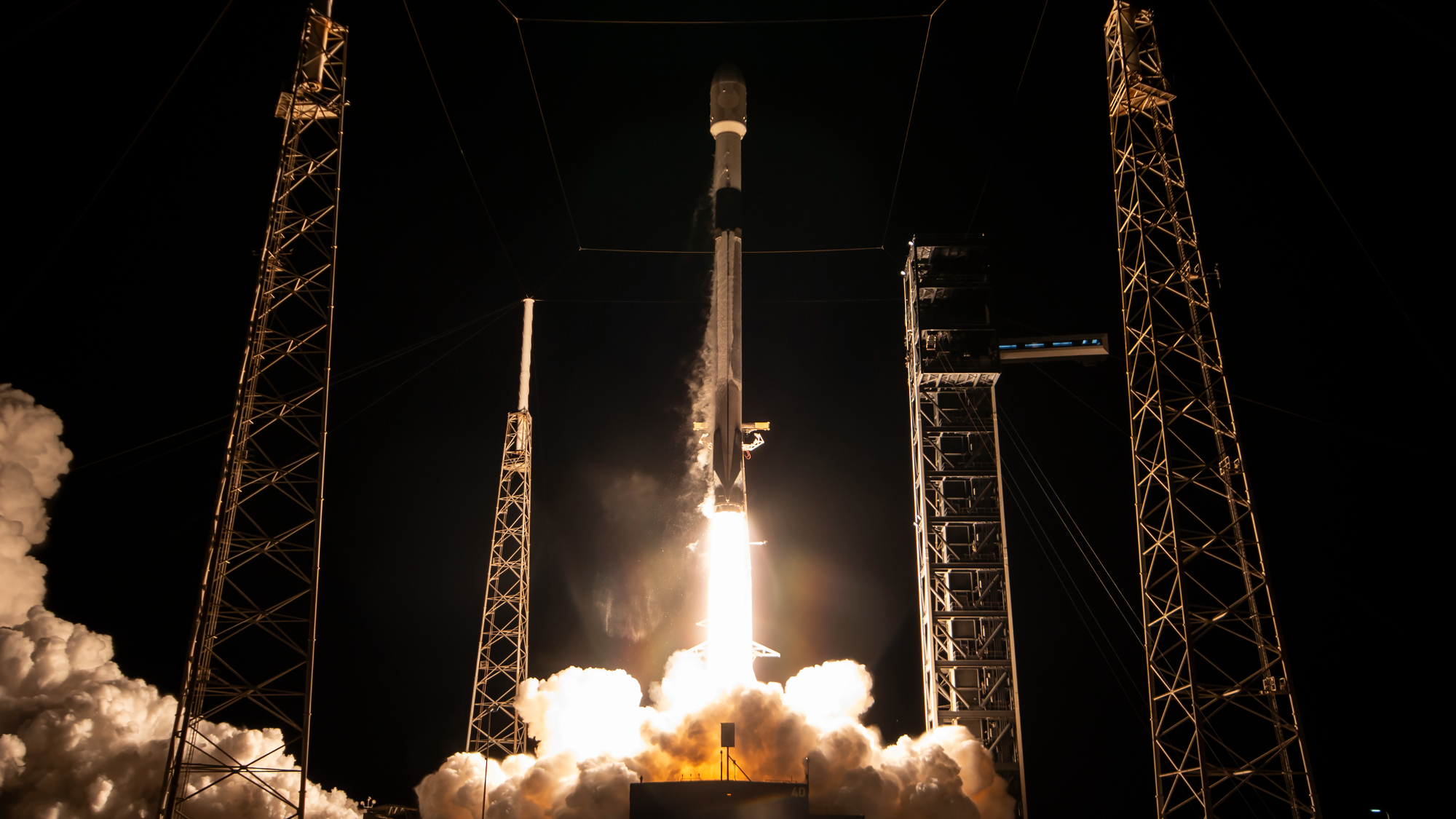
 A SpaceX Falcon 9 rocket launches the GPS III SV09 satellite for the U.S. Space Force on Jan. 27, 2026. (Image credit: SpaceX) Share this article 0 Join the conversation Follow us Add us as a preferred source on Google Newsletter Get the Space.com Newsletter
 Breaking space news, the latest updates on rocket launches, skywatching events and more!
Contact me with news and offers from other Future brands Receive email from us on behalf of our trusted partners or sponsors By submitting your information you agree to the Terms & Conditions and Privacy Policy and are aged 16 or over.You are now subscribed
Your newsletter sign-up was successful
Want to add more newsletters?
An account already exists for this email address, please log in. Subscribe to our newsletterSpaceX will launch a new GPS satellite for the U.S. Space Force early Monday morning (April 20), and you can watch the action live.
A Falcon 9 rocket topped with the GPS III SV10 satellite is scheduled to lift off from Florida's Cape Canaveral Space Force Station on Monday, during a 15-minute window that opens at 2:57 a.m. EDT (0657 GMT).
GPS III SV10 (short for "Space Vehicle 10") is the 10th and final satellite in the United States' advanced GPS III line.
"GPS III satellites have a three-fold increase in positional accuracy and an eight-fold improvement in jam resistance compared to prior versions," Space Force officials said in a statement on Jan. 28, just after GPS III SV09 rode a Falcon 9 to orbit.
"These advanced features enable the constellation to provide an across-the-board boost in effectiveness and lethality to weapon systems in every theater," they added.
GPS III SV10 was originally supposed to fly aboard United Launch Alliance's new Vulcan Centaur rocket. Last month, however, the Space Force announced that it was switching the satellite to a Falcon 9 due to issues that Vulcan has experienced with its solid rocket boosters (SRBs).
Get the Space.com NewsletterContact me with news and offers from other Future brandsReceive email from us on behalf of our trusted partners or sponsorsAs part of this rocket swap, Vulcan Centaur will now launch the USSF-70 national security mission, which had been slated to fly on a SpaceX Falcon Heavy. USSF-70 is expected to launch no earlier than summer 2028, Space Force officials have said. (Presumably, Vulcan Centaur's SRB issues will be worked out by then.)
If all goes to plan on Monday morning, the Falcon 9's first stage will come back to Earth about 8.5 minutes after launch, touching down softly in the Atlantic Ocean on the SpaceX droneship "Just Read the Instructions."
It will be the seventh launch and landing for this particular booster, according to a SpaceX mission description.
The Falcon 9's upper stage, meanwhile, will continue powering its way to medium-Earth orbit. It will deploy GPS III SV10 there about 90 minutes after liftoff.
 Mike WallSpaceflight and Tech Editor
Michael Wall is the Spaceflight and Tech Editor for Space.com and joined the team in 2010. He primarily covers human and robotic spaceflight, military space, and exoplanets, but has been known to dabble in the space art beat. His book about the search for alien life, "Out There," was published on Nov. 13, 2018. Before becoming a science writer, Michael worked as a herpetologist and wildlife biologist. He has a Ph.D. in evolutionary biology from the University of Sydney, Australia, a bachelor's degree from the University of Arizona, and a graduate certificate in science writing from the University of California, Santa Cruz. To find out what his latest project is, you can follow Michael on Twitter.
View MoreYou must confirm your public display name before commenting
Please logout and then login again, you will then be prompted to enter your display name.
Logout MORE FROM SPACE...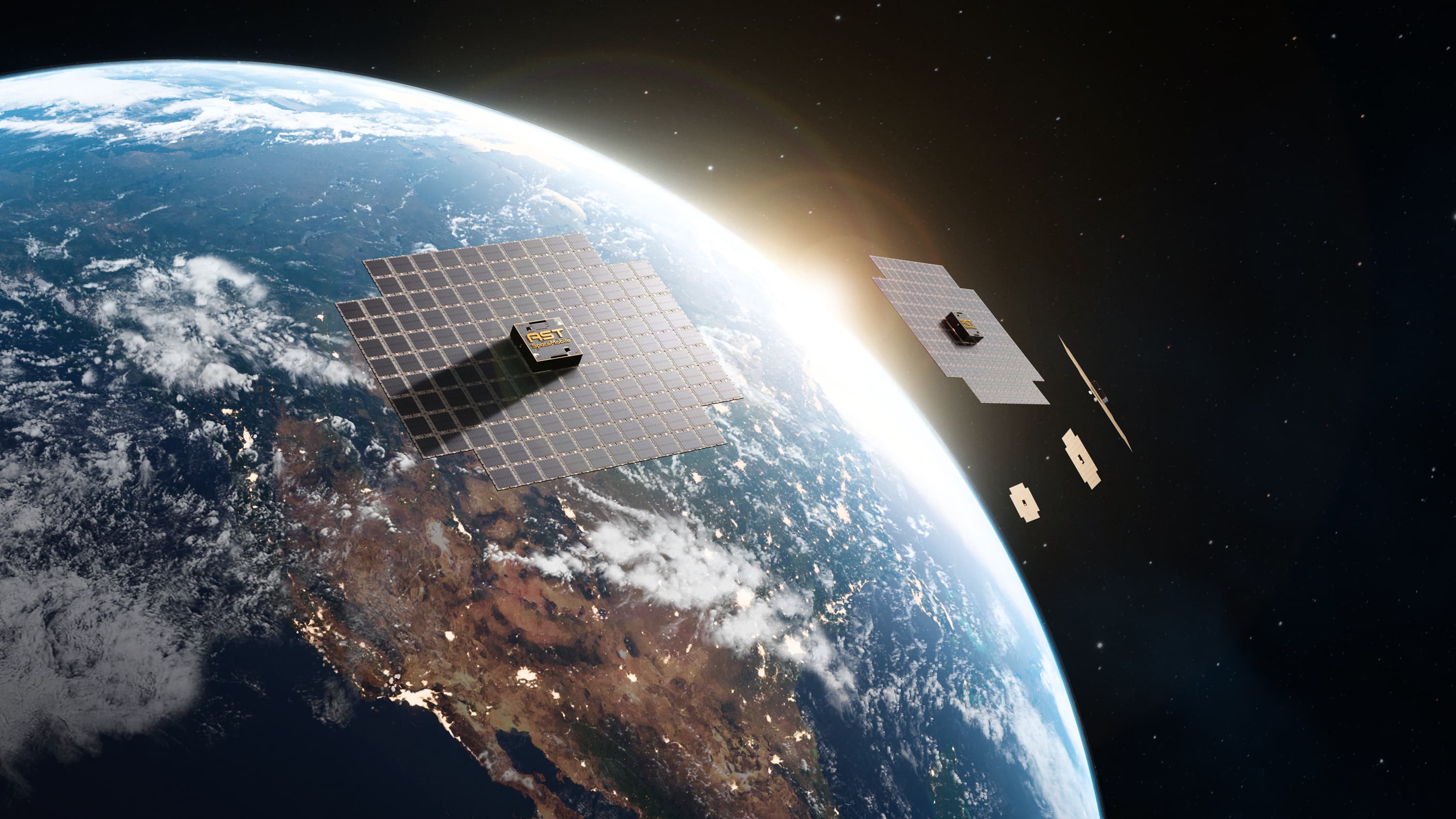 1Blue Origin just launched the giant Bluebird 7 mobile phone satellite into space — but it's in the wrong orbit
- 2'Sunshine' was 2007's answer to 'Project Hail Mary', and it told a much darker tale of solar catastrophe
- 3The Lyrid meteor shower returns with ideal viewing conditions! Here's what to look out for this week
- 4Telescope livestream: Watch the moon pass in front of the Pleiades on April 19
- 5Synthetic universe allows you to 'see and hear' galaxies evolving from the dawn of time (video)