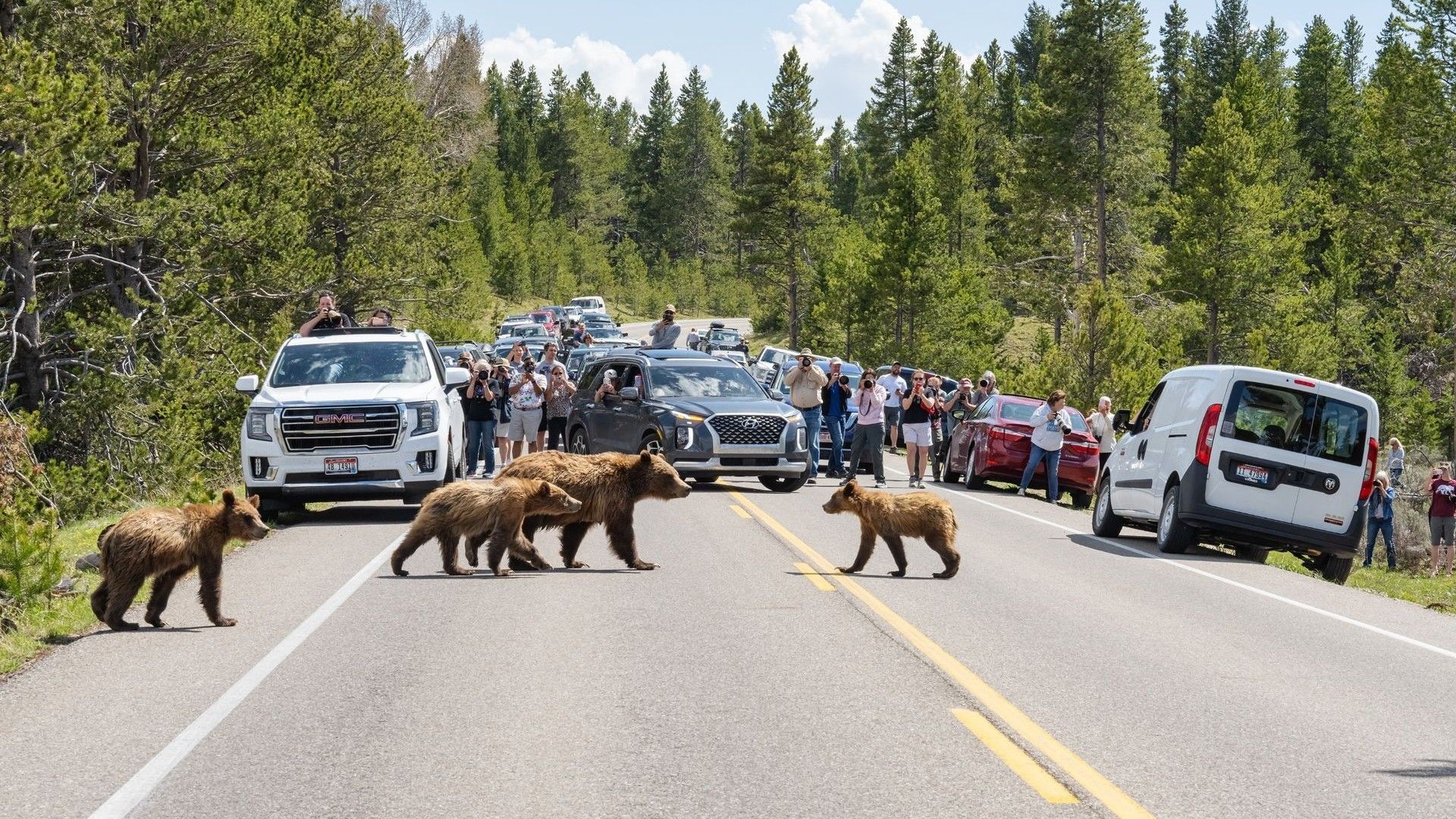
Across 53 challenging days between fall 2020 and spring 2021, a 360-pound (160 kilograms) young male grizzly bear nicknamed "Lingenpolter" tried to cross Interstate 90 in western Montana 46 times. High-resolution GPS tracking showed him moving parallel to four lanes of roaring traffic, bouncing off the highway like a furry pinball as he searched for a gap.
Eventually, Lingenpolter beat the odds, probably by slipping under a river bridge. But his hero's journey shows what a formidable barrier a busy highway can be for wildlife, Cecily Costello, a research wildlife biologist at Montana's Department of Fish, Wildlife and Parks, told Live Science. "It is easy to imagine the difficulty this grizzly bear experienced trying to reach the other side," Costello said.
A map of all the places Lingenpolter attempted to cross the road before making it across. (Image credit: USFWS)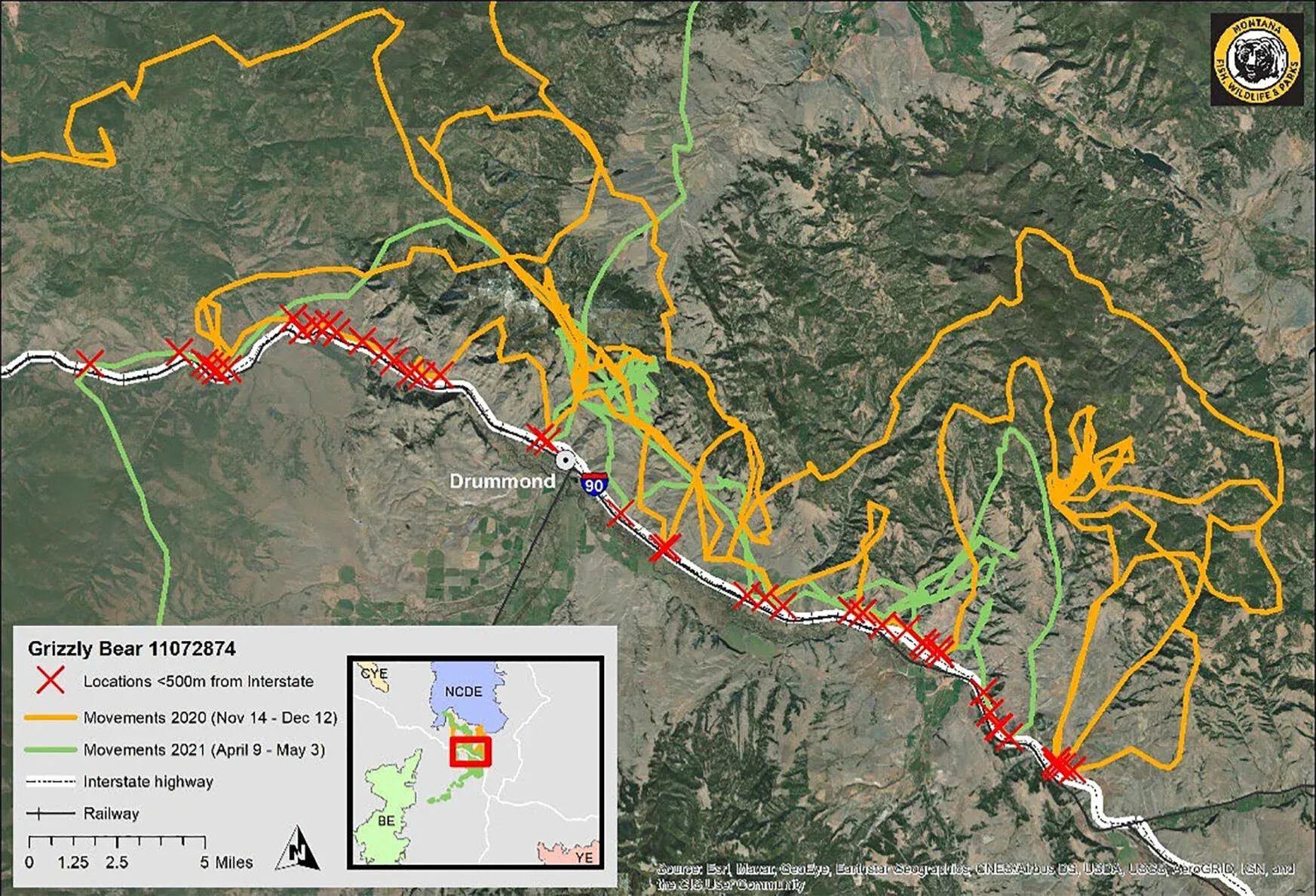
This past May, another grizzly wasn't so lucky. Braving a crossing near one of Lingenpolter's attempts, the 27-year-old male bear was struck and killed by a truck, triggering a multicar rollover.
It's crucial for grizzly bears (Ursus arctos), also known as brown bears, to have room to roam. When they can't move between populations to mate, small groups get genetically isolated. And what's true for bears can also be true for other wildlife. "It's really challenging to be a small, fragmented population," said Michael Proctor, a wildlife biologist at Birchdale Ecological Ltd., a Canada-based environmental consulting firm. Such fragmentation is "one of the mechanisms by which we lose entire communities, and sometimes whole species," he told Live Science.
Nowhere is this challenge more urgent than in the 2,100 mile long (3,400 kilometers) region stretching along the spine of the Rocky Mountains between Yellowstone in Wyoming and the Yukon in northern Canada. The area, which spans five U.S. states, two Canadian provinces, and more than 75 Indigenous territories "represents the most intact, connected, wild, large mountain region in the world," Jordan Reeves, program director of landscape connectivity at the Yellowstone to Yukon Conservation Initiative (Y2Y), which aims to secure connectivity throughout the region told Live Science.
The terrain between Yellowstone and the Yukon is the most intact wild large mountain region, and is crucial for bear migration. (Image credit: National Park Service)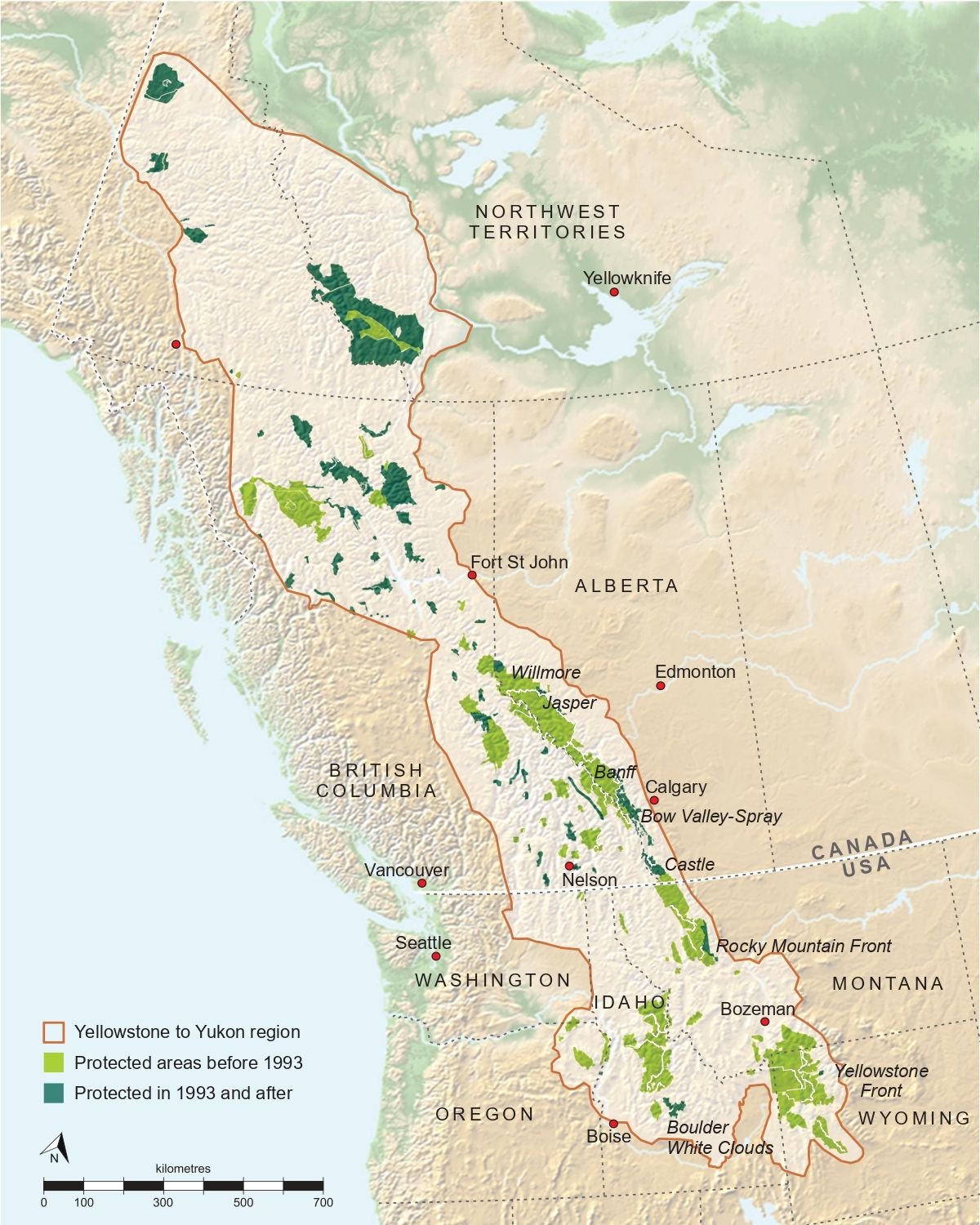
But as highways, rail lines, and human development fragment its valleys, maintaining connected pathways for grizzly bears across this landscape has become a challenge.
Grizzlies range across vast, diverse terrain, spanning high-elevation alpine habitats, mid-mountain slopes, and low valley bottoms, which means safeguarding their movement can also protect passageways for coexisting species, including wolverines , mountain goats , elk and bighorn sheep, Proctor said. That's why researchers are trying to understand why, where and when grizzlies move. And what stops them in their tracks.
"We're looking at how a bear sees the world," Andrew Derocher, a bear biologist at the University of Alberta who has used GPS collars on grizzly bears to trace their movements, told Live Science.
Nature versus nurture
When Sarah Sells started her graduate studies in animal behavior, her supervisor told her to "try to crawl into their fur brains and understand how they think," Sells told Live Science. Although we can't recreate exactly what's going on between a grizzly's ears, GPS collars that track animal movement hourly can tell scientists a lot about how animals behave, said Sells, who is currently the assistant unit leader of the U.S. Geological Survey's Montana Cooperative Wildlife Research Unit.
A collared bear in the wilderness. (Image credit: Sarah Sells)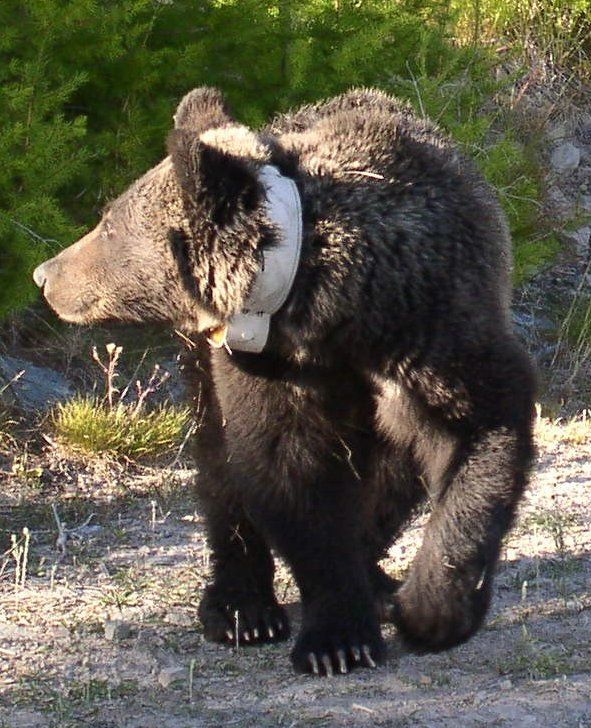
That tracking data is starting to produce an incredibly detailed picture not just of where bears go but also how and why they're making those choices.
"Bears are food finding machines," Chris Servheen, a bear biologist with the International Union for Conservation of Nature's Bear Specialist Group, told Live Science. "So remembering where they found food is critical to their success in life."
Using a combination of telemetry data (information collected by tracking devices) and movement modeling, Derocher and colleagues have investigated how well grizzlies remember where food is and when it is best to visit a foraging patch. Derocher's research showed that about two-thirds of the bears have a great memory for where and in what season they previously found food. His tracking data also revealed that wild bears generally avoid humans. But bears have only a few months to fatten up for winter. If food is scarce, many bears go into human environments and sometimes get killed, Proctor said.
The data is also offering insight into different bear "personalities." Bears are ultimately individuals, with their own traits and quirks, Servheen said.
A young male bear named Lingenpolter tried to cross the interstate 90 in western Montana 46 times before successfully making it across. (Image credit: USFWS)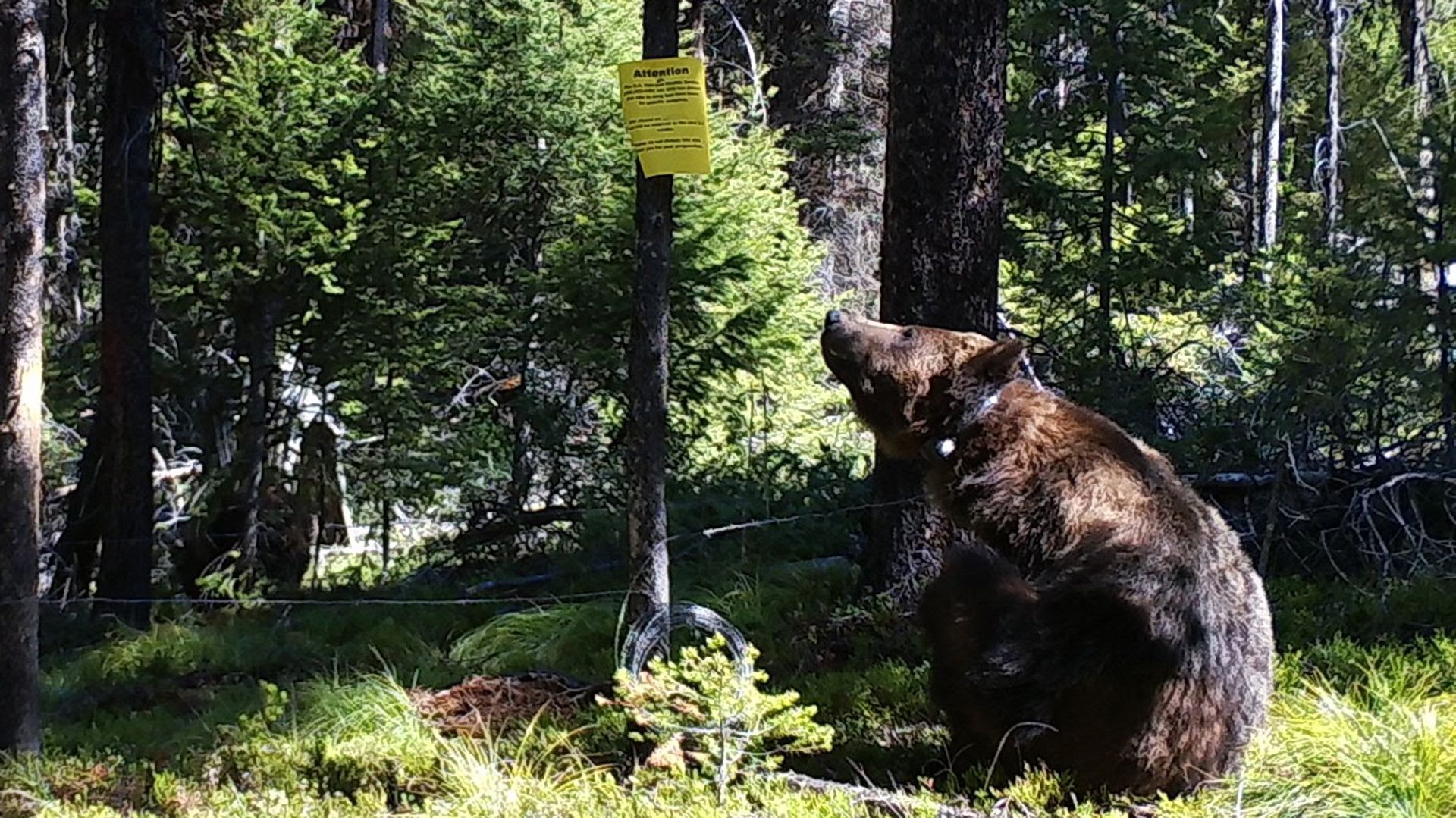
Tracking data suggests that a lot of bear behavior is transmitted culturally via a mother's influence. Sometimes, the wrong behavior can get passed down to the next generation, Servheen said. For example, an infamous female grizzly known as 399 jaywalked potentially hundreds of times in the Jackson Hole valley in Wyoming while managing to keep her distance from humans. Her 20-odd cubs learned to follow her example, but they lacked her strategic caution. Several were killed by vehicles or management euthanizations.
"It's a risky thing to teach your kids to do stuff like that," Servheen said. "And her offspring weren't as smart as she was."
A cracked windshield
Further north along the region between Yellowstone and the Yukon, Proctor's first DNA survey across 1,500 square miles (4,000 square kilometers) of southern British Columbia in the late 1990s shattered his illusion that the bears, along with bighorn sheep (Ovis canadensis) and other species in this province, were free to roam. Instead, he found a "cracked windshield" landscape, where roads and human sprawl had fractured the wilderness into isolated genetic islands. In the 2000s, the genetic diversity of the South Selkirk grizzly bears — a detatched subpopulation inhabiting southeastern British Columbia, northern Idaho, and northeastern Washington — was so low, for example, that biologists feared the bears wouldn't survive.
But Proctor and his colleagues went on to use bear movement data to model pathways through human-settled valleys. Proctor was so convinced about the viability of one potential corridor that he paid 10,000 Canadian dollars ($7,000) of his own money to buy a key piece of land right in the middle of it. "That was the first canoe over the waterfall of purchasing connectivity land," Proctor said
Michael Proctor examines a grizzly. (Image credit: Dave Quinn)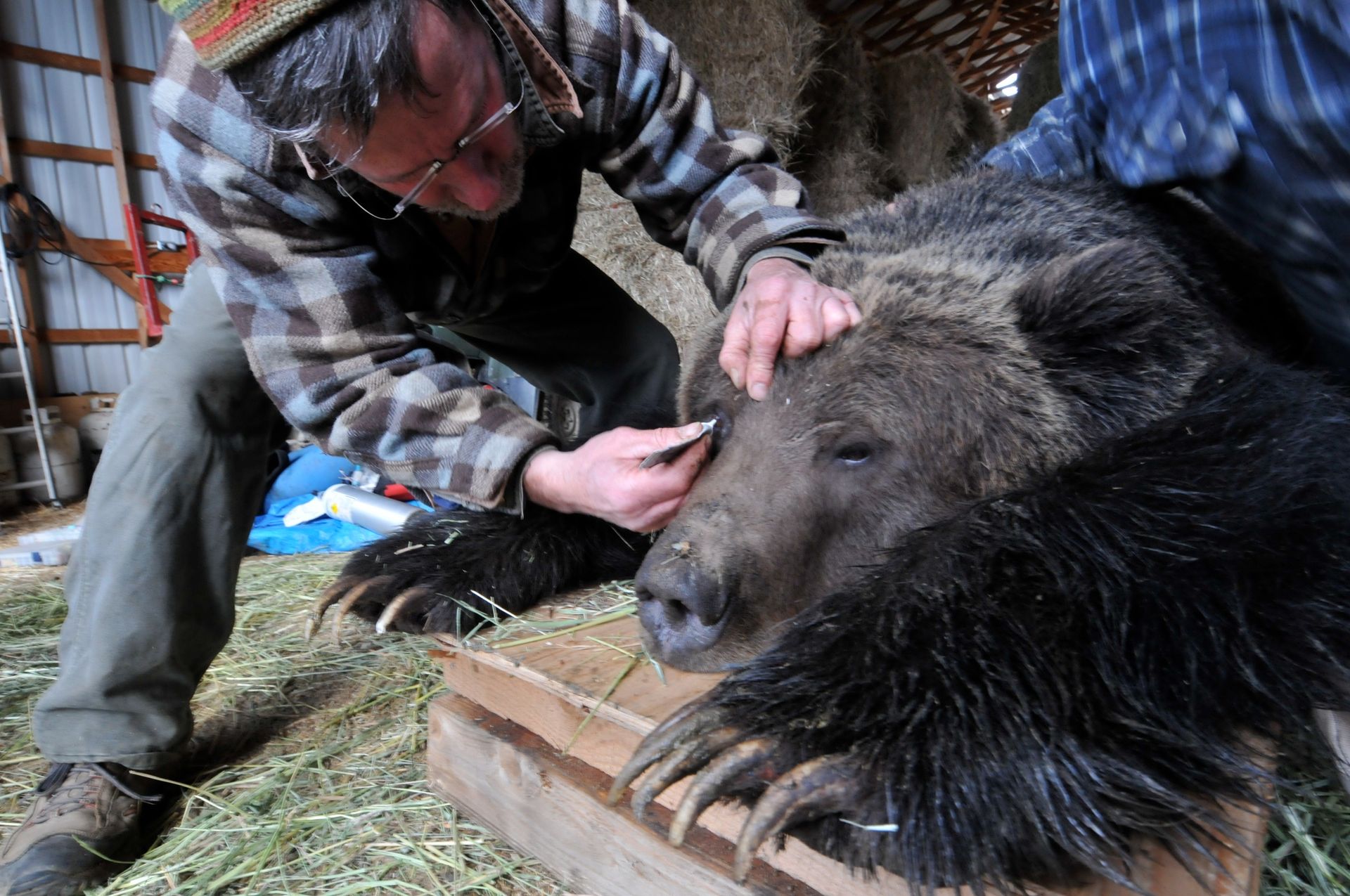
Proctor’s land secured a segment of a crucial connectivity corridor and, in the following years, he and other scientists partnered with trusts to purchase other land parcels, build fences, and establish safe corridors for grizzlies in the Creston Valley in southeastern British Columbia. These actions helped bears move north and south (sometimes across the border) and between the South Selkirk Mountains and Purcell Mountains. The researchers then watched bears like "Captain Hook," who'd been shot in the leg, hobble into the South Selkirks and breed with eight females. By 2021, nine immigrant bears had produced 27 new offspring within the population.
"This is gene flow; this is connectivity," Proctor said. "We took a completely isolated population and pretty much recovered it."
The peaks of the Purcell and Rocky Mountain ranges frame the Rocky Mountain Trench insoutheastern British Columbia—a core component of the Yellowstone to Yukon region. Steeptopography forces both wildlife and human activity into the same low-elevation valley bottoms. (Image credit: Pat Morrow)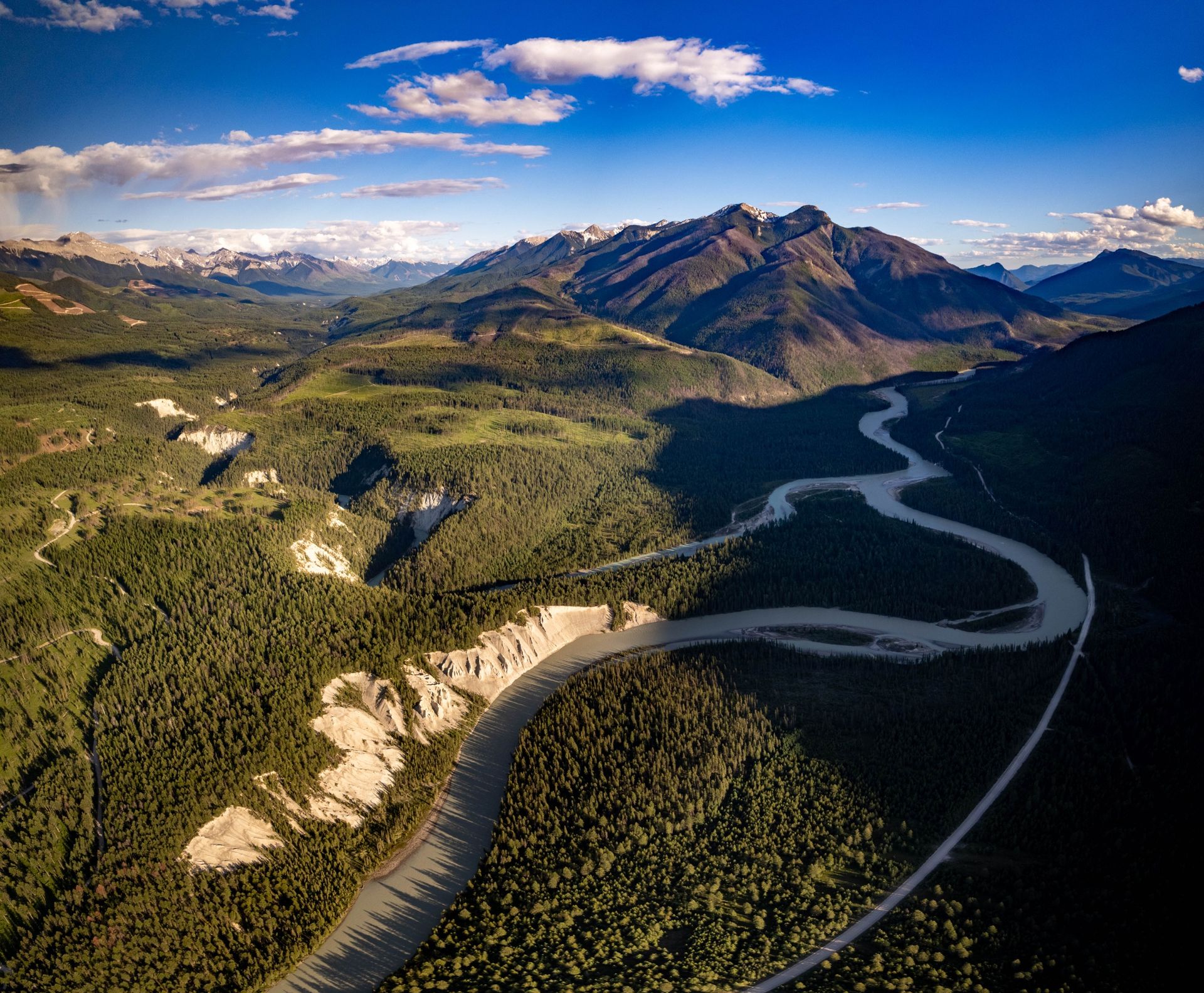
Despite efforts to safeguard corridors through human occupied landscape, roads continue to stop bears in their tracks. When Servheen tracked bears near Highway 2 in northwest Montana, he found that many of the grizzlies avoided the highway altogether and those that crossed did so at night. But he also found that the bears' crossings clustered in specific sections of the road. Finding the crossing zones has helped researchers identify good locations for constructing overpasses and underpasses on many busy highways, but a crossing structure on its own is not enough, Servheen cautioned.
A bear's memory for where to find food is exemplary, but there's no special reward in a bear's brain for crossing a road safely — only a fatal penalty when they don't, Servheen said. So conservationists can't rely on bears to remember where crossings are. Instead, they must build fencing along the highway to funnel wildlife into the underpasses or overpasses. Then, the immediate land on each side needs to allow animals safe passage. "Otherwise, you have a bridge to nowhere," Servheen said.
Now researchers such as Sells are trying to use data about bears' likeliest routes to determine potential corridors in locations where they have little tracking data or where few bears live yet.
To do this, Sells is developing a virtual "Sims for Bears" that recreates the Continental Divide Ecosystem in Montana. In the life-simulation video game "The Sims," players give virtual humans personality traits, preferences and needs, and then drop them into a virtual environment to see how they behave.
Sells built the model using the GPS collaring data from 65 grizzly bears navigating individual paths through greenery, riparian areas and around forests and roads. Then, she "parachutes" an individual digital bear into a detailed computer simulation of real-world terrain and has them take thousands of virtual steps. By running these multiple simulated bears through thousands of iterations across the digital terrain, the researchers can watch where the virtual bears repeatedly choose to walk, effectively creating a map of predicted movement corridors.
Sells has used the model to predict how grizzly bears might recolonize the Bitterroot ecosystem of Idaho and Montana, which Lingenpolter was heading toward when attempting to cross Interstate 90.
A brown bear mom plays with her cubs. (Image credit: Sarah Sells)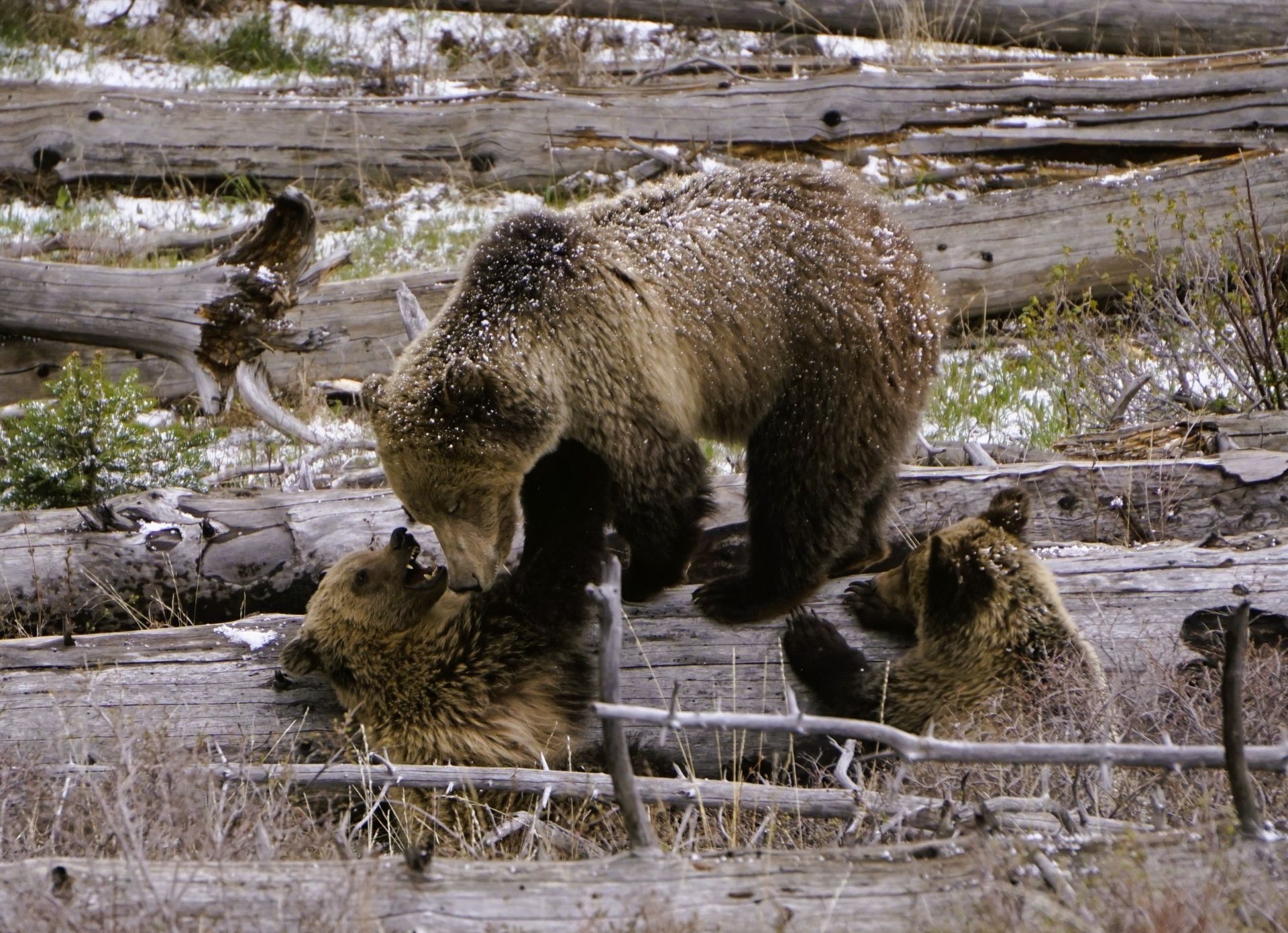
To get to the Bitterroot Mountains, bears must pass through a valley filled with people, roads, garbage and fruit trees. "So knowing where they are more likely to end up is helpful to address things that could be difficult for humans or bears," Sells told Live Science.
The people problem
The data is also confirming that the greatest barrier bears face comes from human contact or transportation infrastructure across the entire Yellowstone-to-Yukon region. Studies from across west-central North America report that humans directly or indirectly caused between 77% and 90% of grizzly bear deaths from 1989 to 2015. Hunting, managed kills in urban areas and road and rail collisions all take a toll.
Bears running across the road in Glacier National Park. (Image credit: National Park Service (Glacier National Park))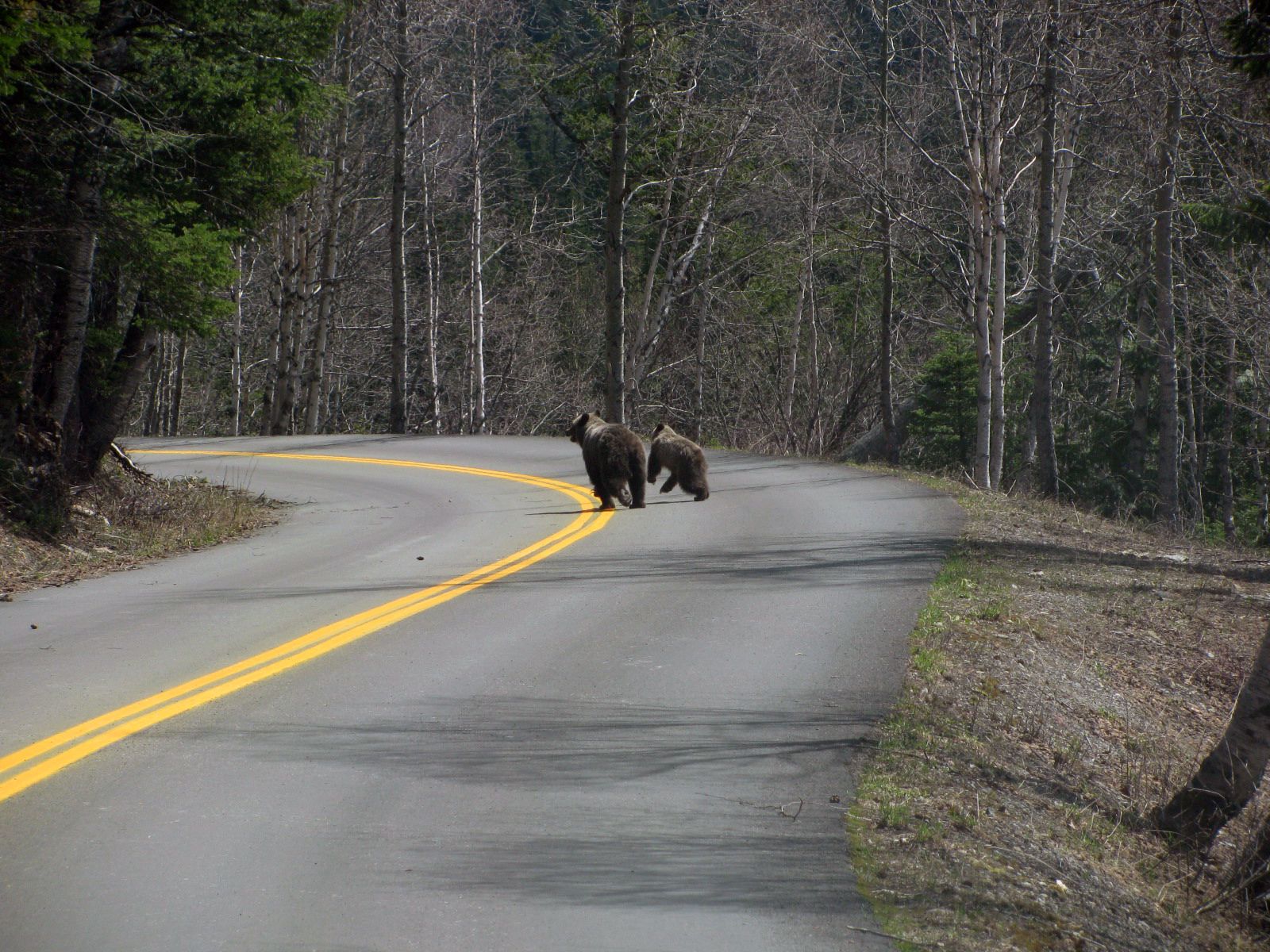
Bears in the wild usually avoid people, but some bears seek out human-dominated areas because they know these places are a source of food. People move to the Elk Valley in southeastern British Columbia because they love nature, but then they plant apple trees in their backyard, which attract bears, said Clayton Lamb, a wildlife scientist at the nonprofit Biodiversity Pathways.
Quickly, a bear eating backyard apples gets labeled a "problem bear," "when really it is a 'people problem,'" Lamb told Live Science.
Even human recreation takes a toll on bears' health and ability to move freely. Lamb's research has shown that grizzly bears try to avoid areas next to busy cycling and hiking trails.
To minimize human-bear conflict, Michelle McLellan, a wildlife ecologist at Biodiversity Pathways, has tracked trail use by both people and grizzlies in the West Kootenay region of British Columbia. McLellan documented people's habits using trail cameras and apps such as Strava Metro. Her research shows that the bears use the trails to move quickly between foraging spots but have learned not to use the trails that are most popular with humans. Consequently, the Nelson Cycling Club decided to close certain trails in the spring and cautioned riders about when and how to use the open trails. "Ride aware, make noise, slow down when needed," the club cautioned in its May newsletter.
Working with information from McLellan, the club has cut back overgrown vegetation along sight lines to prevent mountain bikers from startling bears at close range. They've also constructed wooden platforms on sections of trails that clatter and rumble as bikes pass over them, giving bears early notice of approaching riders. "The key is to not surprise them by making a lot of noise." McLellan told Live Science, noting that grizzlies are more likely to attack if they are surprised.
One advantage of having human mountain biking and hiking trails concentrated close to towns is that it focuses recreation into specific areas, Lamb said. Keeping trails condensed supplies multiple accessible paths and reduces humans encroaching on true wilderness — prime bear habitat. "The goal would be to ensure that there's sufficient recreation opportunities for people to stay healthy and connected to their local landscape while ensuring that wildlife can still move around and access their habitats," Lamb said
Learning to share
As humans increasingly live, work and play in bear territory, it's important to recognize the impact on the animals, Servheen said. "The bears never get a day off," he said. "Every day, they're trying to stay away from people and make a living in a place with multiple people on the landscape."
Bears expend a lot of much-needed energy trying to avoid people, and they won't be able to do that forever, Servheen said. As humans increase the development of private lands and recreation in bear territory, the squeeze is on. "There's going to be more conflicts with bears, and more dead bears," Servheen said.
The bears have done their part, Lamb said. His research has shown that bears living near humans are adapting by becoming mostly nocturnal, which reduces their odds of clashing with humans. "So, we need to meet them where they are at and see what we can do to share the space," Lamb said.
On the human side, people need to make it less tempting for bears to be in human dominated areas, McLellan said. That means keeping garbage stowed and making sure there is no ripe fruit available. "If you live rurally, you want them to be able to pass through your property but not linger near your home or in your front yard," McLellan said.
Bears have proved to be adaptable and persistent; Lingenpolter tried to cross the highway dozens of times before finding a way under. However, Servheen warned that we are putting them in a tough spot. To keep bear populations stable, scientists need data on bear behavior to help inform land management policies that create safe pathways for grizzlies to move through human dominated areas and regulate recreation with bears in mind, Servheen said.
"If we want to have bears in the future, we need to think about the needs bears have for some level of space on the landscape," Servheen said.
Securing that space across the vast Yellowstone to Yukon landscape requires more than just land acquisitions and highway overpasses — it requires increasing public awareness and counteracting the perception that bears are inherently aggressive and irrational, Proctor said. If people understand bear behavior, they can learn to act in ways that neither attract bears nor threaten them. And understanding the totality of bears’ strong drive to survive, and protect each other, can elicit empathy and motivation to protect this iconic species.
Michael Proctor as he collars a bear. (Image credit: Jane Palmer)Exclusive to Live Science Pro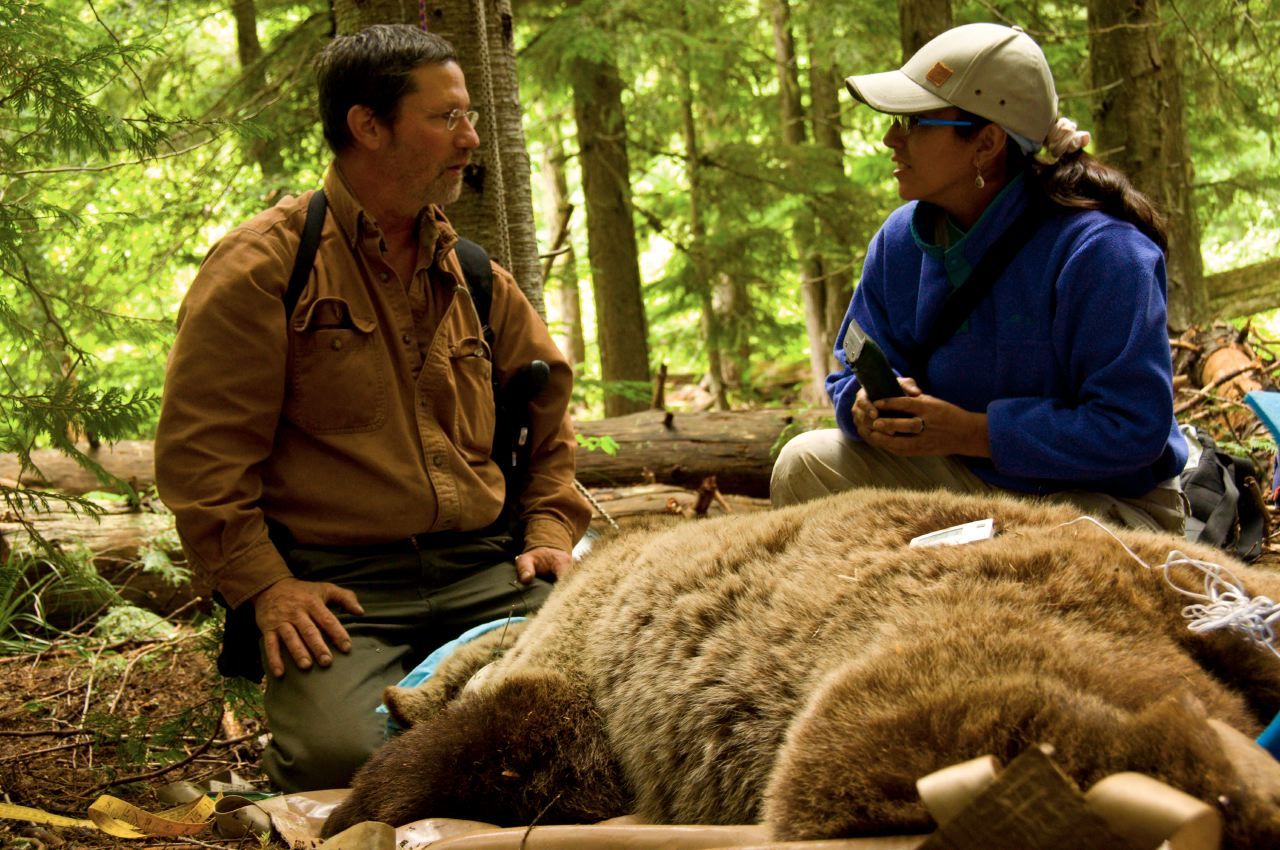
- 'It's nature calling to humans, and humans deciding whether or not to reply': Why we need to start paying attention to our mutually beneficial relationships with other species
- Bear hair and fish weirs: Meet the Indigenous people combining modern science with ancestral principles to protect the land
Early in his career, Proctor captured, immobilized and radio-collared a mother grizzly with her two yearlings, or newly adolescent bears. While the research team worked, the young bears circled quietly at a distance. When the scientists finally stepped back and the mother began to stir, the yearlings approached cautiously. As the mother's groggy head rested on a log, the yearlings' long-clawed front paws delicately explored the radio collar. Then, each one rested its head directly on hers, to form a quiet pile of three bear heads.
"They just wanted to touch mom after this ordeal," Proctor said. "Yes, grizzlies can be rough and dangerous but they can also be gentle at times," Proctor said.
Reporting and travel for this story was supported by the Sitka Foundation and the Science Media Centre of Canada.
Help us improve Live Science Pro: We're always trying to make our content better. Leave us feedback about Pro here.