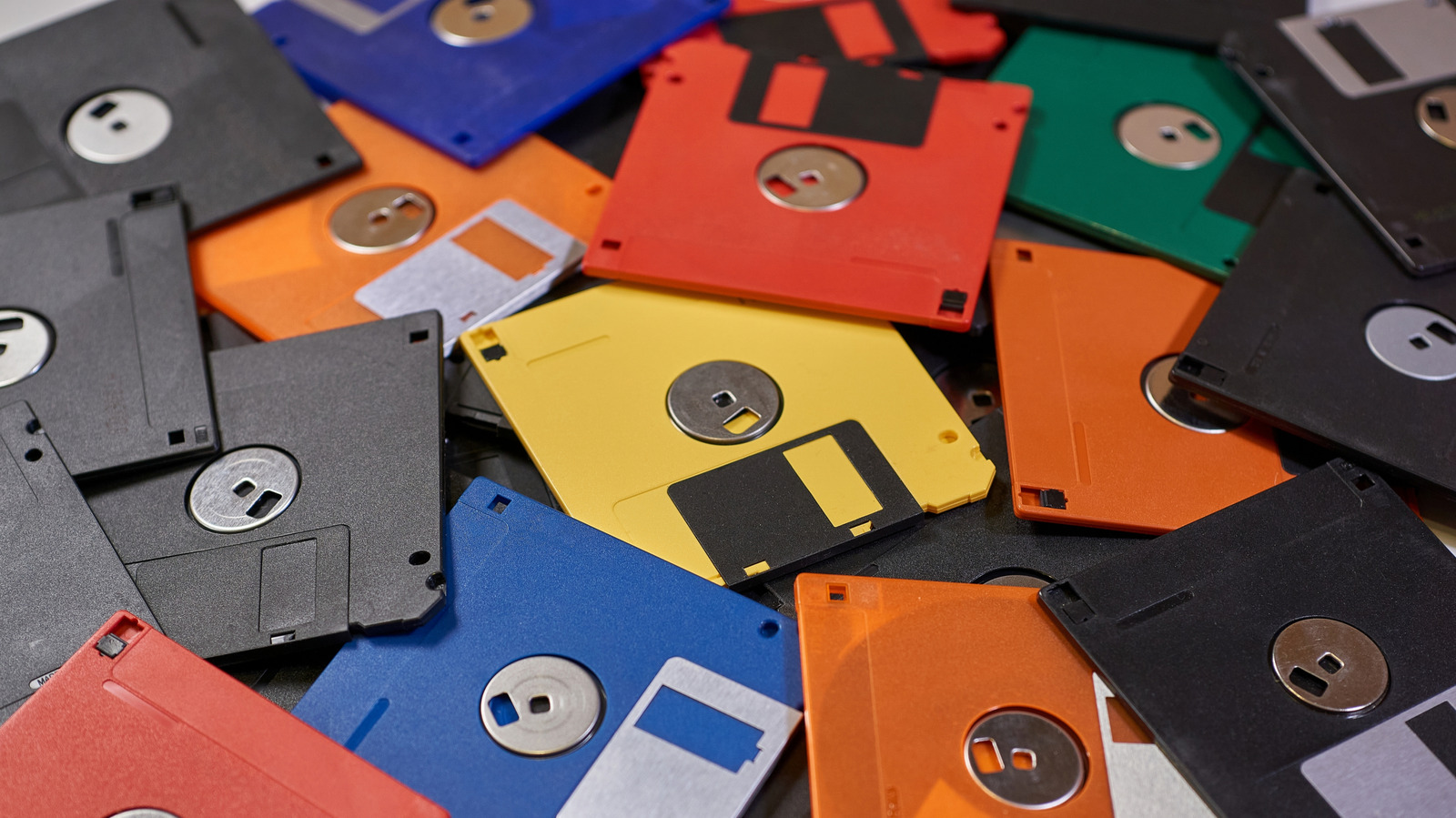
The first USB flash drives held 8MB; today's biggest hard drives hold 44TB.
By Luke James Nov. 21, 2026 9:15 am EST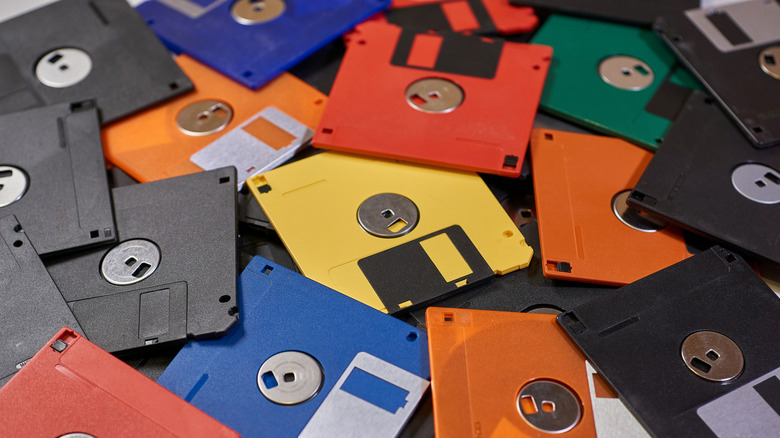 Yauheni Kazlou/Shutterstock Add Engadget on Google: Preferred Source Google Discover
Cast your mind back 25 years to 2001. You've just finished writing a school essay, or crafting a playlist of freshly ripped MP3s, and now you've got to get it off the family PC. There's a large beige tower humming away under the desk and a box of floppy disks in the drawer — or, if your household was particularly techy, a spindle of blank CDs. If whatever you wanted to pull from the PC was bigger than 1.44MB, the floppy disk was out.
Back then, storage was something you could hold, label and lose by dropping it down the back of the desk. On-device storage was also a premium commodity, with an entry-level PC having a hard drive capacity of 10GB or so. Today, the largest consumer hard drives top out at around 24TB to 30TB, while commercial ones go as high as 44TB and consumer SSDs reach around 8TB.
Nowadays, though, most of our data sits on those commercial hard drives in a data center we'll never see. And after years of getting cheaper, all that space has started getting more expensive.
Floppies, Zip disks and burned CDs
In the early 2000s, hard disk manufacturers were quoting less than $60 for those 10GB drives, or about $6 per gigabyte. Anything you wanted to carry between machines usually went on a 3.5-inch floppy, a format that's got so much nostalgia behind it that one YouTuber created a floppy from scratch. And as you've likely noticed, the floppy is still used as the "save" icon in many programs today.
Sony alone was selling tens of millions of them per year in 2002, even after Apple had dropped the floppy format from the iMac in 1998. Mass-market floppy disk production ended in 2011 when Sony, the last major manufacturer, stopped making them. They're still used in some industries, most notably in air traffic control, though the Federal Aviation Administration has said it'll phase them out by 2028.
Iomega's Zip drive, meanwhile, was the upgrade for anyone who'd outgrown the floppy. It launched in 1995 at $199, with 100MB disks that cost about $20 apiece, but it came with a nasty problem. A failing drive would click over and over as it tried to read a disk that it couldn't — a defect that became known as the "click of death." Iomega was hit with a class action lawsuit over it in 1998.
That aside, Iomega's (and the floppy disk's) biggest problem was the humble CD-ROM. Holding about 700MB (seven times as much as a Zip disk) it eventually finished them both off. CDs have even experienced their own revival in the last several years.
DVDs should logically have been next in line, but with burners like Pioneer's DVR-A03 retailing for close to $1,000 in 2001, it was an unaffordable option for the average household.
Flash drives and the cloud
Just as CD-ROMs were taking over, a little-known, underused technology also emerged that would eventually clear out those drawers full of floppies and ROM disks. Singapore's Trek called it the ThumbDrive, while IBM sold one designed by Israel's M-Systems as the DiskOnKey.
While they may have only held 8MB (roughly five floppies' worth of space), they hung on your keyring and plugged right into a USB port with no driver or burning software needed. They also utilized speedy flash memory. By February 2003, Dell had started dropping the floppy drive as standard from its Dimension desktops, instead offering a 16MB USB key for $20 in its place. "There's a percentage of our user base that can't remember the last time they've used [floppy drives]," a Dell spokesperson said to eWeek at the time.
Of course, a flash drive had the same weakness as everything that came before it: you could lose it or leave it plugged in somewhere for someone else to find. The solution to this came from Amazon back in 2006, when it introduced a service called S3, renting out space on its servers for 15 cents per gigabyte per month.
It was initially aimed at developers, not people looking for space to stash their holiday photos, but it's the same infrastructure Dropbox ran on when it launched in 2008 with 2GB of free space. Suddenly, you had a folder that copied itself to every computer you owned, meaning there was no longer any need to physically burn, carry, label and eventually lose physical storage.
Storage today
 dba87/Shutterstock
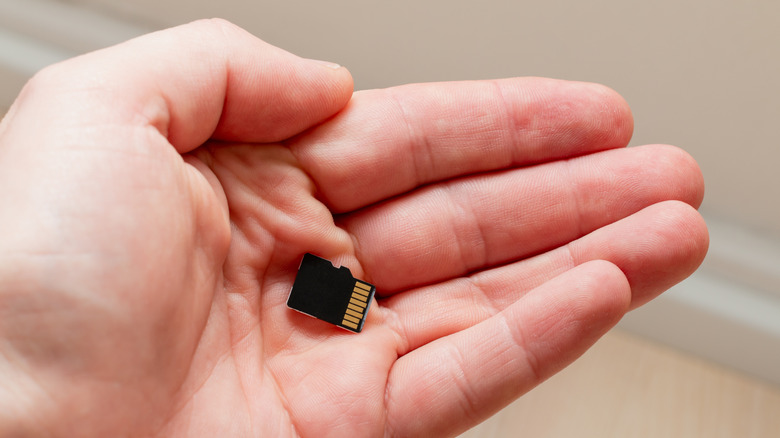
Fast forward to today, and Seagate is producing 44TB hard drives at volume, which is 4,400 times the size of that 10GB drive from 2000. Meanwhile, a 2TB microSD card, something smaller than a fingernail, can hold as much as nearly 1.4 million floppies.
You can't buy the former yourself, though. Seagate's 44TB drives are currently sold only to two hyperscale cloud providers. Beyond that, many of us stopped relying fully on our own local storage years ago. Our phones upload our photos to the cloud without thinking, with a small amount of free storage with your Google, Apple or other account. Alas, that soon runs out when you've got a few years' worth of photos and videos stacked up.
The research and advisory firm Gartner reckons that combined DRAM and SSD prices will keep rising, reaching a 130 percent increase by the end of the year, as institutional buyers inhale memory and flash storage faster than factories can make it. Hard drives aren't immune from price increases either, because the same cloud companies are buying those, too.
It used to be the case that you could count on the same money buying you a bigger drive more or less every year, but that's not so anymore. At least for now.