- Published1 hour ago
- 24 Comments
Over more than 75 years of Formula 1, there have been some iconic cars which have become huge fan favourites.
Sometimes that is because they have been successful and are associated with certain drivers, sometimes it is purely down to aesthetics - or quite often it is a combination of both.
Spanning the 1950s to 2025, we have drawn up a shortlist which incorporate evocative names from F1 past and present: Maserati, Ferrari, Lotus, Brabham, McLaren, Mercedes, Jordan, Renault and Red Bull.
We have mostly kept the list to no more than one car per team, although we have made an exception for Ferrari and Lotus - given their longevity and the memorable cars they have produced.
Have a look over our selection below and then choose your favourite...
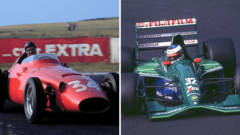
Maserati 250F, 1954-60
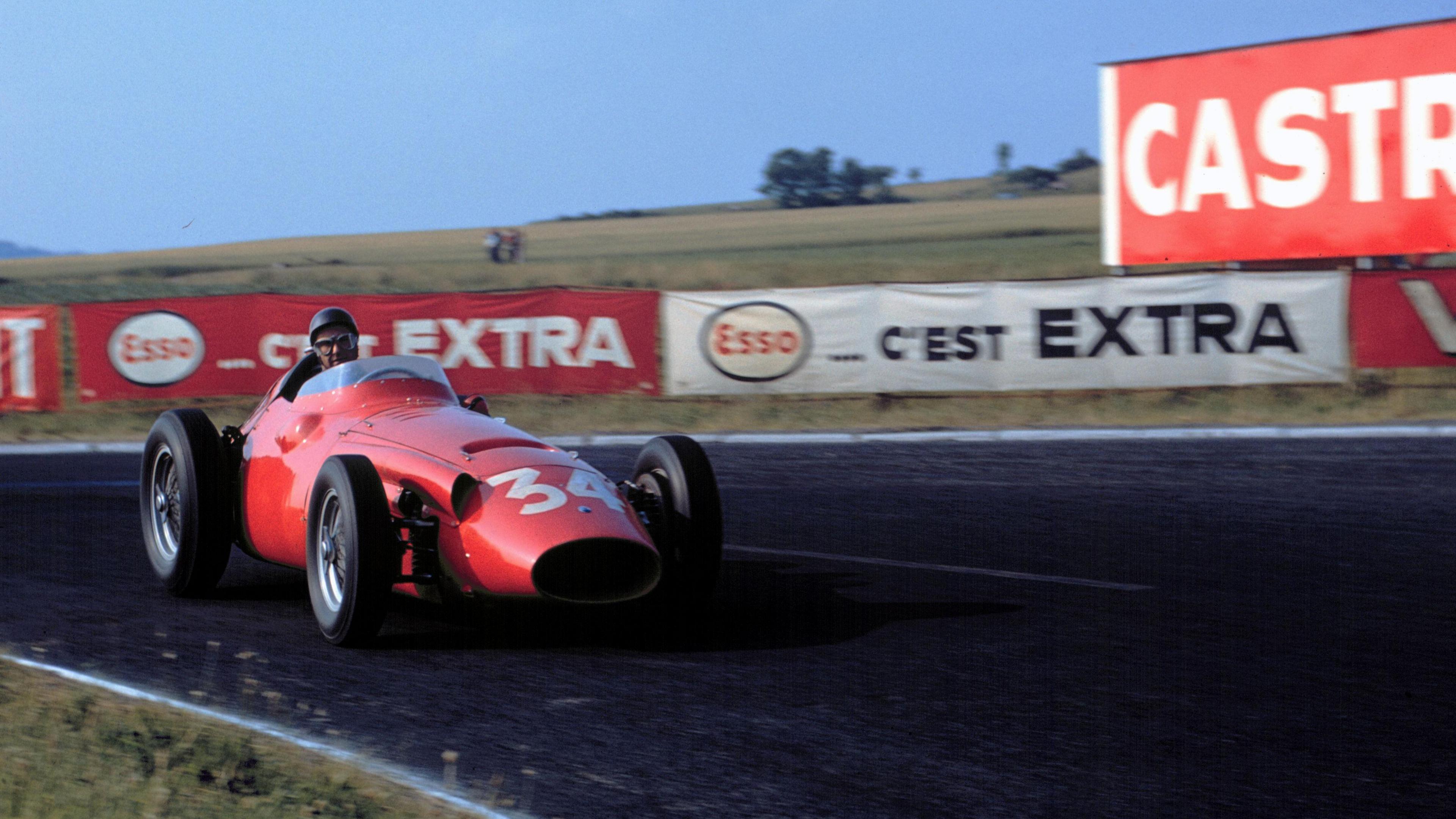 Image source, Getty Images
Juan Manuel Fangio is pictured above driving the Maserati 250F during the 1958 French Grand Prix, the final race for the five-time world champion who dominated the first decade of F1.
Fangio drove the 250F to victory in its first race, the 1954 Argentine Grand Prix - his home event.
It was also in this front-engine car that Fangio came from 50 seconds behind to catch and pass Ferrari's Mike Hawthorn and Peter Collins to win the 1957 German Grand Prix at the 14-mile Nurburgring, lapping 15 seconds faster than the old lap record for one of F1's greatest victories.
'Sharknose' Ferrari 156, 1961
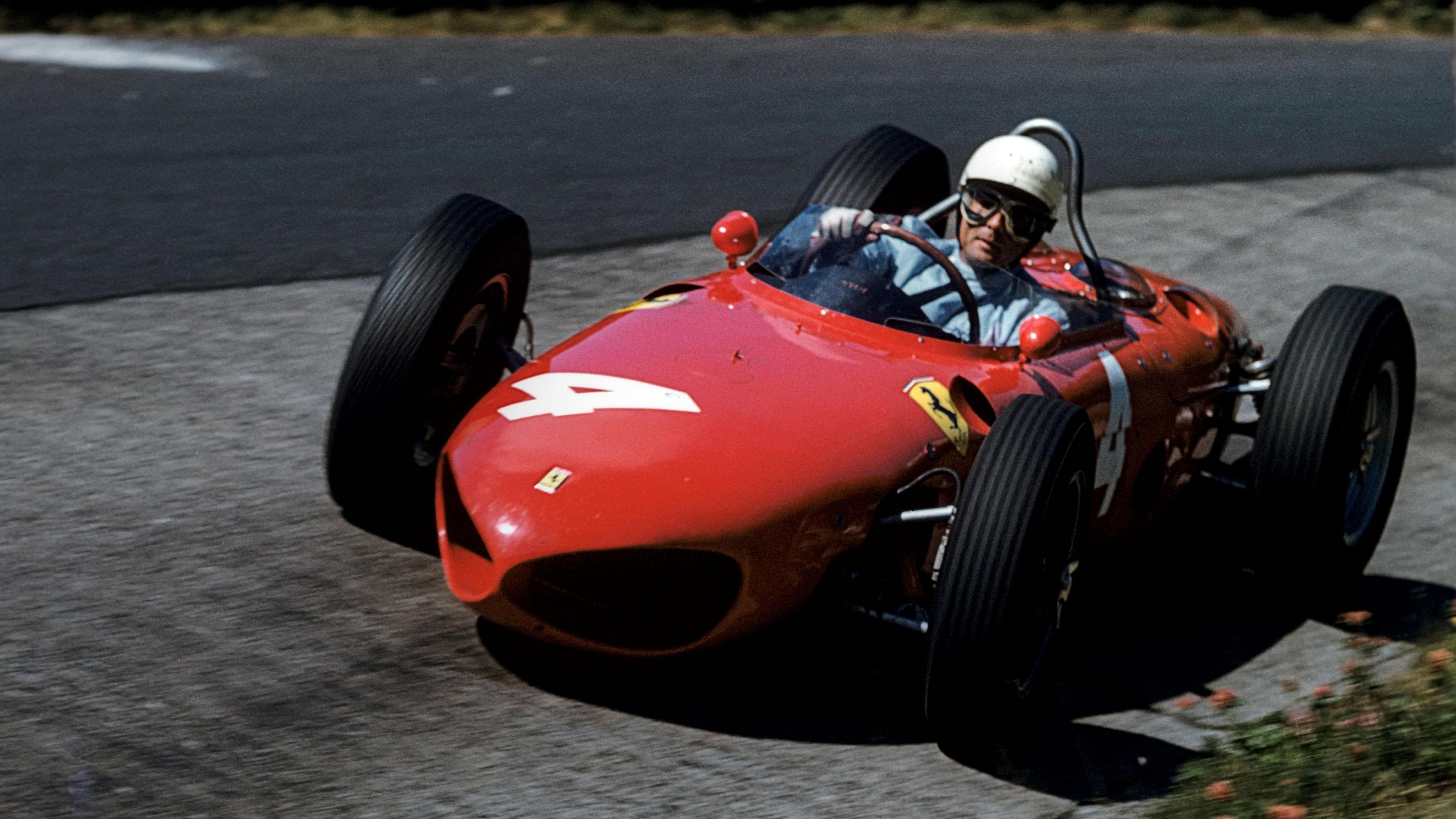 Image source, Getty Images
The 'sharknose' Ferrari 156, with a twin-nostril front end, dominated the 1961 season, winning five of the eight races, including the British Grand Prix at Aintree where they finished 1-2-3.
The championship became a straight fight between team-mates Phil Hill and Wolfgang von Trips and it was decided in tragic circumstances when the German was killed in a horrific crash at Monza, which also claimed the lives of 15 spectators.
American Hill is seen above driving the 156 during the 1961 German Grand Prix at the Nurburgring, a race in which he finished third behind Von Trips and the winning Lotus of Stirling Moss.
Eagle Mk1, 1966-69
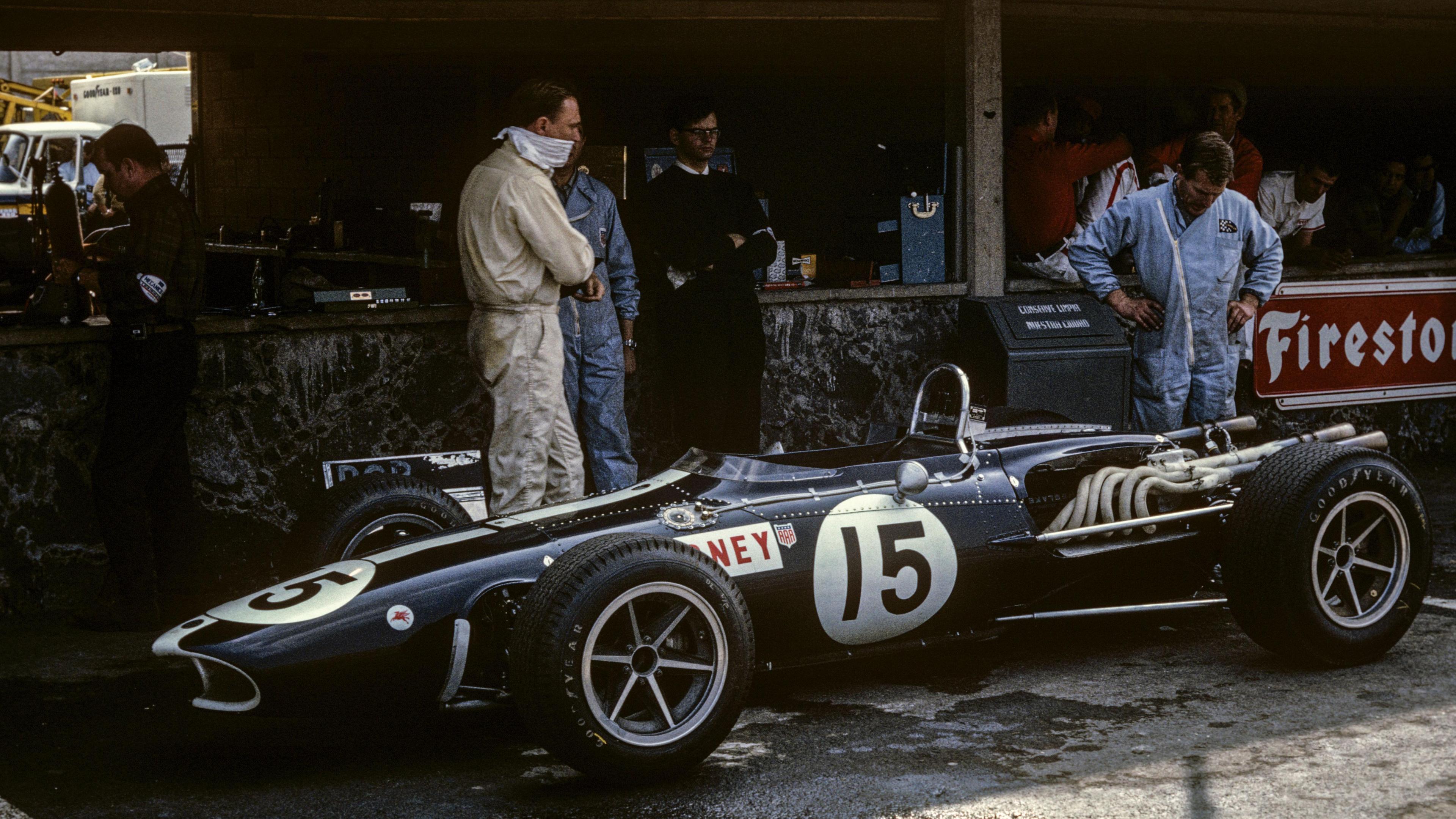 Image source, Getty Images
Built for Dan Gurney's Anglo American Racers team, the elegant Eagle Mk1 was dark blue with a white stripe at the front.
It won the 1967 Belgian Grand Prix with Gurney at the wheel - Jack Brabham and Bruce McLaren are the only other drivers to have won an F1 race in a car run by their own team.
Gurney is pictured looking over the Mk1 in the pits at the 1966 Mexican Grand Prix.
Lotus 49, 1967
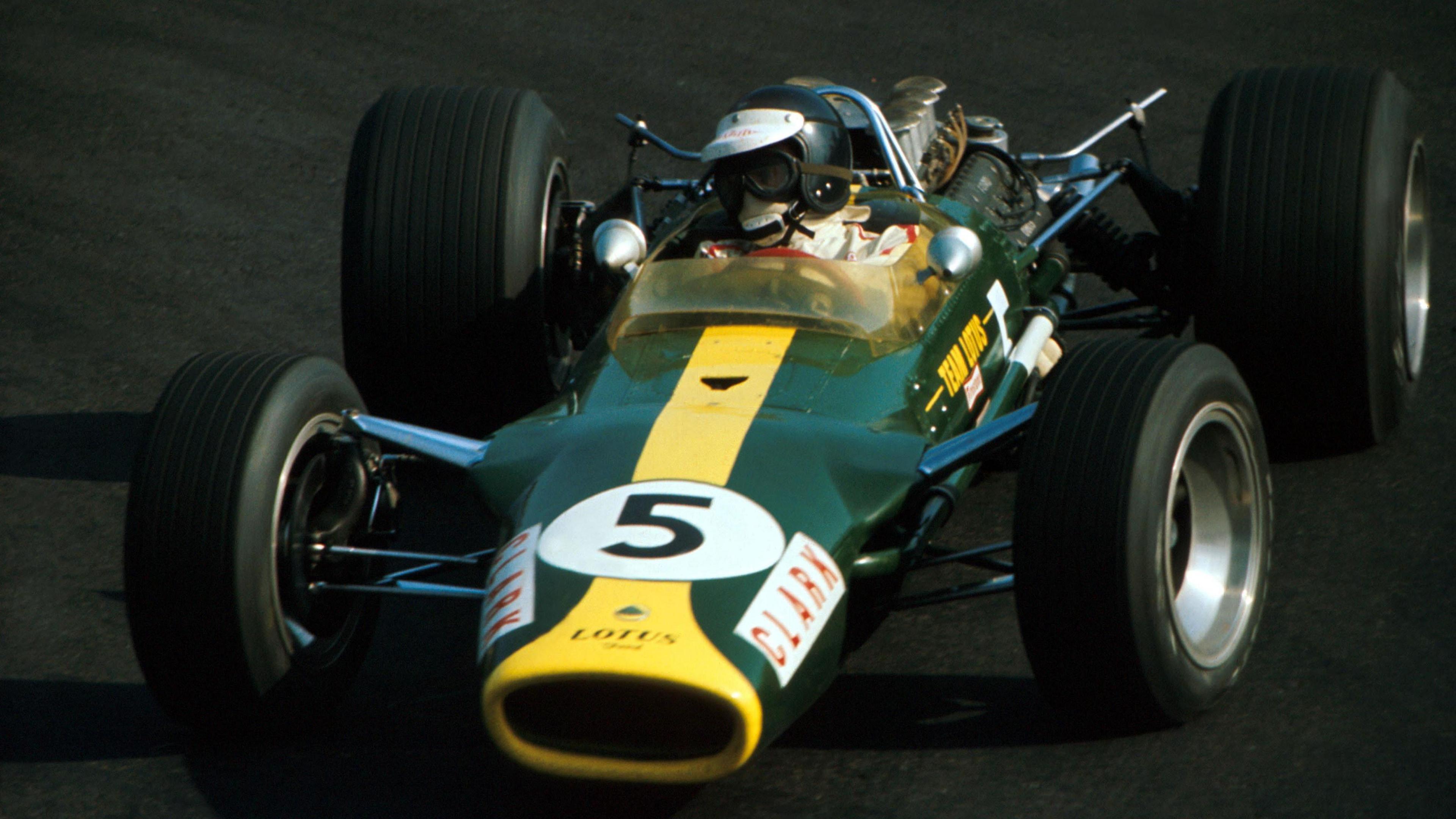 Image source, Getty Images
The Lotus 49 was introduced in 1967, the final year in which the team competed in British racing green with a yellow stripe at the front. Tobacco sponsorship arrived in 1968 via Gold Leaf and the Lotus became red, white and gold.
The 49 was designed by Colin Chapman and Maurice Philippe and was the first F1 car to be powered by a Ford-Cosworth DFV engine.
It won on its debut at the 1967 Dutch Grand Prix through Scotsman Jim Clark and though reliability issues meant it could not win the championship that year, Englishman Graham Hill took the title in 1968 after Clark's death in a F2 accident.
Lotus 79, 1978
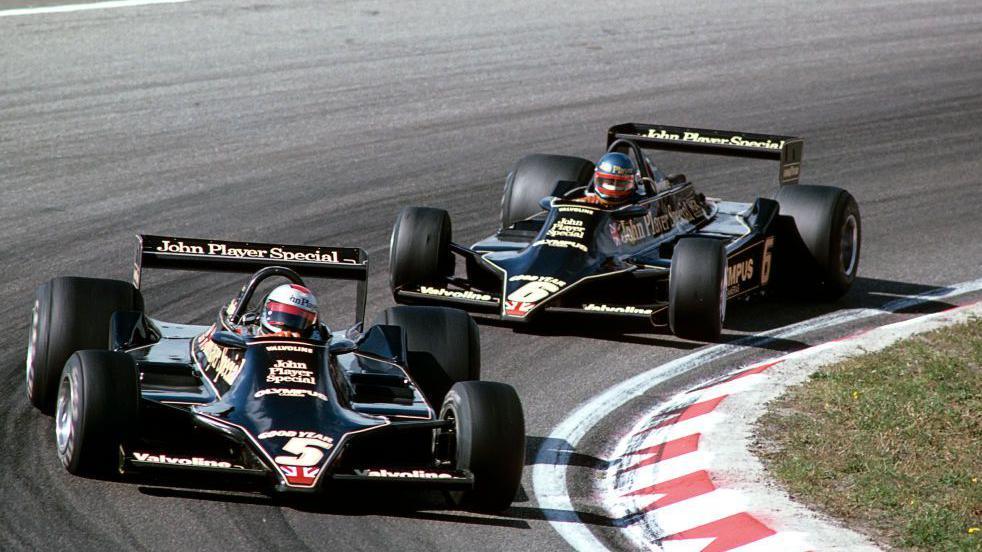 Image source, Getty Images
By 1978, Lotus were racing in livery that also would become iconic - their black and gold which was used, on and off, until 1986.
For the car itself, the Lotus 79, designer Colin Chapman perfected 'ground effect', where air flowing under the car was channelled to create hitherto unheard of levels of aerodynamic downforce.
The design speeded up airflow to create a low-pressure area that sucked the car down on to the track. Vertically sliding 'skirts' were used to prevent any air escaping out of the sides.
The car dominated the 1978 season, with eventual world champion American Mario Andretti saying it cornered "like it was painted to the road".
Brabham BT46, 1978
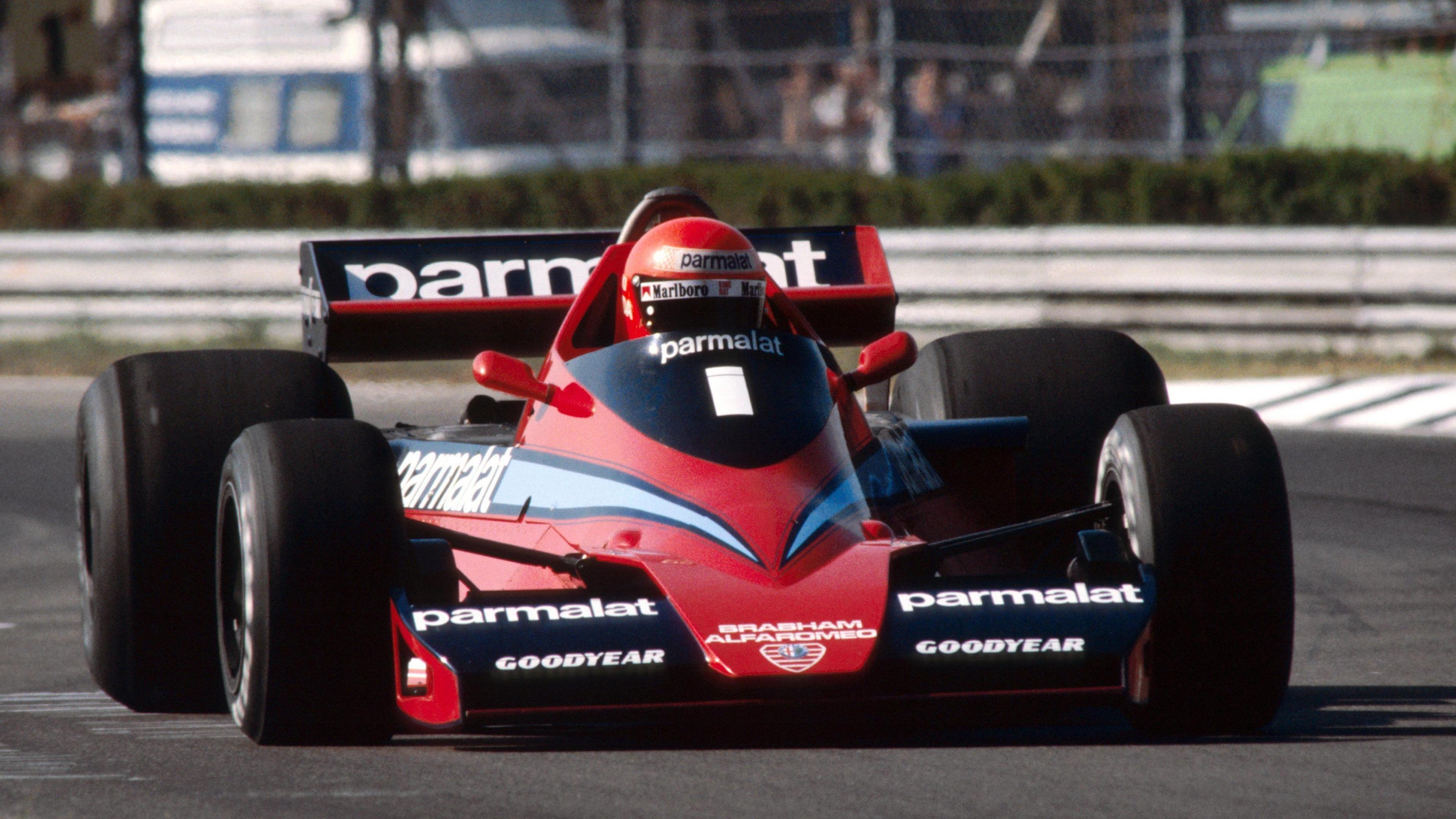 Image source, Getty Images
The Brabham BT46, designed by Gordon Murray, was eclipsed by the dominant Lotus 79s in 1978 but did manage to win two races through Niki Lauda, in Sweden and Italy. In the first of these, the Brabham ran with a giant fan at the rear.
In theory, the fan was there to cool the engine but it had a side effect of extracting air from beneath the car, sucking it to the track. After protests, it never raced again.
McLaren MP4/4, 1988
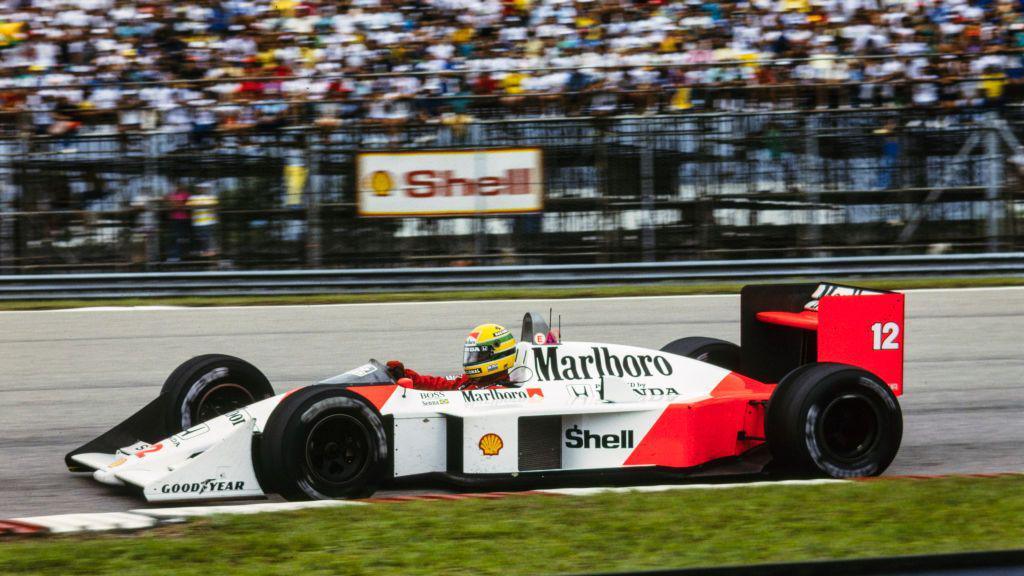 Image source, Getty Images
Until 2023, the McLaren-Honda MP4/4 was the most dominant car in F1 history, winning 15 of the 16 races in 1988 with Ayrton Senna taking his first drivers' title ahead of team-mate Alain Prost.
Also designed by Gordon Murray, the MP4/4 had a striking 'low' appearance. It looked fast and it was fast. Very fast.
It obliterated the opposition and only the carelessness of a backmarker prevented a clean sweep, as Jean-Louis Schlesser punted Senna off as the Brazilian attempted to lap him with two laps to go of the Italian Grand Prix. An almost perfect season for an almost perfect car.
Ferrari 641, 1990
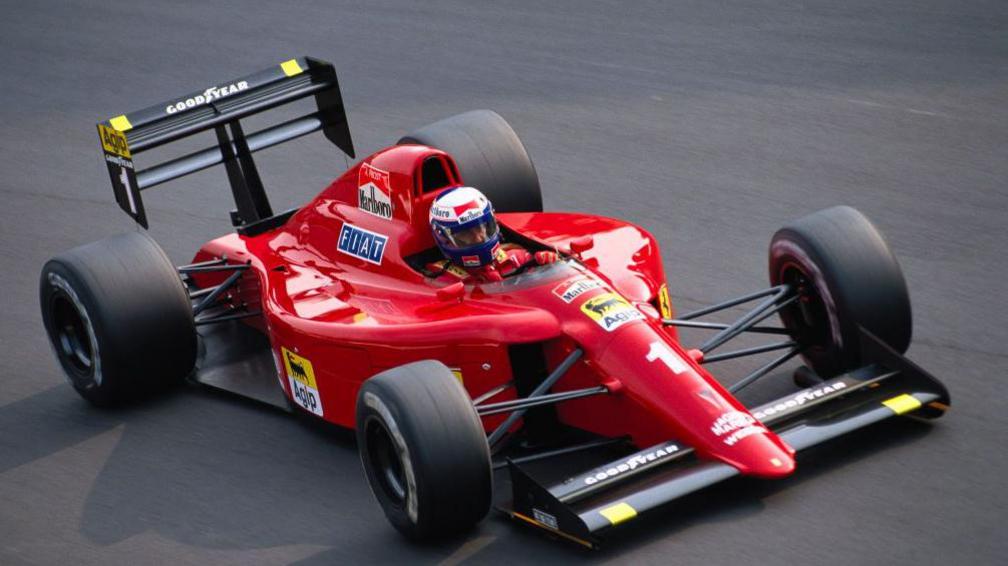 Image source, Getty Images
The elegant curves of the scarlet Ferrari 641 was given the honour of being displayed in New York's Museum of Modern Art. The car itself, driven by Alain Prost and Nigel Mansell, had more about it than just looks, winning six of the 16 races in 1990.
Frenchman Prost contended for the drivers' championship with by now bitter rival Senna and his hopes only ended when the Brazilian drove him off the track at the first corner of the Japanese Grand Prix.
Jordan 191, 1991
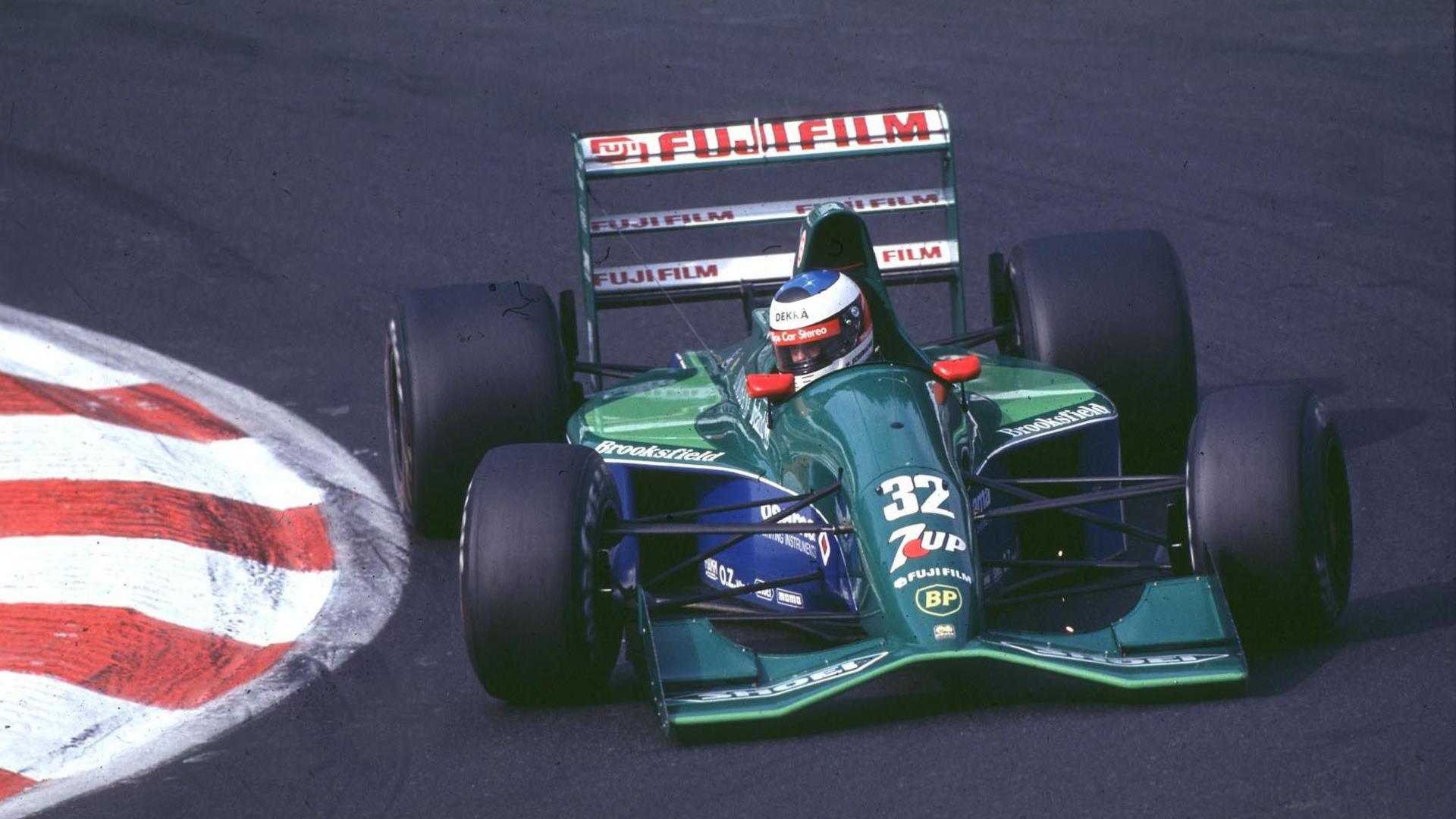 Image source, Getty Images
The car in which Michael Schumacher made his debut, the 191 was the first F1 car produced by Eddie Jordan's small team.
Designed by Gary Anderson, the green 7UP sponsorship fitted with Jordan's Irish background and it was an impressive debut season, with journeymen drivers Andrea de Cesaris and Bertrand Gachot regularly picking up points in the first half of 1991 at a time when only the top-six finishers were rewarded.
For the Belgian Grand Prix, Jordan needed a replacement for Gachot, who had been jailed in the UK for using CS gas in an altercation with a London taxi driver. In came Schumacher from sportscars and he was an immediate sensation, qualifying seventh - more than 0.7 seconds ahead of De Cesaris.
A clutch failure on the first lap caused Schumacher's retirement and by the next race in Italy he had been poached by the Benetton team.
Williams FW14B, 1992
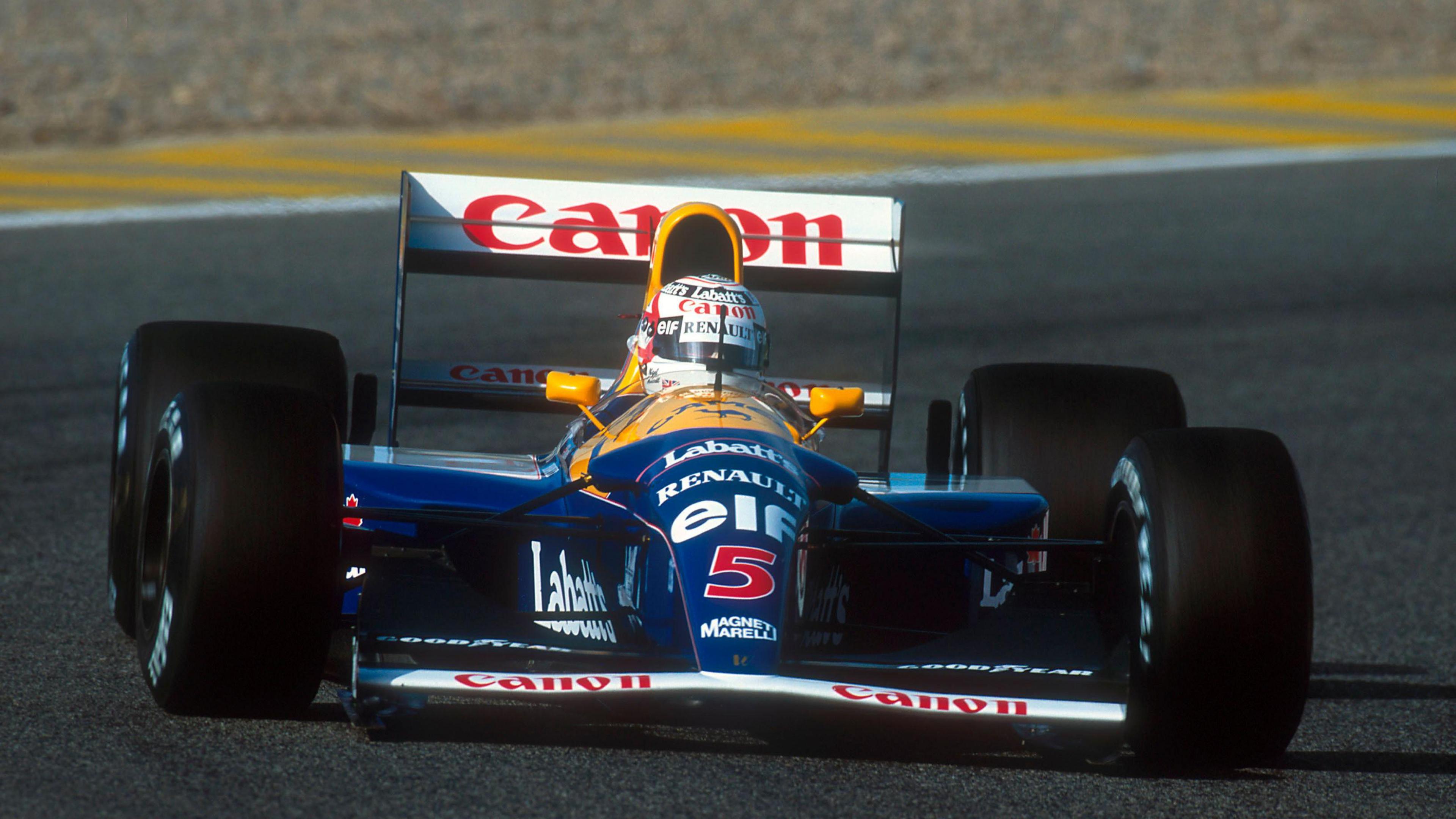 Image source, Getty Images
The Williams FW14B was the car that delivered Nigel Mansell's world title, after three previous near-misses.
It was the class of the field in 1992 as Williams pioneered and perfected an active suspension system and were powered by a Renault engine that eclipsed the Honda in the McLaren.
Briton Mansell won nine of the 16 races and had wrapped up the championship by the Hungarian Grand Prix in mid-August.
Renault R25, 2005
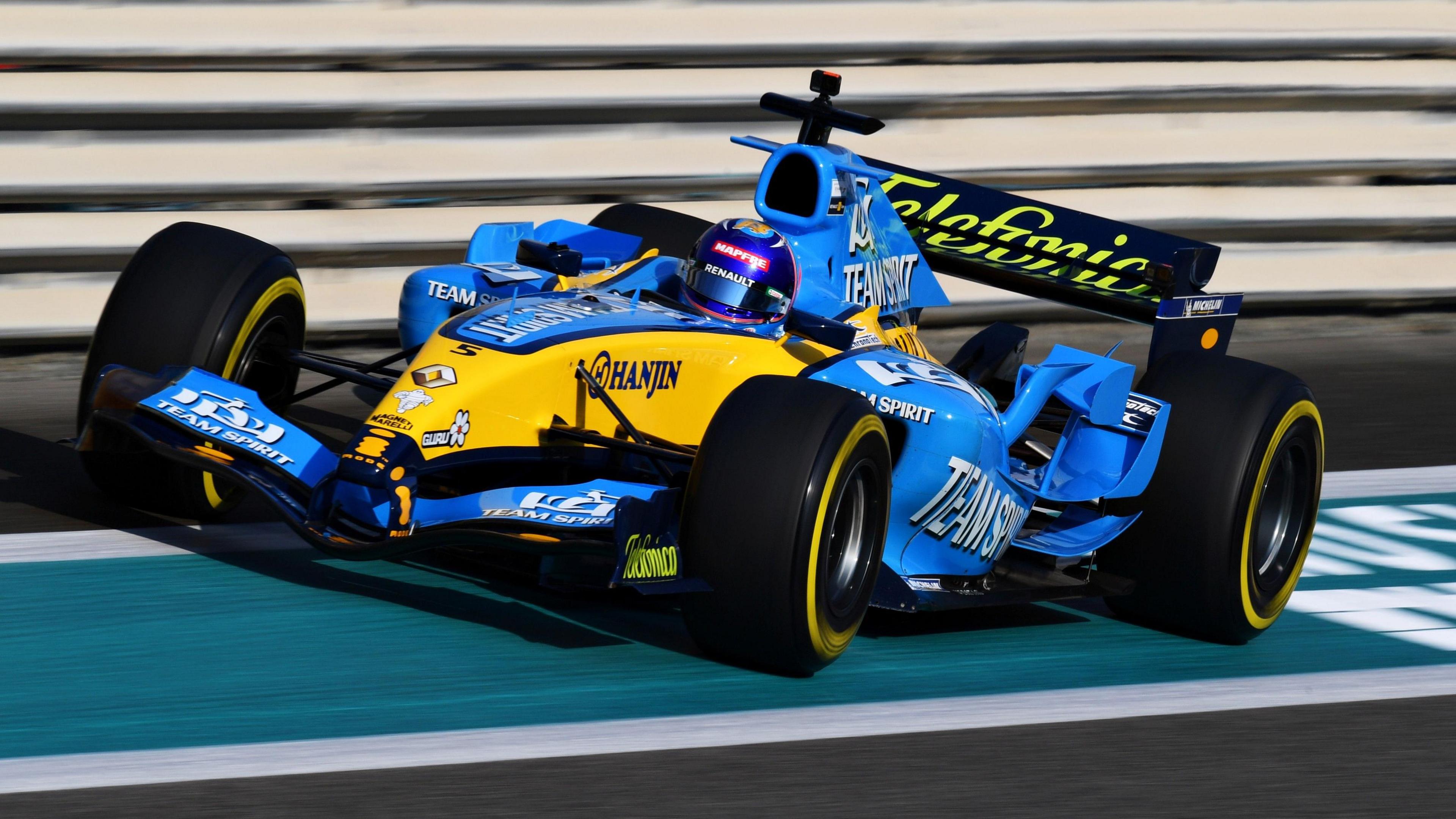 Image source, Getty Images
The R25 was the car in which Fernando Alonso won the first of his two drivers' championships.
In the final year of the three-litre V10 formula, Alonso's race craft and consistency, combined with the car's speed and reliability, overcame the fast but fragile McLarens.
The Spaniard, still in F1 at the age of 44, is pictured above driving the R25 at the 2020 Abu Dhabi Grand Prix.
Mercedes W11, 2020
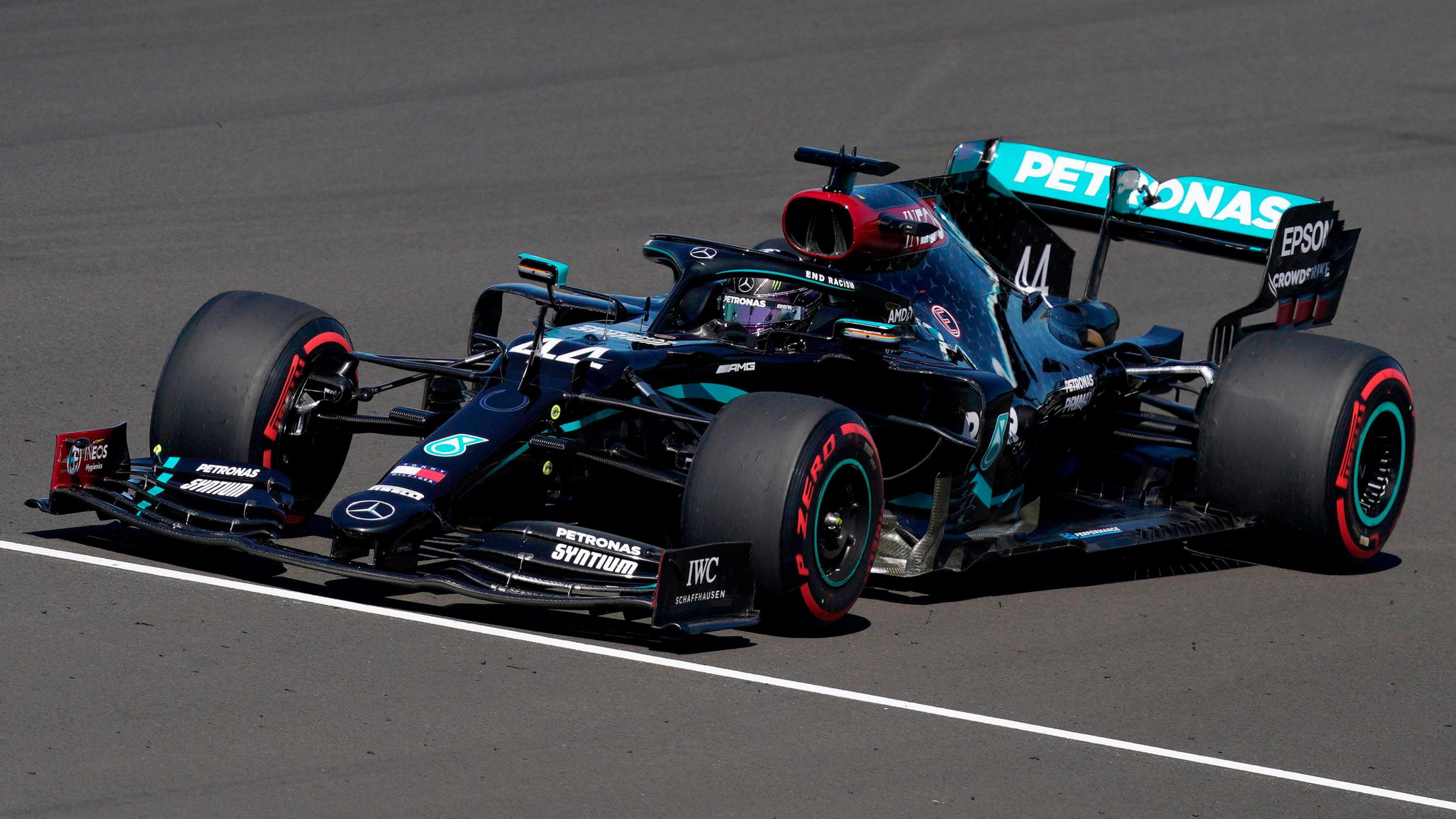 Image source, Getty Images
The Silver Arrows became black in 2020, which Mercedes said was a way of displaying its commitment to increase diversity and stand against racism.
The W11 is the first car in his list to feature the halo head protection device, which became mandatory in F1 in 2018.
The W11 continued Mercedes' domination of the hybrid-turbo era that began in 2014, winning 13 of the 17 races in a season compressed into a five-month period by the Covid-19 pandemic.
During the year, Lewis Hamilton broke Schumacher's record for the most F1 wins and then equalled his tally of seven drivers' championships.
Red Bull RB21, 2025
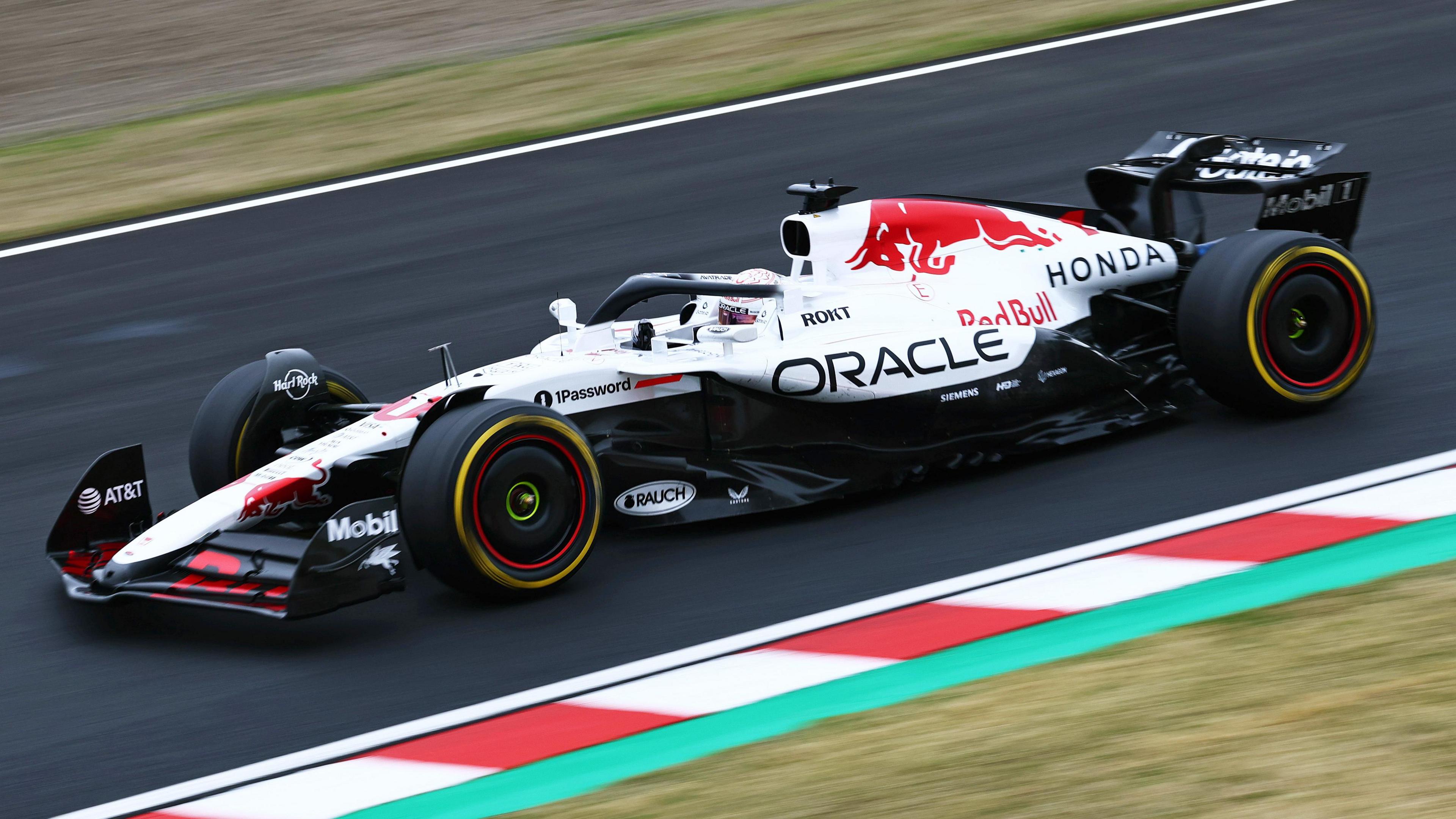 Image source, Getty Images
This version of the Red Bull RB21 was a special one-off livery used at the 2025 Japanese Grand Prix in tribute to engine manufacturer Honda, to mark the last year of their partnership and Honda's first F1 victory in 1965 in Mexico when they raced in white and red.
Max Verstappen ensured this design had a 100% success rate by winning the race at Suzuka, which is Honda's own circuit.
Sorry, this vote cannot be loaded. In order to vote you need to enable JavaScript in your browser.