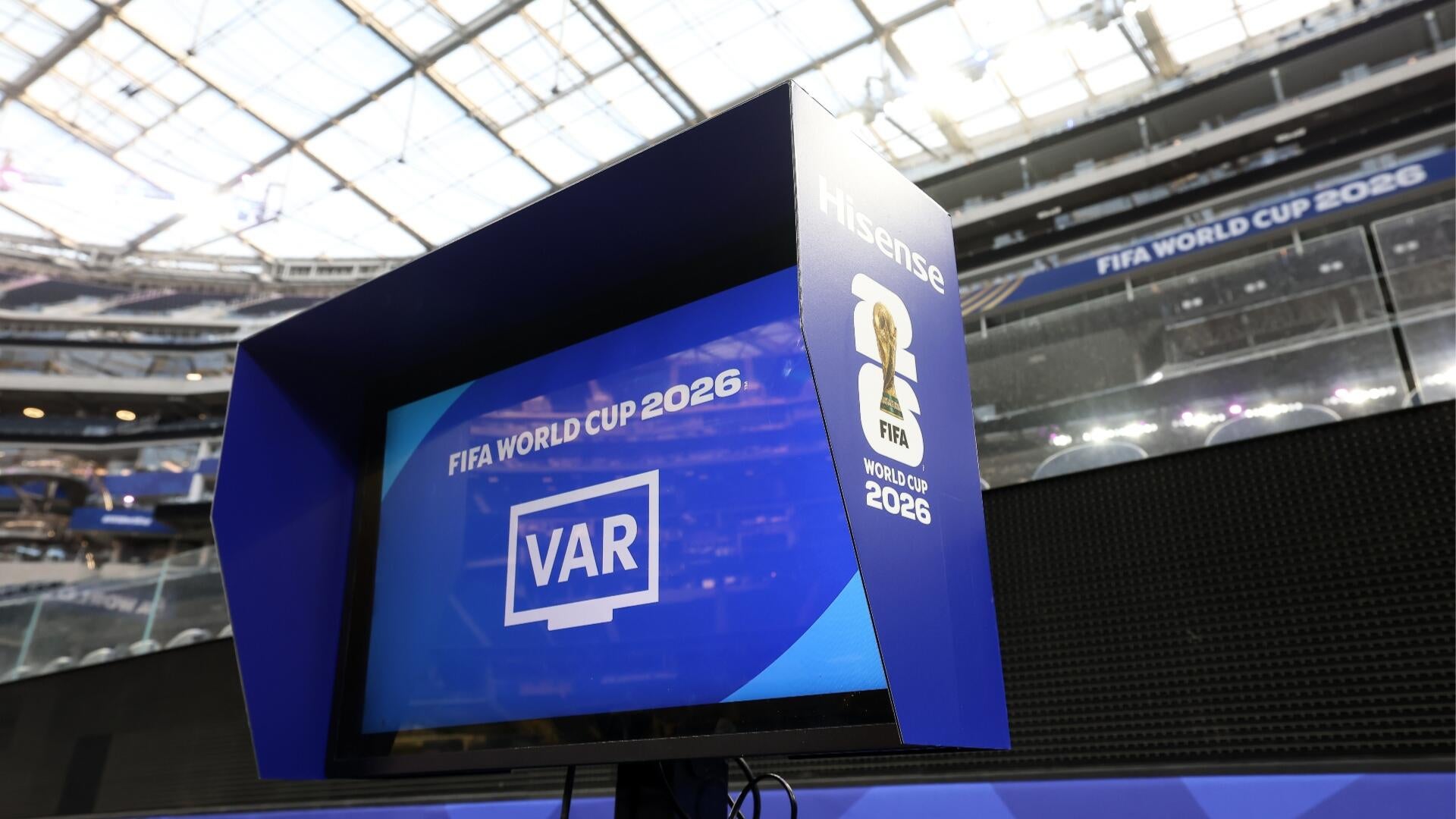
As you watch or read about the World Cup, there's a good chance that you'll see someone talking about VAR. But what is it? VAR is the use of the video assistant referee to review decisions made in a game for clear and obvious errors or missed incidents. Some of those calls, such as checking for offside or goals that have crossed the line, can be done automatically due to sensors embedded in the ball so that its position can always be determined at a moment's notice.
But for other things, such as penalties and other fouls, it can get murkier. It's important to remember the clear and obvious error component because if it's not clear, the VAR is supposed to recommend that the decision made on the field is the one that is kept.
Here's what to know:
VAR procedure
For use, after the original decision is made by the referee, VAR automatically checks the decision. If there is a potential error or missed incident, VAR can initiate a review, prompting the referee to show the TV signal (drawing a box with their hands), and the referee will then go to a monitor to review the footage before making a final decision. There is no time limit on these reviews currently. When a decision is made, the referee will show the TV signal again and then publicly explain and announce the decision that was made.
When is VAR used?
There are five main times when VAR comes into play.
- Goals: To determine if there was a foul, handball, the ball went out of play, or if there is any other interference that should cause a goal to be disallowed or allowed if it was originally called off.
- Penalty kicks: Similar to goals, VAR can give or remove a penalty kick depending on the location of where the offence happened, if there may have been someone offside, committing an offence, or if the ball was out of play, or if the kick was incorrectly awarded or incorrectly not given. It can also make the difference in a foul be given as a penalty or a free kick if on the edge of the box.
- Red cards: VAR can add a red card if it deems that an offense is serious enough, or it can also remove one if it did not rise to the level of a red card event.
- Mistaken identity: Used for red or yellow cards, VAR will ensure that the player who committed the offense is the one to review the card if the referee clearly misidentified a player.
- Clearly incorrectly awarded corner kicks: New for this World Cup, if the decision can be changed immediately and without delaying the restart, corner kicks can be reviewed.
Are there challenges?
Unlike American sports, which have a certain number of times that a head coach can challenge a referee's decision in a game, there is no such mechanism in soccer. VAR decisions are final once decided, and protesting them too much can lead to yellow cards for dissent.
Add CBS Sports on Google Join the Conversation comments