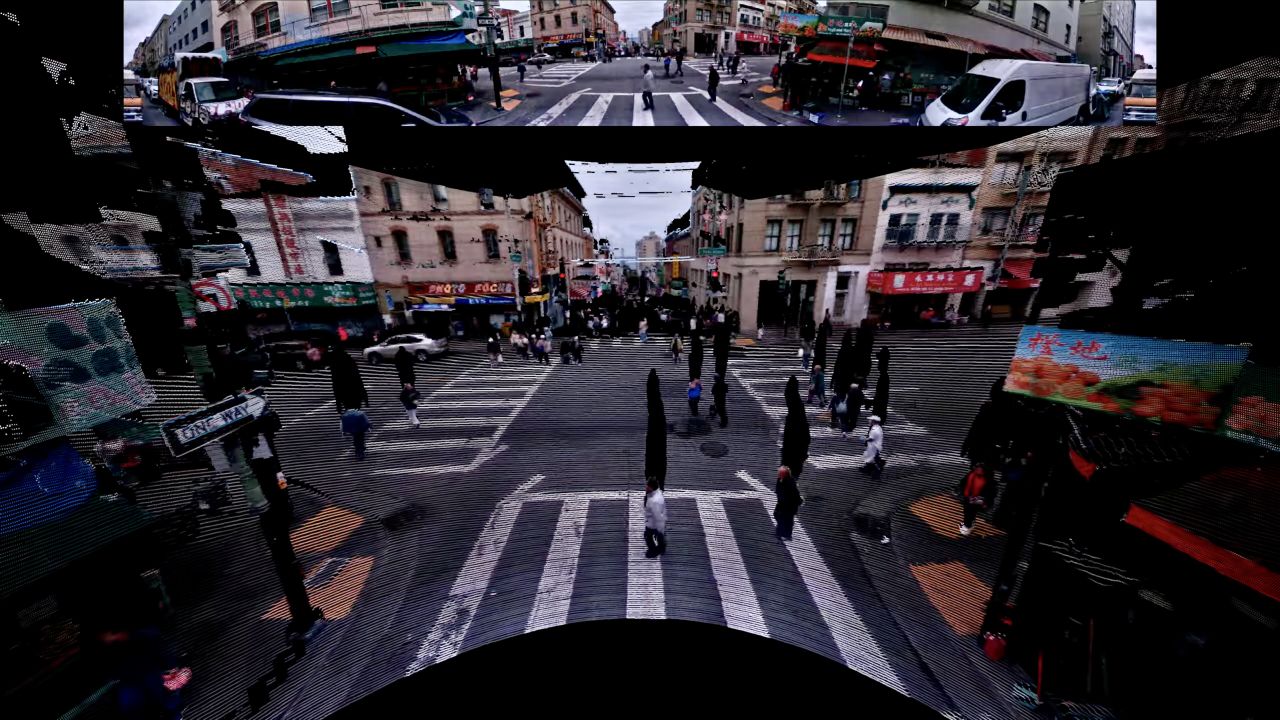
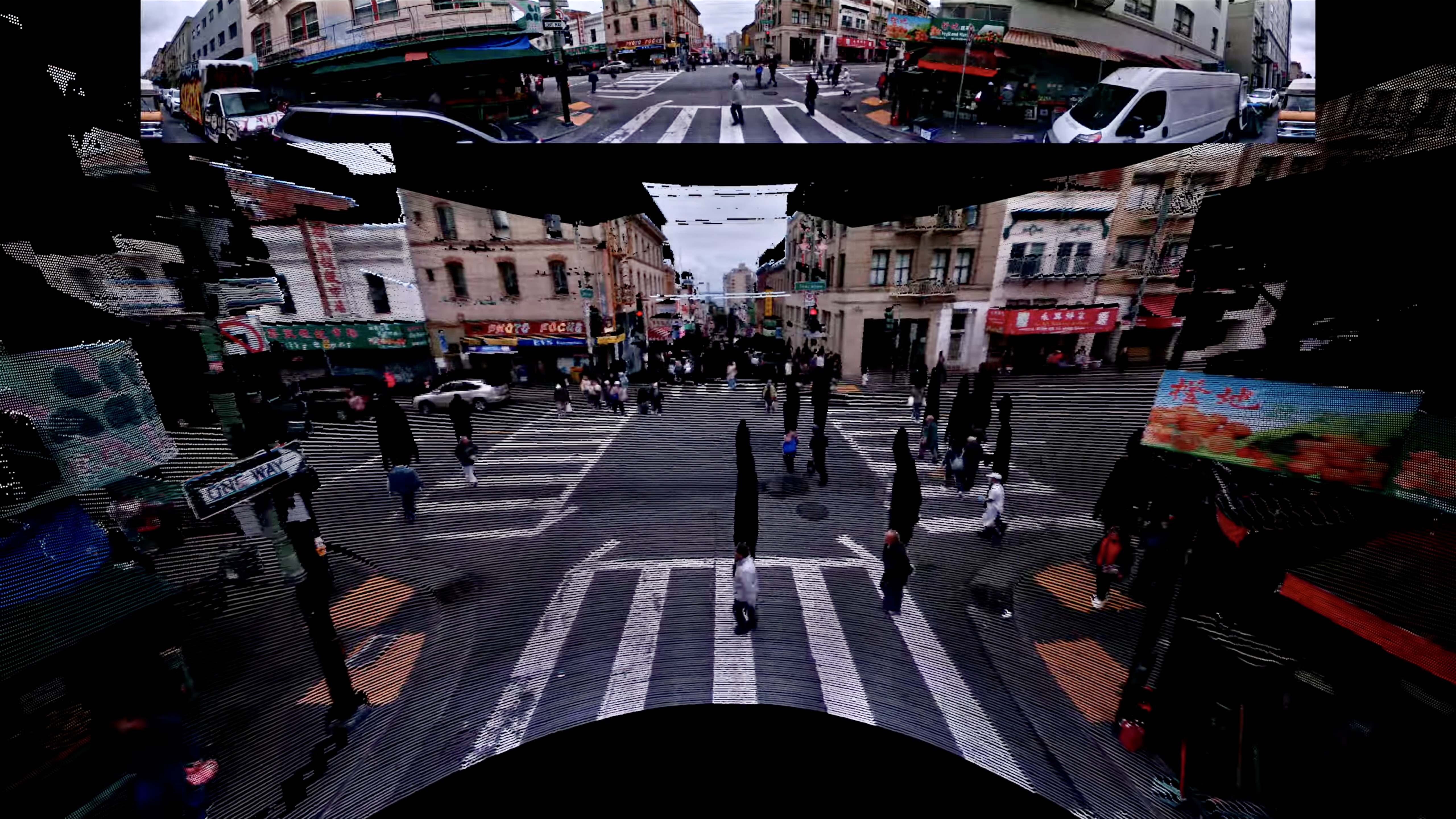
 Rev8 detects both ambient light, like a camera, and the laser light, which tells it how far away objects are. (Image credit: Ouster/YouTube) Share this article 0 Join the conversation Add us as a preferred source on Google Newsletter Subscribe to our newsletter
 A California-based technology company has launched the world's first mass-produced native color light detection and ranging (lidar) sensor, which captures 3D spatial and color data simultaneously.
Until now, autonomous vehicles and robots have relied on separate sensors for each data stream. But the new devices, dubbed "Rev8," could lead to safety improvements, Ouster representatives say, as bots will be able to perceive the 3D and color information of their environment more quickly.
The next generation of lidar
Typical lidar sensors work by emitting laser pulses and measuring the time it takes for the reflected signals to return. This allows them to calculate the distance to objects in their environment with high precision and gather physical information, such as how reflective surfaces are.
A dedicated lidar processing chip converts the return laser signals into points on a 3D map, before sending it to the host computer to aid its decision-making. If the device also needed to "see" in color, it would require a separate camera lens and its data would need to be calibrated with that from the lidar sensor.
What makes Ouster's new Rev8 sensors different is that they detect both laser light for depth perception and ambient light for color information. The new "L4 Ouster Silicon" chip inside builds a 3D map from the laser returns and assigns the corresponding color information to each 3D point at the moment it is generated.
REV8 OS1 MAX with Native Color Freeway Drive - YouTube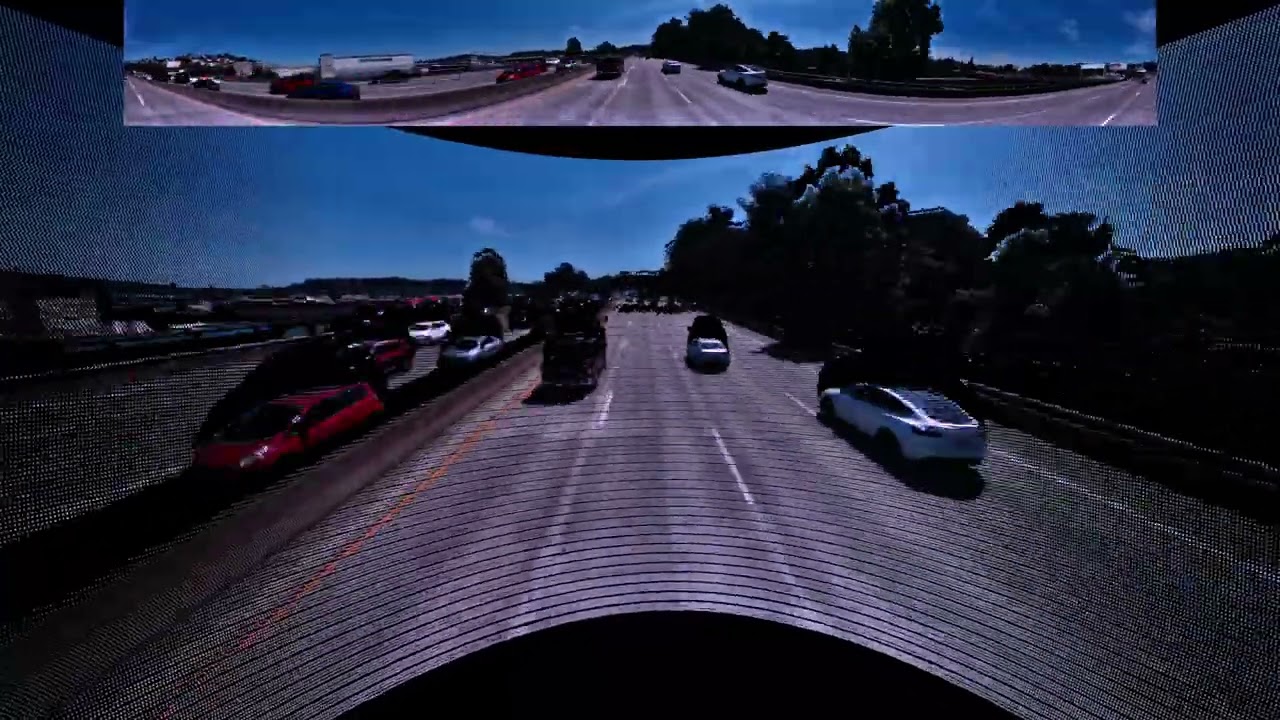 Watch On
 The sensors do this using single-photon avalanche diodes, which can interpret all incoming light at a very high resolution, as each photon triggers an "avalanche" of electrons to produce a strong electrical signal.
Sign up for the Live Science daily newsletter nowContact me with news and offers from other Future brandsReceive email from us on behalf of our trusted partners or sponsorsIndeed, the Rev8 family of sensors can detect up to 20 trillion photons per second with picosecond timing precision, Ouster representatives said. A typical commercially available LiDAR sensor processes detections at a rate of only a few million photons per second.
The Rev8 sensors boast megapixel-like resolution, putting them in the same class as a smartphone camera, but the 48-bit color depth gives them vastly better color accuracy. According to Ouster, the OS1 Max — the most advanced sensor in the Rev8 line — has a detection range of up to 1,640 feet (500 meters) and a 45-degree field of view.
The Rev8 sensors also boast 116 decibels of dynamic range, which describes the ratio between the darkest and lightest light signals they can capture and, as such, their tolerance to extreme lighting. In comparison, the Nikon D850 DSLR camera has a dynamic range of 11.5 f-stops, or about 69 dB.
Why lidar is crucial to the future of robotics
The key benefit of a single sensor capturing both 3D and color data is that the two are already perfectly aligned when they reach the chip, skipping the time-consuming and computationally demanding calibration phase. It eliminates the requirement for a separate camera system, thereby lowering manufacturing costs and saving valuable space within the device.
Removing the calibration step also reduces the margin for error in interpreting the two data streams. This could make autonomous vehicles safer, said John Molloy, an expert in autonomous sensing and AI safety at the University of York in the U.K.
"Native color lidar creates the potential for faster and more efficient perception systems that have a better understanding of their environment while also reducing the size, complexity and, potentially, the cost of autonomous sensing stacks," Molloy, who was not involved in the launch of the new devices, told Live Science in an email. "This could prove particularly valuable in enabling safer, more affordable, and more widely deployable autonomous mobility."
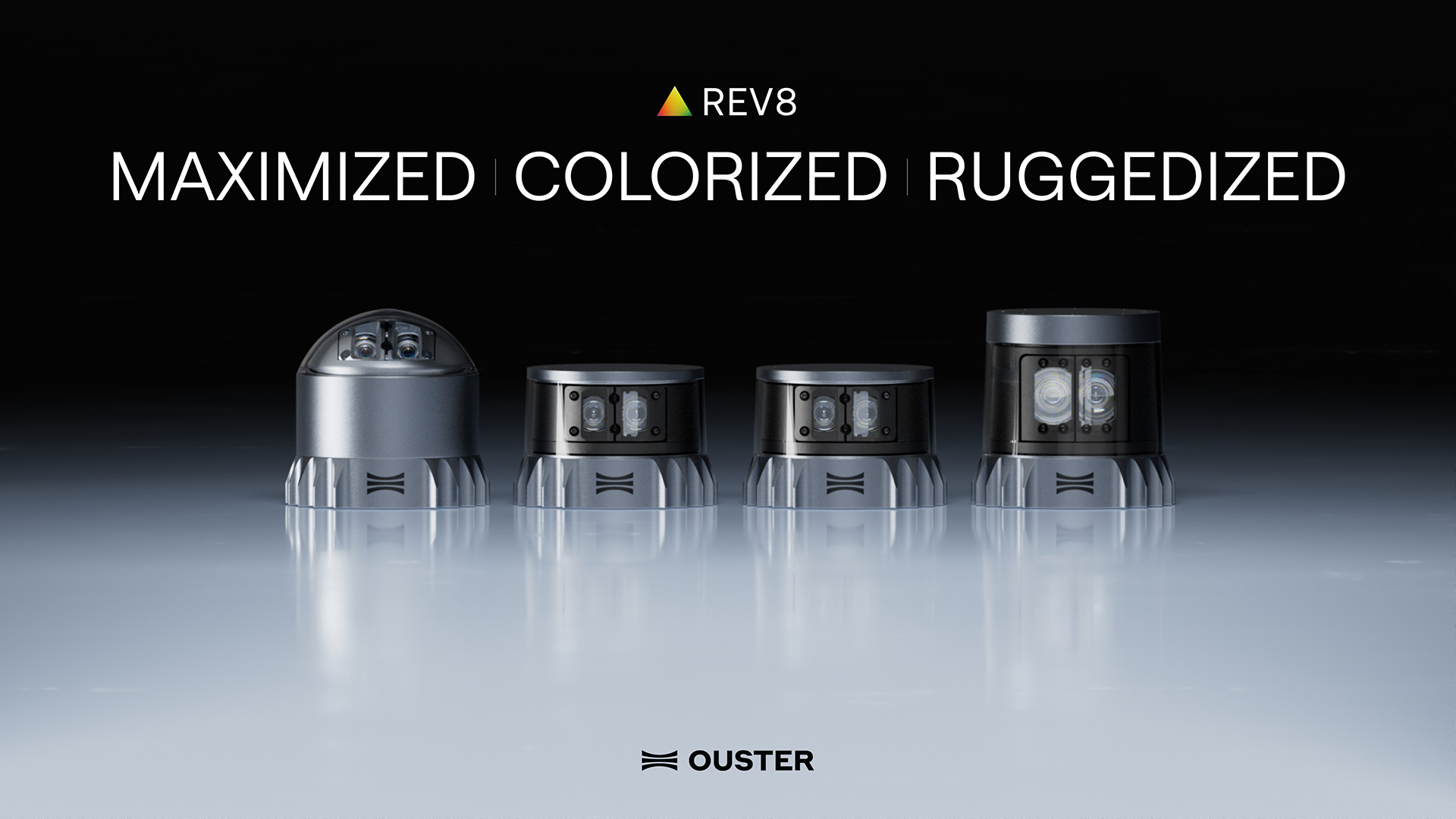
The Rev8 family of sensors can detect up to 20 trillion photons per second with picosecond timing precision.
(Image credit: Ouster)Rev8 allows sensors to collect higher-quality 3D color data required to build "world models" for embodied AI systems, Ouster representatives explained in the statement. Scientists say these world models — neural networks that use data points from the real world — are needed to train systems like humanoid robots or self-driving cars to navigate and manipulate the world around us.
Demand for the latest and greatest lidar sensors is growing, with Ouster's sensors already used in autonomous systems produced by the likes of Google and Volvo.
Related stories- New EV motor invention could cut 1,000 pounds from future vehicles, making them much lighter while boosting their range
- Secretive X37-B space plane to test quantum navigation system — scientists hope it will one day replace GPS
- The first flying taxis could start operating in 2026
Waymo has deployed robotaxis in major cities across the U.S. and plans to begin operations in London this year. Humanoid robots are expected to take on an increasing number of roles in education, medicine and eldercare, while industrial robot installations have more than doubled since 2004.
Ouster is not the only company with its sights on a hefty chunk of the robot sensor market. In April, China-based Hesai unveiled a new lidar sensor that also processes color and 3D depth information directly within the chip. Unlike Rev8, however, it has yet to enter mass production.
Sensor technology for autonomous vehicles has reached an even more advanced level in research labs. Last summer, scientists from the University of Rochester and the University of California revealed their penny-sized laser that could emit 20 quintillion pulses of light per second and accurately interpret objects moving at up to 89 mph (143 km/h).
 Fiona Jackson
Fiona Jackson is a freelance writer and editor primarily covering science and technology. She has worked as a reporter on the science desk at MailOnline, and also covered enterprise tech news for TechRepublic, eWEEK, and TechHQ.
Fiona cut her teeth writing human interest stories for global news outlets at the press agency SWNS. She has a Master's degree in Chemistry, an NCTJ Diploma and a cocker spaniel named Sully, who she lives with in Bristol, UK.
View MoreYou must confirm your public display name before commenting
Please logout and then login again, you will then be prompted to enter your display name.
Logout