
 Andy Burnham. Photograph: Tayfun Salcı/ZUMA Press Wire/ShutterstockAndy Burnham. Photograph: Tayfun Salcı/ZUMA Press Wire/ShutterstockAndy Burnham considers radical shake-up to cut energy bills
Labour leader examining proposals to overhaul gas standing charges and make heat pumps cheaper to run than boilers
Andy Burnham is considering radical plans that could cut household energy bills by £130 a year and make running a heat pump cheaper than a gas boiler.
In his speech on Friday as he became the new Labour leader, Burnham promised to reduce the price of “essentials”, and a cost of living package is expected to be one of his first announcements in Downing Street.
The energy proposal, drawn up by the thinktank Nesta and being examined by Burnham’s team, would change the way household gas is charged and remove some policy levies from bills, at a cost of £3.2bn a year to the taxpayer.
Making electricity cheaper relative to gas would make running heat pumps a more attractive option, and shave £130 off average bills.
Andrew Sissons, the director of Nesta’s sustainable future project, said: “For years, legacy policy costs have been heavily loaded on to electricity bills, making clean heating options artificially expensive.
“By combining a zero-taxpayer-cost reform of the gas standing charge with these targeted tariff cuts, the government can deliver around £130 a year in immediate financial relief for the majority of UK households, while making clean heating the cheapest option on the market.”
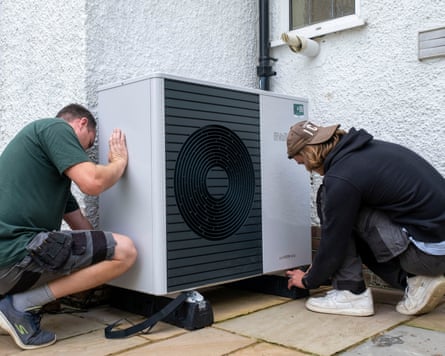 Speeding up the adoption of heat pumps would burnish Burnham’s green credentials. Photograph: Andrew Aitchison/In Pictures/Getty Images
Speeding up the adoption of heat pumps would burnish the new PM’s green credentials, which have been questioned by some in Labour since it emerged that he had rejected the energy secretary Ed Miliband as his chancellor in favour of the home secretary Shabana Mahmood.
Burnham insisted on Friday that he had made no final decisions about his top team, which is expected to be announced on Monday.
Under the proposed reforms, Nesta argued, the government should also wipe out the backlog of consumer electricity debts, at a one-off cost of £2.7bn. As well as providing debt relief for about 2 million households, this bailout would cut the £29 a year paid by all households to cover the cost of unpaid bills.
The costs of any package would have to be met in the new chancellor’s first budget this autumn – potentially through tax rises.
Nesta’s approach targets the controversial standing charge on gas bills, which some argue unfairly penalises low-income households. The standing charge, often likened to a telephone line rental, is separate from the rate charged for gas used and currently adds about 29p a day to bills to cover the cost of maintaining gas grids and meters regardless of how much or little energy a household uses.
Moving these charges into the overall cost means higher-income households, which tend to use more gas, will shoulder more of these grid costs than homes with small incomes or those in fuel poverty. Energy bills would fall for 84% of the poorest households, according to Nesta, saving £22 a year from bills overall.
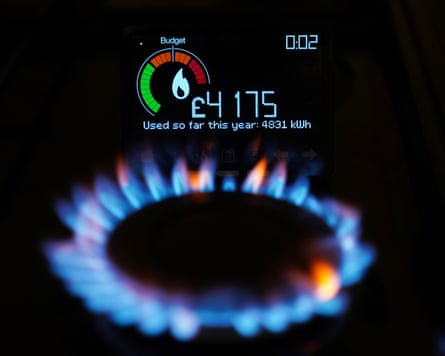 Some argue that the standing charge on gas bills unfairly penalises low-income households. Photograph: Yui Mok/PA
The shift would also create greater savings for those who choose to cut their gas use by installing an electric heat pump, according to the report.
It recommended moving the remaining levies used to pay for renewable energy subsidies into general taxation to lower electricity costs by £42 a year, and reducing the rate of VAT on electricity bills to save another £41 a year.
Together, Nesta calculates, the changes would be worth about £130 a year, further boosting savings for those opting to replace gas boilers and combustion-engine cars with electric alternatives.
Moving renewable energy levies off household bills echoes an approach taken by Rachel Reeves at last year’s budget, as part of a series of measures by the outgoing chancellor aimed at tackling inflation.
Without intervention, household energy bills are expected to rise this winter as the conflict in the Middle East pushes up the cost of oil and gas.
Reeves had insisted she would not offer costly across-the-board support for households, as Liz Truss did in 2022, instead asking Treasury officials to draw up options for more targeted help.
In July, the cap on gas and electricity rates rose 13% to the equivalent of £1,862 a year for the average household.
Burnham’s team was approached for comment.
Explore more on these topicsShareReuse this content