Breaking space news, the latest updates on rocket launches, skywatching events and more!
Contact me with news and offers from other Future brands Receive email from us on behalf of our trusted partners or sponsors By submitting your information you agree to the Terms & Conditions and Privacy Policy and are aged 16 or over.You are now subscribed
Your newsletter sign-up was successful
Want to add more newsletters?
An account already exists for this email address, please log in. Subscribe to our newsletter The Milky Way shines in a new image captured by the Artemis 2 crew. (Image credit: NASA)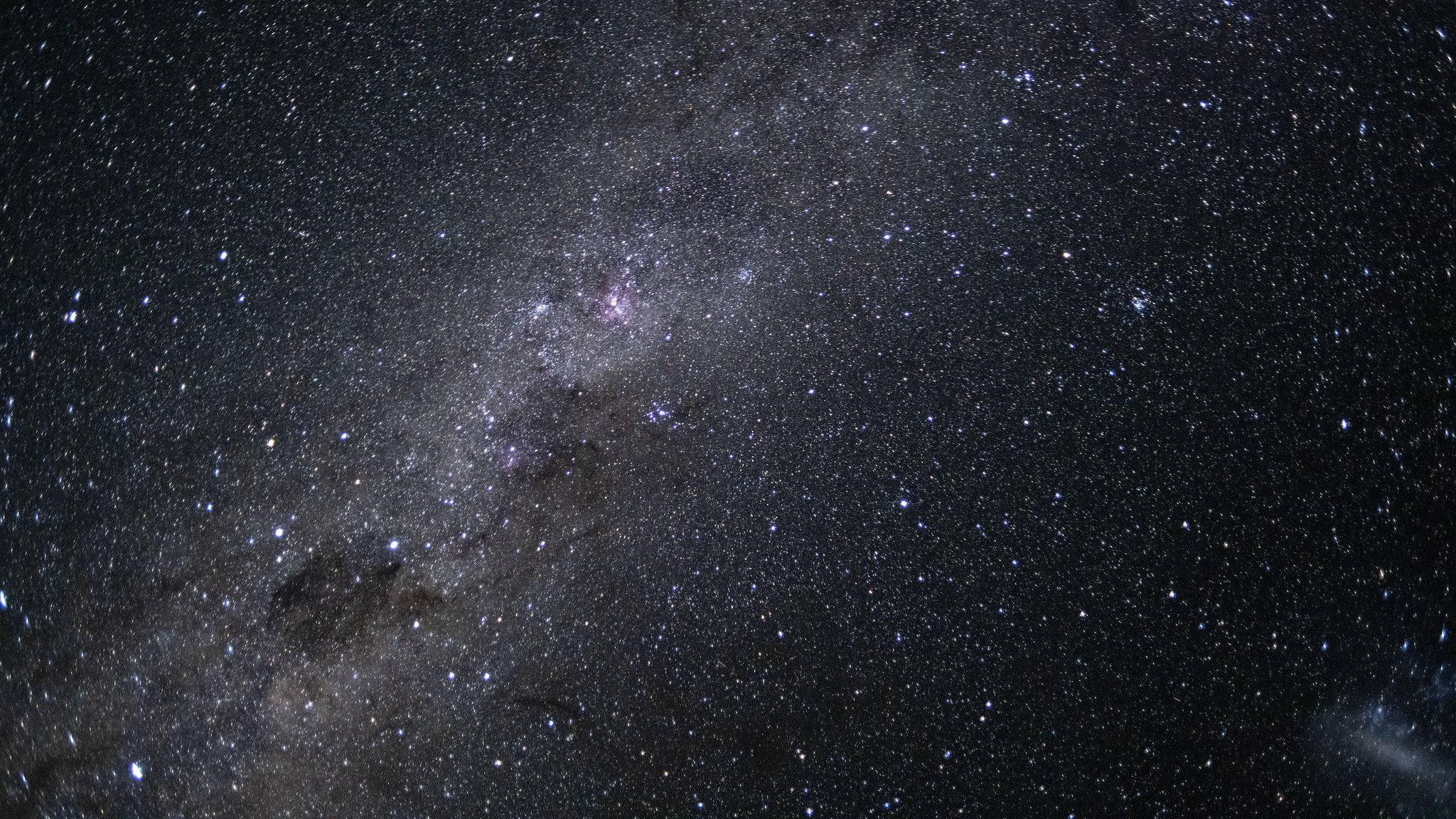
The Artemis 2 crew captured this majestic photo of the Milky Way through the window of their Orion spacecraft "Integrity" on April 7, less than a day after completing a historic lunar flyby that saw them temporarily lose communications with Earth as they looped around the far side of the moon.
What is it?
A river of shining stars and dusty filaments marks the galactic plane of the Milky Way — the colossal galaxy that we call home. This particular view of our host galaxy doesn't look directly towards the core, but rather into one of its spiral arms, where countless deep-space objects areshining against the blackness of space.
Why is it amazing?
The pink cloud at the center of the shot is the Homunculus Nebula, a vast glowing structure of interstellar dust and gas 7,500 light-years from Earth, according to NASA, created in the wake of a cataclysmic eruption of the double star system Eta Carinae.
Article continues belowStar clusters and dimmer nebulas are visible threaded through the galactic plane, while the Large Magellanic Cloud — a satellite galaxy of the Milky Way — appears as a hazy patch of light to the bottom right of the shot.
From space, the crewmember who captured the image was blissfully free of the atmospheric interference that usually comes hand in hand with capturing the glowing band of the Milky Way. However, a slight blurring of stars at the edge of the frame seems to betray the subtle motion of the spacecraft — or camera — over the course of the 10-second exposure.
When was it taken?
The image was captured less than a day after NASA astronauts Reid Wiseman, Victor Glover and Christina Koch, and the Canadian Space Agency's Jeremy Hansen executed a historic flyby of the lunar surface that took them farther from Earth than any human before them.
Over the coming days, the Artemis 2 crew will perform a series of course correction burns to finesse their trajectory as they journey back to Earth, before finally splashing down in the Pacific Ocean off the coast of San Francisco at the culmination of their 10-day space odyssey.
Get the Space.com NewsletterContact me with news and offers from other Future brandsReceive email from us on behalf of our trusted partners or sponsorsWant to know more? Then be sure to stay up to date with the latest news with our Artemis 2 liveblog and to check out our Artemis program reference page for answers to all of your Artemis questions as NASA and its partners look to establish a sustainable presence on the moon.
 Anthony WoodSkywatching Writer
Anthony Wood joined Space.com in April 2025 after contributing articles to outlets including IGN, New Atlas and Gizmodo. He has a passion for the night sky, science, Hideo Kojima, and human space exploration, and can’t wait for the day when astronauts once again set foot on the moon.
View MoreYou must confirm your public display name before commenting
Please logout and then login again, you will then be prompted to enter your display name.
Logout MORE FROM SPACE... 1Artemis 2 moon astronauts capture space history — on their iPhones
- 2Galaxy starves its supermassive black hole, loses 95% of its brightness
- 3'It just made it even more special': Being so far from Earth makes you appreciate our planet even more, Artemis 2 astronaut says
- 4The Artemis 2 space toilet is actually working fine. But there is another problem
- 5'Project Hail Mary' sound designers used surprising animal sounds to create Rocky's musical alien voice (interview)