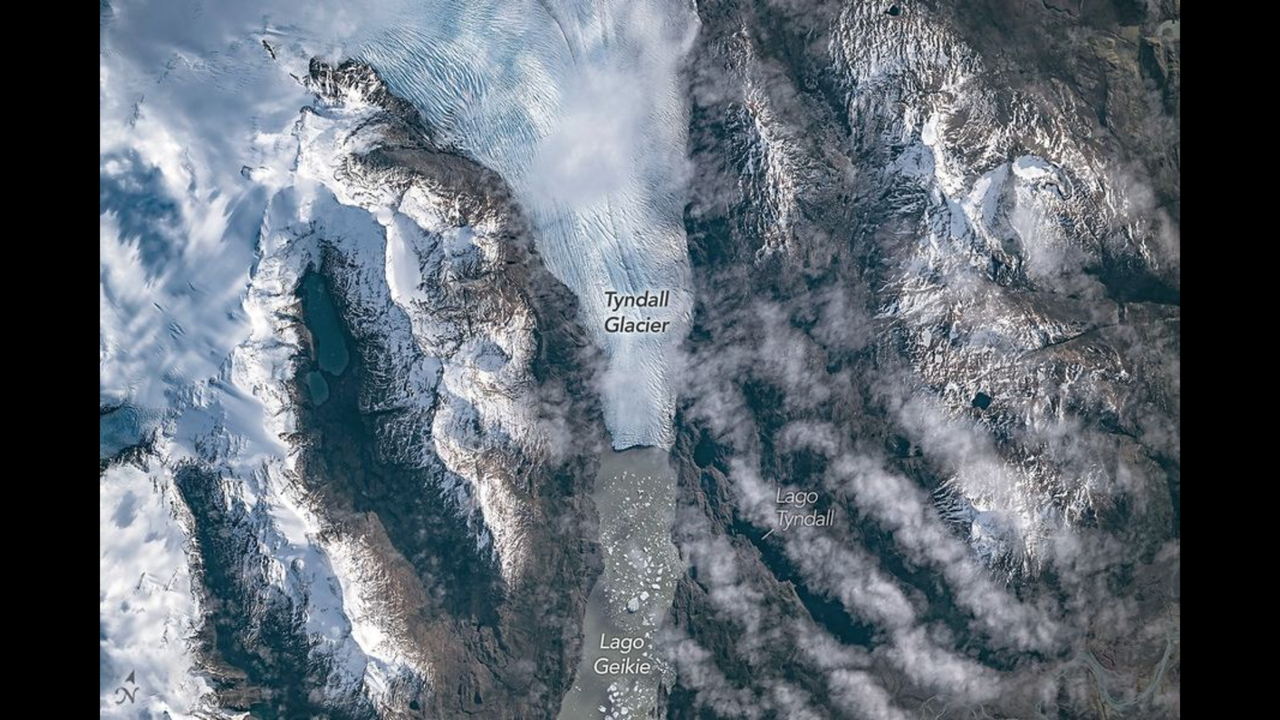
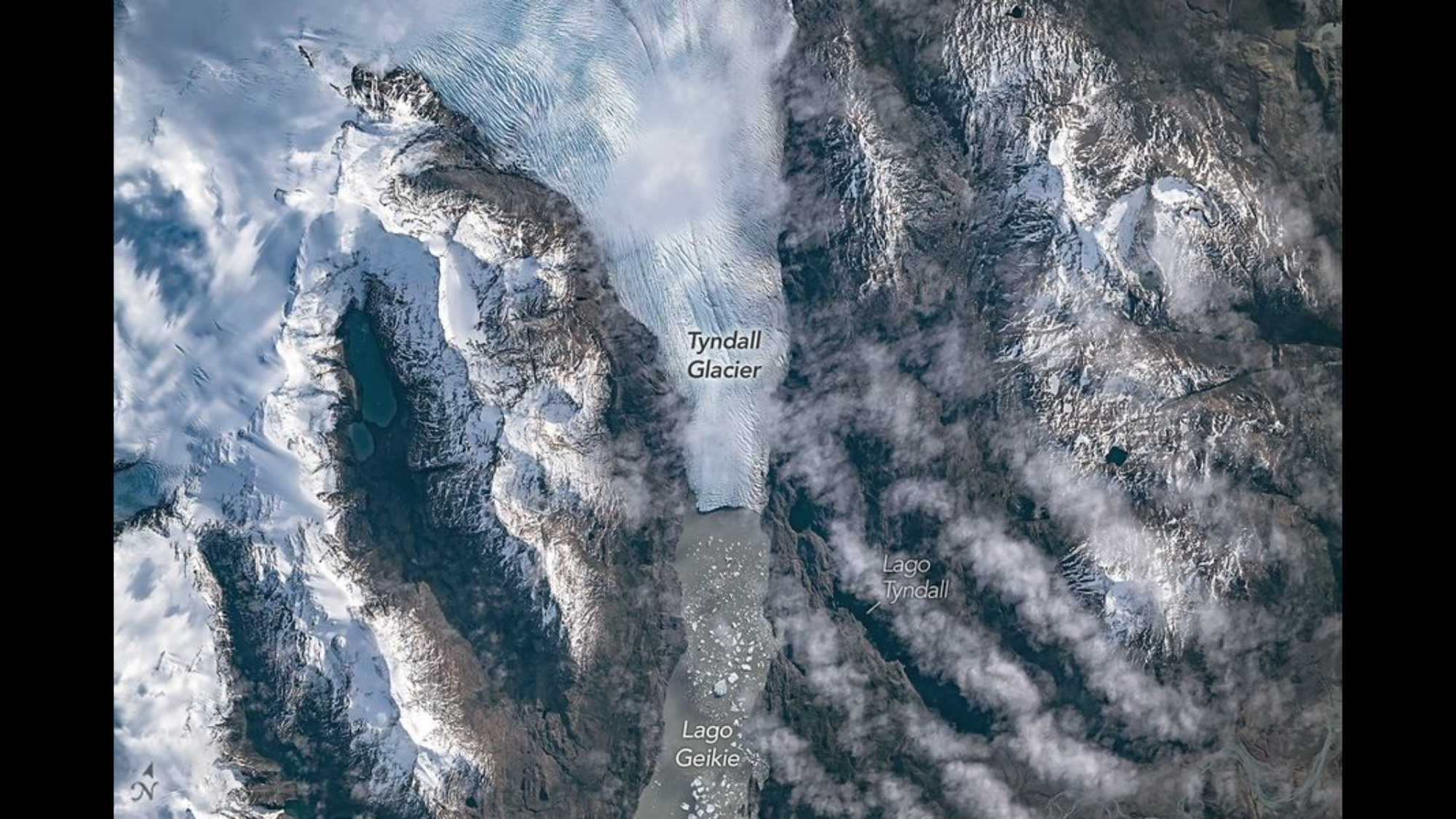
Fragments of ice splintered from a glacier float down an Antarctic lake in a photo captured from aboard the International Space Station.
What is it?
In a new photograph snapped by astronauts on the International Space Station, you can see pieces of the Tyndall Glacier splintering off and floating out into the lake Lago Geikie. Even from space, the chunks of ice falling from the glacier can be seen floating away.
The Tyndall Glacier in southern Chile is part of the Southern Patagonian Icefield. Located between Chile and Argentina, this is the second-largest continuous ice field like it in the world. It measures at over 5,000 square miles of ice (13,000 square kilometers).
Latest Videos FromView moreWatch full video here:
It is the larger half of two remaining pieces of the Patagonian Ice Sheet, an almost unbelievably massive sheet of ice that covered southern Chile during the last glacial period over 20,000 years ago.
Why is it incredible?
As of 2025, the worlds glaciers have lost over 300 tons (273 tonnes) of ice in just the last 20 years alone. With the progression of climate change, this ice continues to melt, fragment and contribute to rising sea levels around the globe. And in this image, we can see the process with our own eyes.
The Tyndall Glacier has been shrinking for about 150 years; as more and more pieces of this glacier break off or melt, Lago Geikie continues to grow and expand. In the past four years alone, Tyndall has lost 1.4 miles (2.2 kilometers) in length, according to glaciologist Mauri Pelto of Nicholas College. Interestingly, while glacier shrinking is concerning as it contributes to sea level rise which puts coastal communities in serious danger, this glacial retreat revealed some unexpected findings beyond that. As this glacier has fallen away, it has exposed bedrock where scientists have found ichthyosaur fossils.
View MoreYou must confirm your public display name before commenting
Please logout and then login again, you will then be prompted to enter your display name.
Logout Chelsea GohdContent Manager
Chelsea Gohd served as a Senior Writer for Space.com from 2018 to 2022 before returning in 2026, covering everything from climate change to planetary science and human spaceflight in both articles and on-camera in videos. With a M.S. in Biology, Chelsea has written and worked for institutions including NASA JPL, the American Museum of Natural History, Scientific American, Discover Magazine Blog, Astronomy Magazine, and Live Science. When not writing, editing or filming something space-y, Gohd is writing music and performing as Foxanne, even launching a song to space in 2021 with Inspiration4. You can follow her online @chelsea.gohd and @foxanne.music