Kane Parsons joins plenty of other YouTubers who’ve made their way to the big screen.
By Devindra Hardawar May 30, 2026 9:00 am EST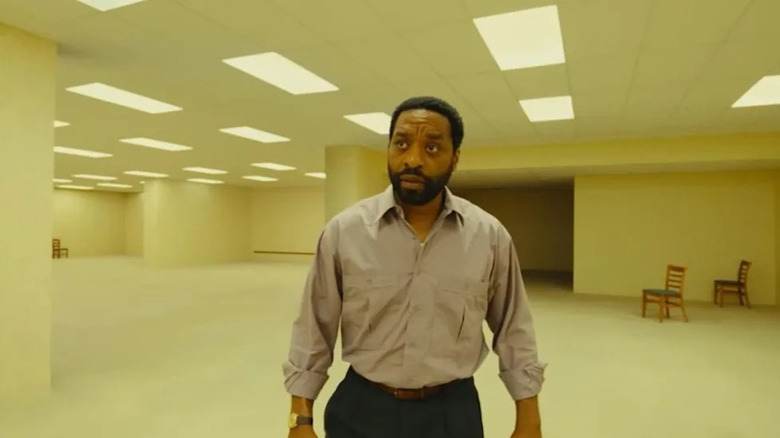 A24
A24 The story behind the Backrooms is almost as trippy as the film itself. Kane Parsons taught himself how to use Adobe After Effects and Blender as a teenager, experimented with online short films, and rose to online fame with his first Backrooms short in 2022 (which now has nearly 80 million views). At just 17, he was tapped by A24 to direct a feature-length version of the story. As I write this, Parsons is still not old enough to drink.
That Backrooms exists as a feature hitting cinemas around the world is impressive, even more so because it's also a genuinely solid horror film with a skillful application of tension and dread that belies the director's young age. It's also yet another sign that Hollywood's future lies in talent that comes from the internet. Between this film, the recent horror thriller Obsession, Markiplier's self-released Iron Lung and the work of the Philippou brothers (Let Me In, Bring Her Back), some of the most intriguing movies of the last few years all come from YouTube creators.
While it may seem strange to think of directors jumping from mobile screens to cinemas, historically, new talent for Hollywood has always come from the mediums that were cheap to film, and gave artists room to hone their skills. In the 1940s and '50s, future Hollywood directors like Sidney Lumet, Arthur Penn and John Frankenheimer got their start directing live TV. That's also where Steven Spielberg made his debut, directing episodes of Night Gallery, Columbo and the TV film Duel (which he made at 24). By the '70s and '80s, we started to see the rise of commercial and music video directors, like Ridley Scott and David Fincher, as well as others coming from campy straight to VHS releases and adult films. The internet is simply the next major proving ground.
Backrooms is more than just a vehicle for a Youtuber to show off, it's also a creepypasta concept that — much like the recent game adaptation Exit 8 — was born in the notorious image board 4chan.The idea of rooms themselves being unsettling for one reason or another isn't new — it's a major part of Bram Stoker's original Dracula novel and The Shining — but online communities popularized the idea of liminal spaces, where seemingly normal environments have a sinister sense of unreality. (You can probably write a sociology thesis on why those liminal spaces find a quiet sort of horror in iconography of a bygone age, like enormous fluorescent-lit office buildings and malls filled with empty stores.)
Parson's film builds on his original YouTube shorts, with a few sequences shot in a similarly eerie yet nostalgic VHS aesthetic. But we can't live in low-res forever — the film gives Parson the freedom and budget to build out the confounding spaces so that human actors, not just a Blender render, can explore them. It's a shame to lose the analog Blair Witch touch that made Parson's work so compelling, but he still manages to creep us out in sharp 4K.
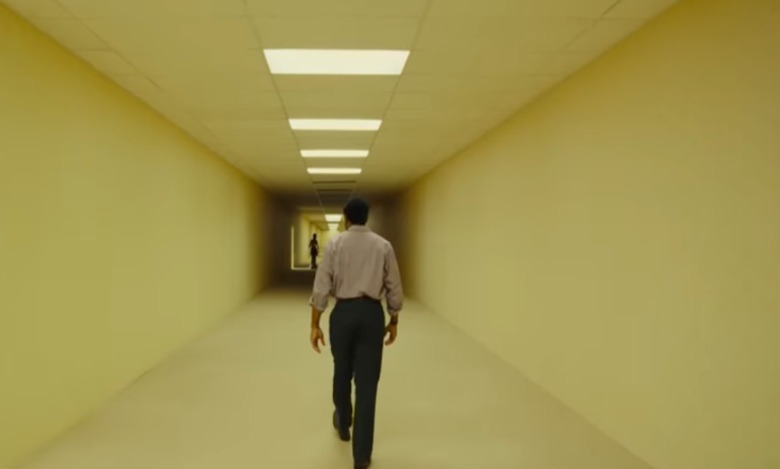
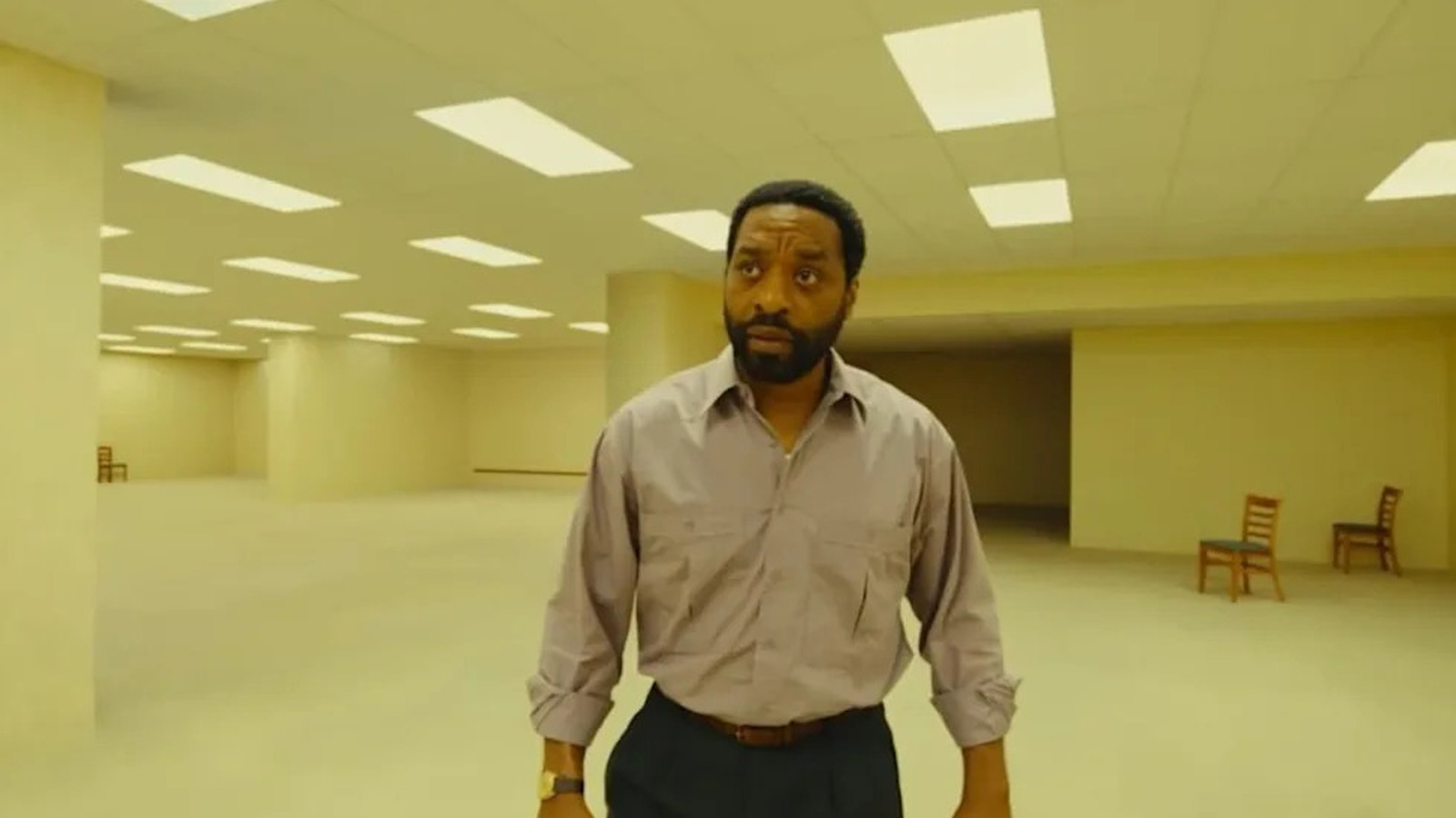
While he's had plenty of experience mastering the tone and mood of horror, Parsons (and co-writer Will Soodik) still needs to work on developing characters who are more than just sketches of trauma. Backrooms focuses on a very divorced furniture store owner (Chiwetel Ejiofor) who discovers a gateway into the titular space in the basement of his building. With his background as an architect, he devotes himself to mapping the space and figuring out where it all went wrong. He's eventually joined by his therapist (Renate Reinsve), who goes looking for her missing patient, while dealing with her own sense of abandonment. Nobody in the film is as memorable as the Backrooms themselves, and the horrors they hold.
Thankfully, the movie avoids the sin of trying to explain what the Backrooms actually are. Instead, we get hints of mystery and people trying to come to terms with reality falling apart. That notion alone is creepy, and it lets our imaginations fill in the blanks. I saw the film in a sold-out theater filled with teenagers, who collectively screamed every time something moved within the shadows or peered around a corner. Honestly, that's probably the best way to experience this film.
I'm sure it's just a matter of time before short-form video creators also start making their way until feature films. Every great director has to start somewhere. For Kane Parsons, it was on his computer. For the next generation, it may be from just filming and editing on their phones. And you know what? As someone who wants cinema to survive, I welcome it, as cringe as it may sound.