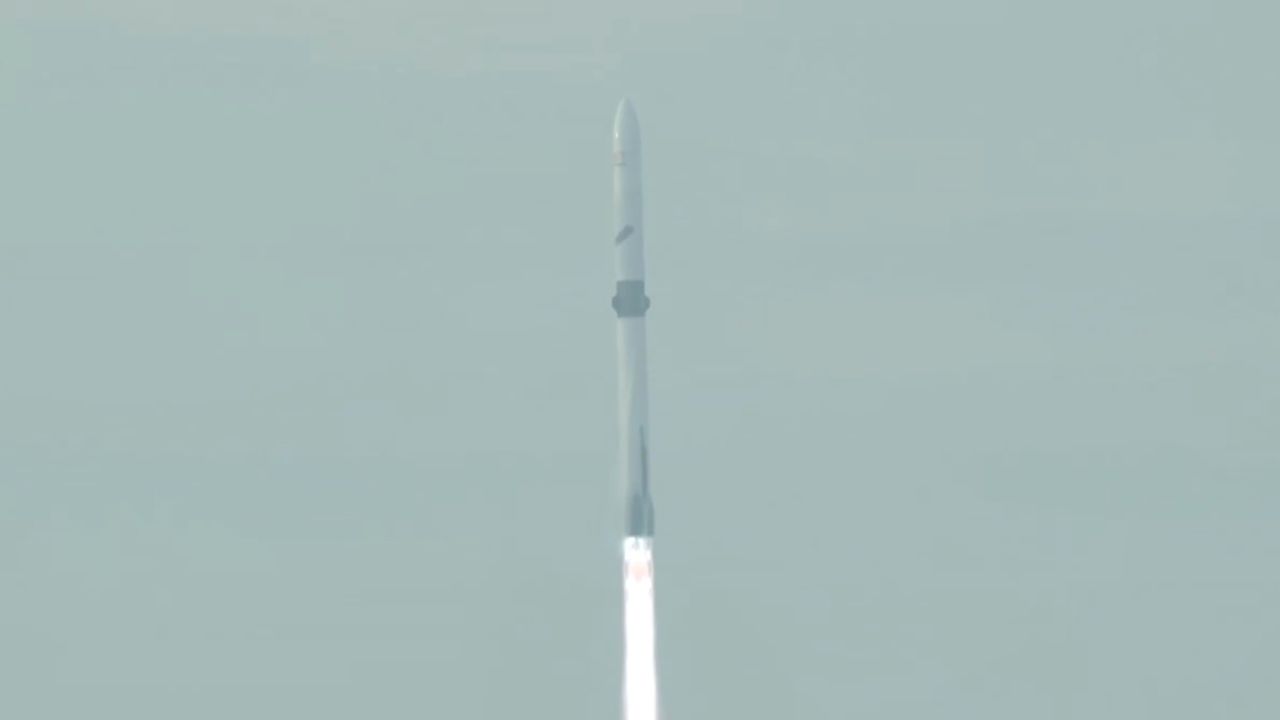
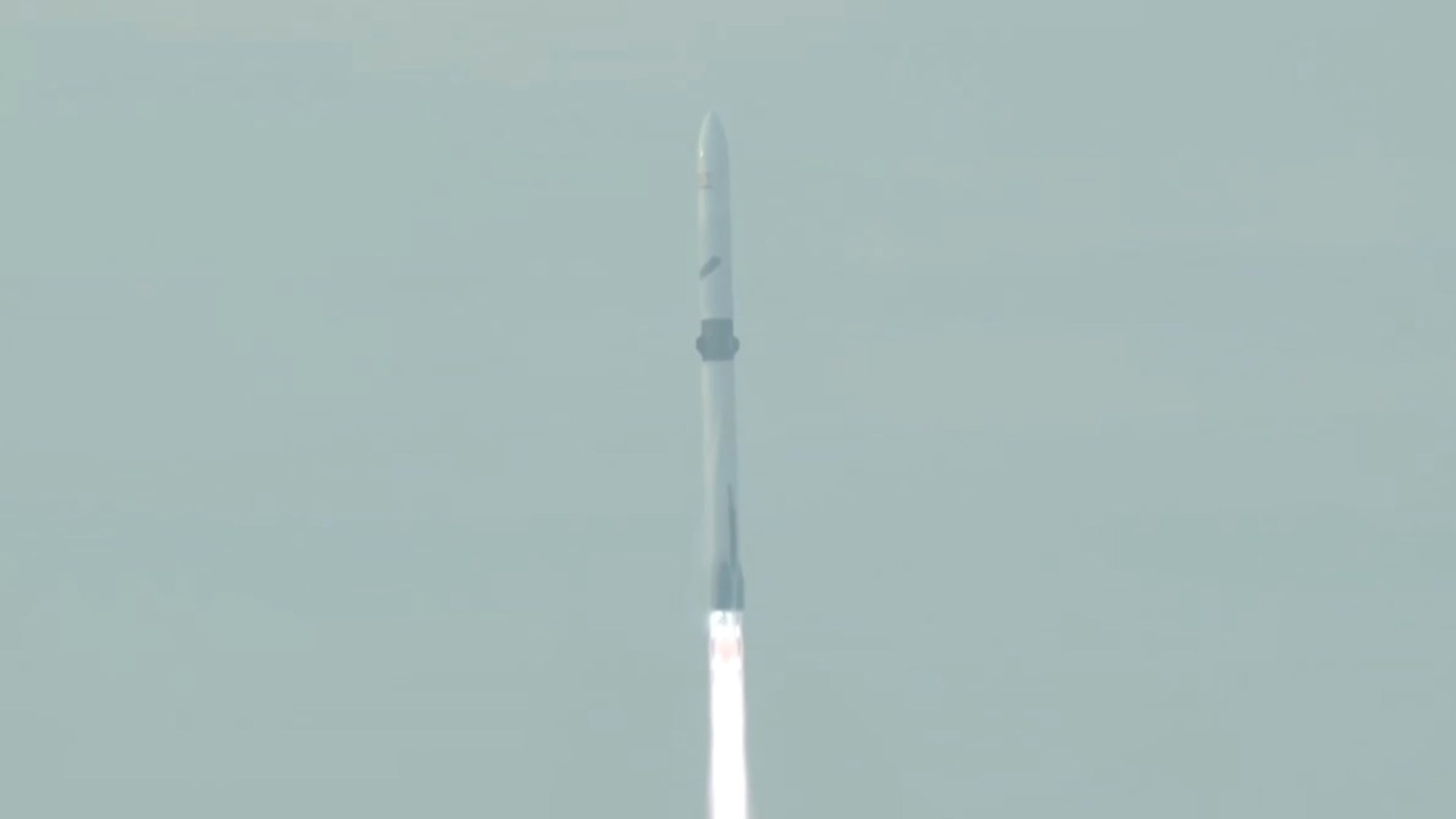
 Blue Origin's New Glenn rocket launches on its third-ever mission on April 19, 2026. Things went well at first, but New Glenn failed to deliver the satellite — AST SpaceMobile's BlueBird 7 — to the proper orbit. (Image credit: Blue Origin) Share this article 0 Join the conversation Follow us Add us as a preferred source on Google Newsletter Get the Space.com Newsletter
 Breaking space news, the latest updates on rocket launches, skywatching events and more!
Contact me with news and offers from other Future brands Receive email from us on behalf of our trusted partners or sponsors By submitting your information you agree to the Terms & Conditions and Privacy Policy and are aged 16 or over.You are now subscribed
Your newsletter sign-up was successful
Want to add more newsletters?
An account already exists for this email address, please log in. Subscribe to our newsletterBlue Origin's huge New Glenn rocket has been temporarily grounded.
The U.S. Federal Aviation Administration (FAA) is requiring an investigation into New Glenn's third-ever mission, which launched on Sunday morning (April 19) and resulted in the loss of its payload — the BlueBird 7 internet-beaming satellite.
Sunday's mission, which Blue Origin called NG-3, lifted off from Cape Canaveral Space Force Station in Florida.
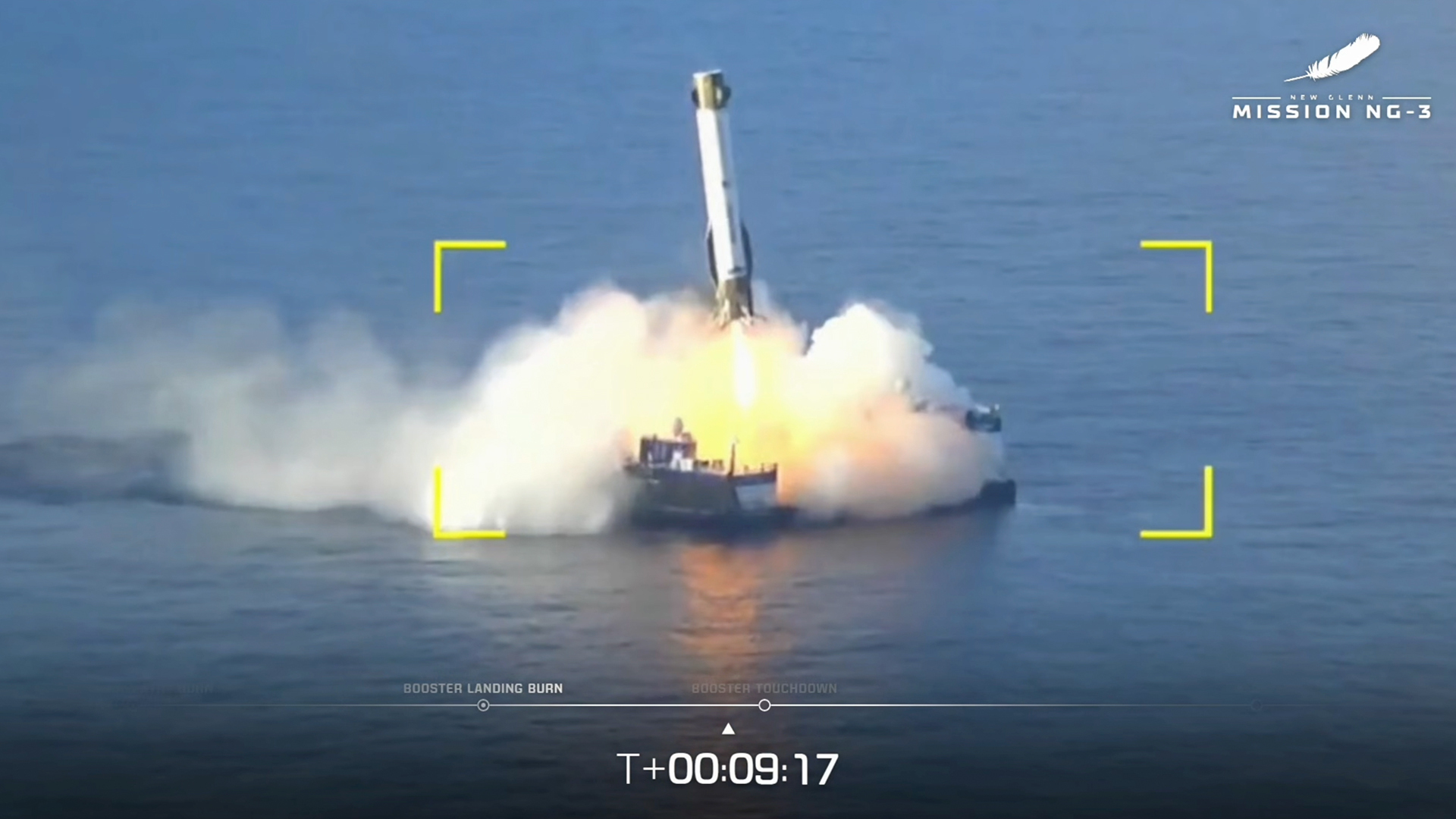
The 322-foot-tall (98 meters) New Glenn performed well at first; its reusable first stage even aced its return to Earth, landing as planned in the Atlantic Ocean atop the Blue Origin droneship "Jacklyn."
But the rocket's upper stage ran into problems while hauling BlueBird 7 to low Earth orbit (LEO). One of the stage's two BE-3U engines didn't produce enough thrust during a key burn, according to Blue Origin CEO Dave Limp, and the satellite was deployed into the wrong spot as a result.
"While the satellite separated from the launch vehicle and powered on, the altitude is too low to sustain operations with its on-board thruster technology and will [be] de-orbited," BlueBird 7's operator, the Texas company AST SpaceMobile, wrote in an update on Sunday. "The cost of the satellite is expected to be recovered under the company's insurance policy."
Get the Space.com NewsletterContact me with news and offers from other Future brandsReceive email from us on behalf of our trusted partners or sponsorsAST SpaceMobile is building out a constellation of direct-to-cellphone satellites in LEO. BlueBird 7 was the second of the company's "Block 2" spacecraft to lift off, after BlueBird 6. These satellites are huge, featuring antennas that cover 2,400 square feet (223 square m) when deployed.
A lot of eyes will be on this mishap investigation, because a lot is riding on New Glenn's success — and not just for Blue Origin.
For example, later this year, the rocket is supposed to launch the first-ever test flight of the company's Blue Moon spacecraft, one of the two contracted crewed lunar landers for NASA's Artemis program.
"Dave, I have no doubt the team at Blue Origin will get back to the pad and fly again soon — overcoming setbacks only gets us closer to achieving the near-impossible. I’m confident Blue's sustained achievements — like the successful reuse and recovery of the New Glenn first stage we saw this week — will keep us on track for success with the Artemis program," NASA Administrator Jared Isaacman wrote on Tuesday (April 21), in an X post addressed to Limp.
"Thank you, Jared. Learnings from this setback will make us better. We'll be back on the pad soon for AST SpaceMobile, NASA, and all our customers," Limp replied.
 Mike WallSpaceflight and Tech Editor
Michael Wall is the Spaceflight and Tech Editor for Space.com and joined the team in 2010. He primarily covers human and robotic spaceflight, military space, and exoplanets, but has been known to dabble in the space art beat. His book about the search for alien life, "Out There," was published on Nov. 13, 2018. Before becoming a science writer, Michael worked as a herpetologist and wildlife biologist. He has a Ph.D. in evolutionary biology from the University of Sydney, Australia, a bachelor's degree from the University of Arizona, and a graduate certificate in science writing from the University of California, Santa Cruz. To find out what his latest project is, you can follow Michael on Twitter.
View MoreYou must confirm your public display name before commenting
Please logout and then login again, you will then be prompted to enter your display name.
Logout MORE FROM SPACE...1Celebrate Earth Day with this Artemis 2 shot | Space photo of the day for April 22, 2026
- 2See the moon shining in the daytime sky this week: Here's where to look
- 3Spectacular photos of the 2026 Lyrid meteor shower captured from Earth and space
- 4Mysterious rings around Uranus point to hidden moons orbiting the ice giant
- 5The Nancy Grace Roman Space Telescope, NASA's next great observatory, is finally complete