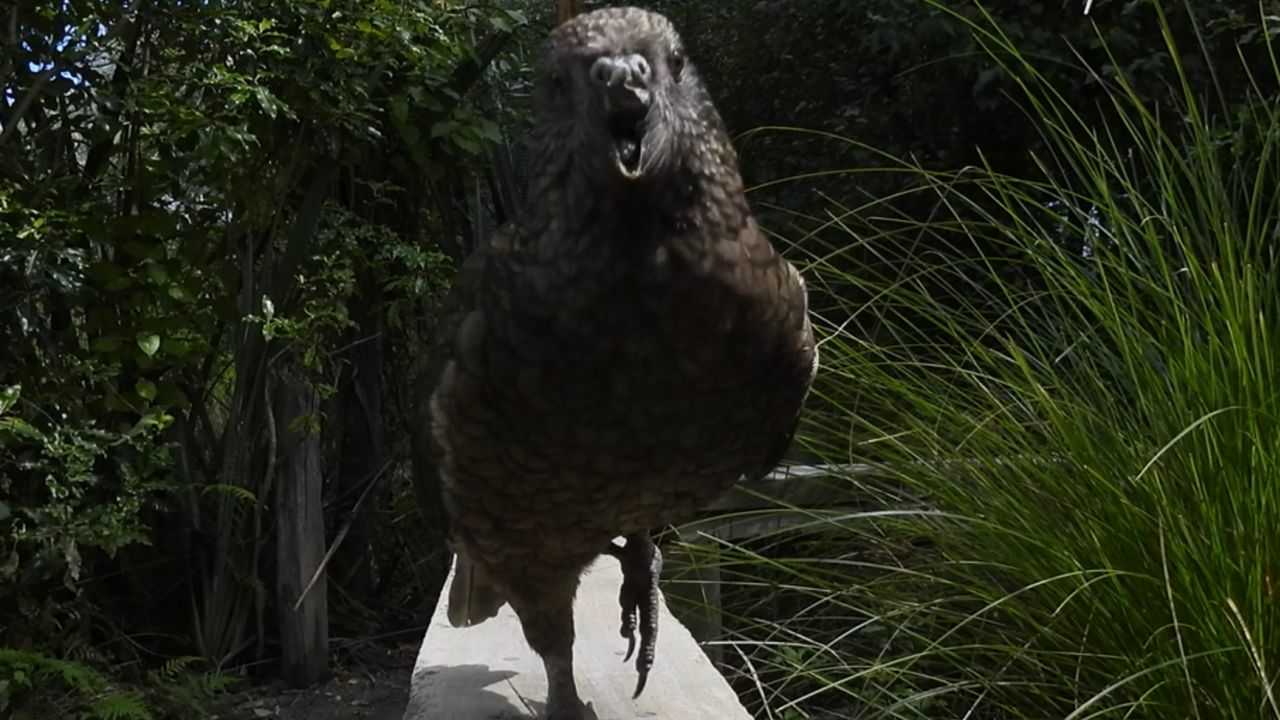
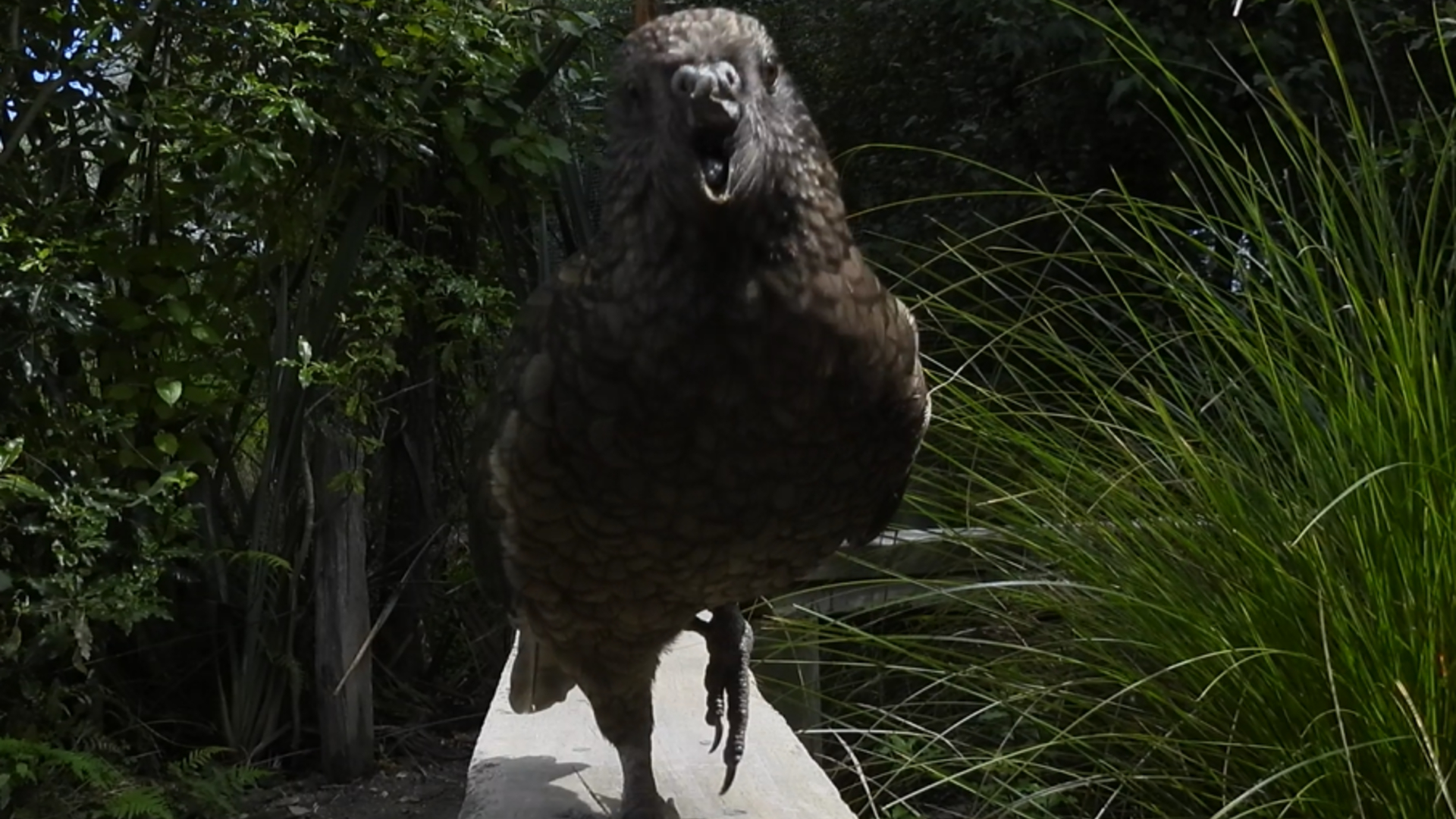
 Bruce the parrot uses his injured beak to win competitions with other male parrots. (Image credit: Alex Grabham) Share this article 0 Join the conversation Follow us Add us as a preferred source on Google Newsletter Sign up for the Live Science daily newsletter now
 Get the world’s most fascinating discoveries delivered straight to your inbox.
Become a Member in Seconds
Unlock instant access to exclusive member features.
Contact me with news and offers from other Future brands Receive email from us on behalf of our trusted partners or sponsors By submitting your information you agree to the Terms & Conditions and Privacy Policy and are aged 16 or over.You are now subscribed
Your newsletter sign-up was successful
Want to add more newsletters?
Join the club
Get full access to premium articles, exclusive features and a growing list of member rewards.
Explore An account already exists for this email address, please log in. Subscribe to our newsletterA New Zealand parrot that's missing the entire top half of its beak has developed a unique jousting technique to attain top social status, researchers report in a new study.
The parrot, named Bruce, thrusts with his exposed lower beak during jousts, targeting the head, wings, beak and legs of his opponent, although he usually doesn't make contact, Alex Grabham, a biologist at Te Whare Wānanga o Waitaha | University of Canterbury in New Zealand and first author of the study, told Live Science. Instead, the moves are competitive posturing meant to spook the opponent. Bruce extends his neck to use more force at close range, or runs and jumps from farther away to drive his beak at other males.
"It's no surprise that a bird like Bruce, that has this impairment, has had to innovate and get on with his life," Grabham said.
Remarkable innovation
Bruce is a kea (Nestor notabilis), an endangered parrot native to New Zealand. These parrots are known for their remarkable adaptability and intelligence, as they have been documented using tools, solving problems and even making predictions.
Bruce has lived in captivity in Willowbank Wildlife Reserve in Christchurch for about 12 years, after being discovered as a juvenile in the mountains of New Zealand's South Island with his entire upper beak missing. Researchers suspect he lost this part of his beak in an accident, but they aren't sure exactly what happened, Grabham said.
Bruce has adapted to his disability by developing never-before-seen techniques to perform everyday tasks. For example, he uses different-sized pebbles instead of his beak to preen himself, in the first recorded case of self-care tool use in a kea parrot.
Sign up for the Live Science daily newsletter nowContact me with news and offers from other Future brandsReceive email from us on behalf of our trusted partners or sponsors"That work really showed that he has had to innovate," Grabham said.
In the study, published April 20 in the journal Current Biology, researchers described Bruce's novel technique for jousting, which has earned him the undefeated alpha-male position in his group. He's the only kea who's been recorded engaging in this jousting technique, Grabham said, and the researchers suspect he's the only one; parrots' upper beak protrudes over their lower beak, so it would be impossible to replicate the moves with an intact beak.
Bruce's jousting moves immediately displaced opponents 73% of the time. Bruce won all 36 of the observed jousts he was part of, confirming him as the dominant alpha parrot of the group. "We know his jousting is a huge part of his success," Grabham said.
Being the alpha has benefits for Bruce's health. He has the lowest stress hormone levels of the group, which the researchers tested by analyzing the parrots' fecal samples. He also enjoys priority access to feeders and is the only male in the group to be preened and have his beak cleaned by other males.
Bruce's behavioral innovation enabled him to exert dominance over the group, marking the first time a disabled animal has achieved alpha status alone, the researchers said. In other recorded cases of physically impaired animals reaching top social status, alliances were essential to dominance. For example, one alpha male chimpanzee (Pan troglodyte) that lost the use of his arm due to polio rose in rank through new charging displays and an alliance with his brother. In another example, an older male Japanese macaque (Macaca fuscata) that had lost his ability to walk attained alpha status through an alliance with the group's alpha female.
RELATED STORIES- Kākāpō: The chonky parrot that can live almost 100 years
- Do parrots actually understand what they're saying?
- World's fattest parrot — on the verge of extinction 30 years ago — has record-breaking breeding season
The new findings emphasize kea's intelligence and flexibility, the researchers said. Kea are endangered, with fewer than 7,000 left in the wild, so their conservation is crucial, Grabham said.
"All of the kea are unique and have their own ways and personalities," Grabham said. "They're incredible creatures, and Bruce is one of many." Willowbank Wildlife Reserve advocates for kea conservation through breeding programs and education.
The new findings show what's possible for animals with physical disabilities, the researchers said.
What do you know about our avian friends? Test your knowledge with our bird quiz!
 Olivia FerrariLive Science Contributor
Olivia Ferrari is a New York City-based freelance journalist with a background in research and science communication. Olivia has lived and worked in the U.K., Costa Rica, Panama and Colombia. Her writing focuses on wildlife, environmental justice, climate change, and social science.
View MoreYou must confirm your public display name before commenting
Please logout and then login again, you will then be prompted to enter your display name.
Logout LATEST ARTICLES 1Scientists identify main cause of extreme nausea and vomiting in pregnancy
- 2Altar to Sol: A rare 1,900-year-old monument dedicated to the Roman god of light and used in a secret underground ritual
- 3Loneliness may contribute to memory issues, but not dementia — they are 'not the same thing'
- 4Naked mole rats wage bloody wars of succession to choose a new queen — but one colony did something scientists have never seen before
- 5'The chances of you living 50 years are very small': Theoretical physicist explains why humanity likely won't survive to see all the forces unified