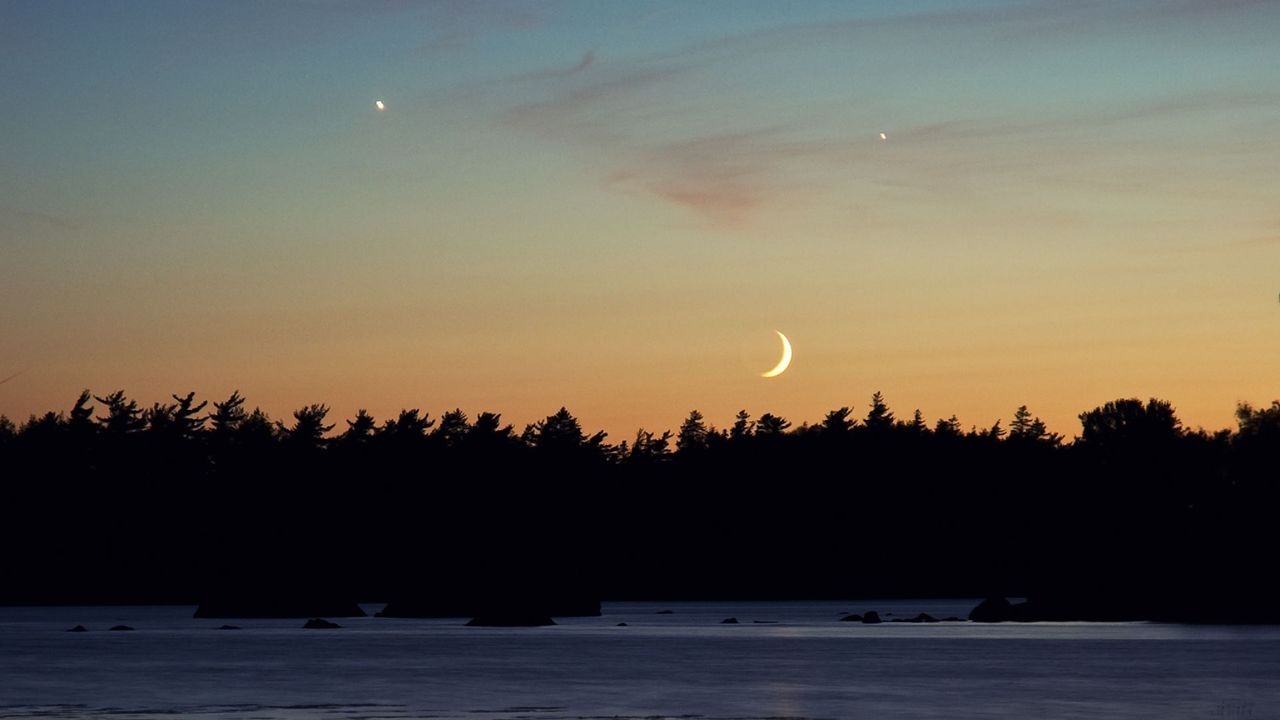
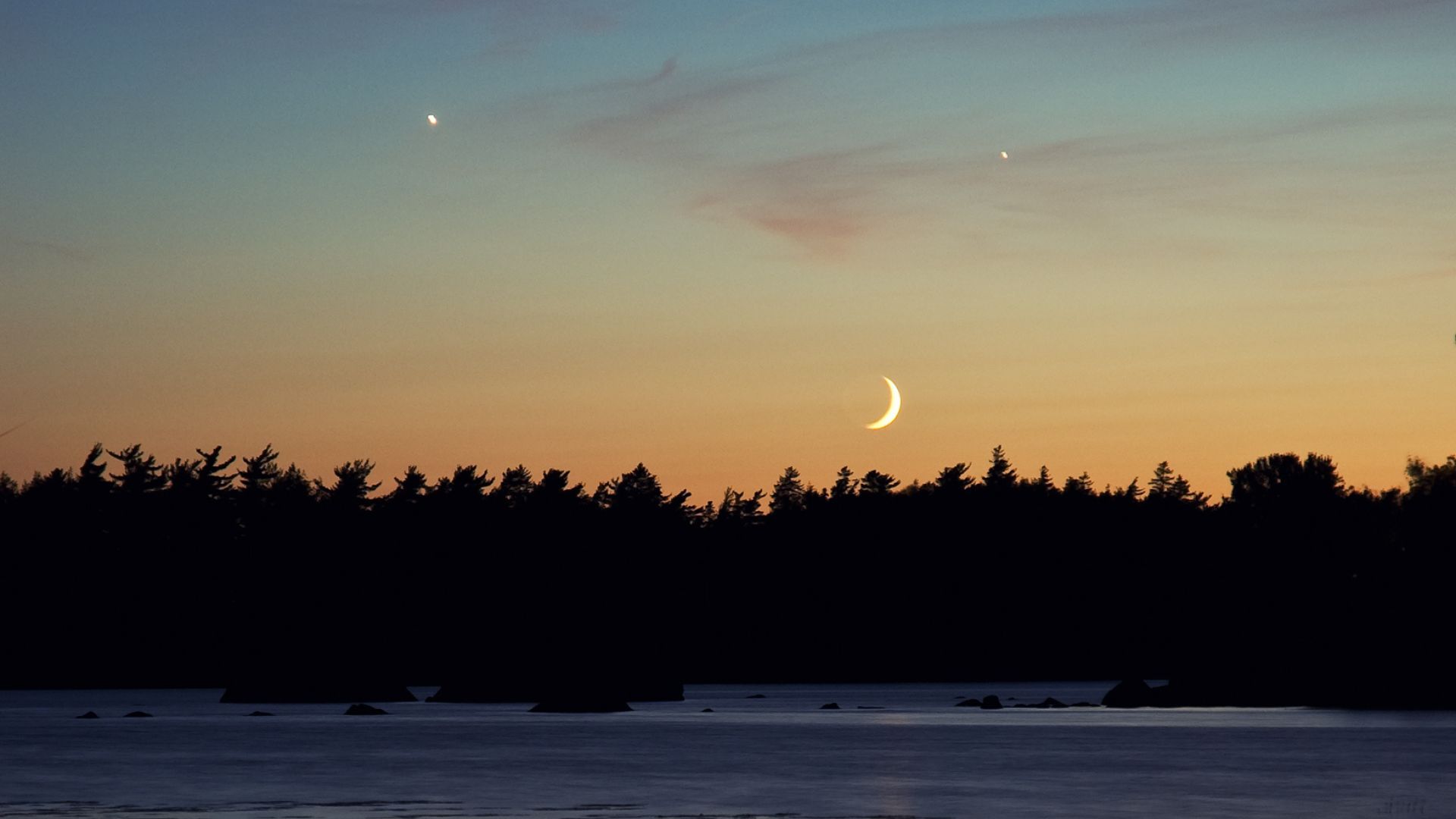
 Planets shine with the crescent moon in the evening sky. (Image credit: Shaunl via Getty Images) Share this article 0 Join the conversation Add us as a preferred source on Google Newsletter Subscribe to our newsletter
 Mercury reaches greatest elongation on June 15, placing the elusive planet at its farthest apparent distance from the sun in the evening sky. That makes this one of the best opportunities of the year to spot Mercury after sunset, shining below Venus and Jupiter in the western sky.
As an "inner" planet, Mercury never strays particularly far from the horizon compared to the outer planets like Mars and Jupiter, which shine brightly overhead from dusk to dawn at opposition, when they sit opposite the sun in Earth's sky.
Mercury's tight orbit around the sun sees it yo-yo back and forth between the evening and morning sky throughout the year. As such is it often lost from view in the glare of our parent star. The rocky world will reach its point of greatest elongation on June 15, when it will appear about 17 degrees away from our parent star — marking one of the best times to see it in its current evening apparition.
How to find Mercury on June 15
Celestron NexStar 4SE 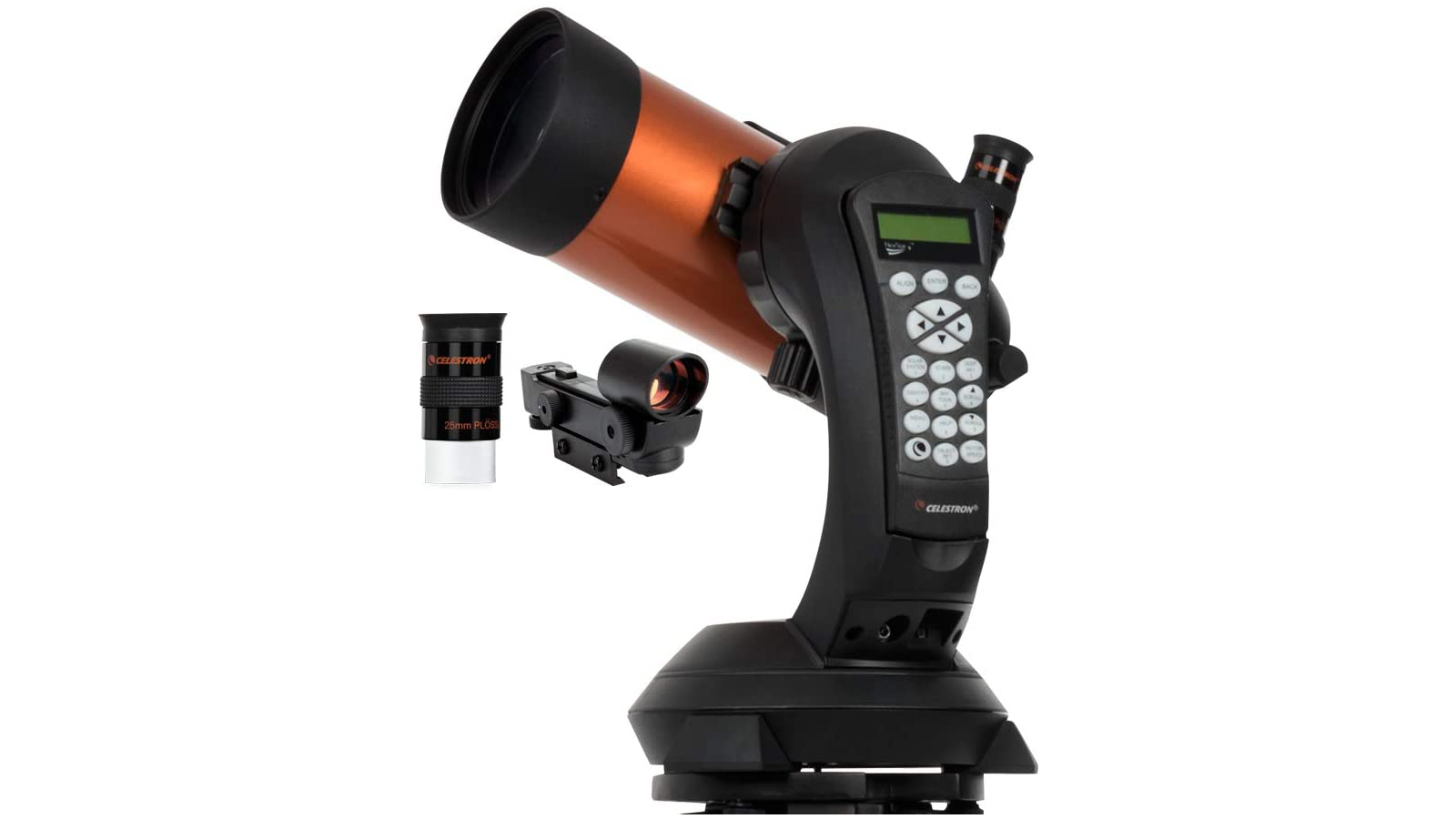
The Celestron NexStar 4SE is ideal for beginners wanting quality, reliable and quick views of the night sky. It's sturdily built, quick to set up and automatically locates night sky targets and provides crisp, clear views of them. For a more in-depth look at our Celestron NexStar 4SE review
Look to the western sky at sunset to find Mercury shining less than 20 degrees above the horizon, with Jupiter and Venus forming a line to its upper left. The razor-thin crescent of the waxing moon will also be present to the lower right of Mercury, all but impossible to spot in the glow of the setting sun.
The weeks that follow will see Mercury's steady light move inexorably closer to the horizon with each passing night, leading up to its inferior solar conjunction on July 12, when it passes between the sun and Earth before transitioning to a morning object.
Want to catch striking images of the night sky? Then be sure to read our picks of the best cameras and lenses for astrophotography, along with our beginner's guide to imaging the night sky.
Editor's Note: If you would like to share your astrophotography with Space.com's readers, then please send your photo(s), comments, and your name and location to [email protected].
View MoreYou must confirm your public display name before commenting
Please logout and then login again, you will then be prompted to enter your display name.
Logout Anthony WoodSkywatching Writer
Anthony Wood joined Space.com in April 2025 after contributing articles to outlets including IGN, New Atlas and Gizmodo. He has a passion for the night sky, science, Hideo Kojima, and human space exploration, and can’t wait for the day when astronauts once again set foot on the moon.


