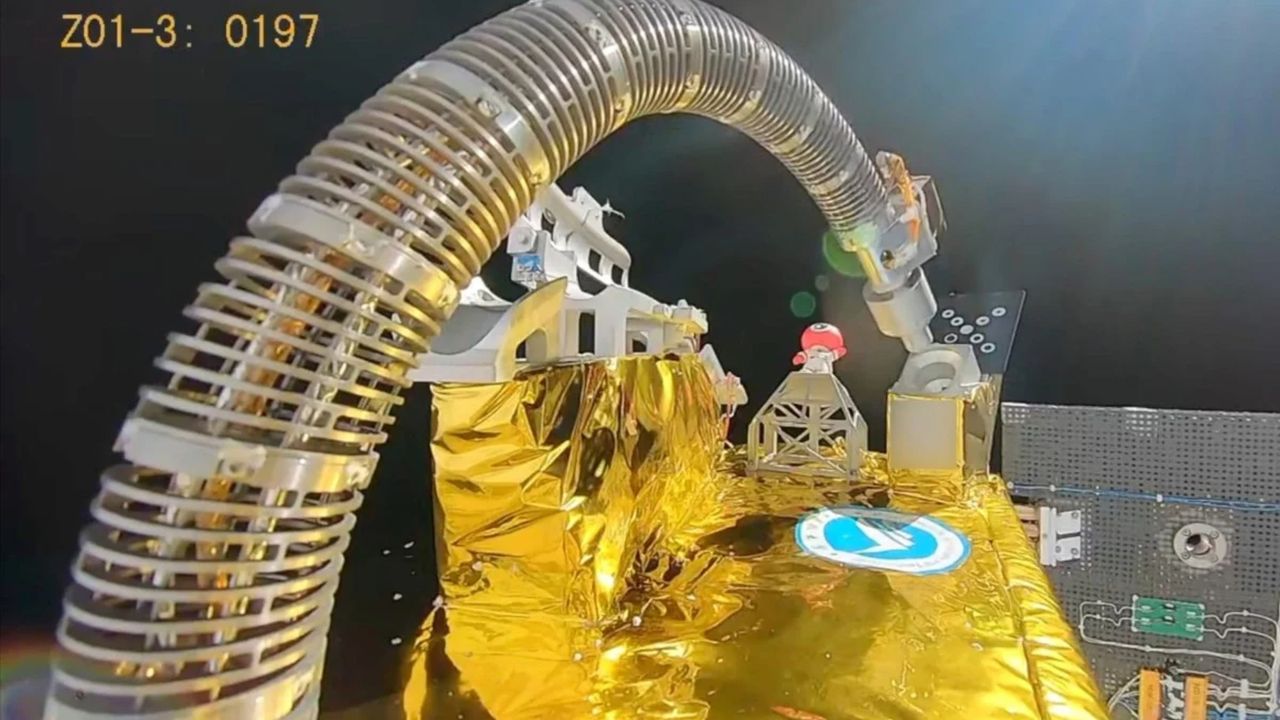
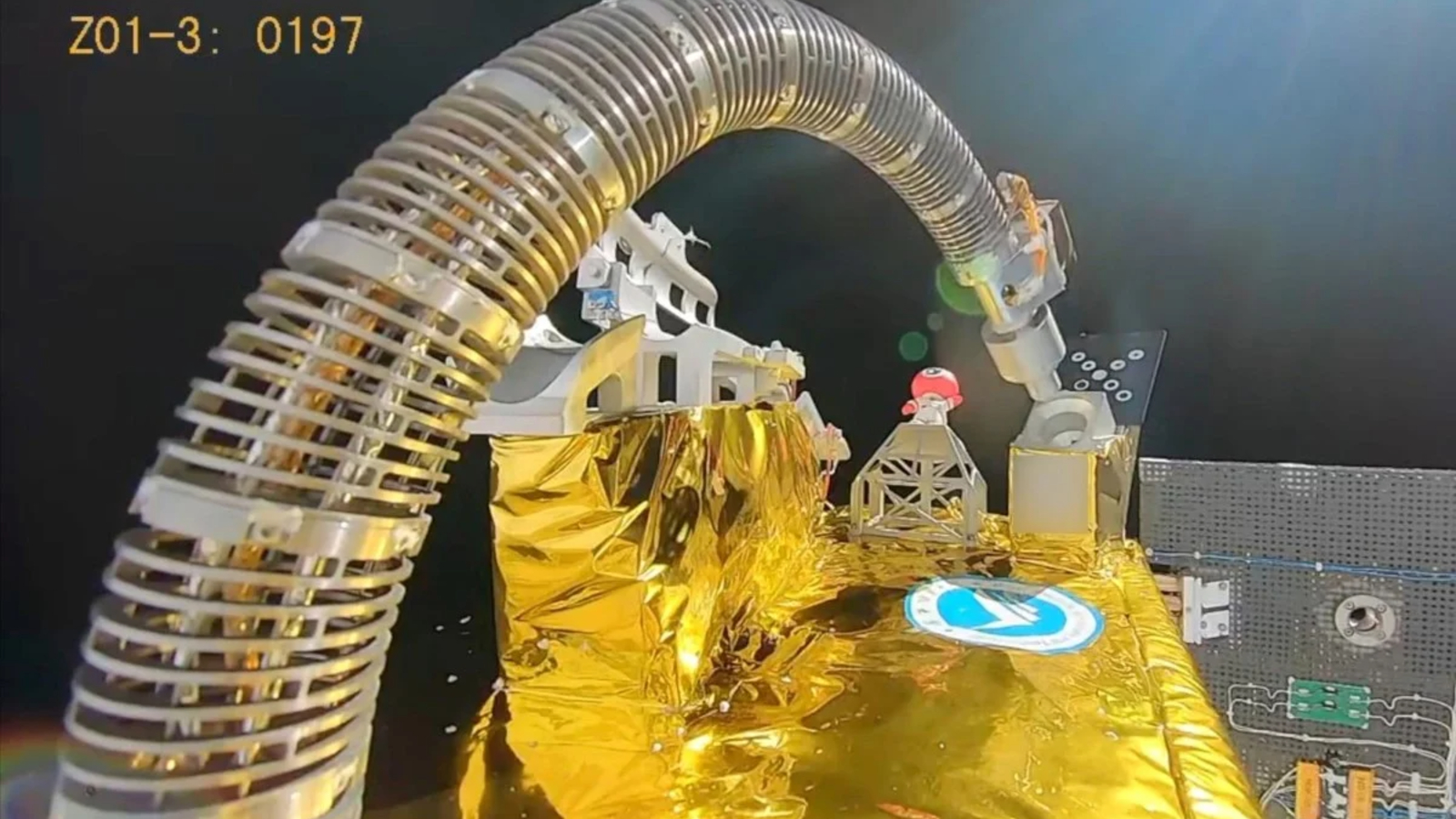
 China's Hukeda-2 satellite has passed a major refueling test after its experimental robotic arm successfully docked with a target port elsewhere on the spacecraft. (Image credit: CCTV handout) Share this article 0 Join the conversation Follow us Add us as a preferred source on Google Newsletter Sign up for the Live Science daily newsletter now
 Get the world’s most fascinating discoveries delivered straight to your inbox.
Become a Member in Seconds
Unlock instant access to exclusive member features.
Contact me with news and offers from other Future brands Receive email from us on behalf of our trusted partners or sponsors By submitting your information you agree to the Terms & Conditions and Privacy Policy and are aged 16 or over.You are now subscribed
Your newsletter sign-up was successful
Want to add more newsletters?
Join the club
Get full access to premium articles, exclusive features and a growing list of member rewards.
Explore An account already exists for this email address, please log in. Subscribe to our newsletterA Chinese satellite equipped with a robotic "octopus arm" has passed a key refueling test in low Earth orbit (LEO), according to state-run media. The achievement highlights China's continued leadership with this particular technology, which NASA has not yet caught up with.
The experimental spacecraft will eventually deploy a giant balloon in LEO, which could help solve another important issue surrounding satellite "megaconstellations" like SpaceX's Starlink network.
Hukeda-2 is a demonstration satellite intended to test new technologies in LEO. Its most notable attachment is an octopus-like robotic arm that "can curl, twist and wrap around objects to work in tight, complex spaces, with a nozzle-like tip at one end designed to line up and connect with a target port," according to the South China Morning Post.
The arm is made of a series of spring-like tubes threaded with cables attached to a motor, allowing it to bend in almost any direction and make the small adjustments needed to dock with another satellite while both spacecraft are traveling at speeds of around 16,800 mph (27,000 km/h).
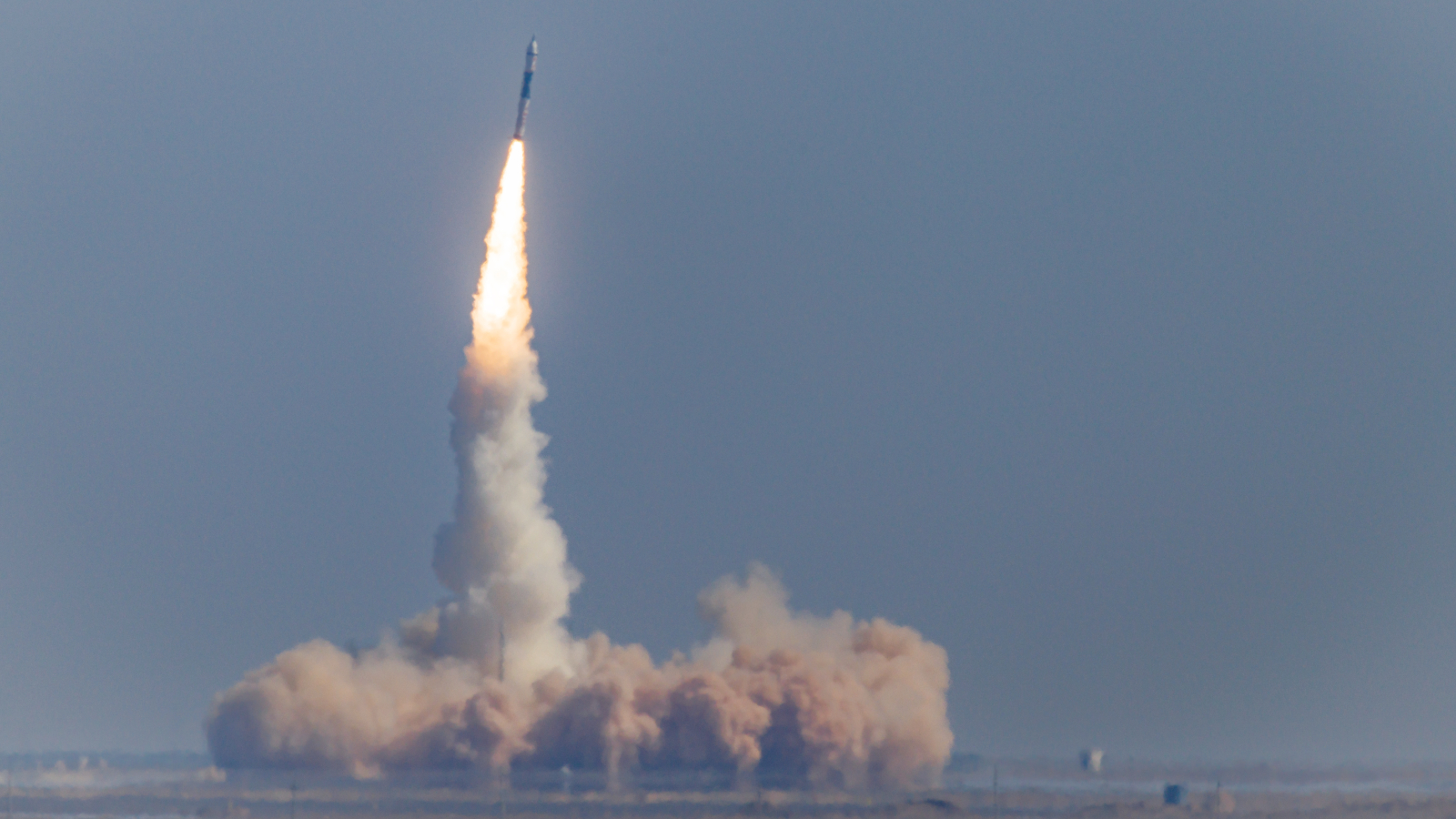
On March 24, Chinese state media reported that Hukeda-2's robotic arm had successfully completed its first refueling test. It was initially unclear if this test involved another satellite. However, photos have since confirmed that the robotic arm instead docked with a target port located on Hukeda-2 itself.
This is the biggest milestone for satellite refueling since June 2025, when China's Shijian-25 satellite successfully connected to and refueled the Shijian-21 satellite, which had previously run out of fuel. This encounter occurred in a higher, geosynchronous orbit, around 22,000 miles (33,500 km) above Earth's surface, and was the first confirmed case of satellite-to-satellite refueling, according to Live Science's sister site Space.com.
Sign up for the Live Science daily newsletter nowContact me with news and offers from other Future brandsReceive email from us on behalf of our trusted partners or sponsorsRefuel, reuse, recycle
When satellites run out of fuel, they can no longer maintain their altitude and are slowly pulled back toward Earth, before eventually burning up in the upper atmosphere. By refueling them, operators can keep the same spacecraft in orbit much longer, thus making them more cost-effective and sustainable, reducing the need to launch replacements. This has been a big aim for NASA and Western companies for several years, but has remained out of reach so far.
China will likely attempt to use similar refueling spacecraft to service its rapidly expanding Qianfan, or "Thousand Sails," constellation, which launched its first batch of satellites in 2024 and is set to rival Starlink in the coming years. (There are currently about 108 active Qianfan satellites in orbit, with plans to deploy 15,000 by 2030.)
SpaceX, on the other hand, does not appear interested in sustaining its active satellites. Instead, the company favors repeated launches of new spacecraft with its reusable Falcon 9 rocket to keep costs down.
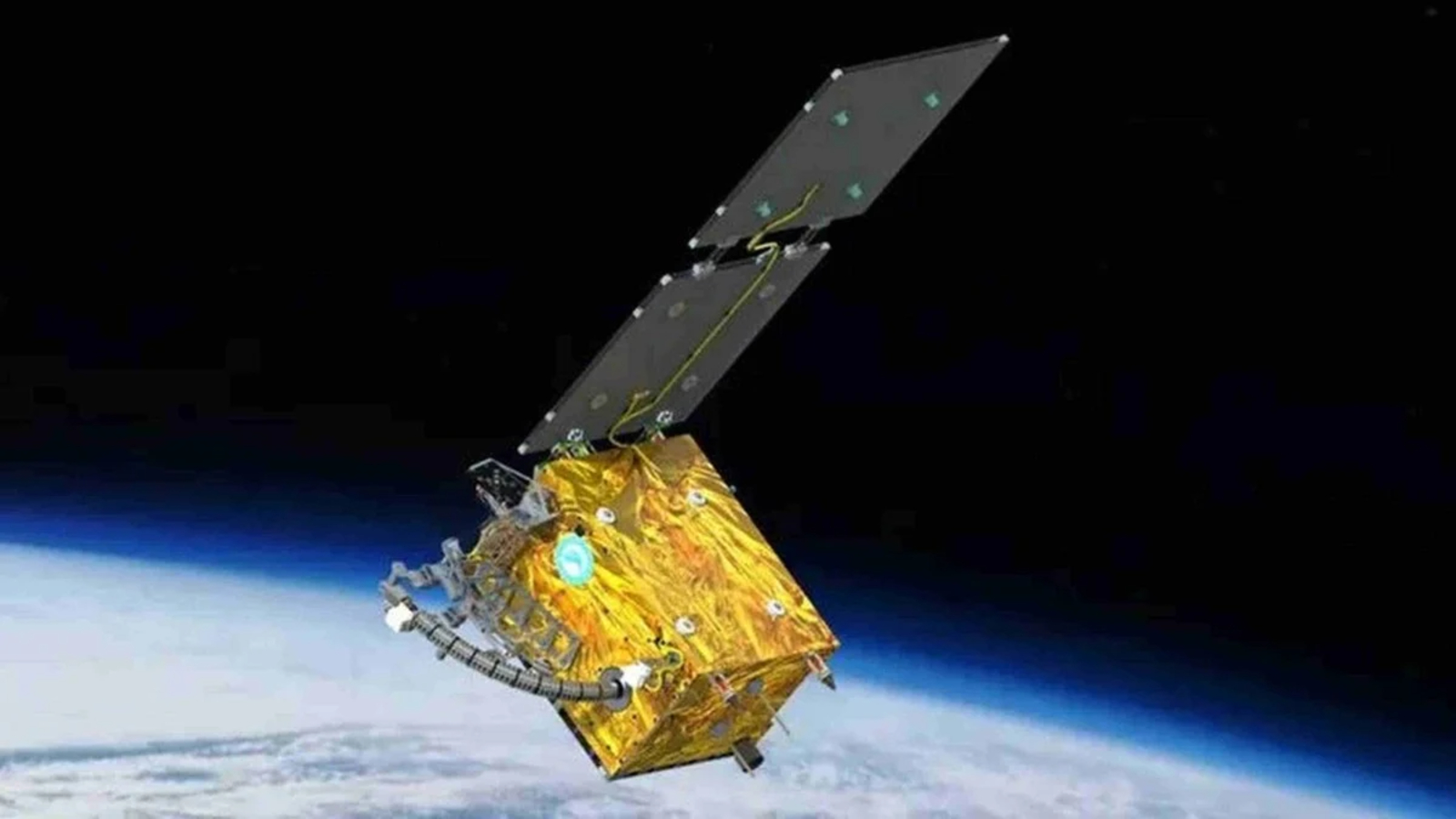
Another issue with expanding constellations is that the number of dead spacecraft waiting to fall back to Earth is rising fast and taking up valuable space that could be occupied by new satellites. In an attempt to fix this, Hukeda-2 will deploy an 8-foot-wide (2.5 meters) balloon at the end of its mission, which will increase atmospheric drag and speed up its return to Earth.
RELATED STORIESIf this works, future Chinese satellites could be deployed with similar devices that allow them to fall back to Earth without initiating a final deorbiting burn. However, it is unclear when Hukeda-2 will deploy its test balloon.
Although quick deorbiting of satellites is prudent, it is unlikely to fix the greater issue of overcrowding that is expected to occur in LEO in the coming decades, especially if SpaceX's controversial plan to launch 1 million orbital data centers comes to fruition.
Recent research has also revealed that satellite reentries release high levels of metal pollution in the upper atmosphere, which is likely triggering issues we are still not fully aware of.
"What goes up must come down," University of Regina astronomer and vocal megaconstellation critic Samantha Lawler recently wrote for Live Science.
TOPICS Harry BakerSenior Staff Writer
Harry is a U.K.-based senior staff writer at Live Science. He studied marine biology at the University of Exeter before training to become a journalist. He covers a wide range of topics including space exploration, planetary science, space weather, climate change, animal behavior and paleontology. His recent work on the solar maximum won "best space submission" at the 2024 Aerospace Media Awards and was shortlisted in the "top scoop" category at the NCTJ Awards for Excellence in 2023. He also writes Live Science's weekly Earth from space series.
View MoreYou must confirm your public display name before commenting
Please logout and then login again, you will then be prompted to enter your display name.
Logout LATEST ARTICLES 1'Not how you build a digital mind': How reasoning failures are preventing AI models from achieving human-level intelligence
- 2Scientists cured type 1 diabetes in mice by creating a blended immune system
- 3Native Americans invented dice and games of chance more than 12,000 years ago, archaeological study reveals
- 4Artemis II blasts off: Humans are on their way back to the moon
- 5Astronauts can face 'nearly lethal doses' of solar radiation — so why launch Artemis II during the sun's peak of activity? Space scientist Patricia Reiff explains.