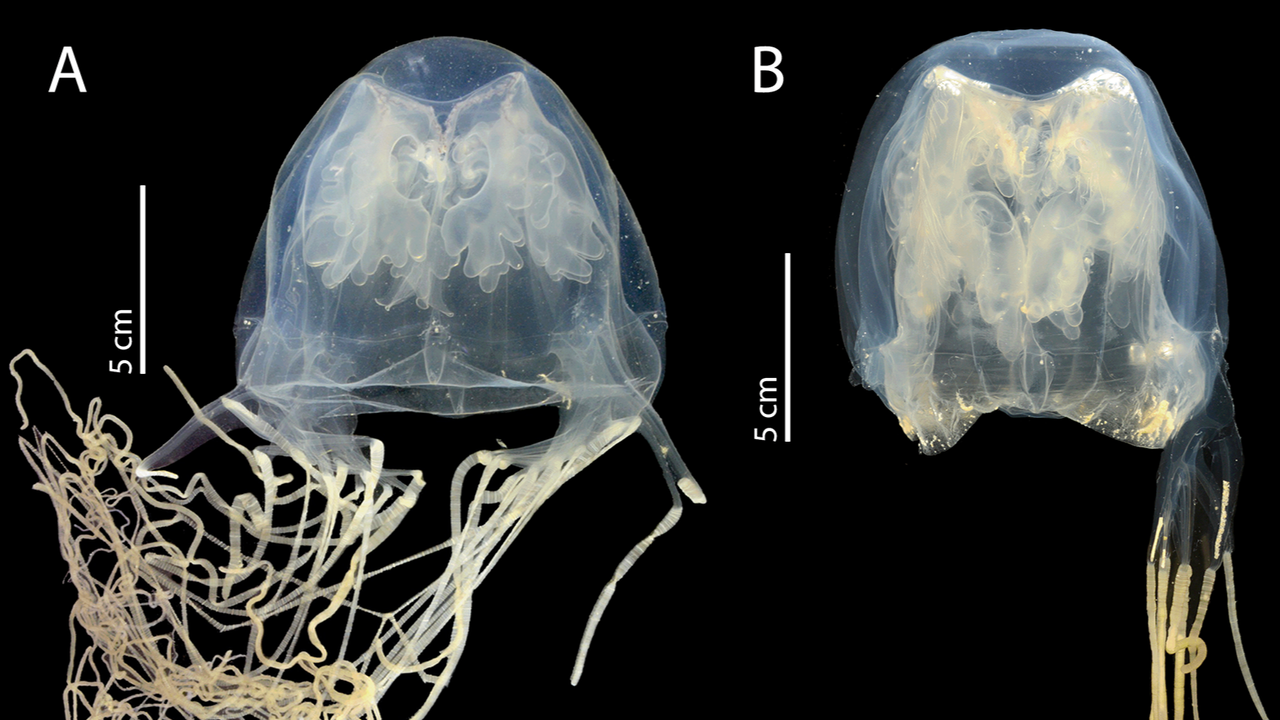
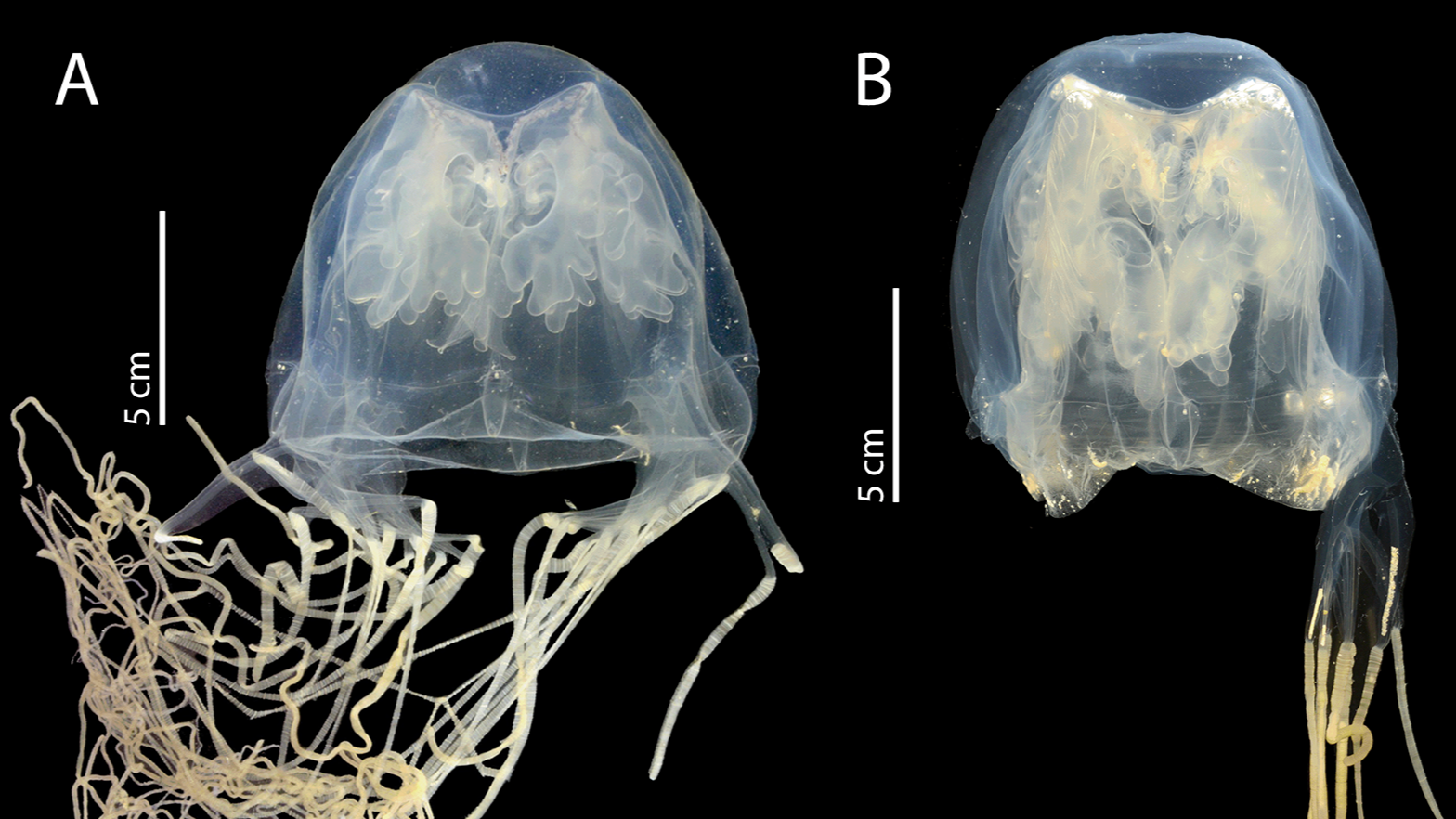
 Scientists have described a new species of box jellyfish from the waters off Singapore. (Image credit: ©Iesa et al. Raffles Bulletin of Zoology, 2026) Share this article 0 Join the conversation Add us as a preferred source on Google Newsletter Subscribe to our newsletter
 Scientists have described a new species of highly venomous box jellyfish based on specimens that were lurking near a Singaporean island formerly known as Pulau Blakang Mati, or the "Island of Death Behind," in 2020 and 2021.
The newly described species, Chironex blakangmati, was named after the island's original, ominous name in Malay, rather than its name since 1972, Sentosa, which means "peace and tranquility." That's fitting, given how dangerous the animal is.
Previously, scientists had mistaken C. blakangmati for another box jellyfish species, C. yamaguchii. However, it turns out that these box jellies are different, both genetically and morphologically, scientists reported in a new study, published May 15 in the journal Raffles Bulletin of Zoology.
"C. blakangmati looks remarkably like Chironex yamaguchii — a jellyfish species I first discovered in Okinawa while doing my master's degree there," study co-author Cheryl Ames, a professor of applied marine biology at Tohoku University in Japan and a research associate at the Smithsonian National Museum of Natural History in Washington, D.C., said in a statement. "But we realized they were completely distinct. I actually went back to dust off an old sample of C. yamaguchii I still had in storage in Okinawa to help with the comparisons!"
The researchers found that the newly identified species lacks branched canal structures at the bottom of its bell-shaped body that C. yamaguchii and the other two Chironex species, C. fleckeri and C. indrasaksajiae, exhibit. Specifically, these canals sit within the perradial lappets, which are flaps reinforcing the musculature that propels box jellyfish when they swim. Together with genetic discrepancies, this anatomical difference confirmed that C. blakangmati is a separate species, according to the statement.
"Our thorough review and analysis of all the Chironex species known to date reveal a lot about these box jellyfishes," study co-author Danwei Huang, an associate professor in the National University of Singapore's Department of Biological Sciences and the Lee Kong Chian Natural History Museum, said in the statement.
Sign up for the Live Science daily newsletter nowContact me with news and offers from other Future brandsReceive email from us on behalf of our trusted partners or sponsors 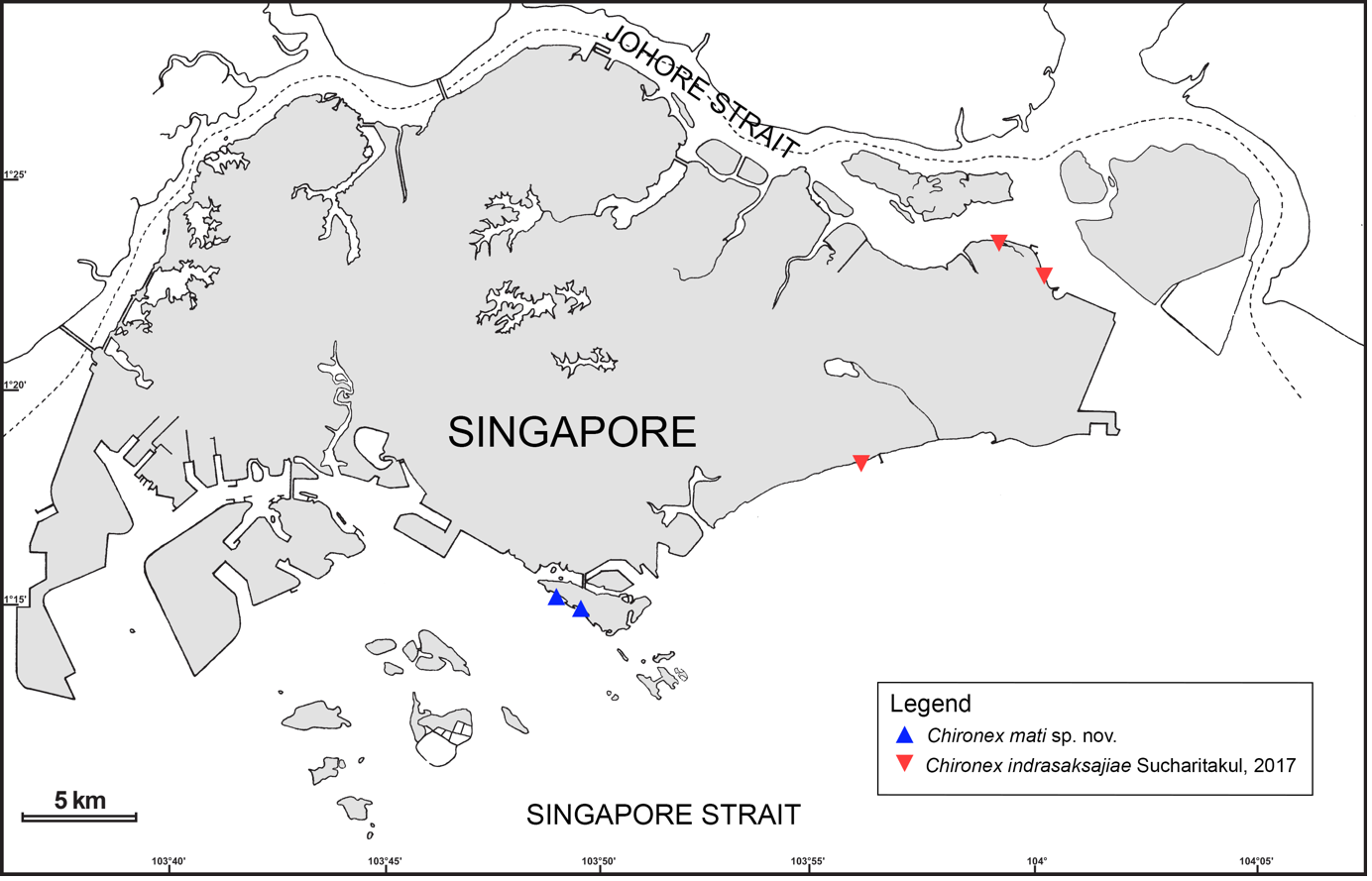
The analysis was based on jellyfish specimens that washed up on Singapore beaches in 2020 and 2021. The newfound species is marked in blue, while Thai sea wasps are shown in red.
(Image credit: ©Iesa et al., Raffles Bulletin of Zoology, 2026)The results also revealed for the first time that C. indrasaksajiae, which is typically found off the coast of Thailand, is present in Singapore's waters. Nicknamed the Thai sea wasp, this species can be deadly.
RELATED STORIES- Bizarre jellyfish with bright-red cross for a stomach discovered in volcanic caldera off Japan
- A mysterious barrier in the Atlantic divides weird deep-sea jellyfish cousins
- Jellyfish Lake: Palau's saltwater pool with a toxic bottom and surface waters brimming with millions of jellyfish
"We were surprised to find C. indrasaksajiae so far away from Thailand," Ames said. "Recording range expansions like these is really important, as we currently know so little about the biodiversity and spatial distribution of box jellyfish."
A better understanding of the distribution of box jellies could help prevent severe injuries and deaths in humans, according to the statement.
Records suggest box jellyfish stings cause around 40 deaths per year globally, but some experts think that number is a huge underestimate.
Article SourcesIesa, I., Ames, C. L., Yap, N. W. L. & Huang, D. (2026). Chironex box jellyfishes (Cnidaria: Cubozoa: Chirodropida) in Singapore: Chironex blakangmati, new species, and range extension of C. indrasaksajiae. Raffles Bulletin of Zoology. http://dx.doi.org/10.26107/RBZ-2026-0026
TOPICS Sascha PareStaff writer
 Sascha is a U.K.-based staff writer at Live Science. She holds a bachelor’s degree in biology from the University of Southampton in England and a master’s degree in science communication from Imperial College London. Her work has appeared in The Guardian and the health website Zoe. Besides writing, she enjoys playing tennis, bread-making and browsing second-hand shops for hidden gems.
View MoreYou must confirm your public display name before commenting
Please logout and then login again, you will then be prompted to enter your display name.
Logout