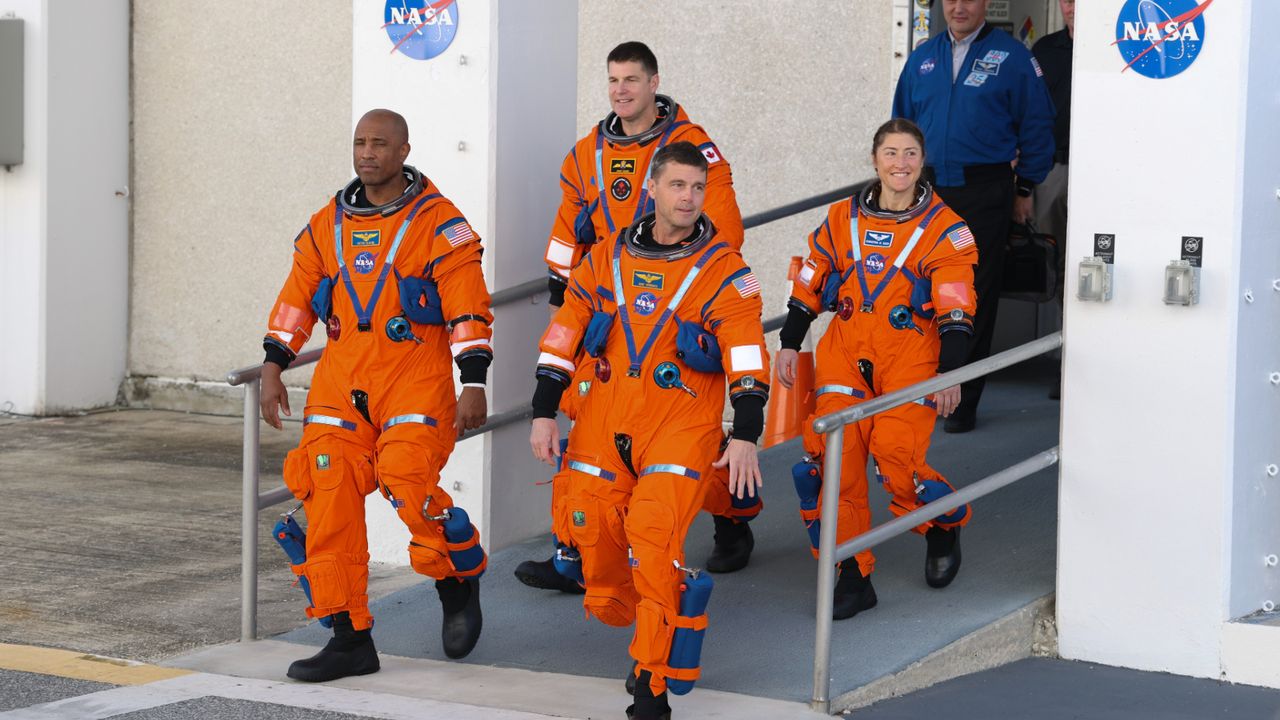
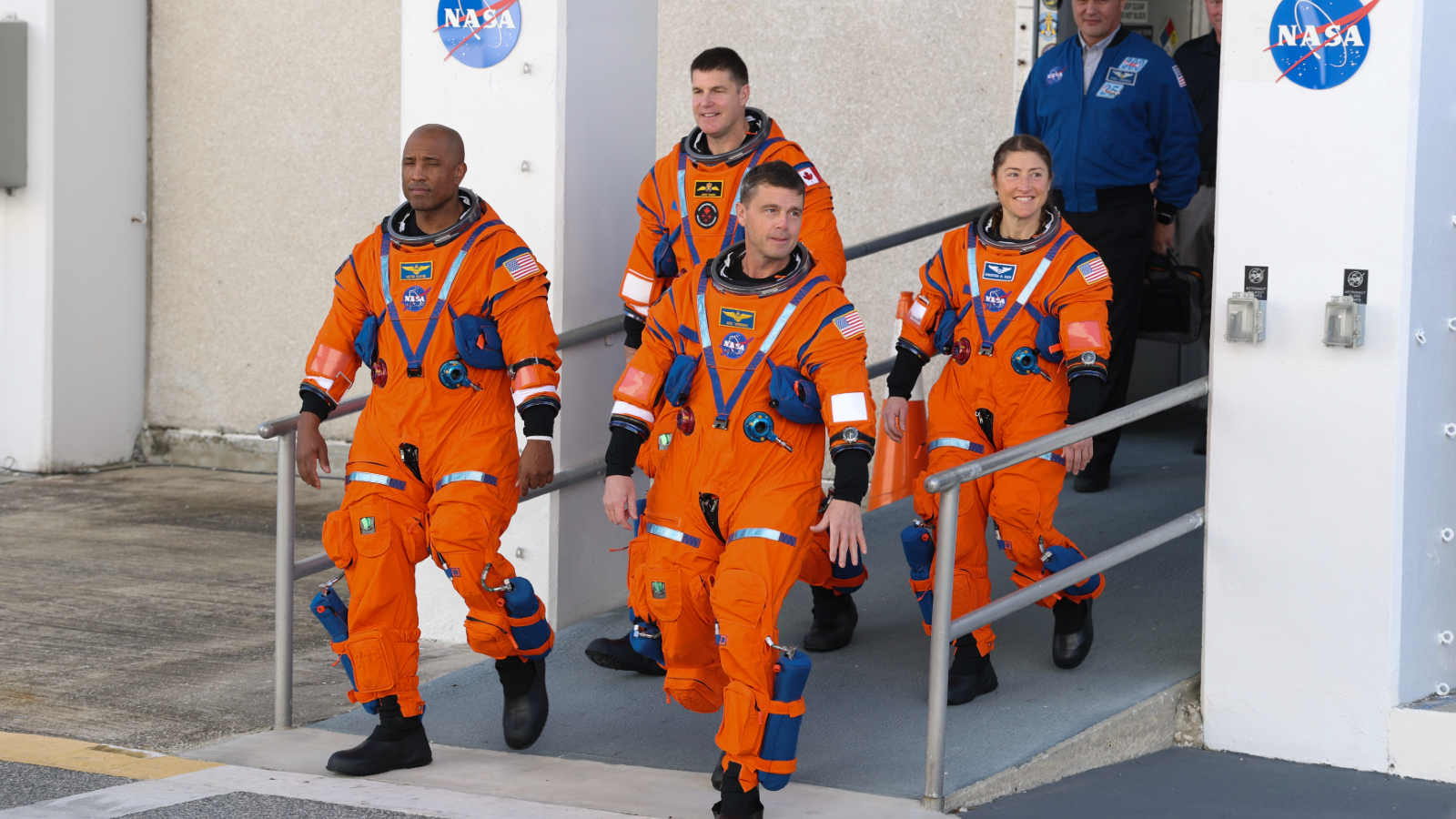
 The Artemis II crew will break multiple records, both individually and collectively, during their historic mission to slingshot around the moon. The team consists of commander Reid Wiseman (front right), pilot Victor Glover (front left) and mission specialists Christina Koch (rear right) and Jeremy Hansen (rear left). (Image credit: Joe Raedle/Getty Images) Share this article 0 Join the conversation Follow us Add us as a preferred source on Google Newsletter Sign up for the Live Science daily newsletter now
 Get the world’s most fascinating discoveries delivered straight to your inbox.
Become a Member in Seconds
Unlock instant access to exclusive member features.
Contact me with news and offers from other Future brands Receive email from us on behalf of our trusted partners or sponsors By submitting your information you agree to the Terms & Conditions and Privacy Policy and are aged 16 or over.You are now subscribed
Your newsletter sign-up was successful
Want to add more newsletters?
Join the club
Get full access to premium articles, exclusive features and a growing list of member rewards.
Explore An account already exists for this email address, please log in. Subscribe to our newsletterAfter repeated delays, NASA is finally ready to launch its much-anticipated Artemis II mission, which will send humans back to the moon for the first time in more than 50 years.
The Artemis II crew includes commander Reid Wiseman, pilot Victor Glover and mission specialist Christina Koch of NASA and mission specialist Jeremy Hansen from the Canadian Space Agency, who were first selected for the mission in 2023.
Article continues belowIn addition to helping prepare for a return to the moon's surface and the eventual construction of a lunar base, each member of the crew will break multiple records — both collectively and individually.
Here are the six most important achievements they will make.
1. First Black astronaut to visit the moon
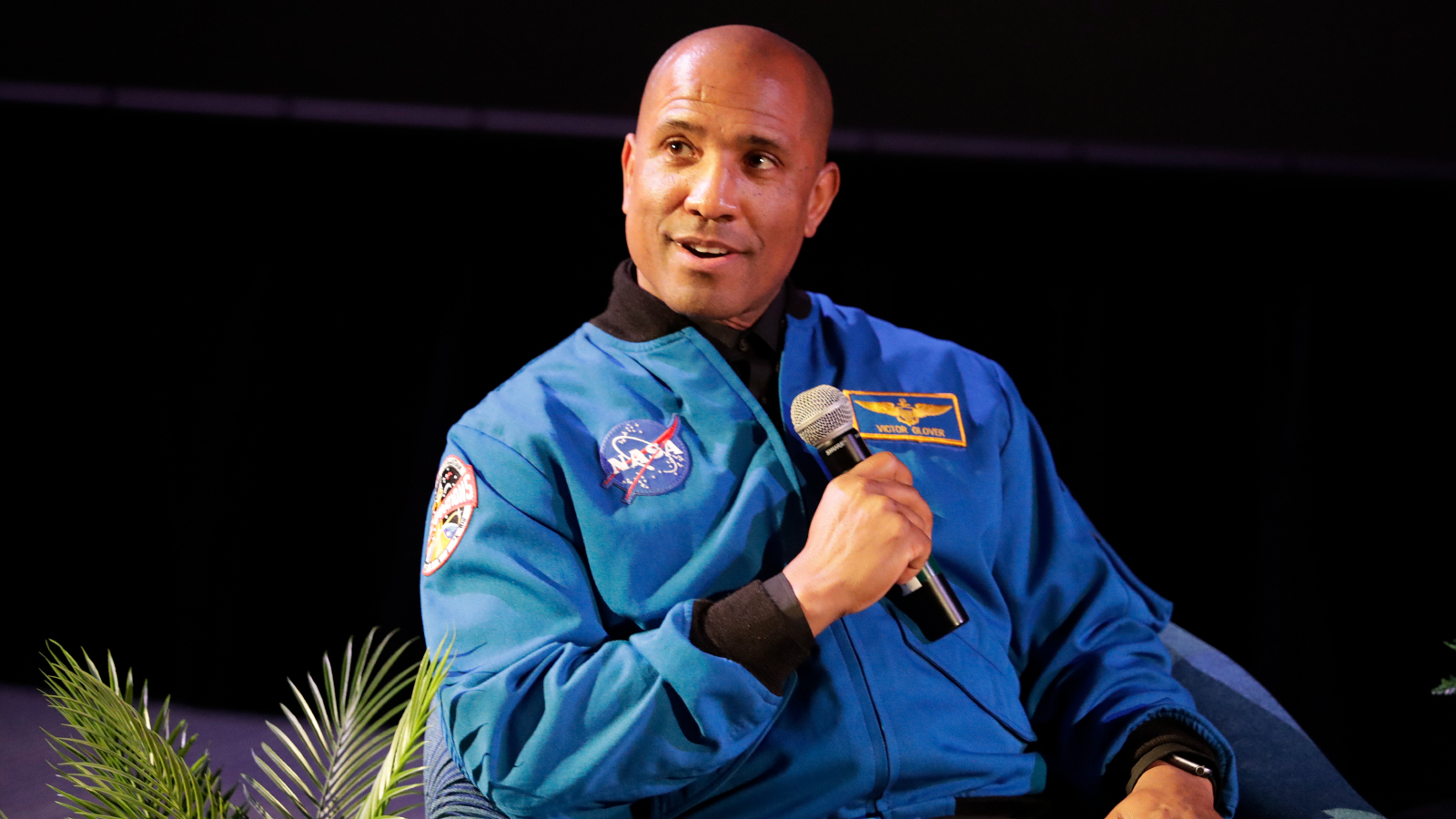
During the upcoming mission, Glover will make history as the first Black astronaut to visit the lunar environment and the first Black astronaut to venture beyond low Earth orbit (LEO).
The 49-year-old former fighter-jet pilot previously spent 168 days on the International Space Station (ISS) between November 2020 and May 2021, making him the first Black astronaut to visit the station. On this trip, he also made history as the first person to pilot SpaceX's Dragon crew capsule, which was being used to deliver astronauts to the ISS for the first time.
Sign up for the Live Science daily newsletter nowContact me with news and offers from other Future brandsReceive email from us on behalf of our trusted partners or sponsorsDuring Artemis II, Glover will also become the first person to fly NASA's Orion spacecraft, when he takes control of the otherwise-autonomous module during a roughly two-hour window, dubbed "prox ops," shortly after launch while the crew is still orbiting Earth, according to a NASA fact sheet. This stage will provide crucial data for the astronauts of future missions, including Artemis III, which will attempt to dock with a lunar lander in LEO, and Artemis IV, which will finally put boots back on the lunar surface.
2. First woman to visit the moon

Mission specialist Koch will be the first woman to go beyond LEO and visit the lunar environment.
Koch, 47, also holds the record for the most consecutive days in space by a woman, having spent 328 days on the ISS between March 2019 and February 2020. During this trip, Koch also participated in the first-ever all-female spacewalk alongside fellow NASA astronaut Jessica Meir. (The record for the most nonconsecutive days in space by a woman is held by now-retired NASA astronaut Peggy Whitson, who spent 665 days in space across three spaceflights.)
During the Artemis II mission, Koch and fellow mission specialist Hansen will be the first to get to work, unstrapping from their seats around 40 minutes after liftoff to help set up vital life-support systems within the capsule, according to the mission's proposed timeline.
3. First non-American to visit the moon
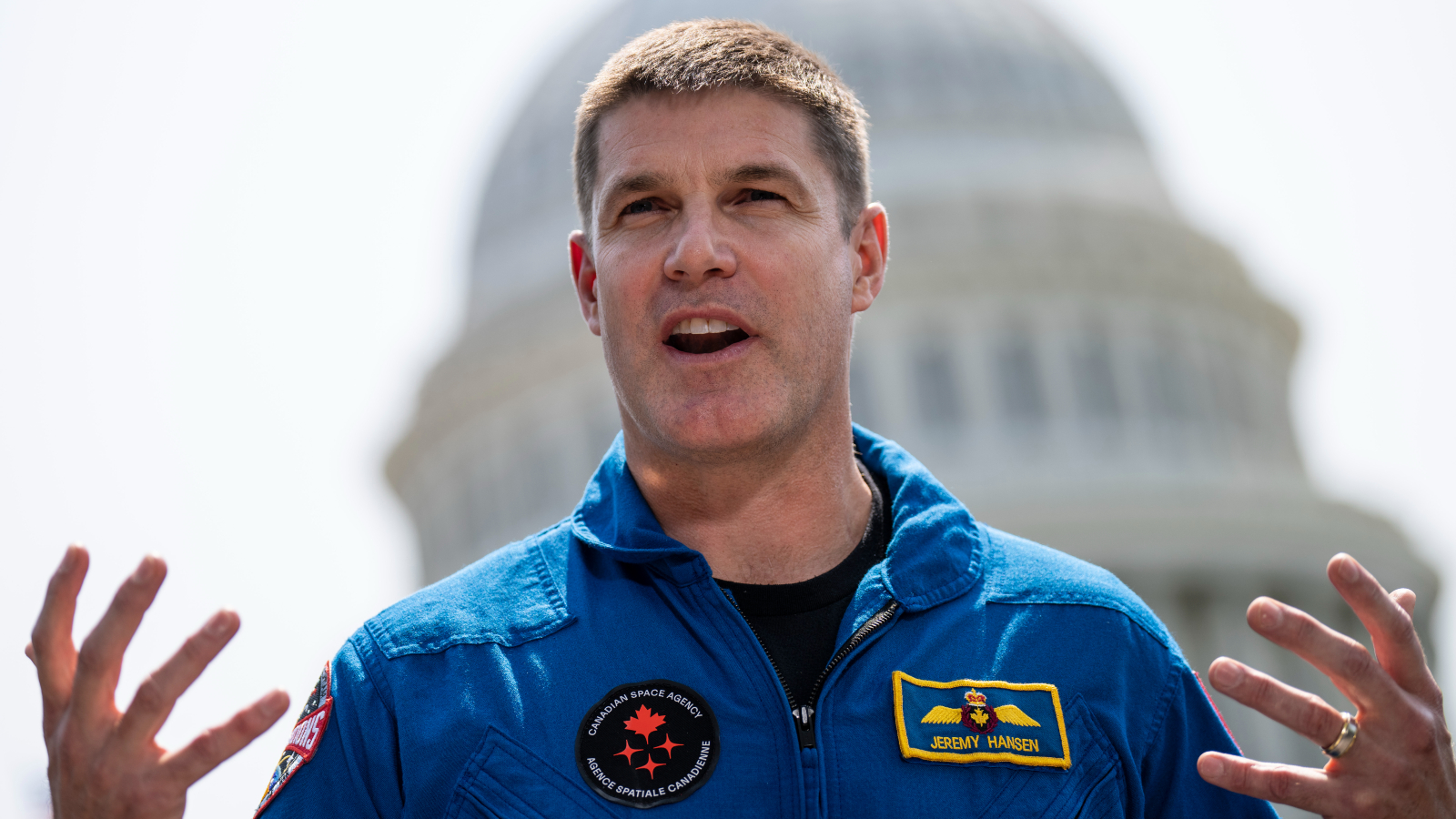
Hansen is the third crewmember who will personally break new ground (or space) during the upcoming mission. The 50-year-old Canadian will become the first non-American to visit the lunar environment and only the 10th Canadian to launch into space.
Hansen is the only crewmember who has not yet been to space. As a result, he may experience "space adaptation syndrome," which is essentially an extreme version of motion sickness that affects around half of first-time astronauts.
"I'm definitely worried about that," Hansen previously told Ars Technica. If he is affected, he will have to be "very intentional" with his movements and "try to minimize" what he does during the initial stages of the mission, he added.
4. Oldest astronaut to visit the moon
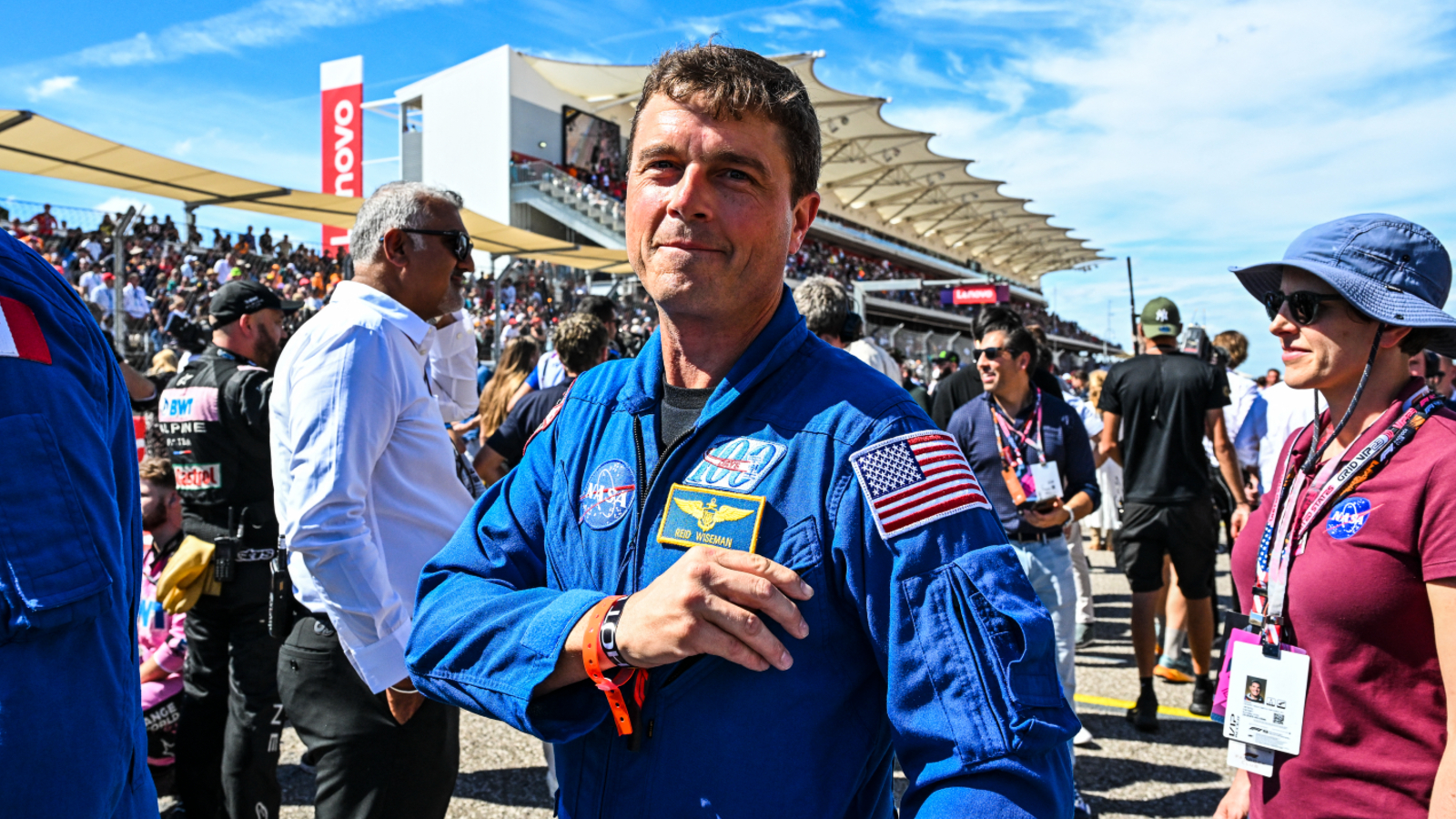
Not to be outdone by the rest of his crew, Wiseman will also set an individual record during the upcoming lunar flyby, becoming the oldest person to visit the lunar environment.
Wiseman turned 50 in November (77 days before Hansen) and will take over the record from legendary NASA astronaut Alan Shepard, who was 47 when he set foot on the moon during the Apollo 14 mission in 1971. (Shepard was also the first American in space, which he achieved on board the Freedom 7 capsule in 1961.)
Interestingly, Hansen and Glover are also older than Shepard was during Apollo 14, and Koch is only 72 days younger, hinting that NASA is prioritizing experience in the Artemis program.
5. Farthest distance from Earth by humans
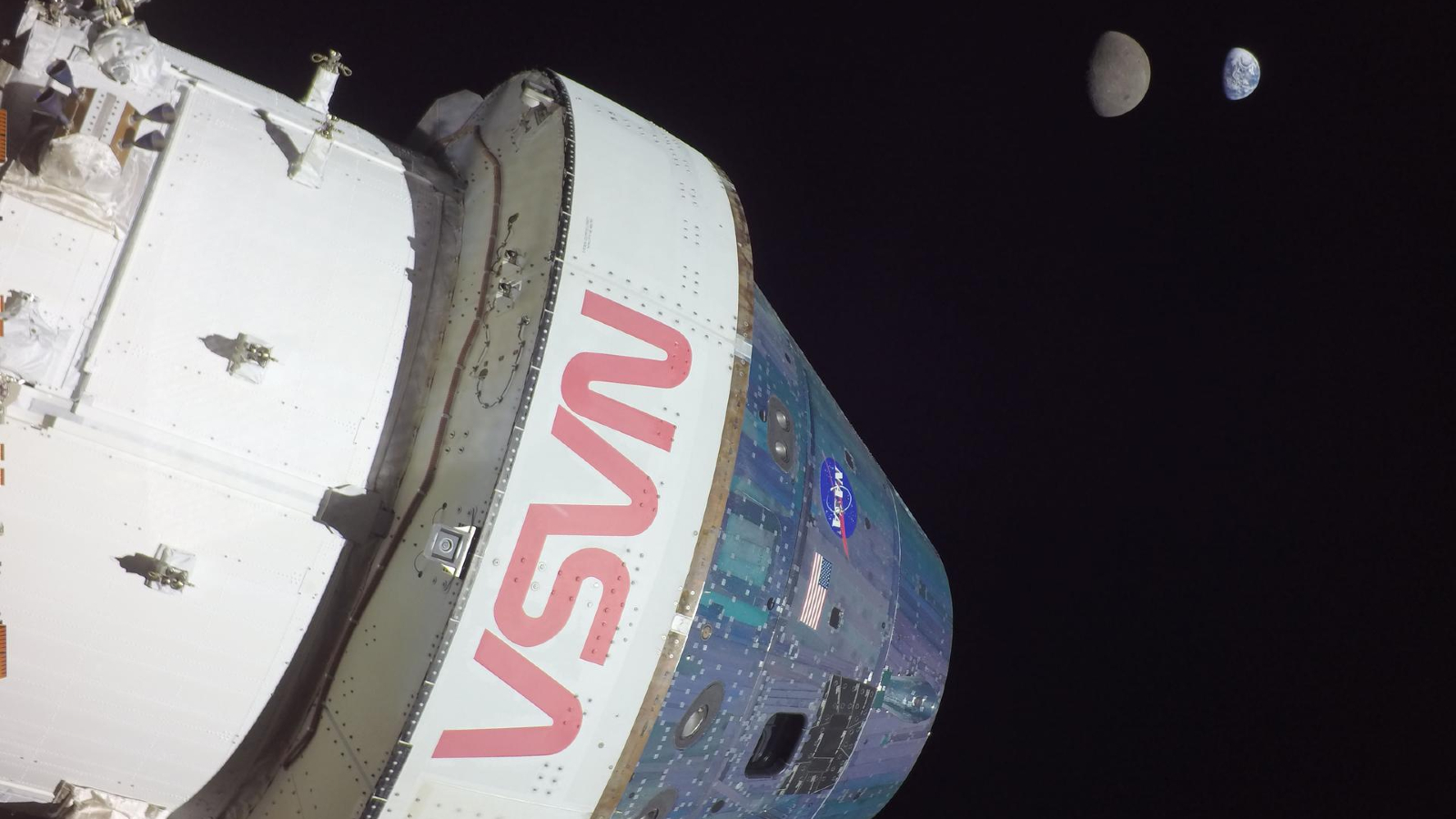
The Artemis II crew is being sent to the lunar environment on a "free-return trajectory," which essentially means they will slingshot around the moon and return to Earth without having to carry out a return burn. This is different to most of the later Apollo missions, which entered into a temporary orbit around the moon.
The last free-return trajectory was inadvertently completed by the Apollo 13 crew, who scrambled to carry out a similar maneuver after they were famously forced to abandon a lunar landing following an explosion on board their spacecraft. The Artemis I mission also slingshotted around the moon in a similar way, but it was uncrewed.
During their "moonshot," the Artemis II crew is expected to reach a maximum distance of 250,000 miles (402,000 kilometers) from Earth — around 1,500 miles (2,400 km) farther than the Apollo 13 astronauts, who previously held this record. This will occur while the crew is out of radio contact for up to 50 minutes as they traverse the far side of the moon.
In "Star Trek"-like fashion, the Artemis II astronauts will literally "boldly go where no [hu]man has gone before." And given that future moon missions, like Artemis IV, will not use a free-return trajectory, this record could stand for quite some time — maybe even until humans visit Mars.
6. Greatest reentry speed (and fastest humans in history)
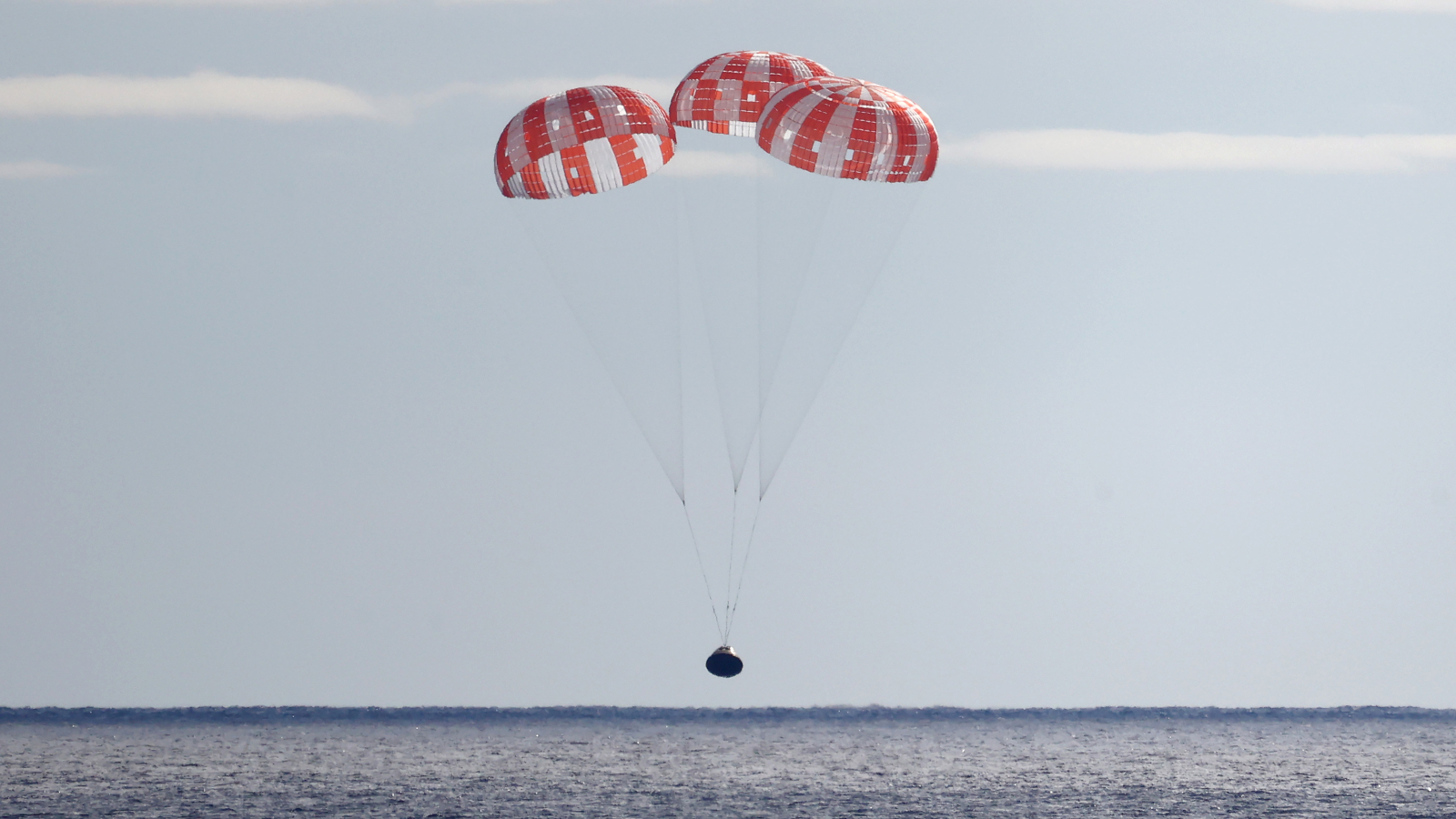
Due to the mission's unique trajectory, the Artemis II crew will also reenter Earth's atmosphere at slightly higher speeds than any other astronauts in history.
NASA estimates that the crew's peak reentry speed will be slightly over 25,000 mph (40,200 km/h), which would beat the reentry record currently held by the Apollo 10 astronauts, who came in hot after burning excess fuel on their return from a lunar flyby in 1969.
Some experts have questioned whether the Orion spacecraft's heat shields can handle the resulting fiery temperatures. However, NASA is confident that the shields can do their job.
This record also means that the Artemis II astronauts will travel faster than any other humans in history (as reentry is the fastest part of any space mission). However, it is not the fastest speed traveled by a human-made object. That record belongs to NASA's Parker Solar Probe, which reached top speeds of around 430,000 mph (692,000 km/h) during its recent close flybys of our home star.
Other firsts
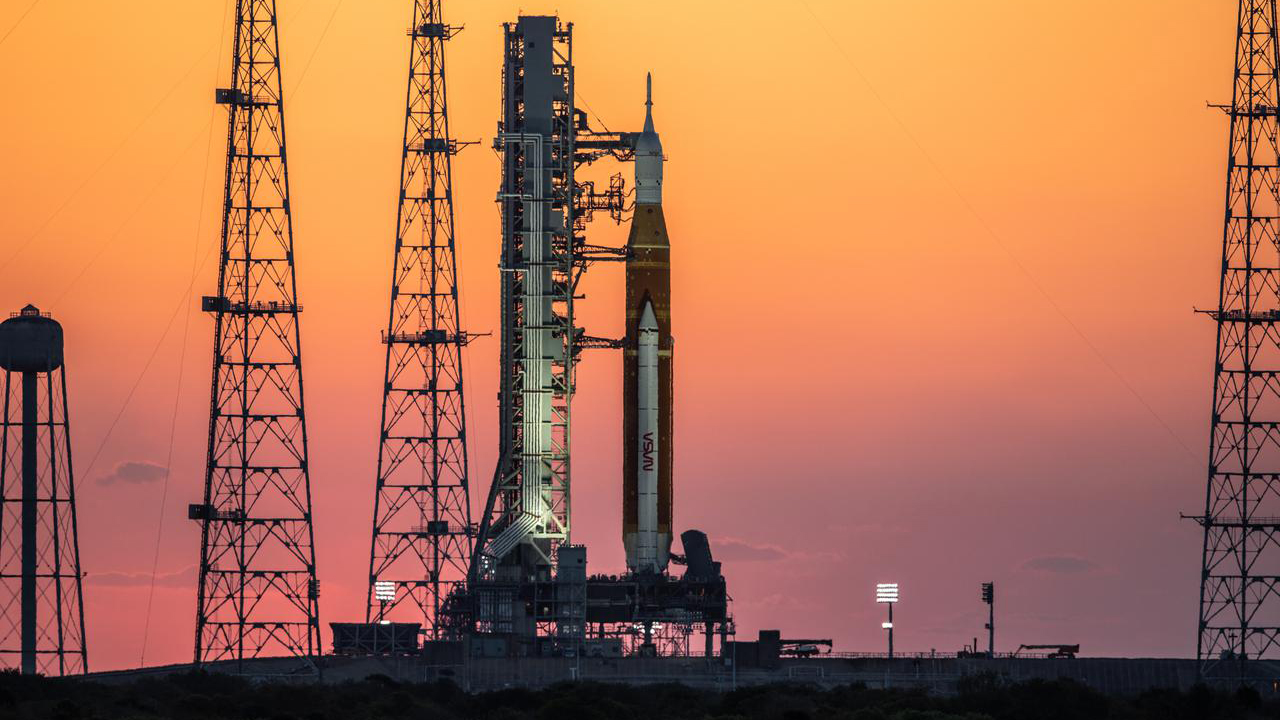
In addition to the major records listed above, the Artemis II mission will mark several other firsts.
For example, the mission will mark the first crewed launch of NASA's mega SLS rocket and the first time humans have journeyed aboard — and piloted — the Orion spacecraft.
RELATED STORIES—'The US has returned to the moon': Private company makes historic moon landing with Odysseus probe
Similarly, a lot of the technology being tested on board the Orion spacecraft is being used in space for the first time. One of the most important examples of this is the Orion Artemis II Optical Communications System, which uses lasers to send and receive messages from Earth and will serve as the basis for future communication relays at NASA's planned moon base.
And last but not least, Artemis II will feature the first fully functioning toilet to visit the moon, as the modules used by the Apollo astronauts were equipped only with "relief tubes" and disposable bags.
TOPICS Harry BakerSenior Staff Writer
Harry is a U.K.-based senior staff writer at Live Science. He studied marine biology at the University of Exeter before training to become a journalist. He covers a wide range of topics including space exploration, planetary science, space weather, climate change, animal behavior and paleontology. His recent work on the solar maximum won "best space submission" at the 2024 Aerospace Media Awards and was shortlisted in the "top scoop" category at the NCTJ Awards for Excellence in 2023. He also writes Live Science's weekly Earth from space series.
View MoreYou must confirm your public display name before commenting
Please logout and then login again, you will then be prompted to enter your display name.
Logout LATEST ARTICLES 1Tudor Heart: A Renaissance gold necklace featuring a French-English pun on the love between Henry VIII and his first wife, Katherine of Aragon
- 2Saturn's chaotic atmosphere revealed in most comprehensive view yet by James Webb and Hubble telescopes
- 3AI systems are enabling mass surveillance in the US, and there is no national law that 'meaningfully limits' the use of this data
- 4Endometriosis messes with the immune system and causes 'ripple effects across the body'
- 5Hubble images taken 25 years apart show big changes in the iconic Crab Nebula — Space photo of the week