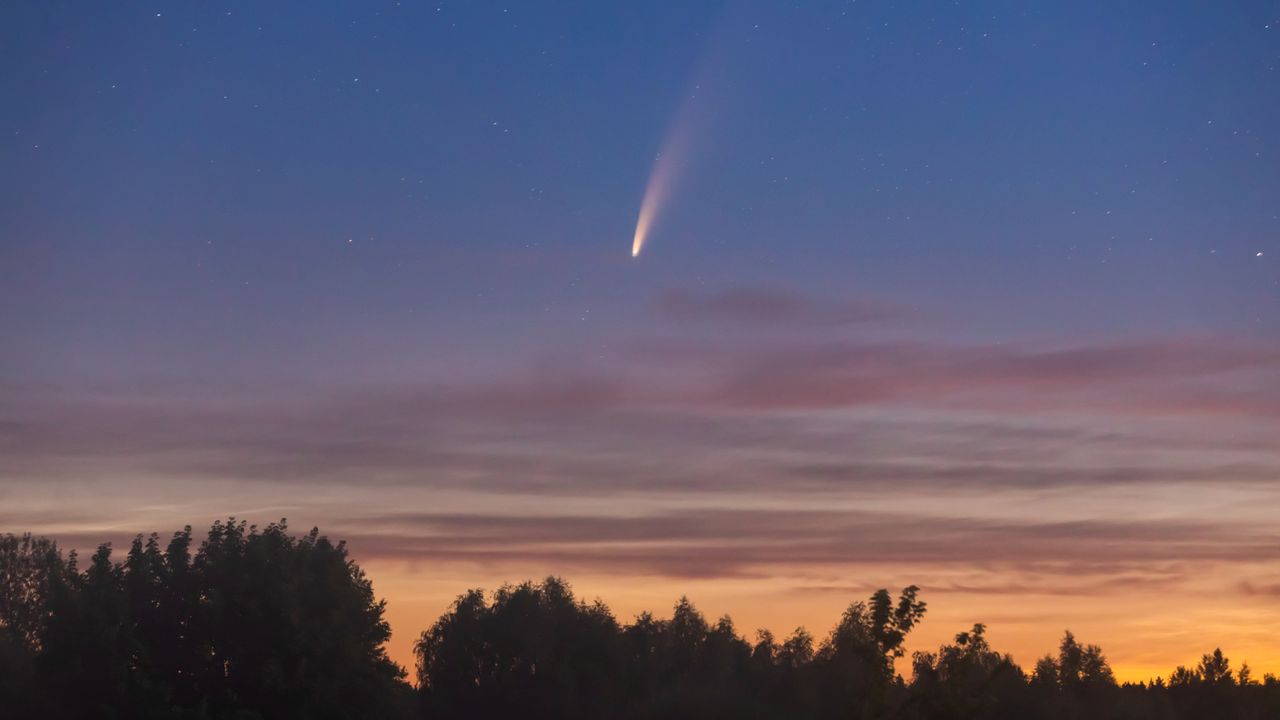
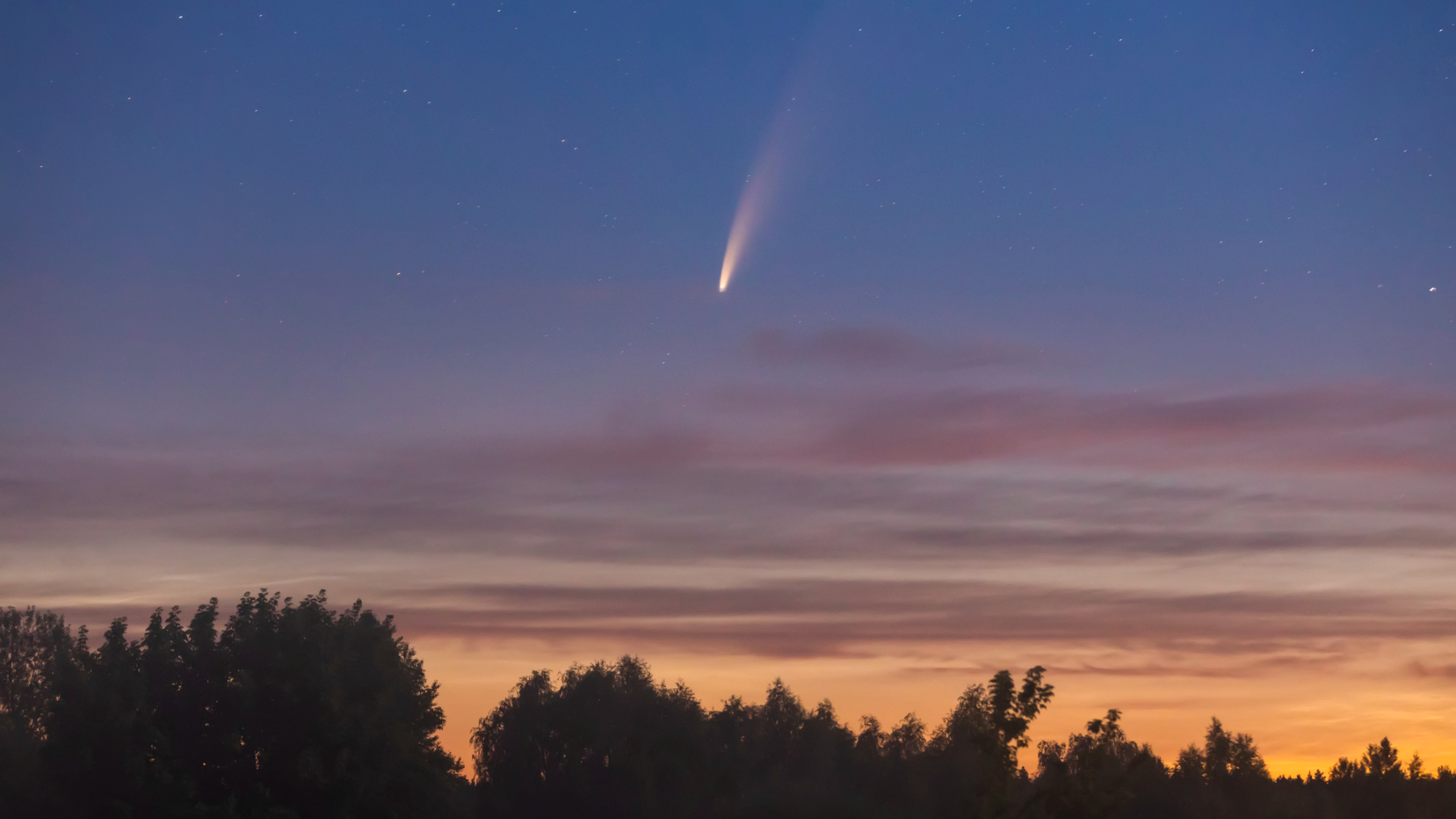
 Comet Neowise C/2020 F3 shines in the predawn sky in 2020. Around April 16, comet C/2025 R3 (PanSTARRS) could similarly become bright enough to be seen with the naked eye. (Image credit: Anton Petrus via Getty Images) Share this article 0 Join the conversation Follow us Add us as a preferred source on Google Newsletter Sign up for the Live Science daily newsletter now
 Get the world’s most fascinating discoveries delivered straight to your inbox.
Become a Member in Seconds
Unlock instant access to exclusive member features.
Contact me with news and offers from other Future brands Receive email from us on behalf of our trusted partners or sponsors By submitting your information you agree to the Terms & Conditions and Privacy Policy and are aged 16 or over.You are now subscribed
Your newsletter sign-up was successful
Want to add more newsletters?
Join the club
Get full access to premium articles, exclusive features and a growing list of member rewards.
Explore An account already exists for this email address, please log in. Subscribe to our newsletterAn incoming comet could provide one of the year's most exciting skywatching events, but only for early risers.
The comet, named C/2025 R3 (PanSTARRS), is currently brightening in the night sky, getting comet hunters excited for its closest approaches to Earth and the sun. The spectacle comes shortly after the unrelated Comet C/2026 A1 (MAPS) was vaporized when it flew just 100,700 miles (162,000 kilometers) from the sun, depriving skywatchers of the chance to see it at its best.
However, comet brightness is highly unpredictable. While current projections are encouraging and PanSTARRS is far less likely to break up than Comet MAPS was, its actual visibility will depend on how the comet behaves as it nears the sun. What seems almost certain is that it will, at the very least, be visible with a pair of stargazing binoculars, which is a rare opportunity.
The comet will reach perihelion (its closest point to the sun) on April 20, when it will pass within 47.4 million miles (76.3 million km). This close approach often increases a comet's activity and brightness, as ice on the comet sublimates into gas that glows as it soaks up solar radiation. The comet will then make its closest approach to Earth on April 27, at about 44 million miles (70.8 million km) distant.
The best time to observe Comet PanSTARRS from the Northern Hemisphere will be in mid-April. From around April 13 to April 15, the comet will appear near the Great Square of Pegasus, which will be just above the eastern horizon an hour before sunrise, before moving into Pisces. A new moon on April 17 will provide dark skies leading into perihelion, which will improve viewing conditions. However, by April 27, the comet may be partially lost in the sun's glare, despite reaching peak brightness.
Whether it becomes a truly spectacular object remains uncertain, but current signs suggest that Comet PanSTARRS is one to watch this month. Learn more in our April stargazing guide.
Sign up for the Live Science daily newsletter nowContact me with news and offers from other Future brandsReceive email from us on behalf of our trusted partners or sponsors Jamie CarterLive Science contributor
Jamie Carter is a Cardiff, U.K.-based freelance science journalist and a regular contributor to Live Science. He is the author of A Stargazing Program For Beginners and co-author of The Eclipse Effect, and leads international stargazing and eclipse-chasing tours. His work appears regularly in Space.com, Forbes, New Scientist, BBC Sky at Night, Sky & Telescope, and other major science and astronomy publications. He is also the editor of WhenIsTheNextEclipse.com.
View MoreYou must confirm your public display name before commenting
Please logout and then login again, you will then be prompted to enter your display name.
Logout LATEST ARTICLES 1Woman's 'biologically implausible' infection led her to sneeze 'worms' out of her nose
- 2'In every continent where humans are present, water bankruptcy is manifesting itself': Exiled Iranian scientist Kaveh Madani on our desperate need to preserve our most precious resource
- 3'They are literally everywhere': The shocking story of how forever chemicals polluted the world
- 4DNA reveals ancestry of man buried in Stone Age monument in Spain, but his religion remains a mystery
- 5'So much magic': Artemis II shares first images from the far side of the moon, including new 'Earthset' and total eclipse in space