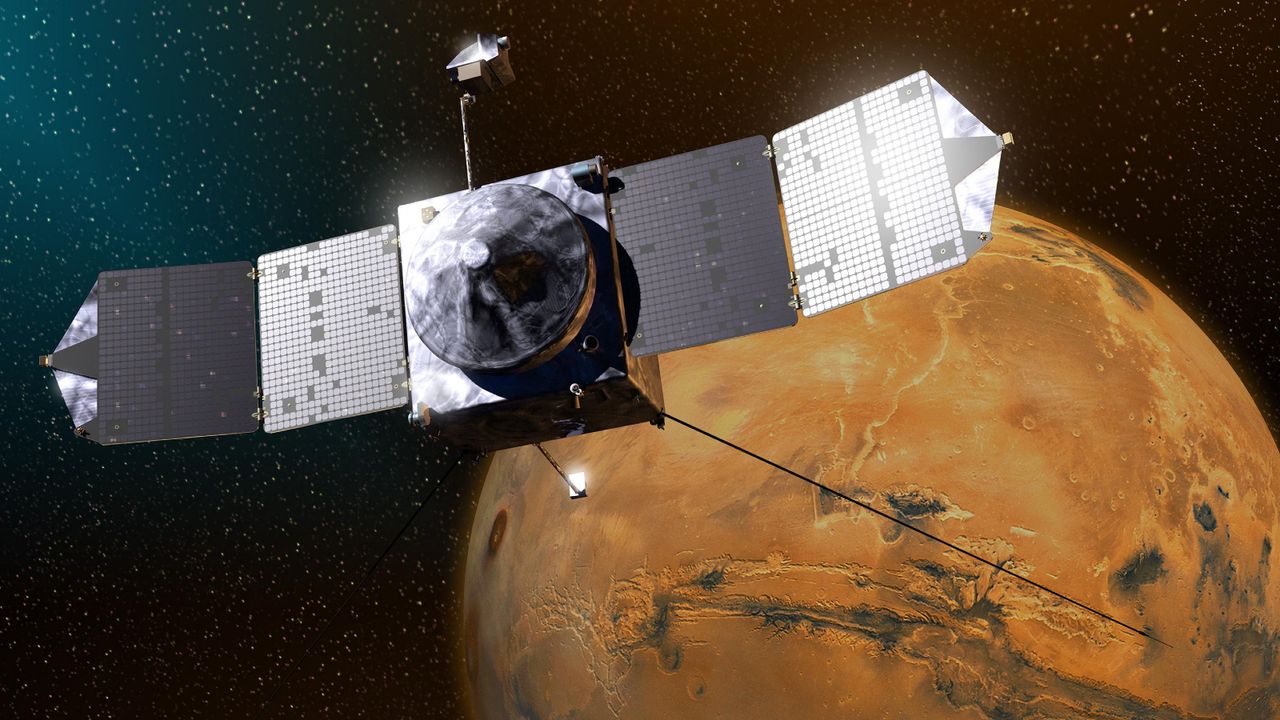
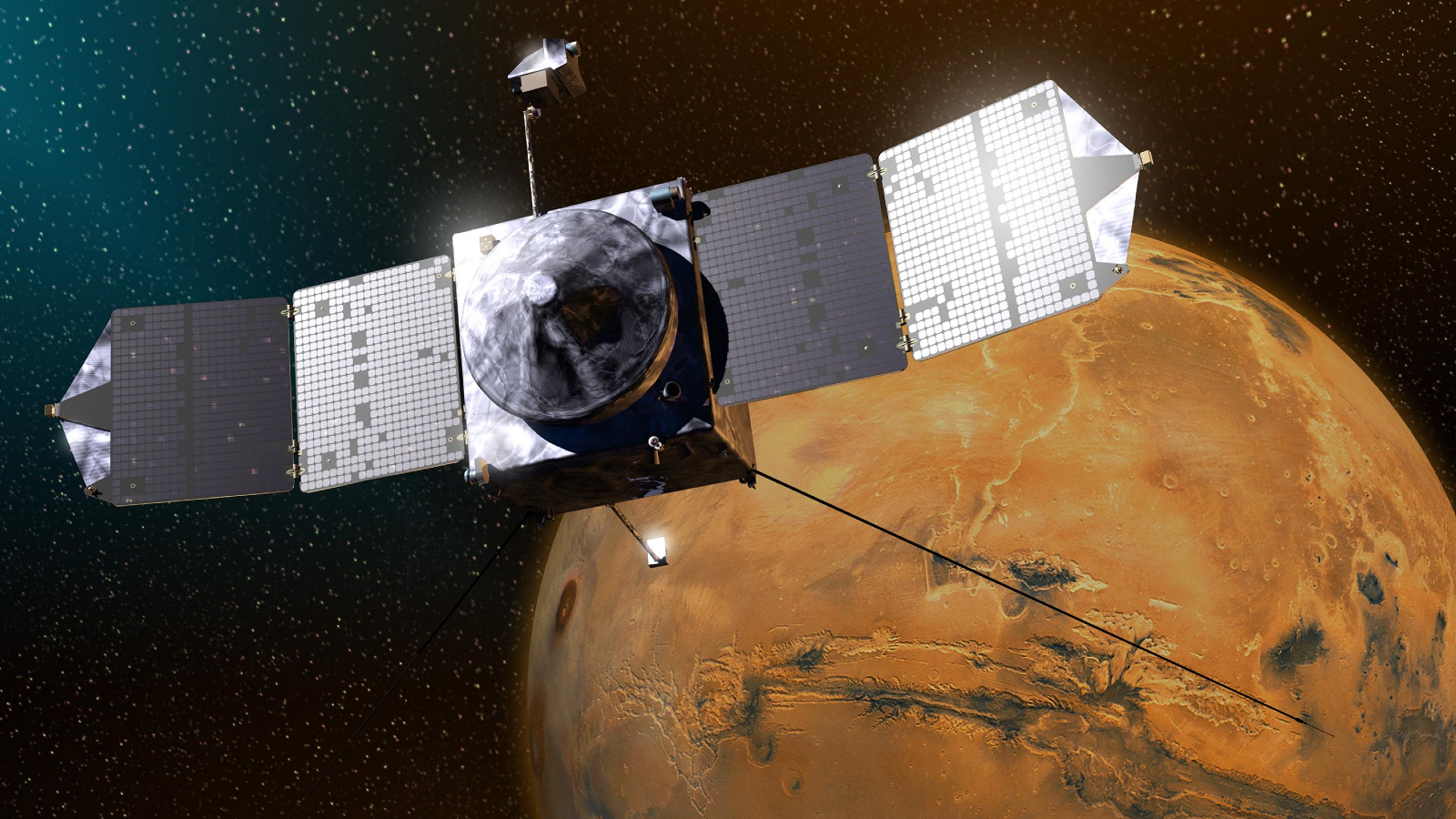
 NASA's MAVEN spacecraft detected strange "wiggles" in Mars' atmosphere after a powerful coronal mass ejection smashed into the Red Planet in 2023. These fluctuations were tell-tale signs of the Zwan-Wolf effect, which was previously thought to be impossible on Mars. (Image credit: NASA/GSFC) Share this article 0 Join the conversation Add us as a preferred source on Google Newsletter Subscribe to our newsletter
 A phenomenon that was thought to be impossible on Mars is squeezing the Red Planet's atmosphere like toothpaste from a tube, a new study finds. The surprising discovery, uncovered by a NASA spacecraft during a powerful solar storm, could change how we think of dangerous space weather throughout the solar system, researchers say.
The unlikely phenomenon, dubbed the Zwan-Wolf effect, was first discovered on Earth in 1976 and occurs when "charged particles are squeezed like toothpaste coming out of a tube along magnetic structures called flux tubes," NASA representatives wrote in a statement. These flux tubes are located within Earth's magnetosphere, the invisible field that is generated by the movements of our planet's molten metal core and shields us from radiation.
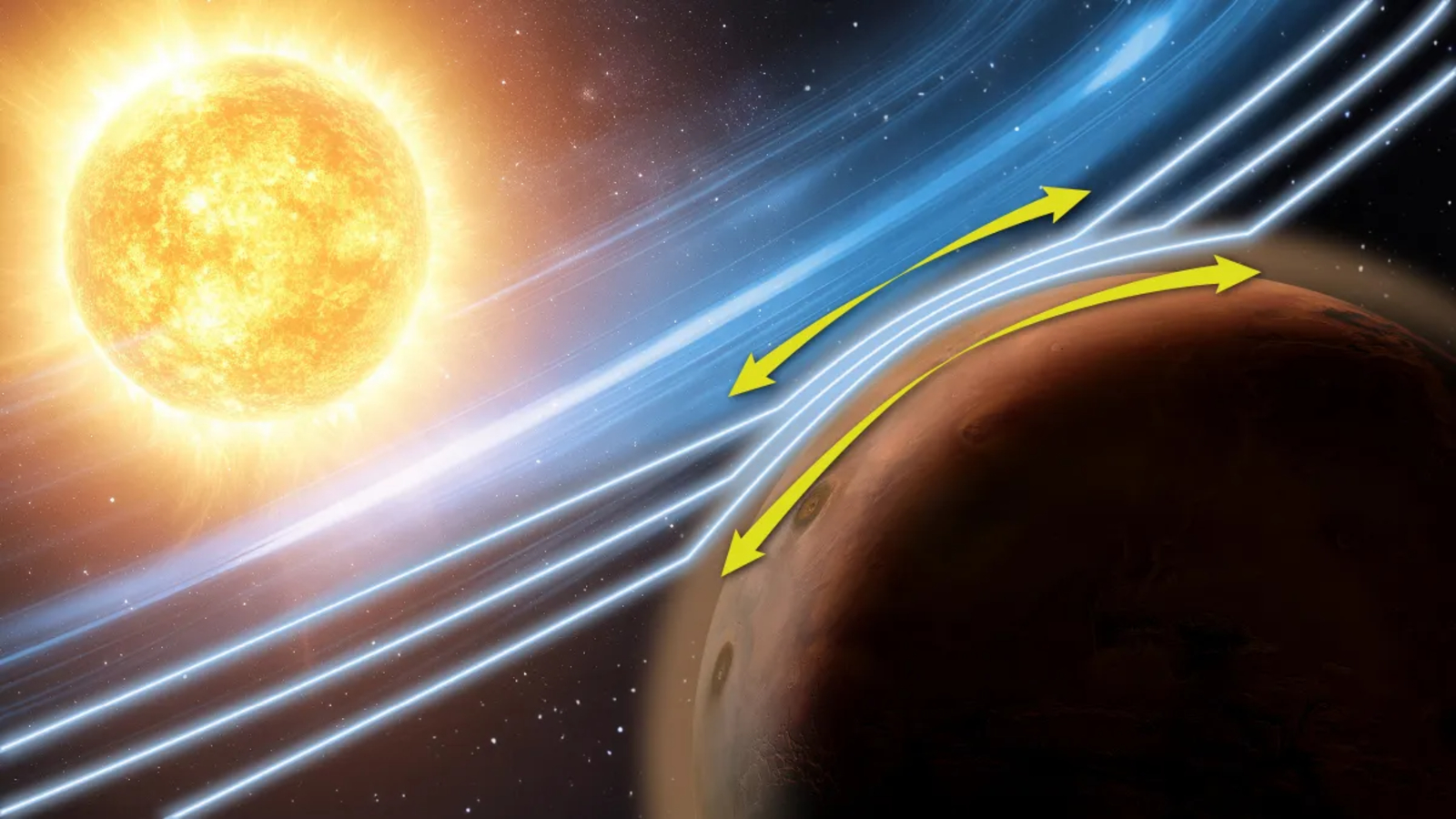
The Zwan-Wolf effect squeezes plasma along the edges of Mars' ionosphere, similar to what happens in Earth's magnetosphere.
(Image credit: LASP/CU Boulder)Sign up for the Live Science daily newsletter nowContact me with news and offers from other Future brandsReceive email from us on behalf of our trusted partners or sponsorsRELATED STORIES- 'Almost unbelievable': Rare void from the sun briefly blew up Mars' atmosphere last year, and it could happen to Earth too
- Lights on Mars! NASA rover photographs visible auroras on Red Planet for the first time
- See the first clear images of 'sun rays' on Mars in eerie new NASA photos
Fowler, C. M., Hanley, K. G., McFadden, J., Mitchell, D., Halekas, J., Andersson, L., Bark, D., Ma, Y., Chaston, C., Sanchez-Cano, B., Lester, M., Brain, D., Mazelle, C., Espley, J., Benna, M., Jolitz, R., Ramstad, R., & Curry, S. (2026). Detection of Zwan-Wolf effect in the ionosphere of Mars. Nature Communications, 17(1). https://doi.org/10.1038/s41467-026-72251-9
 Harry BakerSenior Staff Writer
Harry is a U.K.-based senior staff writer at Live Science. He studied marine biology at the University of Exeter before training to become a journalist. He covers a wide range of topics including space exploration, planetary science, space weather, climate change, animal behavior and paleontology. His recent work on the solar maximum won "best space submission" at the 2024 Aerospace Media Awards and was shortlisted in the "top scoop" category at the NCTJ Awards for Excellence in 2023. He also writes Live Science's weekly Earth from space series.
View MoreYou must confirm your public display name before commenting
Please logout and then login again, you will then be prompted to enter your display name.
Logout