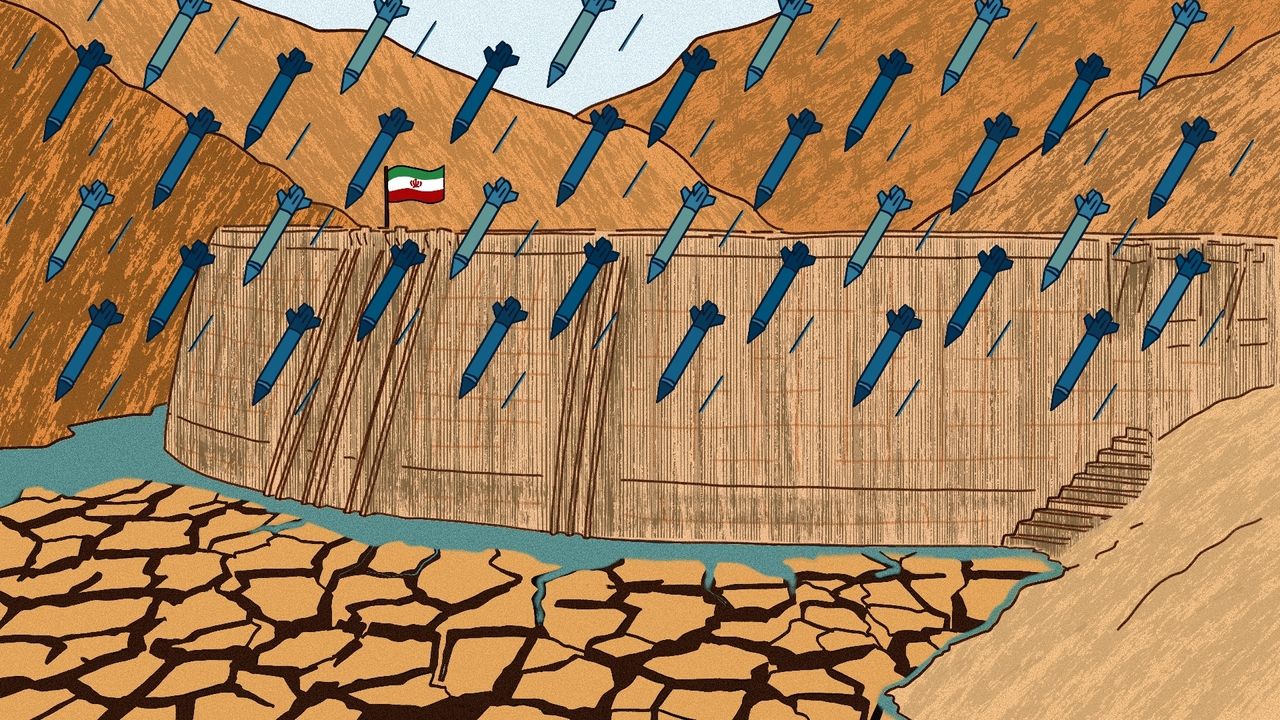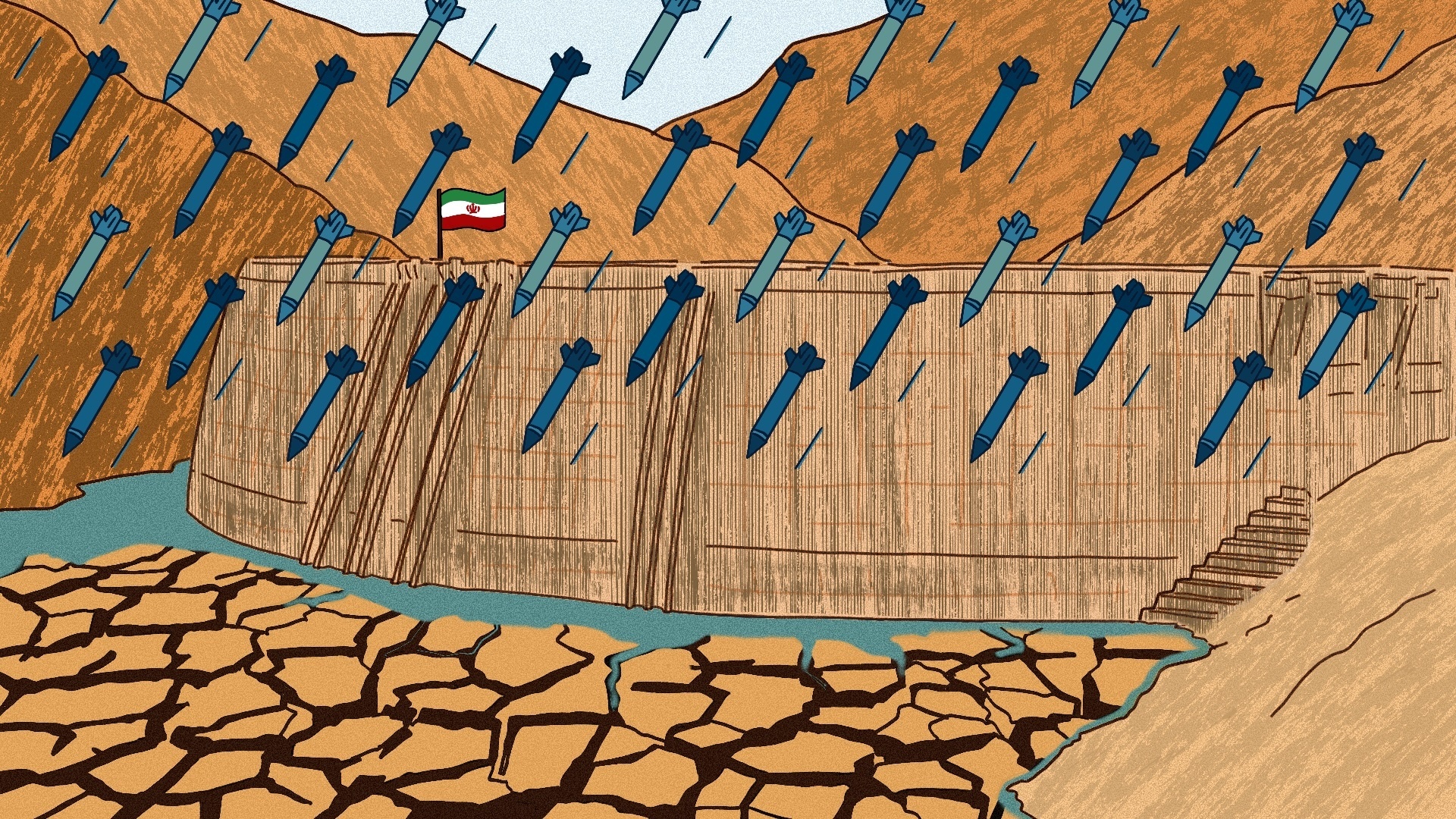
War is deepening a water crisis in Iran that has depleted the country's surface water, as well as its groundwater resources. (Image credit: Roshanak Rouzbehani)
Share this article Join the conversation
Follow us Add us as a preferred source on Google Newsletter Subscribe to our newsletter
On March 10, the U.S. and Israel bombed Iran's capital of Tehran so heavily, one resident described the city as "the last stop before hell."
Buildings shook and windows shattered as missiles struck oil and weapons development facilities in Tehran, which is home to nearly 10 million people. The World Health Organization urged Iranians to stay indoors as acidic rain blackened with soot and toxic compounds showered residential areas.
Since the start of the war on Feb. 28, U.S.-Israeli forces have launched thousands of attacks around Iran, destroying homes, schools, hospitals and other key civilian infrastructure. Almost 3,500 Iranians have died, and more than 26,500 have been injured.
But as bombardments continue, another emergency is spiraling in the background. The war has overshadowed a dire water crisis in Iran that, among other things, caused Tehran to nearly run out of water late last year.

Science Spotlight takes a deeper look at emerging science and gives you, our readers, the perspective you need on these advances. Our stories highlight trends in different fields, how new research is changing old ideas, and how the picture of the world we live in is being transformed thanks to science.
In November 2025, four of Tehran's five water reservoirs were 88% empty, and the fifth, Amir Kabir, was 92% empty. The city faced its worst water crisis in six decades, with taps going dry in some districts and desperation paving the way for deadly protests in December 2025 and January 2026.
Iran has been in a drought for more than five years, and water shortages caused by decades of overreliance on agriculture, broken water policies and hostility toward the rest of the world have gripped the country. Lakes, rivers and wetlands are drying up across most provinces. And in the northeastern city of Mashhad, which is home to about 3.5 million people, water levels in November fell to below 3% of storage capacity.
To make up for surface water losses, Iranians are pumping groundwater, but those reserves are also running dry.
"Iran, for the foreseeable future, will have many, many other issues that need to be sorted out, and I'm afraid the environment will not be at the top of priorities," Nima Shokri, executive co-director of the United Nations University Hub on Engineering to Face Climate Change and head of the Institute of Geo-Hydroinformatics at the Hamburg University of Technology in Germany, told Live Science.
But the water crisis hasn't gone away, and the war will likely worsen the problem, experts told us. Iran can't afford to neglect its water issues any longer, Shokri said.
"If the priority shifts in a meaningful way, if there is structural change, if the environment becomes a top priority, there are things that can be done," Shokri said. "Iran has no choice. Things will collapse unless there is meaningful structural change."
A water-bankrupt country
Tehran's water shortages last year persisted for months. Already in July 2025, officials warned that the city was weeks away from "day zero," when water supplies drop so low that taps run dry, forcing residents to queue for rations or buy bottled water. In August, faced with temperatures of up to 122 degrees Fahrenheit (50 degrees Celsius) that increased the demand for energy and water, authorities closed government offices, banks, schools and universities for several days.
By November, Iran's president, Masoud Pezeshkian, had revived a long-debated plan to move Tehran to the country's wetter south due to water shortages. This time, he claimed that relocating the city was "no longer optional." His government said the Makran region, which stretches across Iran's south from the Strait of Hormuz to Pakistan, could host a new city. But the government didn't release a detailed plan or address the relocation's cost, which analysts say could be more than $100 billion.
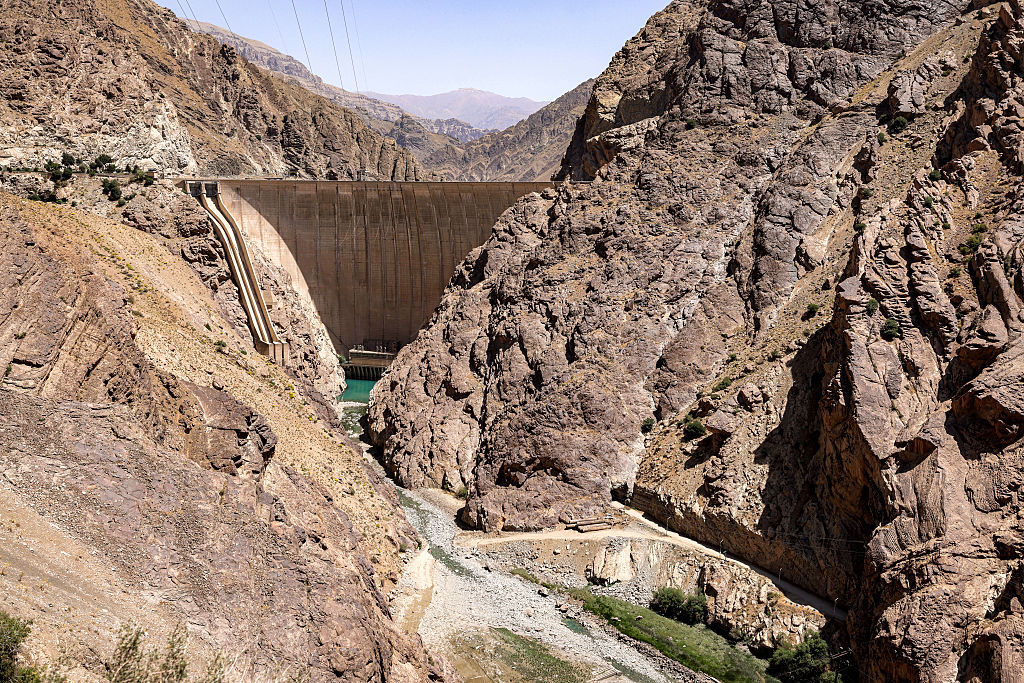
Amir Kabir is one of five large reservoirs that serve Tehran, but its water levels plunged to record lows last year, resulting in minimal outflow into the Karaj River.
(Image credit: ATTA KENARE via Getty Images)
Pezeshkian's comments highlight the lack of a national strategy to deal with water scarcity, said Eric Lob, an associate professor in the Department of Politics and International Relations at Florida International University and a scholar in the Carnegie Middle East Program. Instead of implementing durable solutions, the Iranian regime has relied on water cutoffs, fines and temporary fixes to save water, which is like "putting a Band-Aid on gaping wounds," Lob told Live Science.
Government officials and experts dismissed Pezeshkian's claims as unserious, and they weren't wrong, Lob said. "Even if you were to do that, you still don't have a national plan in place, and you still only have these reactive, stopgap measures that are not going to bring forth any type of sustainable, serious plan."
But the fact that Iran's government would consider displacing 10 million people also shows the gravity of the country's water crisis, which has reached "water bankruptcy" levels — where the damage to some water systems is irreversible on human timescales. Nationwide shortages last year sparked protests in the central Isfahan province in March and contributed to country-wide unrest that the regime brutally suppressed in January 2026 by killing up to 30,000 people.
Last year worsened a historic drought, with Iran receiving about 40% less rainfall than the long-term average, and climate change is predicted to exacerbate the region's aridity. However, water bankruptcy in the country is not driven solely by climate change or short-term droughts. Rather, it stems from decades of broken water governance and aggressive policies that the regime has pursued at the expense of the environment and the Iranian people, Shokri told Live Science.
"It is not 'mismanagement,' because mismanagement is a shallow representation of the issue," Shokri said. "It's a high-level strategic error."
Self-sufficiency at any cost
Since the Iranian Revolution in 1979, the country's ruling elites have placed a great emphasis on independence and self-sufficiency, particularly in food production. In a commentary published March 13 in the journal Nature Sustainability, Shokri and his colleagues argue that this stance and Iran's post-revolution geopolitical aims caused its water crisis.
Agriculture in Iran has mushroomed over the past four decades, despite the country's arid climate and limited water availability. The regime promoted uncapped groundwater extraction to grow crops such as wheat, rice, barley and sugar cane for domestic consumption, while thirstier crops, such as dates and pistachios, simultaneously ballooned to feed exports. Officials invested only minimally in water reuse, leak reduction and monitoring infrastructure, and they heavily subsidized energy, which farmers used to drill more wells and pump more groundwater.
Additionally, the government funded hundreds of dams to store water, but some of the rivers on which they were built are too small to sustain reservoirs. "Oftentimes, the dams don't have enough water, and then also are causing some sort of evaporation, because there's just water sitting in there," Liz Saccoccia, a water security associate at the World Resources Institute in Washington, D.C., told Live Science.
Today, agriculture makes up roughly 90% of Iran's water use. As of 2024, 32 of the world's 50 most overpumped aquifers were in Iran. The number of wells to pump groundwater almost doubled from around 450,000 in 2000 to 800,000 in 2013, but the amount of water that was extracted from those wells in that period declined by 18% due to aquifers running dry. To get to the last drops, farmers have adopted submersible electric pumps that can reach below 160 feet (50 meters), but this has lowered groundwater tables so much that salt water has infiltrated aquifers. Farmers who use this water for irrigation now have saline soils, which limits their productivity.
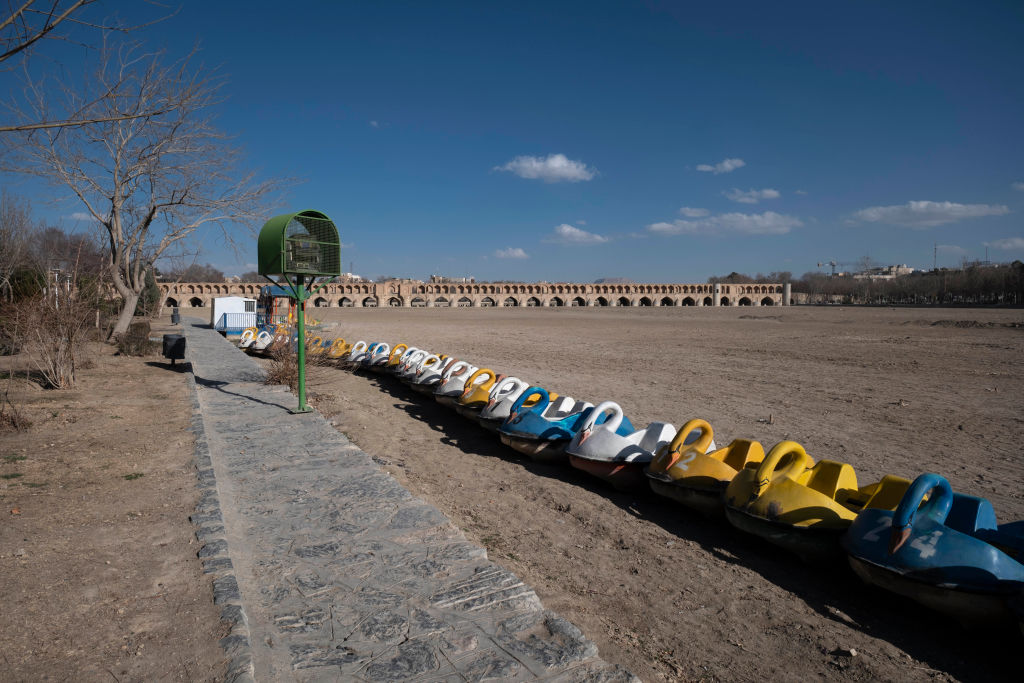
In the city of Isfahan, swan-shaped boats remain on the parched riverbed of the Zayandeh Rud River. The historic Si-o-Se Pol bridge stands in the background.
(Image credit: Morteza Nikoubazl/NurPhoto via Getty Images)
Iran's food self-sufficiency policy has wavered over the past few decades, Lob said, and the country has imported wheat and other agricultural commodities, mostly from places like Russia and Brazil. But the pressure to operate water pumps has remained high, mainly because water use in Iran is extremely inefficient.
Inefficient water use is due to weak input from the Iranian government, which has spent resources on supporting militant and rebel groups around the Middle East, like Hezbollah in Lebanon and the Houthis in Yemen, rather than on developing sustainable water systems, Shokri said.
A lack of foreign investment and limited access to advanced water technologies from countries like the U.S. and Israel due to international sanctions have amplified the problem. Technologies such as big data analytics, artificial-intelligence-based irrigation scheduling and satellite-based water accounting could slash water use; instead, "the way they do the irrigation is completely outdated," Shokri said. For example, flood irrigation is used to grow rice in regions with high evaporation rates, such as Khuzestan province in southwest Iran, he said.
Other experts agreed that the Iranian regime is responsible for the country's water emergency and that global warming and economic sanctions are simply exacerbating an existing problem. "It's a crisis that's been years in the making, and I think that could be equally — if not more — attributed to government mismanagement, alongside these structural issues and externalities," Lob said.
The main flaw in Iran's water policy is that decisions are made on the national scale, rather than at a basin level, where authorities could plan economic activities based on the amount of water available, Saccoccia said. "In Iran, they have these political goals that do clash with the reality of the water resources that they have," she said.
From bad to worse
Freshwater depletion in Iran has helped trigger three other crises that threaten people's livelihoods, health and safety.
First, water shortages have impacted energy production, because water generates hydropower and cools power plants. In 2019, 10.6% of Iran's electricity came from dams, but in 2025, that percentage decreased to 3.3% due, at least in part, to record-low water levels in some reservoirs.
Power outages have become daily occurrences in cities like Tehran, where reservoirs have dropped well below capacity. Last summer, offices and shops were forced to close for hours each day due to electricity cuts that blocked internet access and appliances such as air conditioners and refrigerators. In the sweltering heat, water and electricity shortages made staying at home exceptionally difficult and left residents with few options but to buy bottled water to cool down.
The water crisis has also created dangerous air pollution through dust that blows off dry lake beds and riverbeds, Shokri said. Satellite images show that bodies of water across Iran have shrunk dramatically over the past 40 years, exposing sediments that are easily picked up by wind and can travel hundreds of miles. For example, northwest Iran's Lake Urmia — once the largest saltwater lake in the Middle East — has almost completely dried up and, in turn, increased harmful particle pollution in the region.
The third crisis born out of Iran's water emergency is widespread subsidence, or sinking of the land surface over time. This is due to groundwater extraction, which compresses sediments by removing water volume from the ground, Jess Payne, a doctoral student at the University of Leeds Institute for Geophysics and Tectonics in the U.K., told Live Science.
In a 2025 study, Payne and her colleagues used radar data from satellites to show that more than 12,120 square miles (31,400 square kilometers) of Iran — an area roughly the size of Maryland — is subsiding faster than 0.39 inches (10 millimeters) per year. Some places are sinking much faster than that; for example, Rafsanjan, a city in central Iran, dropped by over a foot (34 centimeters) every year between 2014 and 2022.
About 77% of subsidence in Iran occurs in valleys dominated by agriculture, and it is especially acute in desert regions, where rainfall doesn't replenish aquifers, Payne said. "Only 3% of the subsidence we observe happens under urban areas," she noted. "That tells you that the drivers are going to be probably linked to agriculture, and that probably tells you it's groundwater extraction."
But agriculture-driven subsidence affects urban areas, too. In cities like Shiraz, Isfahan and Yazd, uneven subsidence has caused huge cracks to form in buildings and roads. In September 2025, the threat was so severe that officials evacuated 40 schools in Isfahan, which has a population of about 2.2 million.
Subsidence may also increase the risk of earthquakes in Iran, which is a hotspot for seismic activity. Many faults are likely hidden beneath aquifers, and groundwater extraction could reduce the load on these faults, Payne said. "It won't cause an earthquake, but if that fault is close to failure, it might contribute to it happening sooner," she said.
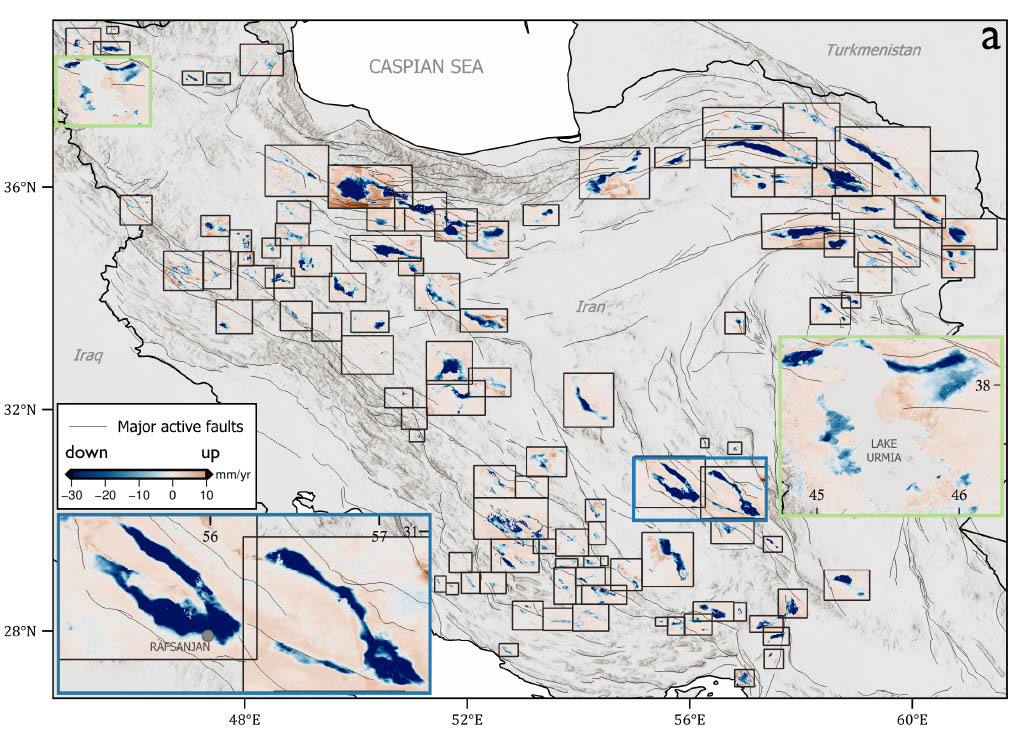
This map shows active faults and subsidence hotspots in Iran, with dark blue indicating areas where the land is sinking by more than 1 inch per year. Subsidence at Lake Urmia (green box) and in Rafsanjan (blue box) are shown in more detail.
(Image credit:
Payne et al. 2025)
In the longer term, subsidence is ominous because sediments can become so compact that they forever lose their ability to hold water. "Some subsidence is irreversible," Payne said. "You're permanently losing freshwater stores in the ground, and that's really problematic, particularly for arid regions like Iran."
Air strikes on critical infrastructure
The recent war has caused massive-scale destruction around the Persian Gulf and thousands of deaths. The conflict has eclipsed Iran's water concerns, but it will likely exacerbate shortages in the country over the coming months and years, experts said.
A major, imminent threat to Iran's water security is U.S.-Israeli forces' targeting of energy infrastructure, including fuel depots and oil refineries. Most water infrastructure cannot function without power, Auroop Ganguly, a distinguished professor of civil and environmental engineering at Northeastern University in Massachusetts, told Live Science in an email.
"Water and energy are inextricably linked," Ganguly said. "If energy infrastructure in Iran is targeted, water, wastewater and sewage treatment would be impacted, while electric wells, pumping stations, and water distribution networks would become inefficient or crippled."
Iran has also sustained heavy damage to a desalination plant on Qeshm Island, which officials said cut off water supplies to 30 villages. However, Iran relies on desalination for less than 3% of its water use, meaning strikes on desalination plants have a smaller impact on water security in Iran than they do in Gulf states like Bahrain and Kuwait, which depend on desalination for 90% of their drinking water, Ganguly said.
Desalination serves a handful of coastal cities and islands in Iran, including Bandar Abbas and Kharg Island. "Targeting desalination plants in the critical coastal or island regions would have severe local effects, but targeting larger dams or power supplies could result in broader nation-wide impacts," Ganguly said.
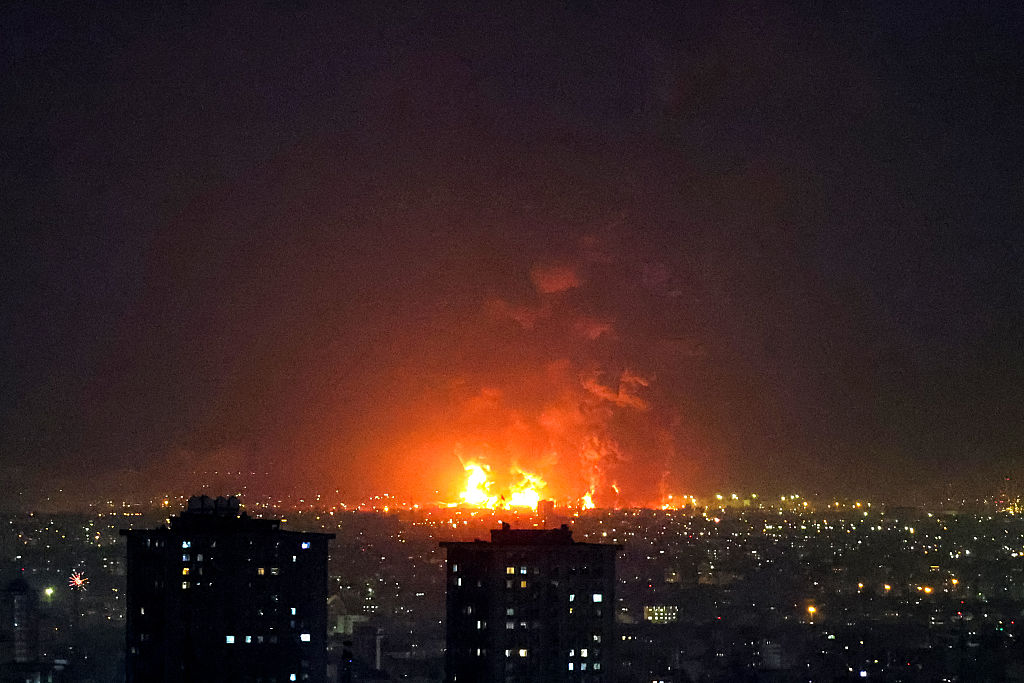
On March 7, 2026, the U.S. and Israel struck the Tehran Oil Refinery in Iran's capital city, causing a huge fire.
(Image credit: ATTA KENARE via Getty Images)
The air strikes have also caused other environmental problems.
The war has unleashed deadly air pollution from burning oil and gas facilities that will worsen existing air quality issues in Iran and fuel both immediate and long-term health crises, Frederick Otu-Larbi, a lecturer and environmental scientist at Ghana's University of Energy and Natural Resources and Lancaster University in the U.K., told Live Science.
"For several days or weeks at the beginning of the war, you could literally see black smoke covering most of Tehran, and Iran, and the region, from burning oil and infrastructure," said Otu-Larbi, who recently published an analysis of greenhouse gas emissions created in the first few weeks of the war. "We're looking at a whole country's total annual emissions being pumped out into the atmosphere in a space of 30, 40 days. All of that air pollution from burning oil [and] burning infrastructure is likely to cause some immediate problems, but also long-term health complications for the population."
"Chaos" ahead
The war will likely worsen Iran's water crisis by diverting its resources to reconstruction rather than the environment and by further isolating the country from neighbors and others that have more advanced water technologies.
Solving Iran's water emergency requires creating alternative economic opportunities for farmers and boosting water use efficiency across the country, yet the war will likely strengthen the regime's goal of self-sufficiency and entrench its geopolitical stance, Lob said. "If anything, this war has hardened the regime," he said, adding that this makes it extremely unlikely that Iran could obtain advanced water and desalination tech from countries like the U.S. and Israel in time to stave off a water catastrophe. These technologies would not make up for decades of water depletion, but they could alleviate pressure on Iran's natural systems and help the country save water.
Many farmers cannot move into other sectors, because economic sanctions and Iran's isolation from international trade and investment restrict what jobs are available. Reconstruction after the war could cost tens, if not hundreds, of billions of dollars, further limiting economic growth and job opportunities, which would bake in more water depletion through continued reliance on agriculture, Lob said.
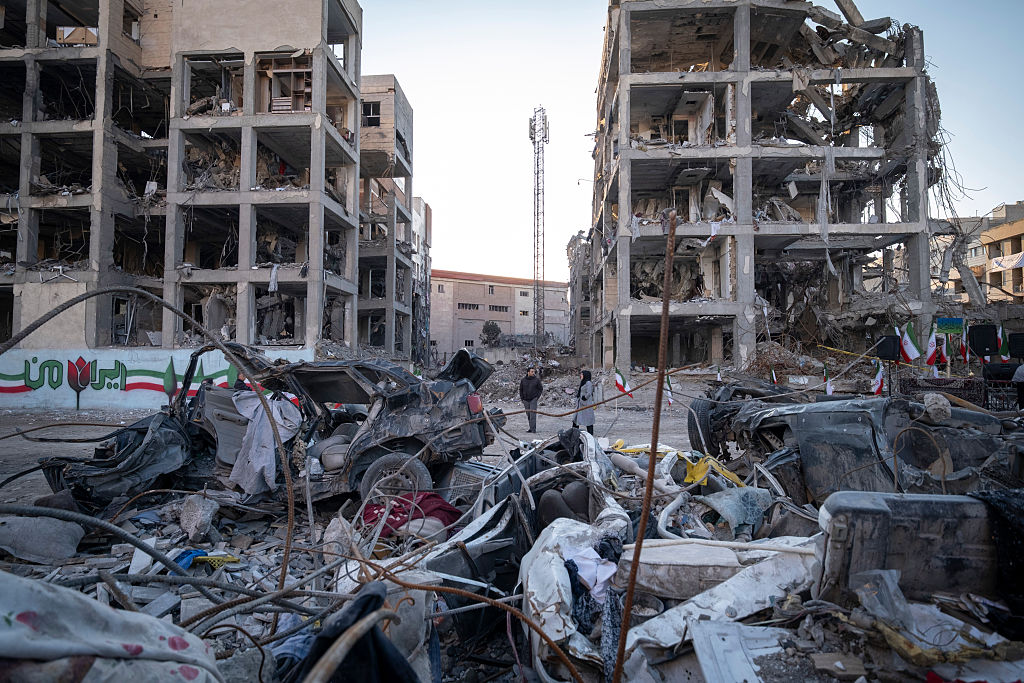
On March 9, 2026, U.S.-Israeli military operations destroyed buildings in a residential area of Tehran.
(Image credit: Morteza Nikoubazl/NurPhoto via Getty Images)
Iran wants to increase its desalination capacity to mitigate water shortages, Ganguly said, and it is building pipelines to carry desalinated water inland to cities like Isfahan. But desalination plants are expensive to operate, and they take up to six years to erect, Naser Alsayed, an environmental policy expert for the Gulf region at the London-based research institute Chatham House, told Live Science. Iran is a mountainous country, meaning transporting desalinated water inland will be difficult, Alsayed added.
The longer the war drags on and the more Iran delays rethinking its water management and national priorities, the worse the water situation will get. Nature takes 20 to 30 years, on average, to recover from warfare, a 2025 study found. Water supplies could be contaminated with heavy metals, oil and other toxic pollutants for decades to come. This potential contamination, together with estimates that population growth will drive up Iran's water demand by 30% by 2050, suggests the country will face more severe water shortages in the future.
"If there is no structural change in the governance, things will only get worse," Shokri said. "The environmental system will collapse."
Water-shortage protests that have been building over the past few years indicate that Iran's society could break down if the regime doesn't act soon to preserve water, Alsayed said. "If people don't even have access to essential resources, then it's going to be chaotic — very chaotic," he said.
Related stories
More revolts over basic access to water and electricity could lead to more violent crackdown by the regime and avoidable deaths, as well as emigration from the country. "The regime will find it hard to contain this; that's for sure," Alsayed said.
The solutions are numerous and obvious, Shokri said. "How about you heavily invest in wastewater treatment? How about you modernize your irrigation system? How about you start normal interactions with the world? How about stabilizing your currency? How about you use money to strengthen infrastructure? How about fixing your water transportation system?"
At the very least, Iran should integrate water use efficiency measures into its postwar reconstruction, Lob said. "We're looking at a country that's been devastated by war, so the situation is pretty bleak, and they're dealing with an economy that's in shambles," he said. Nevertheless, there could be an opportunity to build back better when it comes to water infrastructure. "One can hope."
TOPICS
 Sascha Pare
Staff writer
Sascha is a U.K.-based staff writer at Live Science. She holds a bachelor’s degree in biology from the University of Southampton in England and a master’s degree in science communication from Imperial College London. Her work has appeared in The Guardian and the health website Zoe. Besides writing, she enjoys playing tennis, bread-making and browsing second-hand shops for hidden gems.
View More
You must confirm your public display name before commenting
Please logout and then login again, you will then be prompted to enter your display name.
Logout