Get the world’s most fascinating discoveries delivered straight to your inbox.
Become a Member in Seconds
Unlock instant access to exclusive member features.
Contact me with news and offers from other Future brands Receive email from us on behalf of our trusted partners or sponsors By submitting your information you agree to the Terms & Conditions and Privacy Policy and are aged 16 or over.You are now subscribed
Your newsletter sign-up was successful
Want to add more newsletters?
Join the club
Get full access to premium articles, exclusive features and a growing list of member rewards.
Explore An account already exists for this email address, please log in. Subscribe to our newsletter 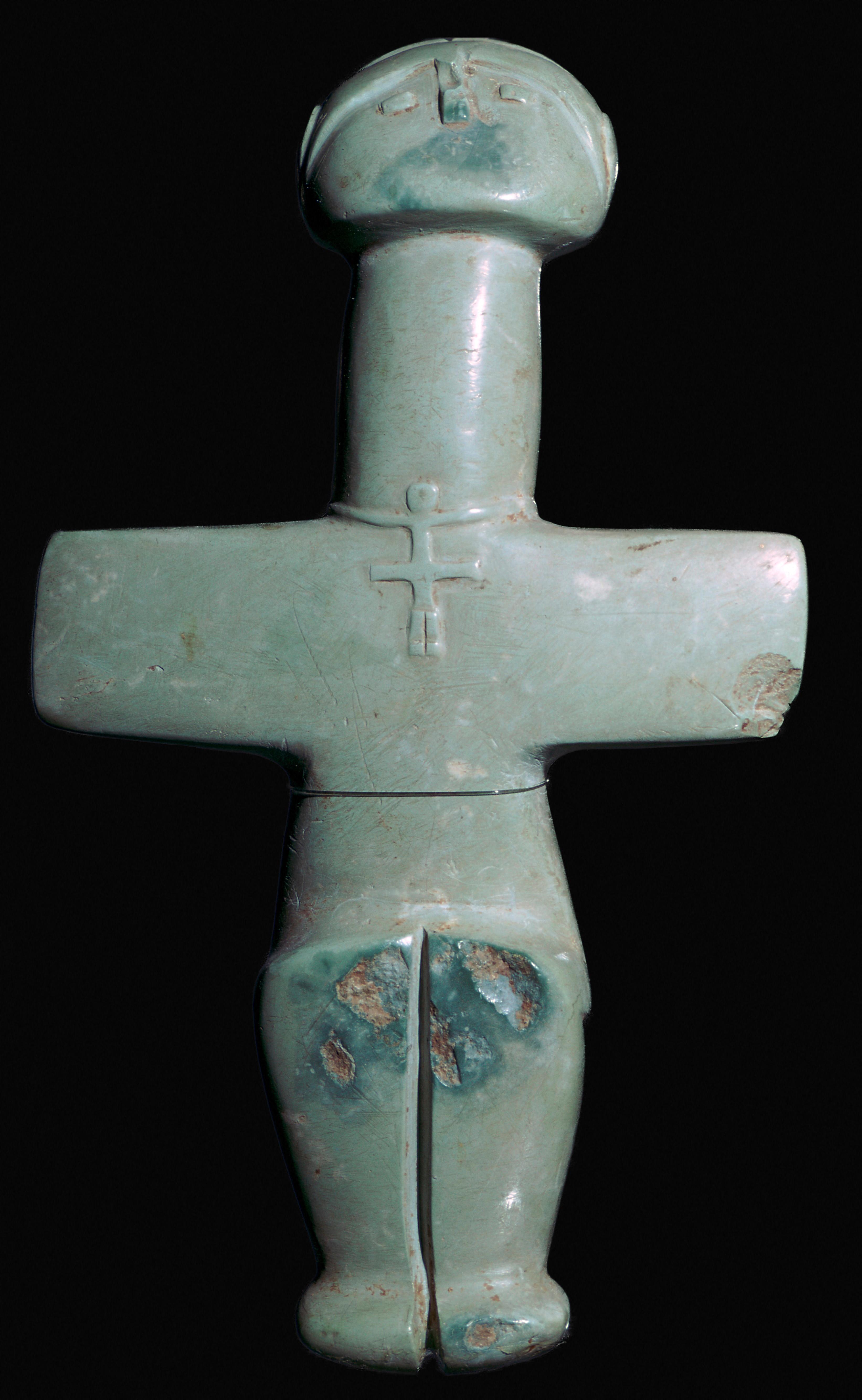
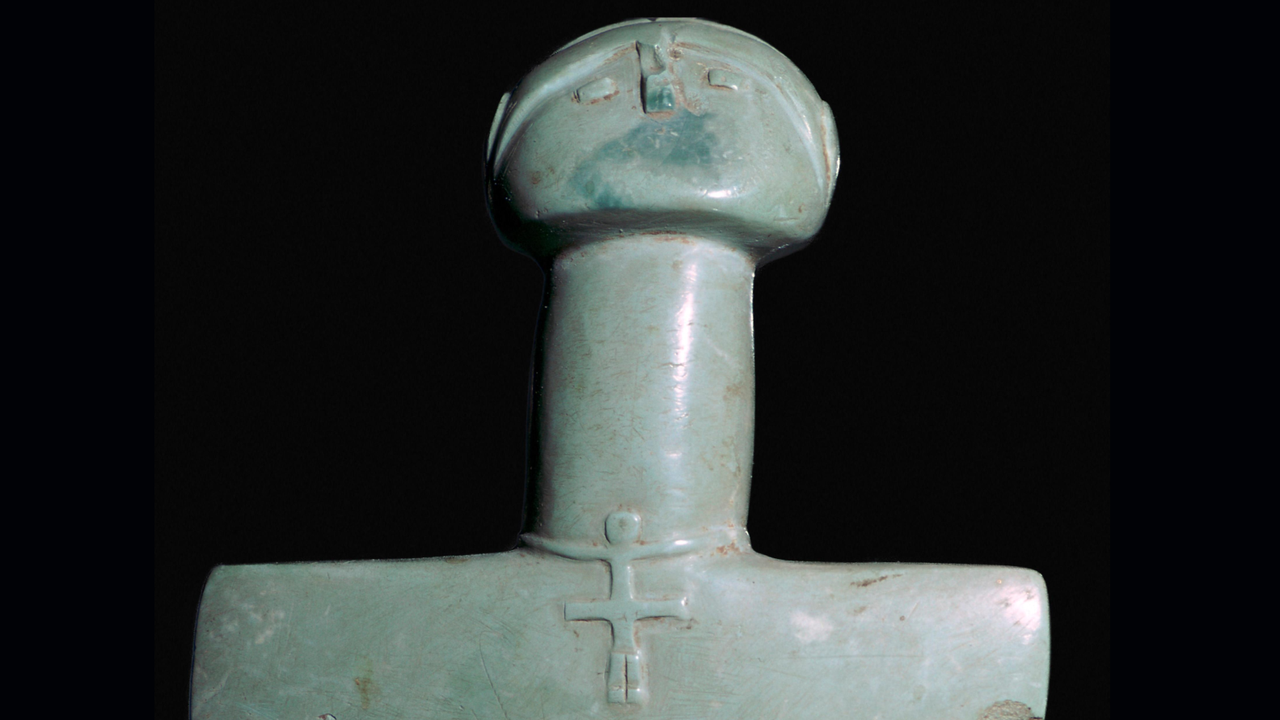
Name: Idol of Pomos
What it is: A carved figurine
Where it is from: Pomos, Cyprus
When it was made: Circa 3000 B.C.
During the Middle Chalcolithic (circa 3400 to 2800 B.C.), ancient Cypriot artists began producing a wide variety of human-shaped sculptures. The most common of these figurines that archaeologists have found are cruciform, or cross-shaped.
Chalcolithic cruciform figurines from Cyprus share a few characteristics: The body and the arms form a cross shape, and the figure's knees are depicted slightly drawn up or bent. Many of the figurines have small breasts, and some have another figure carved horizontally in the figure's arms, leading scholars such as archaeologist Edgar Peltenburg to suggest that they might be birth charms or fertility deities.
The Idol of Pomos is unusual because its face includes eyes, a nose and a cap-like covering with ears, unlike other examples that are faceless. Although this statuette does not have protruding breasts, it is assumed to represent a female figure. The figurine also wears a miniature version of herself around her neck, suggesting that these small idols may have been worn as jewelry 5,000 years ago.
MORE ASTONISHING ARTIFACTS- Beadnet dress: A 4,500-year-old ancient Egyptian funeral 'gown' that was in vogue during the Old Kingdom
- Tudor Heart: A Renaissance gold necklace featuring a French-English pun on the love between Henry VIII and his first wife, Katherine of Aragon
- Urfa Man: An 11,500-year-old life-size statue of a man holding his penis
Given the abnormally long neck and the flat back, the Idol of Pomos originally may have been suspended or hung on a wall, according to Joan Mertens, who wrote about the figurine while she was an assistant curator at the Metropolitan Museum of Art. But many details about the cruciform figurines and their meaning remain a mystery.
Today, the Idol of Pomos is on display at the Cyprus Museum in Nicosia. The figurine, which has come to represent Cyprus' contribution to prehistoric civilization, has also been featured on the country's 1- and 2-euro coins since Cyprus' adoption of the euro in 2008.
For more stunning archaeological discoveries, check out our Astonishing Artifacts archives.
TOPICS Kristina KillgroveStaff writer
Kristina Killgrove is a staff writer at Live Science with a focus on archaeology and paleoanthropology news. Her articles have also appeared in venues such as Forbes, Smithsonian, and Mental Floss. Kristina holds a Ph.D. in biological anthropology and an M.A. in classical archaeology from the University of North Carolina, as well as a B.A. in Latin from the University of Virginia, and she was formerly a university professor and researcher. She has received awards from the Society for American Archaeology and the American Anthropological Association for her science writing.
View MoreYou must confirm your public display name before commenting
Please logout and then login again, you will then be prompted to enter your display name.
Logout LATEST ARTICLES 1Human ancestors butchered and ate elephants 1.8 million years ago, helping to fuel their large brains
- 2Ancient Egyptian stone monument depicting a Roman emperor as a pharaoh discovered in Luxor
- 3'Human minds shouldn't have to go through' this: Artemis II crew recalls unreal moment when Earth disappeared — Space photo of the week
- 4Does the moon look the same from everywhere on Earth?
- 5I found a new meteor shower — and it comes from an asteroid getting baked to bits by the sun