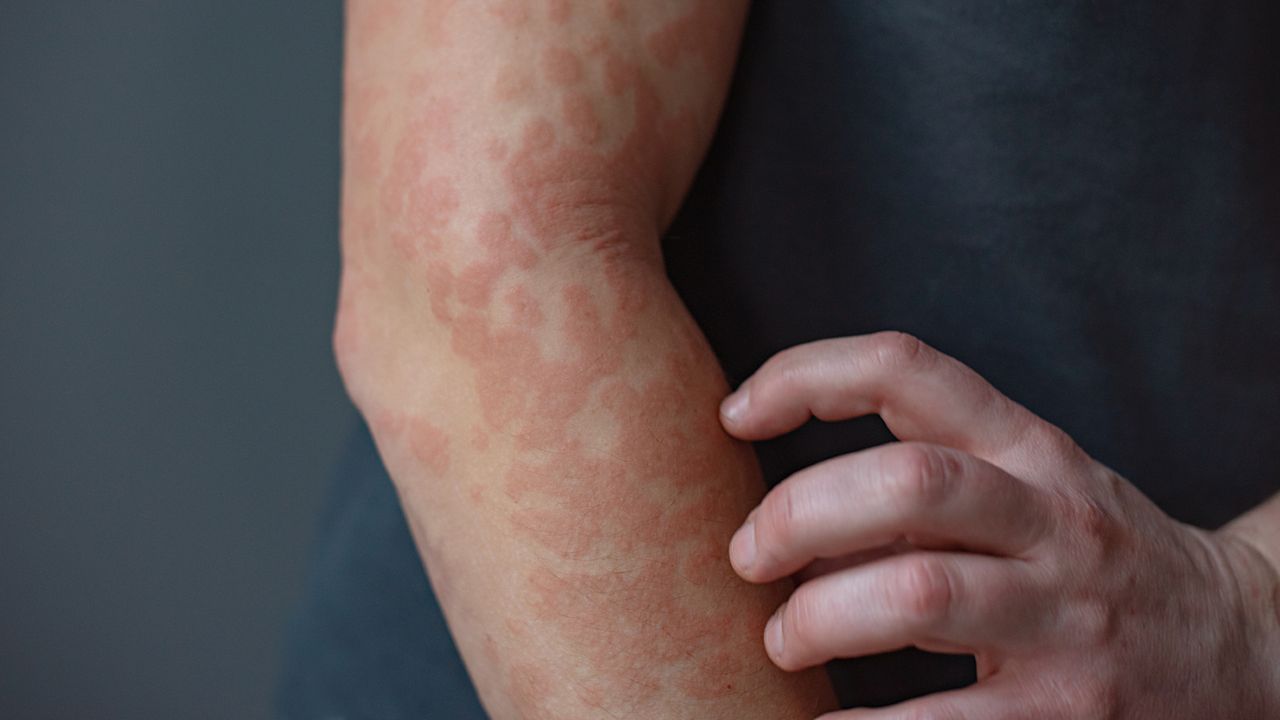
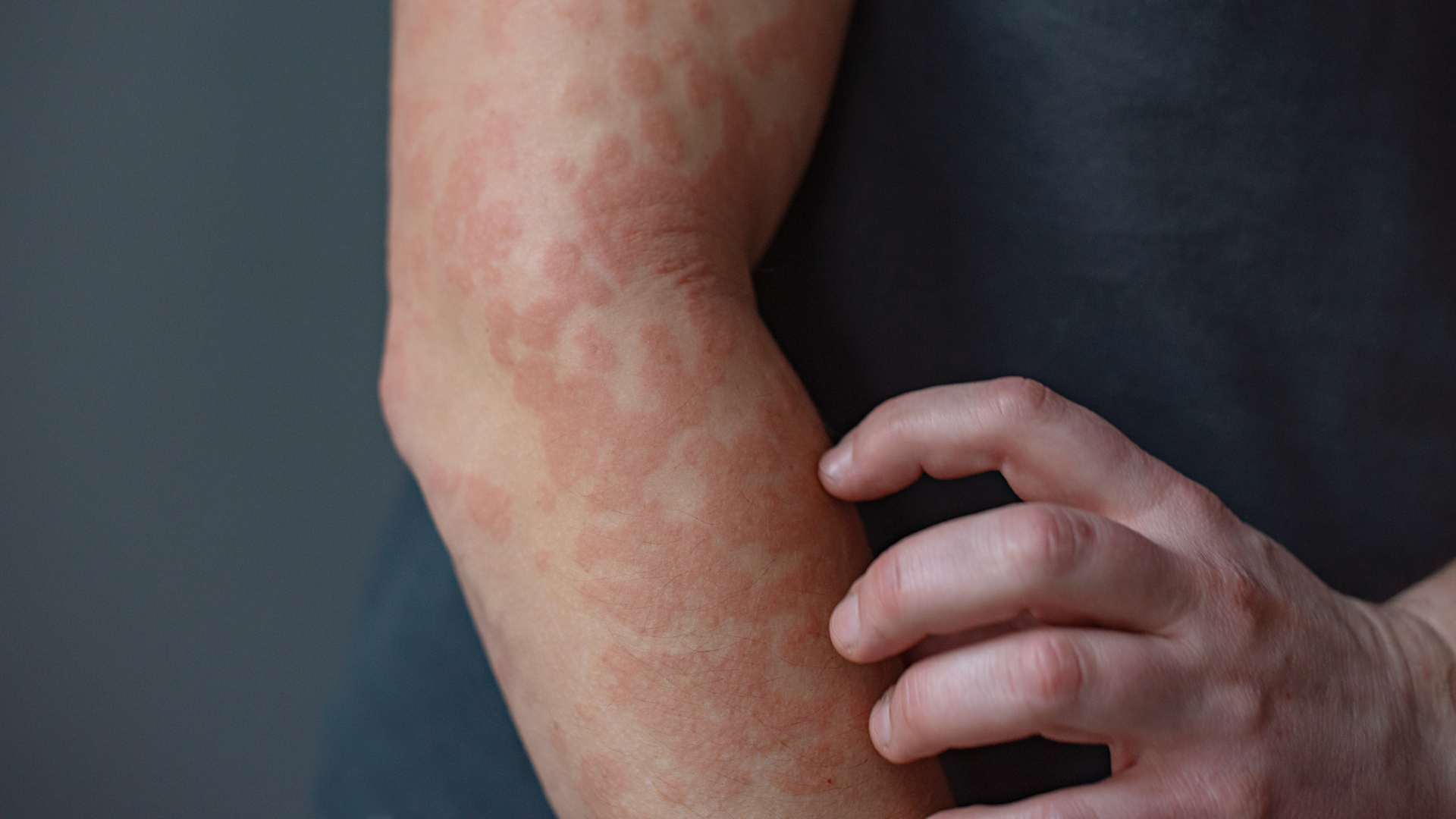
 The skin diseases psoriasis and eczema can cause painful, itchy rashes. Keratin may play a role in their development. (Image credit: Yuliia Kokosha via Getty Images) Share this article 0 Join the conversation Follow us Add us as a preferred source on Google Newsletter Sign up for the Live Science daily newsletter now
 Get the world’s most fascinating discoveries delivered straight to your inbox.
Become a Member in Seconds
Unlock instant access to exclusive member features.
Contact me with news and offers from other Future brands Receive email from us on behalf of our trusted partners or sponsors By submitting your information you agree to the Terms & Conditions and Privacy Policy and are aged 16 or over.You are now subscribed
Your newsletter sign-up was successful
Want to add more newsletters?
Join the club
Get full access to premium articles, exclusive features and a growing list of member rewards.
Explore An account already exists for this email address, please log in. Subscribe to our newsletterKeratin proteins form our skin, hair and nails — but when mutated, they can mess with the immune system, driving diseases like psoriasis and eczema, new research suggests.
In the new study, published Wednesday (April 8) in the journal Science Translational Medicine, researchers identified a mutant keratin protein that can disrupt processes that normally help skin cells manage inflammation. That breakdown could help to explain how inflammatory skin diseases emerge.
Keratin's role in skin inflammation
The researchers focused on PC because the genetic disorder is known to be caused by mutations in the KRT16 gene, which carries instructions for keratin 16.
In PC, those mutations disrupt the network of filaments that helps skin cells in high-friction areas of the body, like the soles of the feet, resist mechanical stress. As a result, activities like walking or running cause skin cells to break down and become inflamed, forming painful calluses and blisters.
In people without PC, skin boosts its production of keratin 16 when facing stressors, such as inflammation.
Sign up for the Live Science daily newsletter nowContact me with news and offers from other Future brandsReceive email from us on behalf of our trusted partners or sponsors"Keratins are like the steel cables or steel beams of the cell," Wendy Bollag, a professor in the Augusta University's department of physiology who wasn't involved with the study, told Live Science. "That tensile strength you need for the skin, [without it] it's prone to breaks, tears. Microorganisms can slip in and that will then cause the immune system to react and trigger inflammation."
And in people with chronic inflammation of the skin, the tissue continually makes lots of keratin 16.
"Understanding why these specific keratin proteins spike during inflammation and directly cause disease when mutated has the potential to identify new ways to treat PC, psoriasis and related conditions," Cohen and Coulombe said.
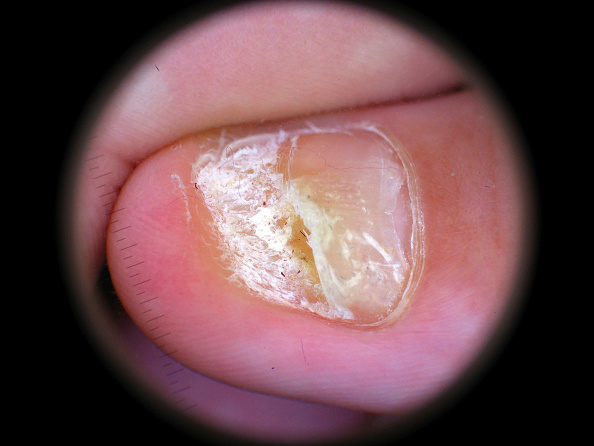
So Cohen, Coulombe and colleagues aimed to uncover the mechanism between keratin 16 and PC. They looked at samples of thickened skin from patients with PC, as well as samples from lab mice with a similar condition. They also disabled the KRT16 gene in a second group of mice to see what would happen if the gene didn't work at all.
They found that when the keratin 16 gene was mutated or missing, skin inflammation skyrocketed. According to Cohen and Coulombe, these results suggested that "K16 normally acts as a 'brake' on the signals produced by skin cells to recruit the immune system."
These signals included type I interferons, a family of proteins that help control inflammation and orchestrate immune responses against viruses and cancer.
In both patients and mice with PC, type I interferon signaling was more active than in people and mice without the condition, the researchers found. The same increase was seen in the mice with no keratin 16, suggesting that when the protein is absent, interferons activate a robust immune response and more inflammation.
On the flip side, when keratin 16 was present, these interferons' activity was modulated and the inflammation lessened.
Historically, keratin 16 has been "best known as a structural protein," Cohen and Coulombe said. Learning about this other function "completely changes how we view the skin's defense system and the role keratins play within it," they said.
Bollag noted that the study seemed thorough and its results compelling.
RELATED STORIES- Keratin extracted from sheep's wool repairs teeth in breakthrough
- Formaldehyde-free hair-straightening products may still threaten health, concerning study finds
- Scientists are unraveling the link between pollution and psoriasis
"This article is even more impressive than I thought in terms of all of the different techniques and approaches that were used to show that keratin 16 regulates interferon signaling in the skin," she said. "If you use multiple different techniques and multiple different approaches and they all confirm the same thing, that's a really powerful way to show that what you're looking at is real."
The study authors are optimistic that their findings could have big implications for future treatments for skin diseases. In fact, in the study, they demonstrated that an inhibitor of type I interferons helped clear up skin lesions in a mouse model of PC.
"Understanding this newly found connection creates an opportunity to examine type I interferon signaling as a new therapeutic target in PC," they said.
DisclaimerThis article is for informational purposes only and not meant to offer medical advice.
Article SourcesCohen, E., Xu, Y., Ghodke, S., Orosco, A., Wang, D., Johnson, C. N., Steen, K., Sarkar, M. K., Özlü, N., Tsoi, L. C., Gudjonsson, J. E., Marchal, L., Hovnanian, A., Parent, C. A., & Coulombe, P. A. (2026). Keratin 16 inhibits type I interferon responses in differentiating keratinocytes of stressed and diseased skin. Science Translational Medicine, 18, eadx9123. 10.1126/scitranslmed.adx9123
 Kenna Hughes-CastleberryContent Manager, Live Science
Kenna Hughes-Castleberry is the Content Manager at Live Science. Formerly, she was the Content Manager at Space.com and before that the Science Communicator at JILA, a physics research institute. Kenna is also a book author, with her upcoming book 'Octopus X' scheduled for release in spring of 2027. Her beats include physics, health, environmental science, technology, AI, animal intelligence, corvids, and cephalopods.
View MoreYou must confirm your public display name before commenting
Please logout and then login again, you will then be prompted to enter your display name.
Logout LATEST ARTICLES 1How to see Comet PanSTARRS as it brightens in the night sky this week
- 2Diagnostic dilemma: Woman's 'biologically implausible' infection led her to sneeze 'worms' out of her nose
- 3'In every continent where humans are present, water bankruptcy is manifesting itself': Exiled Iranian scientist Kaveh Madani on our desperate need to preserve our most precious resource
- 4'They are literally everywhere': The shocking story of how forever chemicals polluted the world
- 5DNA reveals ancestry of man buried in Stone Age monument in Spain, but his religion remains a mystery