Coaching in the NBA has never been known for its job security. George Karl and Dwane Casey both got fired immediately after winning Coach of the Year awards in the 2010s. Frank Vogel and Mike Budenholzer both got fired two years after winning championships in the 2020s, were both hired by the Phoenix Suns, and then fired again one year later. But the collective seats of all 30 NBA coaches never grew hotter than it did during the 2024-25 season.
Mike Brown won Coach of the Year unanimously for the Kings in the 2022-23 season. He was fired before New Year's Eve in 2024. Taylor Jenkins of the Grizzlies led multiple No. 2 seeds in the brutal Western Conference and was 44-29 in March. He was still let go with nine games left in the season. Michael Malone led the Denver Nuggets to the 2023 championship. He was fired with three games left in the season. Tom Thibodeau took the New York Knicks to their first Eastern Conference Finals in 25 years. He was fired for losing that series.
There was a measure of outcry when these firings came. These were undeniably good coaches. They were all, at the very least, accomplished. Brown and Thibodeau had each won Coach of the Year for the teams that fired them, Malone won a title and Jenkins is the winningest coach in Grizzlies history.
All but Brown were winning when they were fired, and even Brown's circumstances were murky. He won 48 games in his debut campaign with the Kings, and 46 with a roster that wasn't as healthy a year later. But the West got deeper in 2024, so the Kings fell from the No. 3 seed all the way down to No. 9. A Sacramento team that had spent 17 of the previous 18 seasons in the lottery to that point panicked. They fired Brown after a 13-18 start that mostly came down to bad clutch luck. They've won less than 35% of their games since.
Brown, Malone and Thibodeau were undeniably the most successful coaches those franchises had employed at least within the past 20 years, and Jenkins was at worst tied with Lionel Hollins in Memphis. So what was the point? Why fire winning coaches like this? The answer lies in Brown's follow-up act.
Why Mike Brown has thrived with the Knicks
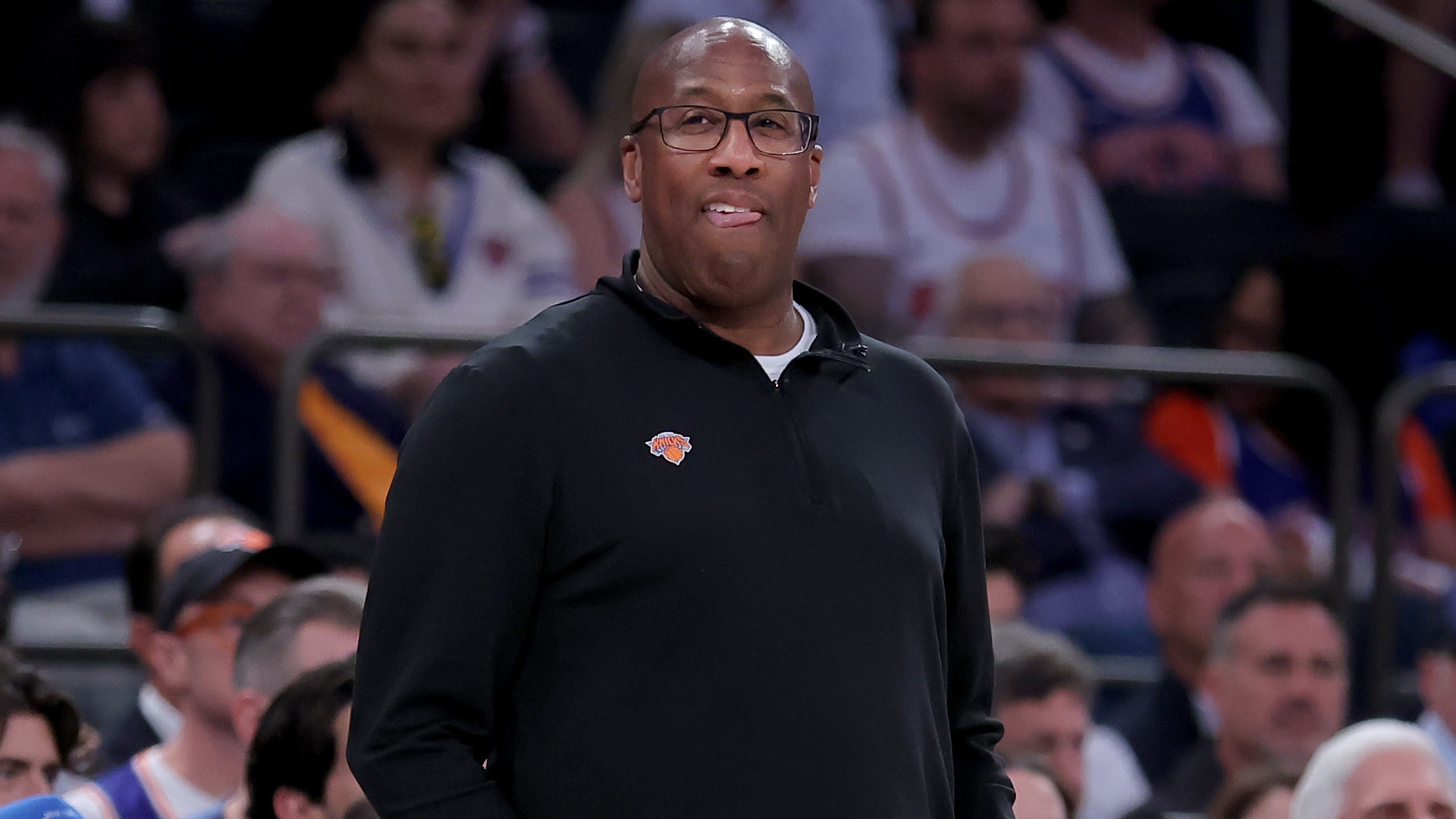
In the annual game of musical chairs created by the league's coaching carousel, Brown landed in Thibodeau's old seat in New York. The roster was changed only minimally. The six most-used Knicks in the 2024-25 season returned this season, along with key backup Mitchell Robinson, who only missed that list because of injury. With mostly the same group of players, Brown proceeded to fix basically everything that was wrong with Thibodeau's Knicks.
The Knicks didn't take the right shots under Thibodeau. They improved from 28th to 12th in 3-point attempt rate under Brown. Their offense was stagnant. According to NBA.com tracking data, the Knicks moved from 18th to 14th in passes per game and 21st to 10th in average distance traveled per game offensively. All five of Thibodeau's starters averaged at least 35 minutes per game a year ago. Only Jalen Brunson reached that threshold this season. The starters as a group played 940 minutes last season and 541 this season. Brown used all of those extra minutes to experiment with lineups and maximize his bench.
The result of all of that tinkering has been one of the most remarkable postseason runs in NBA history. The Knicks are 15-3 in the 2026 playoffs as of this writing. They have by far the best point differential in playoff history as they have thus far outscored their opponents by 279 points. A year after the Knicks lost to the Pacers with home-court advantage, they are one win away from winning their first championship in 53 years.
And they're doing it in large part because Brown is pulling all of the right levers. He reimagined New York's offense around Karl-Anthony Towns' passing after the Knicks fell behind 2-1 in the first round against Atlanta. Whenever the Knicks have needed a key sub, he's known exactly where to turn. Replacing Josh Hart with Landry Shamet swung Game 1 of the Eastern Conference Finals. How many coaches would have closed the last 10 minutes of a Finals game with the tiny Jose Alvarado playing next to Jalen Brunson? Brown did it, and it led to the biggest comeback in Finals history.
The coaching lessons we can learn
The easy lesson to take here would be that Brown is simply the superior coach to Thibodeau, and this upgrade pushed the Knicks over the top. I'm not sure it's that simple. They'd shared similar levels of success prior to this postseason. Thibodeau has won just under 58% of his games as a head coach. Brown was just under 60%. Brown had reached the Finals once, but did so while coaching LeBron James. Thibodeau's first shot at the Finals was erased by James in 2011. They've both won two Coach of the Year awards. If coaching were simple enough to rate, we probably would have considered Thibodeau and Brown as similarly skilled leaders.
Yet their outcomes with similar rosters suggest that Brown is undoubtedly the better coach for this specific team. Something about what he's doing works for this group of players more than what Thibodeau did.
He's certainly more malleable than Thibodeau, who has been defined by certain stylistic quirks his whole career. He leans on his starters more than any other coach. His offenses almost universally revolve around his point guards dribbling a lot. His teams crash the offensive glass. They tend to play bigger and emphasize defense over shooting. Brown was known as a defense-first coach when he got his first shot in Cleveland. He's adapted a fair bit over time, likely benefitting quite a bit from his time working with Steve Kerr in Golden State. His 2022-23 Sacramento Kings were the most efficient offense in NBA history to that point without an obvious future Hall of Famer leading the way.
Malleability is a critical coaching trait, but this probably runs deeper. Not every fired coach is as rigid as Thibodeau and not every replacement is as creative as Brown has proven to be. Coaching isn't just a matter of having the right ideas, but implementing them. At some point, a coach's message inevitably starts to get stale. That's one of the reasons Larry Bird only coached three years. Brad Stevens was regarded by some as the NBA's best coach when he stepped down in Boston in 2021 to take over the front office. He cited the benefits of bringing in a fresh voice to lead the team when he did so.
Some version of this has probably always been true in coaching. Maybe the modern NBA just hastens the cycle. Maybe the league is so optimized now that teams tune coaches out faster if they sense things aren't working. Maybe social media and rings culture create faster divisions. Maybe the power dynamic between players and coaches has shifted in such a way that players understand that if they don't like who they're playing for, they can nudge the team in another direction. It's probably a combination of all of these factors and more.
There's a saying when it comes to coach firings: you can't fire the players. That has never been truer than it is now. The 2023 Collective Bargaining Agreement is the most restrictive CBA the NBA has ever had. Improving your roster, especially when you're the sort of capped-out, under-pressure contender making the sort of firings we've covered here, can be next to impossible under the wrong circumstances. For teams like this, changing coaches might legitimately be the only antidote.
And as controversial as these firings have gotten... Brown is hardly the first success story. The 2015 (Steve Kerr), 2016 (Ty Lue), 2019 (Nick Nurse) and 2020 (Frank Vogel) championships were won by coaches in their first year with their team. The 2024 Celtics won with a second-year coach in Joe Mazzulla. The circumstances under which each of those teams changed coaches were vastly different, and the Raptors and Lakers in particular also dealt with rosters built on the fly.
But perhaps there's something to the idea of hiring a coach, seeing how far he can take a roster, internalizing the things he did well and then finding a coach to fix the things he didn't and give the team a short-term punch in the arm before his message gets stale. Even if Thibodeau couldn't have gotten the Knicks to this point, he was an undeniable component of their organizational turnaround. He established a culture that Brown inherited and built upon.
That's probably going to be a theory that future teams operate on. The NBA is a copycat league, and the Knicks are one win away from becoming the rare champion that didn't rely on an MVP-caliber player to carry them to the mountaintop. Everyone in the NBA is going to look for lessons out of their run, and the lesson in New York's transition from Thibodeau to Brown is that sometimes a good coach isn't necessarily the right one.
None of what is happening for the Knicks right now happens without Thibodeau... but none of it happens with him either. Being able to identify if and when a coach has hit his ceiling with a team might become a critical front-office skill moving forward, because as the Knicks and so many other recent teams have shown us, the right change at the right time can be the difference between a contender and a champion. When teams fire their accomplished coaches, they more or less envision exactly what Mike Brown did for the Knicks. That, inevitably, will lead to more change around the league in the years to come.
Add CBS Sports on Google Join the Conversation comments