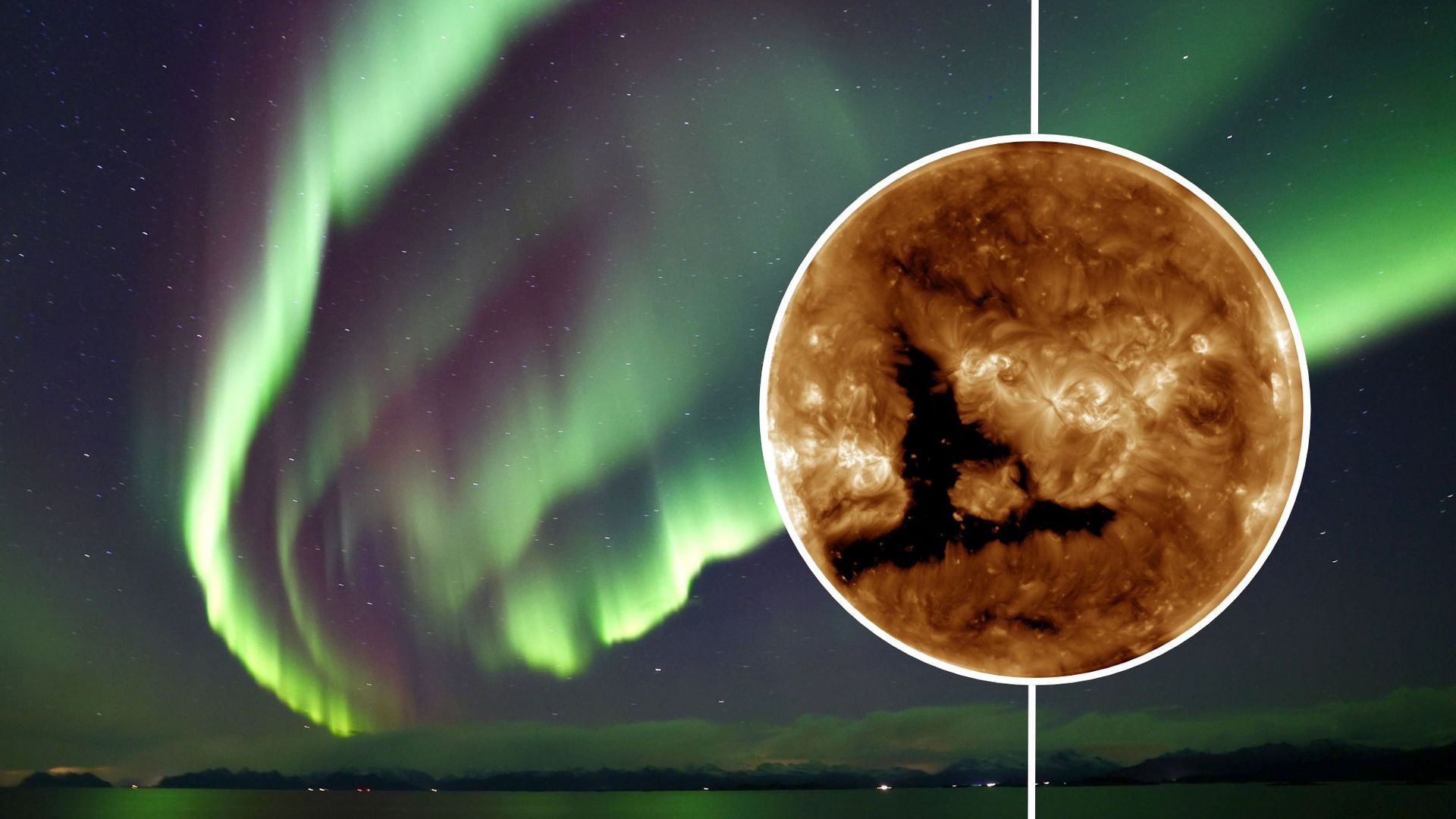
The northern lights could put on an impressive display this weekend as a colossal coronal hole on the sun fires a stream of high-speed solar wind toward Earth. Minor (G1) geomagnetic storm conditions between Nov. 6 and Nov. 8, with a chance of moderate (G2) conditions on Nov. 7 and Nov. 8, according to NOAA's Space Weather Prediction Center (SWPC).
If G2 conditions materialize, the northern lights could be visible as far south as New York and Idaho.
What is happening?
The culprit behind the potential uptick in northern lights is a large coronal hole on the sun, a region where the sun's magnetic field opens up. They allow streams of charged particles known as the solar wind to escape more easily into space. Coronal holes appear darker in ultraviolet images because they are cooler and less dense than their surroundings.
And this particularly large — and rather oddly shaped — coronal hole is sending some seriously speedy wind our way.
The culprit is a large coronal hole in the sun, shaped a bit like a witch on a broom... (Image credit: NASA SDO)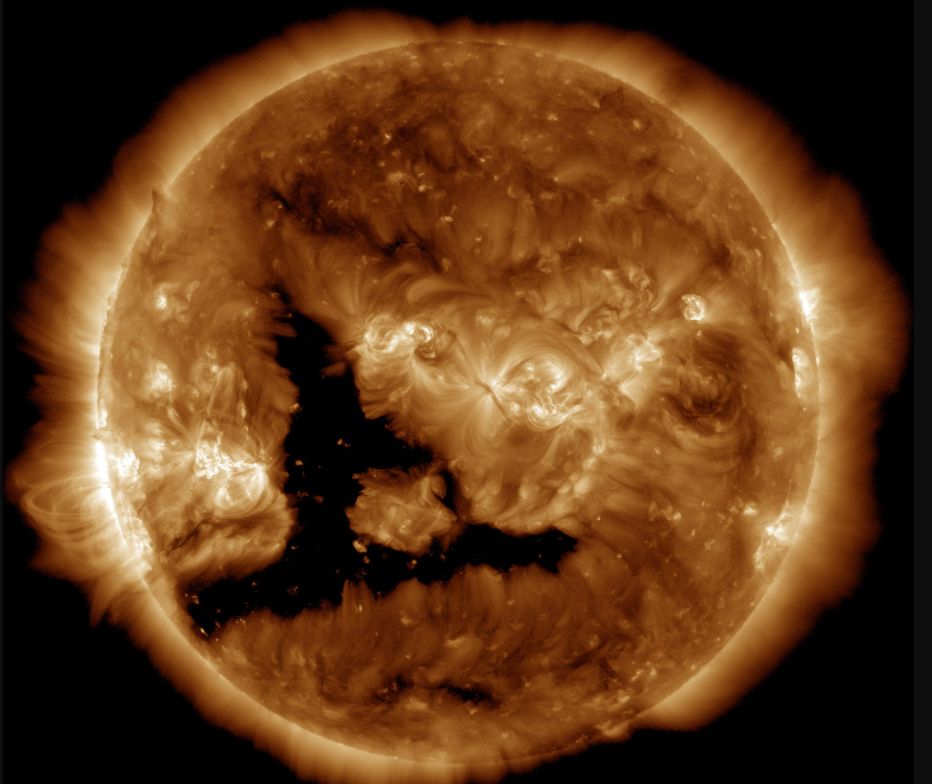
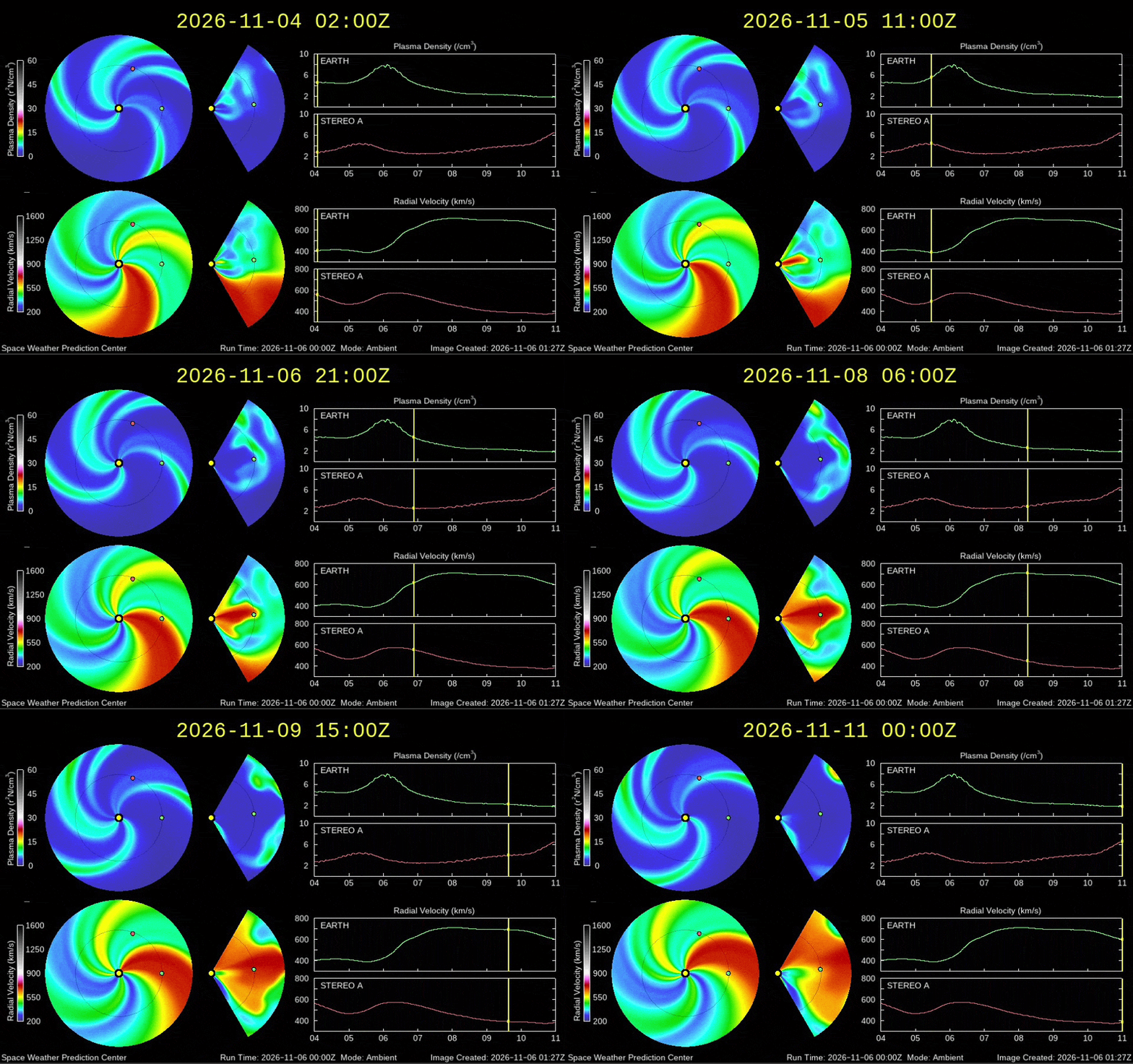
The U.K. Met Office forecasts solar wind speeds between 342 and 404 miles (550-650 kilometers) per second, considerably faster than the typical speed of around 249 miles (400 km) per second.
The fast solar winds are expected to arrive around Nov. 6-7 and could persist through much of the weekend. It could interact with Earth's magnetic field, potentially triggering geomagnetic storms and fueling spectacular aurora shows. The stronger the storm, the farther south the northern lights can potentially be seen.
Where will auroras be visible?
Under G1 conditions, auroras may be visible from northern Michigan and Maine, but if activity intensifies to G2 levels, skywatchers farther south, including those in New York and Idaho, could be in for a treat.
But remember! Aurora forecasts are notoriously tricky. Much depends on the strength and orientation of the magnetic field carried by the incoming solar wind, particularly whether it points southward, allowing more energy to transfer to Earth's magnetic field.
Northern Hemisphere aurora forecast courtesy of the U.K. Met Office
To give yourself the best chance of seeing the northern lights, keep an eye on those aurora forecasts, head somewhere dark away from city lights if you can, with a view of the northern horizon. To stay updated on space weather and know the best times and places to catch auroras, consider using a space weather app tailored to your location. One app I recommend is "My Aurora Forecast & Alerts," available on both iOS and Android. Another great tool is the "Space Weather Live" app on iOS and Android, which offers more in-depth insights into current space weather conditions and their potential for aurora activity.