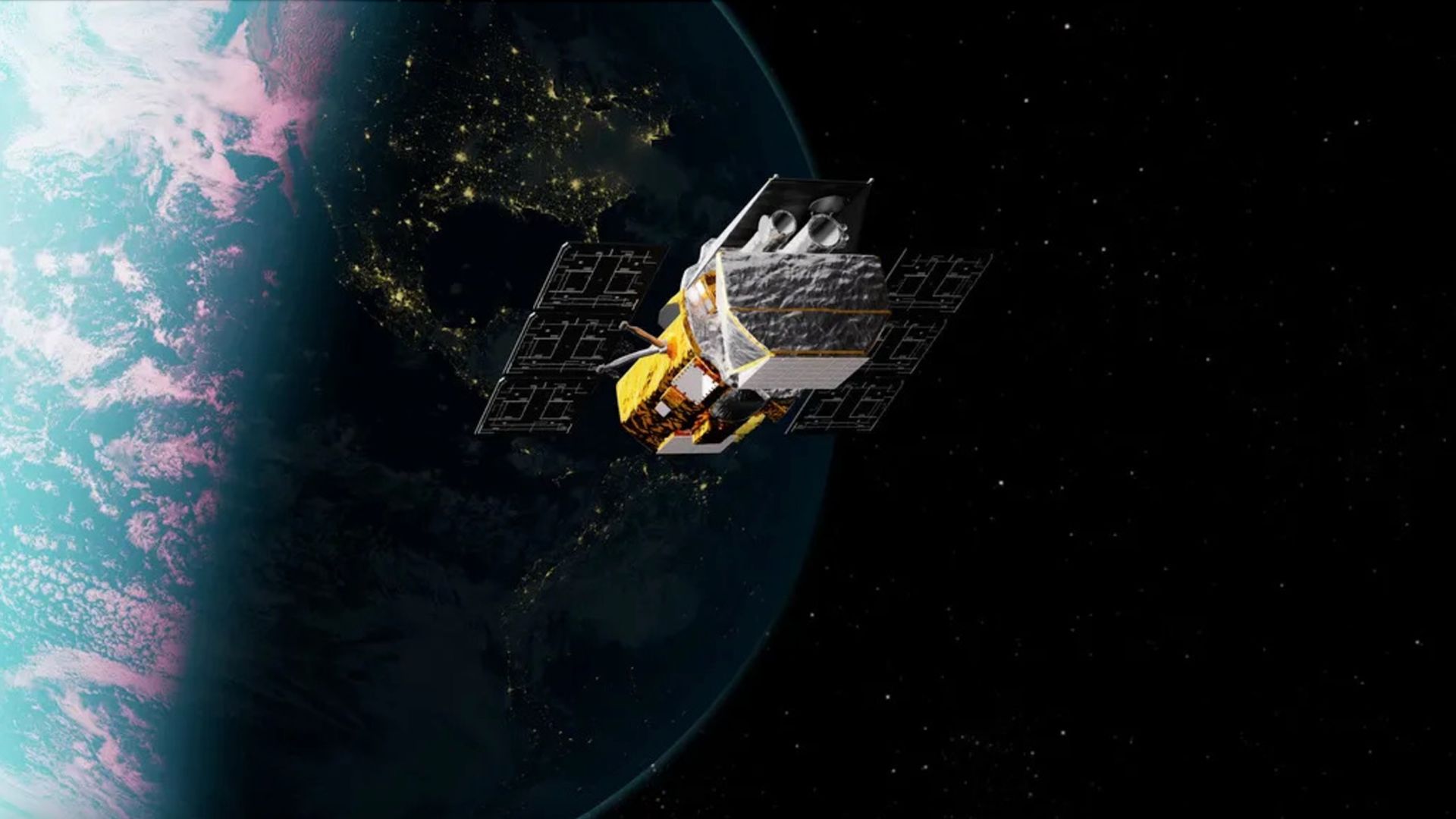
On Oct. 26, 2004, NASA's Cassini spacecraft took the first close-up images of Saturn's largest moon Titan.
The Cassini spacecraft would later drop off a probe on Titan named Huygens, which was a European spacecraft that hitched a ride to the Saturn system with the Cassini mission. But before Cassini dropped off its robotic passenger, it flew by Titan a few times and took some amazing photos.
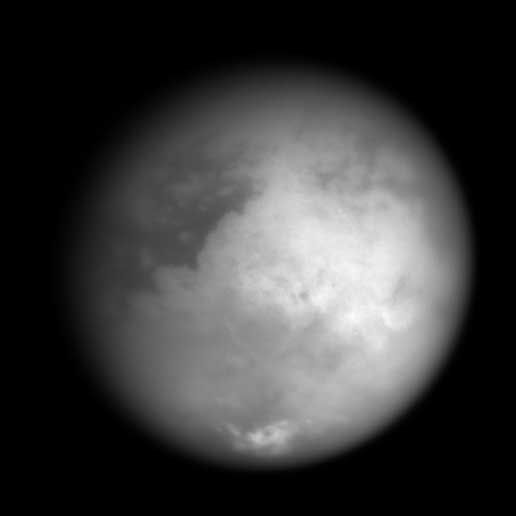
Cassini completed its first flyby on July 3, 2004, but when it swung by a second time on Oct. 26, it got about 300 times closer than it did the first time. At the closest point of this flyby, Cassini was 745 miles (1,200 kilometers) away from the surface of Titan. The spacecraft took hundreds of photos during this flyby, and these were the highest resolution views of Titan anyone had ever seen.
Why it mattered
Astronomers knew Saturn's moon Titan had an atmosphere before Cassini arrived at the smog-shrouded moon, but the spacecraft's first photos (and innumerable more that followed) revealed a strange world that looked eerily similar to what scientists suspect a young Earth might have been like.
The first close-up views of Titan by Cassini showed a large continent-sized region that scienitsts called Xanadu. It included bright features that hinted at a mountain range, as well as a large basin and smooth plains regions.
In all, Cassini would make 127 close flybys of Titan during its 13 years at Saturn before the mission ended in 2017. The probe even dropped the European Huygens lander on Titan, which landed in January 2005, to see the moon's surface first hand.
This flyby image of Titan (and other instrument observations taken at the same time) allowed scientists to measure Titan's atmosphere density and composition to better plan the path and descent for the Hygens lander.
Want more space history? Check out our full On This Day In Space Story archive and watch our On This Day In Space videos on YouTube.