
 Our relationship with our feline friends has changed since cats were first domesticated thousands of years ago. (Image credit: Kilito Chan via Getty Images) Share this article 0 Join the conversation Follow us Add us as a preferred source on Google Newsletter Get the Live Science Newsletter
 Get the world’s most fascinating discoveries delivered straight to your inbox.
Become a Member in Seconds
Unlock instant access to exclusive member features.
Contact me with news and offers from other Future brands Receive email from us on behalf of our trusted partners or sponsors By submitting your information you agree to the Terms & Conditions and Privacy Policy and are aged 16 or over.You are now subscribed
Your newsletter sign-up was successful
Want to add more newsletters?
Join the club
Get full access to premium articles, exclusive features and a growing list of member rewards.
Explore An account already exists for this email address, please log in. Subscribe to our newsletterWin-win interactions can be found across nature. These relationships, known as mutualisms, involve members of different species working together for a mutual benefit.
But relationships between two species can change over time, with those starting out as mutualistic potentially evolving into parasite-host relationships, Rob Dunn, a professor of applied ecology at North Carolina State University, previously told Live Science.
Article continues belowAs we think about the ways we measure our mutualisms, it is worth considering cats. Domestic cats, house cats, under the table and on the table, cats are everywhere and we take them for granted, but what exactly do we get out of our partnership with them?
As far as I know, cats are no longer worshiped as gods. Yet they are also not our mutualists. Superficially they seem to be parasites of human societies, at least from a Darwinian perspective. They benefit from us at the cost of the food we provide to them. The collective weight of domestic cats exceeds that of African savannah elephants. And Americans alone give 15 billion calories' worth of food to house cats each day — much of it meat — roughly as many calories as would be consumed by humans in New York City in a day.
We feed them tuna; like royalty, they dine on the ocean's top predators. In exchange, what do we get back?
I concede in advance that I attempt to answer this question with trepidation. The conclusion I come to may require us to broaden our conception of what the terms of mutualism can be; they definitely require us to rethink what a cat is.
Sign up for the Live Science daily newsletter nowContact me with news and offers from other Future brandsReceive email from us on behalf of our trusted partners or sponsorsToday, hundreds of millions of house cats live with humans around the world. More than 70 million house cats can be found in the United States alone — 70 million meowing, purring, clawing beings — one cat for every four adult humans.
There have never before been so many felids [members of the cat family] on Earth. Globally, there are probably about half a billion cats, though no one has a great count. We have replaced nearly all the wild carnivorous felines of the world — tigers, lions, jaguars, and leopards — with domestic cats. Where once we feared jaguars, we are now confronted by beings we deign to give names like Edgar Allen Paw, Copurrnicus, and, all too often, Mr. Whiskers.
These household cats are all the descendants of the African or Libyan wildcat, Felis silvestris lybica. African wildcats are, and have long been, native to both North Africa and to the Levant. Their range bumps against that of European wildcats, Felis silvestris silvestris, in Turkey. As humans began to farm and store grain, African wildcats began to move into small agricultural human settlements. Once there, they ate mice and rats. They may also have eaten the snakes that ate those rodents (as highlighted in Egyptian art and, later, writing).
Studies led by the Italian cat geneticist Claudio Ottoni of the DNA present in the bones of cats found in archaeological sites have so far been unable to discover any evidence that the earliest African wildcats living with humans were genetically different from their wild-living ancestors and relatives. Their genes seem to have been nearly the same, or maybe simply the same.
At least early in cat-human relationships, their bones were the same. The early village and city cats appear to have been the same African wildcat, simply living in closer proximity to humans. Species with this habit are sometimes called "synanthropes," which denotes nothing more than co‑occurrence, living with (syn) humans (anthrope). These cats living with humans had learned to act tame around humans, just as the humans had learned to act tame around them, most of the time.
"Tameness" is a vague word. Biologists use it to express a kind of mutual tolerance between a nonhuman animal species and humans. It comes from an ancient Indo-European word meaning "to subdue." This root, though, is deceptive. Most tame species either have traits that lead them to behave tamely, as is the case in many island species long naive to large predators, or they choose to be tame, to walk into our worlds without menace. To be tame is to come in peace.
After walking into human cities, the partially or fully tame human-associated wildcats spread with agricultural societies. By 9,500 years ago, wildcats had arrived in places they could not get to without the help of humans. Wildcats are not native to Cyprus. Yet, they arrived. A 9,500-year-burial on the island of Cyprus includes an eight-month-old cat carefully prepared for the afterlife alongside a human. How? Ancient cats are unlikely to have engaged in long swims on their own (if you doubt this assertion, try to bathe a feral cat). Wild but tame cats were ushered/ferried/carried here and there by humans. It is likely that their human chauffeurs were scratched in the process.
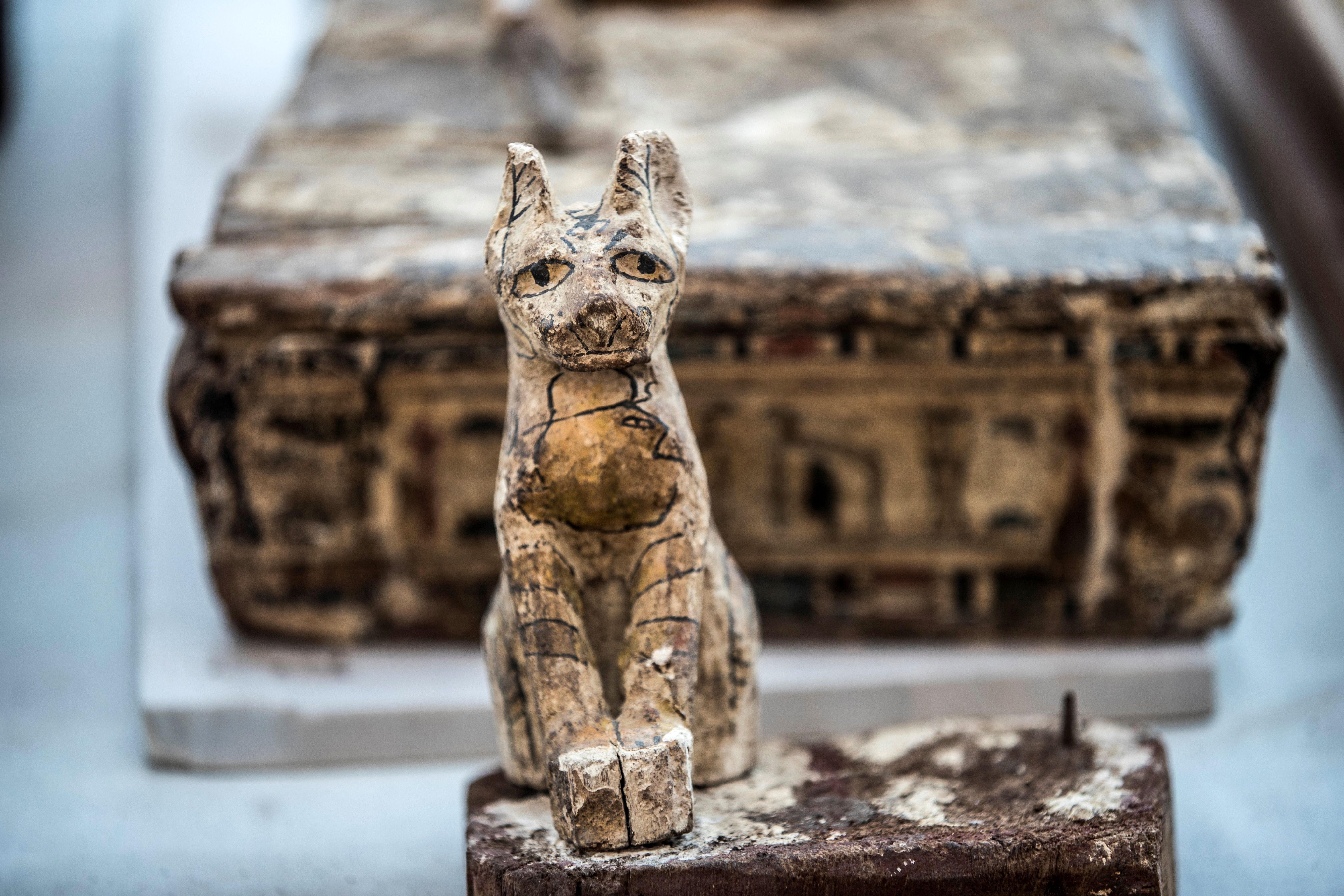
In early settlements, cats and humans were friends with mutual benefits, regardless of whether either exerted any control over the other and whether either partner changed, evolutionarily, relative to the other. It was a mutualism at paw's length. The cats benefited from the messiness of humans and from the effects of that messiness on rodents. The humans benefited from the control cats could exert over rodent populations.
Today, most domesticated cats do not prey upon rats. But reports of early Egyptian cats suggest that they might have been larger than modern domestic cats. At least one Roman archaeological site in Egypt records a gluttonous cat with the bones of six rats in its stomach. In good years, the consumption of rodents, big and small, by cats might have been a kind of pleasantness for humans ("Ah, fewer mice"). In years when food was short, it likely saved lives. It also may have saved lives when diseases carried by rodents, or the fleas upon them, killed humans — diseases such as the plague. Later, cats also played a heightened role on ships, where mice and rats were gloriously abundant and where grain was a precious and relatively scarce commodity.
Where scholars of cat domestication — yes, there are a few, though they'd fit at a long dinner table — begin to differ is whether the predation of cats on mice, rats, and snakes continued to matter as human settlements grew ever larger. This is a subject that could be partially addressed through mathematical models.
RELATED STORIES—Did any cat breeds develop naturally?
—Owning a cat will change your brain. Here's how.
I hypothesize that in small settlements in the ancient Levant, or, later, in Mesopotamia, cats were probably successful in reducing the abundance of mice, and maybe rats, and so, too, their negative effects. But in big urban centers, such as those that emerged with the New Kingdom period in Egypt (1600 BCE), grain was being stored in immense quantities. Where there were whole buildings full of grain, in cities practically spilling over with grain, it seems unlikely that one could keep enough cats around the grain for the cats to matter.
It would have taken hundreds or even thousands of cats milling around the granary, meowing and acting pissy. It is entirely possible, then, that as early grain-based settlements grew, the functional role of cats in rodent and snake control decreased.
It is in this very period that cats began to appear in new forms in Egyptian art. By 3,500 years ago, cats were no longer shown hunting. Instead, they lurked under tables or chairs, often alongside powerful Egyptian women. As Claudio Ottoni pointed out to me, typically, these "under-chair" cats were leashed, perhaps an indication that they may have been tame but not yet so docile as to pose unrestrained for an artist. The under-chair cats seem to indicate that as the human-cat relationship persisted, new kinds of bonds were forming, bonds that no longer related simply to the role of cats in controlling pests. But why?
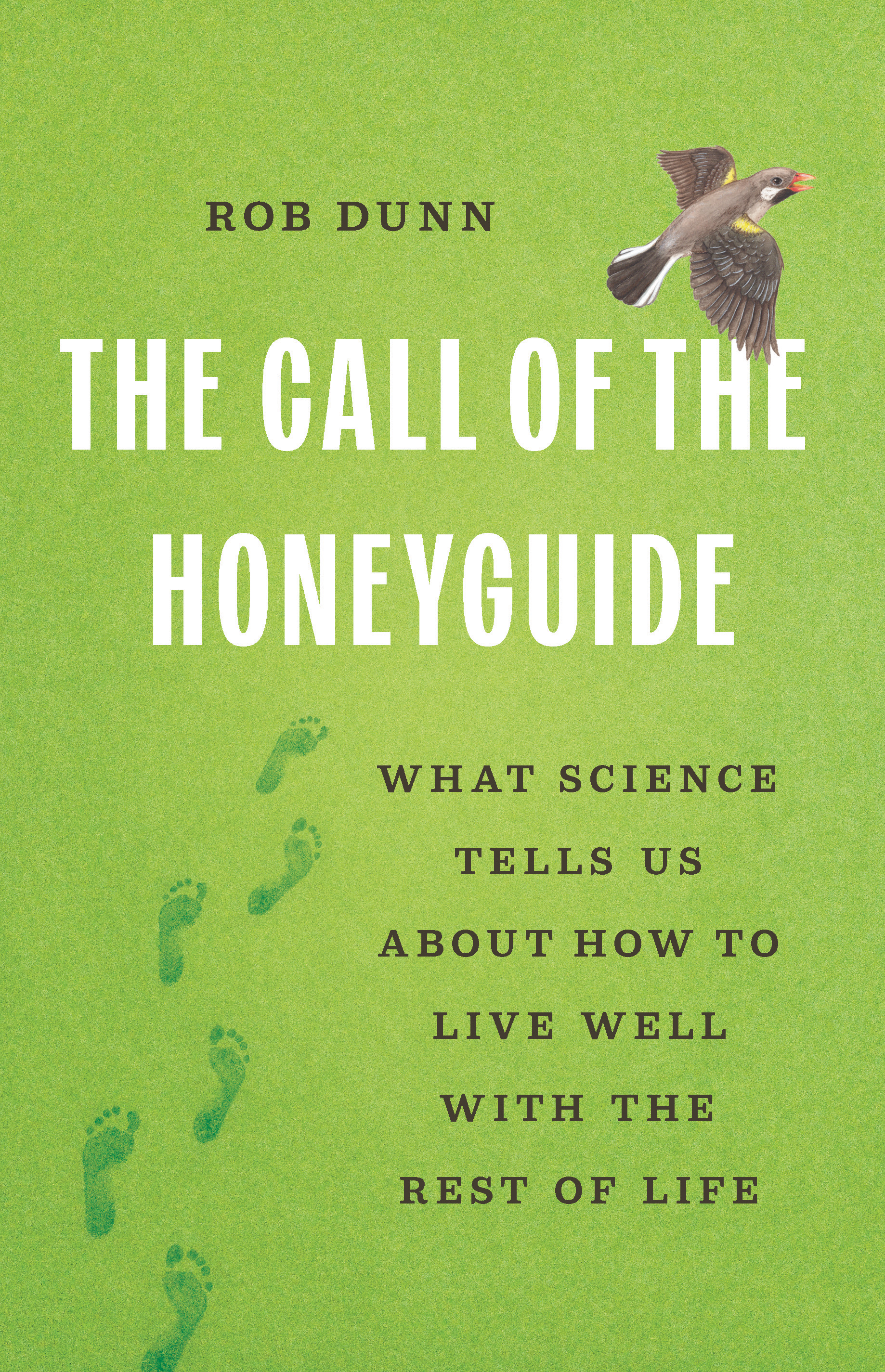
How rethinking our relationships with other species can help us reimagine the future of humankind.
TOPICS Sophie BerdugoStaff writer
Sophie is a U.K.-based staff writer at Live Science. She covers a wide range of topics, having previously reported on research spanning from bonobo communication to the first water in the universe. Her work has also appeared in outlets including New Scientist, The Observer and BBC Wildlife, and she was shortlisted for the Association of British Science Writers' 2025 "Newcomer of the Year" award for her freelance work at New Scientist. Before becoming a science journalist, she completed a doctorate in evolutionary anthropology from the University of Oxford, where she spent four years looking at why some chimps are better at using tools than others.
View MoreYou must confirm your public display name before commenting
Please logout and then login again, you will then be prompted to enter your display name.
Logout LATEST ARTICLES 1Drought paradox study reveals plants around Colorado River turn to groundwater when it gets too hot and dry, reducing flow into the already strained basin
- 2Rare 'daytime fireball' meteor creates powerful sonic boom as 7-ton space rock explodes above eastern US
- 3New AI image generator runs using 10 times fewer steps than today's best models — and it's coming to smartphones and laptops
- 4Enjoy 'Born to be Wild' and all your favorite nature documentaries on your travels with this best-ever ExpressVPN deal
- 57 best deep-sky targets to observe this galaxy season