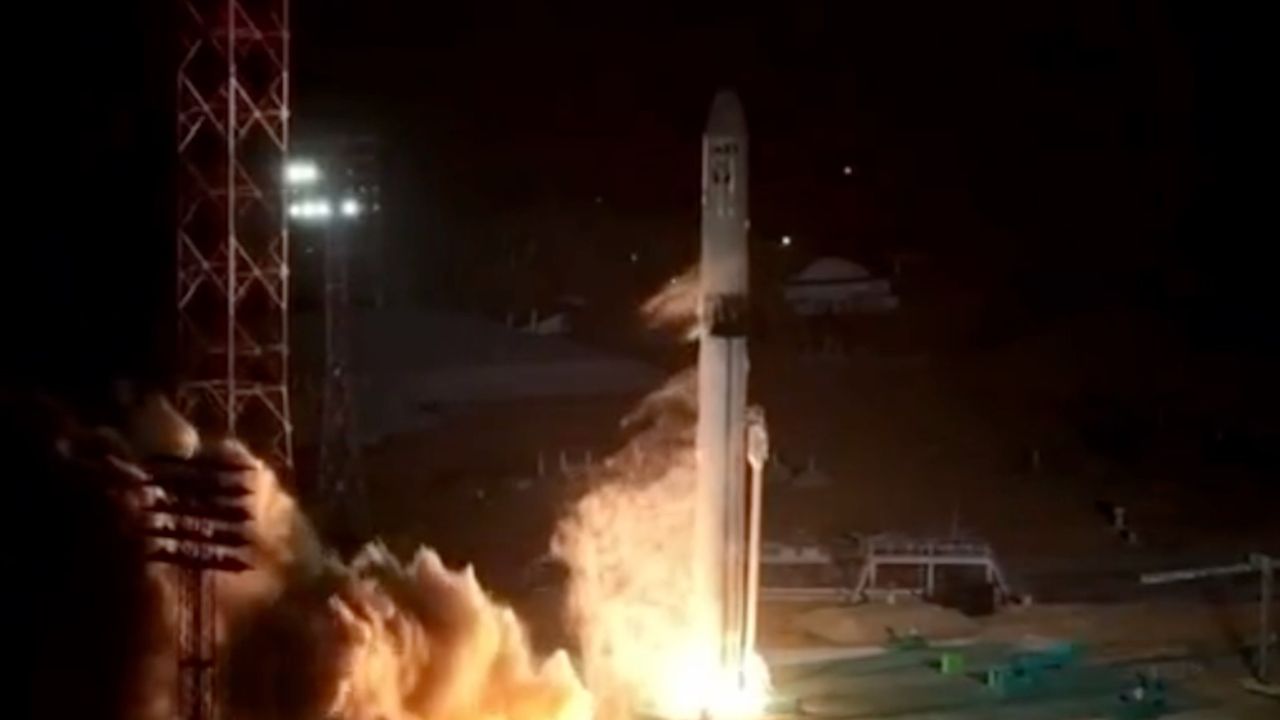
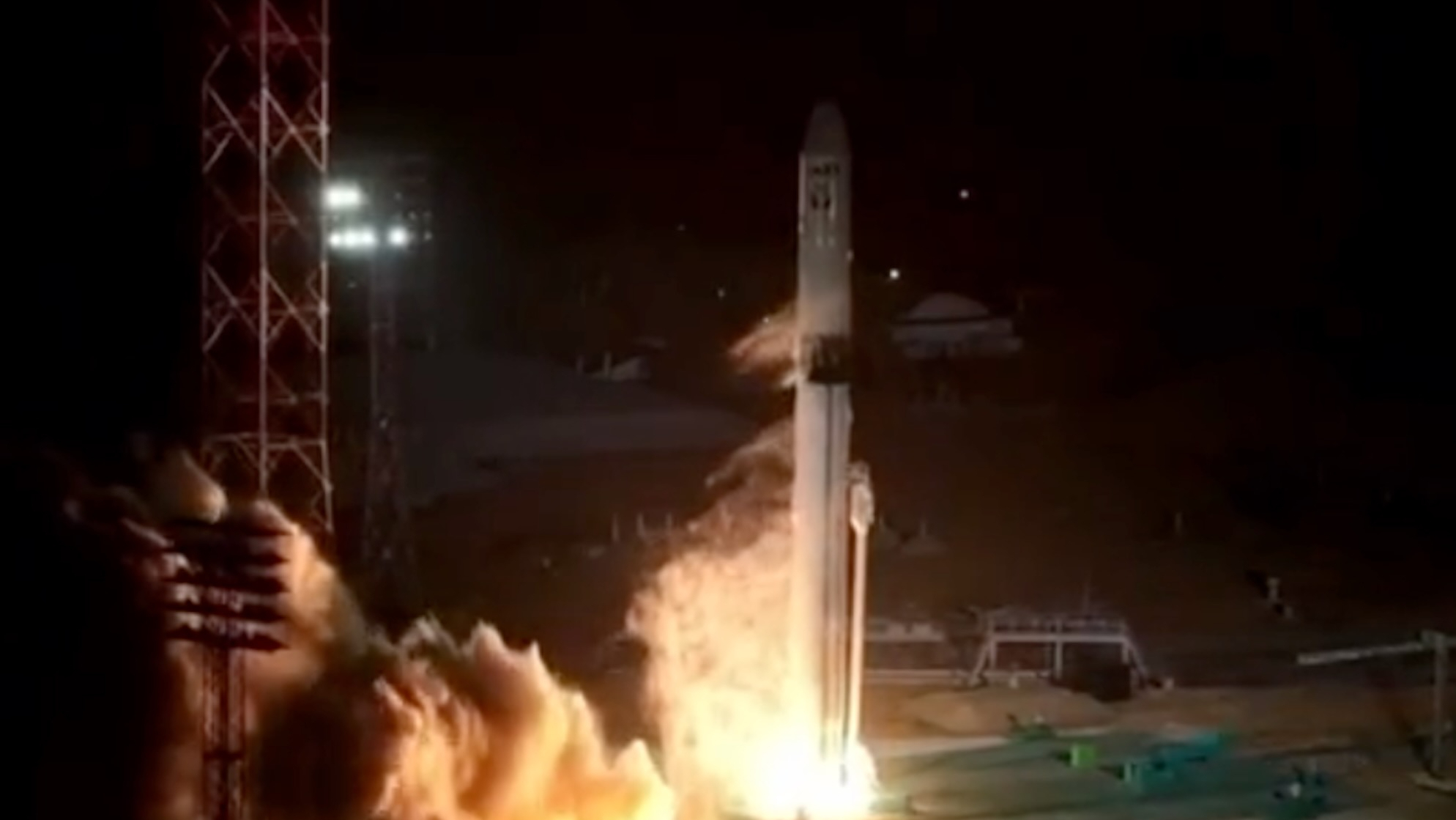
 Russia's Soyuz 5 rocket launches on its first-ever mission, a suborbital test flight from Baikonur Cosmodrome in Kazakhstan on April 30, 2026. The flight was a success, according to Russian space officials. (Image credit: Roscosmos) Share this article 0 Join the conversation Add us as a preferred source on Google Newsletter Subscribe to our newsletter
 Russia's new Soyuz 5 rocket has taken to the skies at long last.
The Soyuz 5 lifted off for the first time ever on Thursday (April 30), rising off a pad at the Russia-run Baikonur Cosmodrome in Kazakhstan at 2:00 p.m. EDT (1800 GMT; 11:00 p.m. local time in Baikonur).
"The first test launch of the new Soyuz 5 rocket was a success!" officials with Russia's federal space agency, known as Roscosmos, said via the Telegram app on Thursday.
"The first and second stages of Soyuz 5 performed as planned, and a mockup was launched onto the calculated suborbital trajectory, followed by a reentry into an area in the Pacific Ocean previously closed to shipping and aviation," they added in another Telegram post.
Thursday's launch was a long time coming for the Soyuz 5, which has been in development since 2017. It "was designed to replace the medium-class Zenit vehicles built in Ukraine and provide Russia with a first-stage booster for [a] future super-heavy rocket," according to RussianSpaceWeb.com.
Roscosmos originally hoped "that the low-cost vehicle would complement the Angara family of rockets for domestic needs and would make Russia competitive again on the international launch market," the outlet added.
The Soyuz 5's homegrown nature took on added importance for Russia in February 2022, when the nation invaded Ukraine, which has long been a powerhouse of rocket design and manufacturing. That invasion is ongoing, so Ukraine is also putting its rocketry expertise to use against Russia these days.
It's unclear, however, if the new rocket will attract international customers. Russia has lost most of its space partnerships due to the Ukraine invasion, and the Soyuz 5 doesn't seem like enough of a breakthrough to revive any.
The rocket is comparable in size and lifting power to SpaceX's workhorse Falcon 9; the Soyuz 5 can haul about 20 tons (18 metric tons) to low Earth orbit, compared to 25.1 tons (22.8 metric tons) for the SpaceX launcher. But the Falcon 9's first stage is reusable, whereas the Soyuz 5 is a completely expendable vehicle.
View MoreYou must confirm your public display name before commenting
Please logout and then login again, you will then be prompted to enter your display name.
Logout Mike WallSpaceflight and Tech Editor
Michael Wall is the Spaceflight and Tech Editor for Space.com and joined the team in 2010. He primarily covers human and robotic spaceflight, military space, and exoplanets, but has been known to dabble in the space art beat. His book about the search for alien life, "Out There," was published on Nov. 13, 2018. Before becoming a science writer, Michael worked as a herpetologist and wildlife biologist. He has a Ph.D. in evolutionary biology from the University of Sydney, Australia, a bachelor's degree from the University of Arizona, and a graduate certificate in science writing from the University of California, Santa Cruz. To find out what his latest project is, you can follow Michael on Twitter.