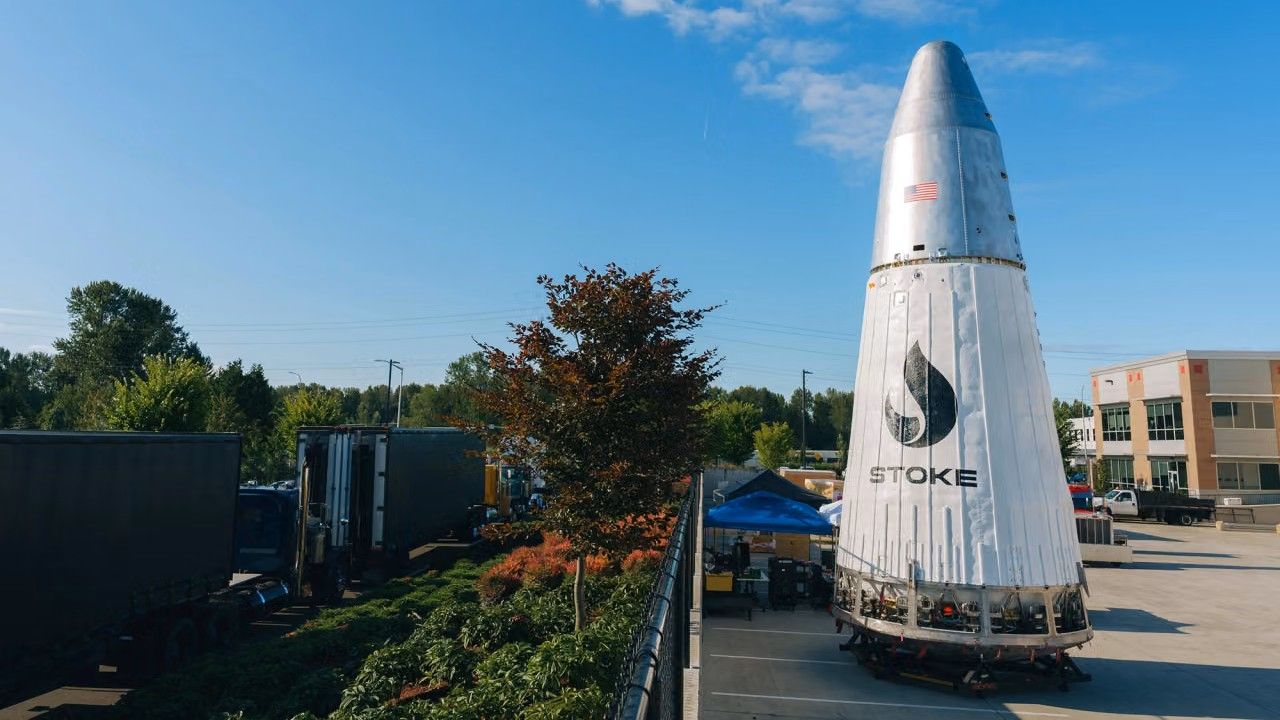
 A notional illustration of the Golden Dome system intercepting a missile. (Image credit: Lockheed Martin) Share this article 0 Join the conversation Add us as a preferred source on Google Newsletter Subscribe to our newsletter
 The United States Space Force has created a new program to develop space-based missile interceptors, with the goal of being able to demonstrate their capability within two years.
The U.S. Space Force established the Space-Based Interceptor (SBI) program in order to develop a constellation of spacecraft that can defend the United States against "a new generation of threats" such as hypersonic weapons, neutralizing them while in flight. The program is part of the planned Golden Dome for America defense system announced by President Trump last year. Estimates of the system's price tag range wildly, from the White House's projected $175 billion to as high as $3.6 trillion.
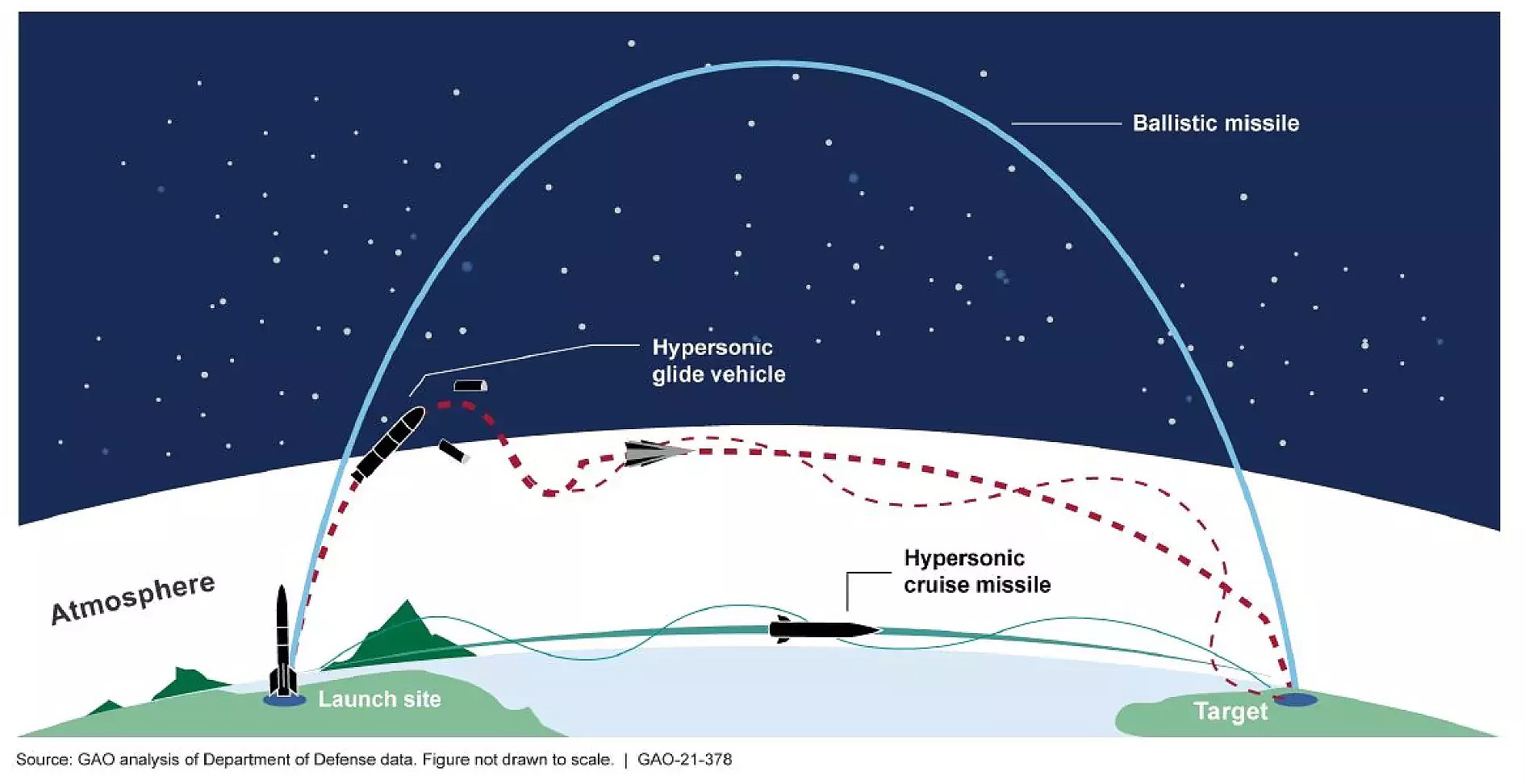
Space Force's SBI program aims to develop a constellation of space-based interceptors capable of "boost, midcourse, and glide phase engagements," meaning they can track and intercept advanced hypersonic vehicles during the three distinct stages of their flight: while they are initially accelerating with a rocket motor; as they are flying through the upper atmosphere; or in their final glide phase, during which they can maneuver at high speeds en route to their targets.
Many of the technical details surrounding how Space Force plans to defeat hypersonic weapons from orbit remain unknown. Critics have pointed out that it would require a constellation of potentially tens of thousands of satellites to defend against even 10 missiles, not to mention the fact that no one has ever seen such a capability demonstrated.
But U.S. Space Force Gen. Michael Guetlein, Vice Chief of Space Operations, who was selected to lead the Golden Dome project, has consistently stated that space-based interceptors are physically possible and that the United States and its aerospace contractors have the technologies to make them a reality.
"The most important message I can give to you today is that Golden Dome is real, and it is no longer theoretical," Guetlein said this month, according to Breaking Defense.
"Because we have been protecting the secrets, to protect the nation's investment, to make sure that we don't tip our hand to our adversaries and they get ahead of us … the American public has not had the opportunity to hear what's actually going on, and there's been a lot of confusion," Guetlein added.
Golden Dome draws some inspiration from Israel's Iron Dome, a missile defense system that can intercept rockets and artillery fire. The system also has some parallels with a 1980s missile defense program proposed by President Ronald Reagan, known as the Strategic Defense Initiative, or SDI.
The SDI program was referred to as "Star Wars" due to how much it sounded like science fiction, and never materialized due to its high projected costs, technological barriers, and political resistance to such a plan.
But over four decades later, many spaceflight technologies that once sounded like science fiction are now a reality. As reusable launch vehicles continue to drive launch costs and timelines down, the prospect of a thousands-strong spacecraft constellation is no longer as outlandish as it once was. While we still have no idea what a space-based interceptor would look like or how exactly it would work, U.S. Space Force leaders stress that they're possible.
But plenty of U.S. military programs with multi-billion dollar budgets have received support throughout the government for years only to be canceled. Will Golden Dome go the way of SDI?
Maybe we'll find out in 2028.
View MoreYou must confirm your public display name before commenting
Please logout and then login again, you will then be prompted to enter your display name.
Logout Brett TingleyManaging Editor, Space.com
Brett is curious about emerging aerospace technologies, alternative launch concepts, military space developments and uncrewed aircraft systems. Brett's work has appeared on Scientific American, The War Zone, Popular Science, the History Channel, Science Discovery and more. Brett has degrees from Clemson University and the University of North Carolina at Charlotte. In his free time, Brett enjoys skywatching throughout the dark skies of the Appalachian mountains.