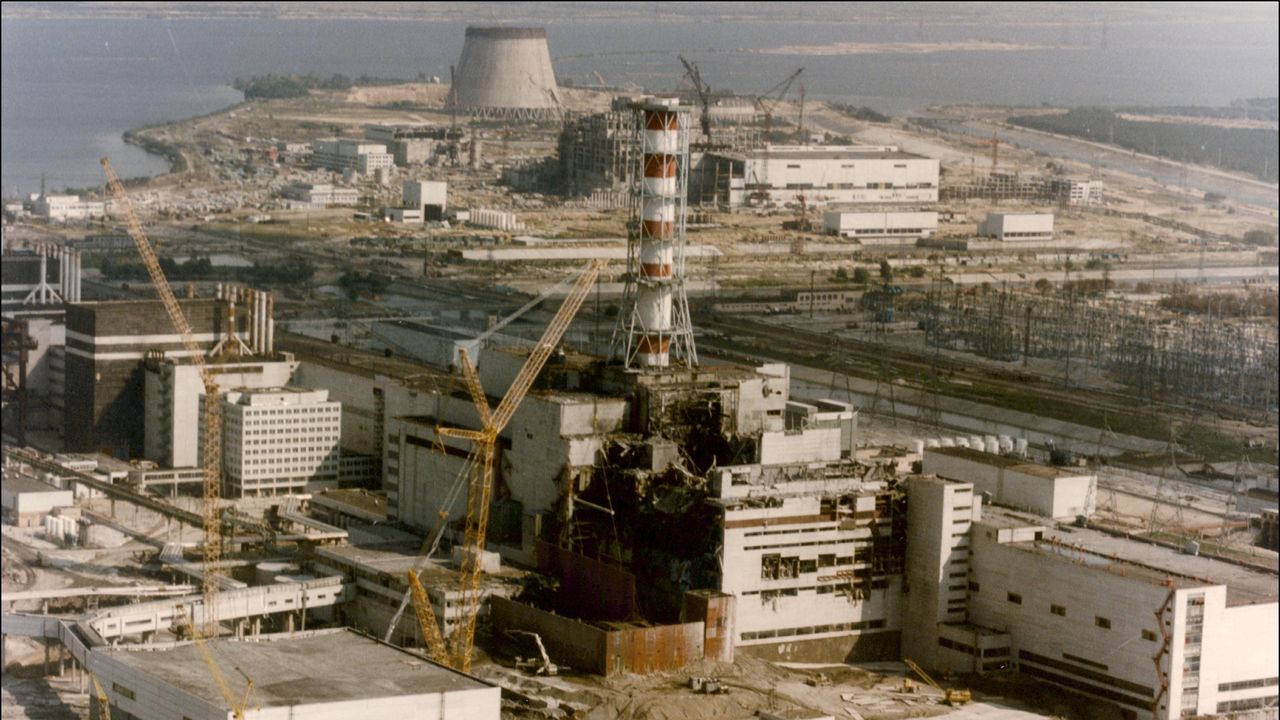
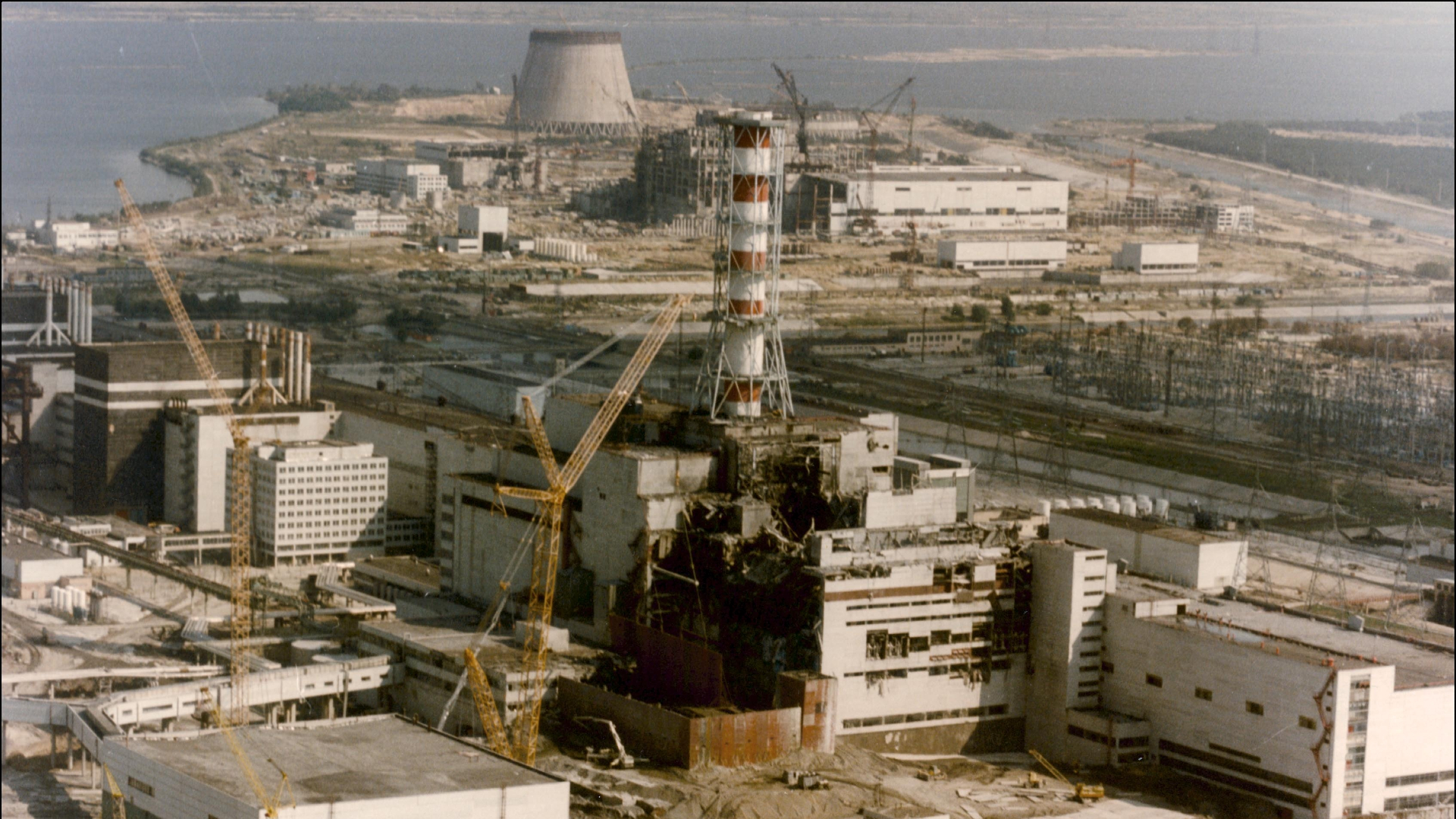
 The Chernobyl Nuclear Power Plant three days after it experienced partial meltdown. (Image credit: SHONE via Getty Images) Share this article 0 Join the conversation Follow us Add us as a preferred source on Google Newsletter Sign up for the Live Science daily newsletter now
 Get the world’s most fascinating discoveries delivered straight to your inbox.
Become a Member in Seconds
Unlock instant access to exclusive member features.
Contact me with news and offers from other Future brands Receive email from us on behalf of our trusted partners or sponsors By submitting your information you agree to the Terms & Conditions and Privacy Policy and are aged 16 or over.You are now subscribed
Your newsletter sign-up was successful
Want to add more newsletters?
Join the club
Get full access to premium articles, exclusive features and a growing list of member rewards.
Explore An account already exists for this email address, please log in. Subscribe to our newsletter QUICK FACTSMilestone: Chernobyl partially melts down
Date: April 26, 1986
Where: Chernobyl, Ukraine
On April 26, 1986, operators at the Chernobyl Nuclear Power Plant were running a test to see what would happen to its nuclear reactors in a power outage — and they triggered the worst nuclear accident in human history.
Reactor 4 was scheduled to be shut down for regular maintenance, so the operators decided to test whether, during a power outage, the turbines could keep the coolant water circulating long enough for the emergency diesel generators to kick in.
The operators started reducing power to the reactor around 1 a.m. on April 25. However, a Kyiv-based operator that controlled the electricity grid wouldn't allow for a complete shutdown, as the grid needed power. So contrary to the prescribed test protocol, the reactor was kept at half-power levels from 2 p.m. to around 11 p.m. local time. (This decision led to a buildup of xenon that made the reactor unstable.)
By the time the test resumed, a less-experienced night crew was on duty. Ideally, the team should have raised power to a higher level to stabilize the reactor before restarting the shutdown test. Instead of bringing the power back up, the operators accidentally lowered it further.
By about 12:30 a.m. on April 26, they realized the power had dropped too rapidly. They tried to raise it by removing almost all of the control rods, which are designed to slow the atom-splitting reaction by absorbing neutrons. The power levels then fluctuated rapidly, and the operators took multiple measures to control the reaction, including temporarily lowering feedwater levels.
A power surge 100 times larger than normal was detected. The operators then tried to get the reaction under control by lowering all 211 control rods into the core, but they jammed. At 1:23 a.m., two back-to-back steam explosions occurred, blew the roof off the building, and spewed radioactive material high into the atmosphere. The debris triggered a massive fire. The core had partially melted down.
Sign up for the Live Science daily newsletter nowContact me with news and offers from other Future brandsReceive email from us on behalf of our trusted partners or sponsorsHundreds of thousands of people were forced to evacuate nearby towns. Two workers died immediately in the disaster, and some of the emergency firefighters and "liquidators" who raced to contain the fire and prevent further melt down ultimately died of radiation sickness or cancer down the line. The cancers were likely caused by the radioactive iodine, strontium and cesium that permeated the area after the explosions.
Just after the Chernobyl plant melted down, this mass of molten concrete, uranium and other nuclear debris, nicknamed "The Elephant's Foot," was extremely radioactive. It is now part of the Chernobyl exclusion zone. (Image credit: Photo 12 via Getty Images)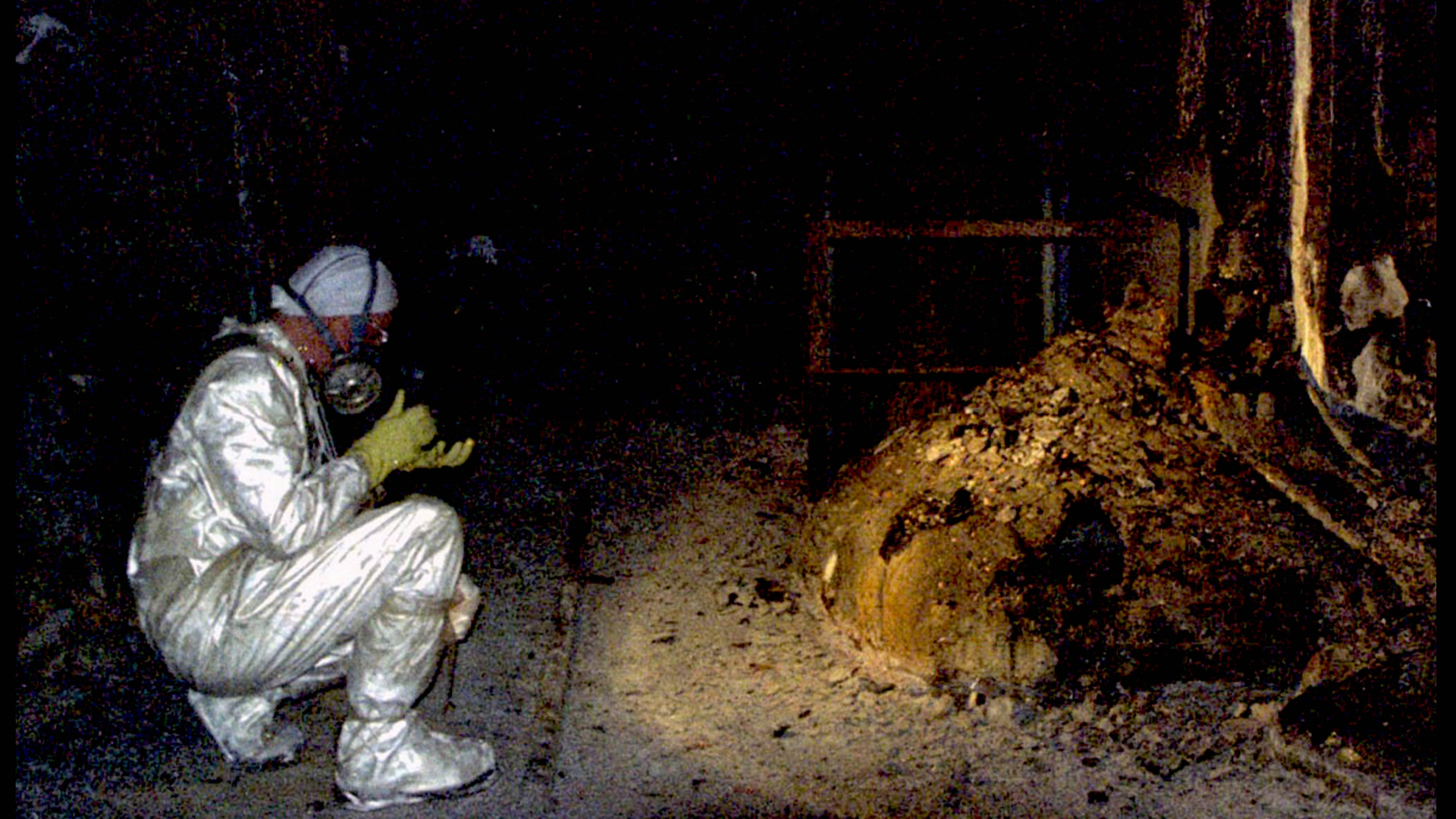
The former Soviet Union tried to keep the meltdown a secret, but elevated radiation levels were detected across Europe, particularly in Scandinavia, in the weeks following the disaster.
In the years after, children in nearby regions experienced higher levels of thyroid cancer than had been typical in the past. But a United Nations report from 2000 found "no increases in overall cancer incidence or mortality that could be associated with radiation exposure." That said, the report acknowledged that some upticks in cancer rates would be expected to take decades to show up in the data.
Today, the 1,000-square-mile (2,700 square kilometers) Chernobyl exclusion zone around the plant is one of the most radioactive places on the planet and a nature preserve. It is also a natural test bed to see what happens when animals and plants are exposed to high levels of radiation, as well as a direct example of "evolution in action."
Experts have spent decades dissecting the missteps that led to the catastrophe, including the poor training of the nuclear plant operators and their subsequent failure to follow safety protocols. Keeping the reactors at half power for hours didn't help, either.
Scientists stand in the reactor hall for reactor 1 at the Chernobyl Nuclear Power Plant more than a decade after the explosion. RBMK reactors like this one have a fatal design flaw that makes melt down more likely, scientists now know (Image credit: Patrick Landmann via Getty Images)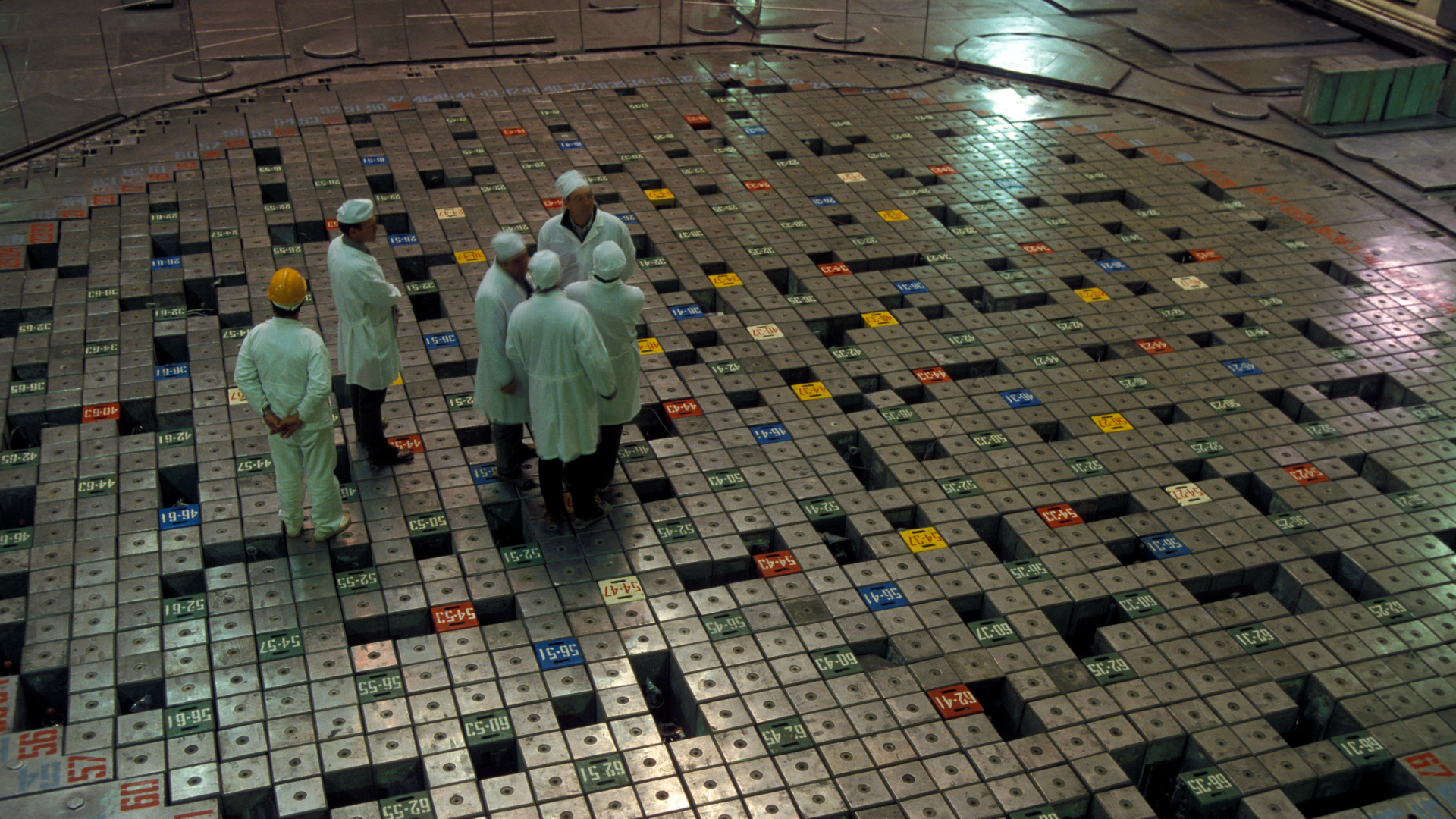
But at heart of the meltdown was a critical design flaw in the Reaktor Bolshoy Moshchnosti Kanalnyy (RBMK) reactors used at Chernobyl and elsewhere in the Soviet Union. All reactors use a "moderator" material to slow fission-produced neutrons so they can stay in the core and fuel further reactions, while water is used as a coolant to keep the cores from overheating and triggering a runaway reaction.
In the "light water" nuclear reactors typically used in the U.S. and Europe, water is both a moderator and a coolant. This means that, as the reaction gets hotter, more and more water turns to steam, leaving less water to act as a moderator, Live Science previously reported. The reaction has a built-in negative feedback loop in which the more heat and steam is produced, the less efficiently fission occurs.
Related stories- What would happen if Russia bombed Chernobyl?
- Russian troops have taken over Chernobyl power plant, Ukrainian official says
- Chernobyl vs. Fukushima: Which Nuclear Meltdown Was the Bigger Disaster?
At Chernobyl, however, graphite served as the moderator. In such a system, as steam forms, the graphite heats up, and the fission reaction speeds up as well. This creates the potential for a runaway positive feedback loop, because steam creates voids where the reaction speeds up, which can quickly boil all the coolant water. This is called a "high positive void coefficient."
It didn't help that the control rods were tipped with graphite, which temporarily sped up the fission reaction just as the operators were trying to slow it down. British officials had warned the Soviets that RBMK reactors had serious defects at least nine years prior to the Chernobyl accident, but most of those issues were not corrected, The New York Times reported at the time.
There are several RBMK reactors still operating in Russia, but most of those have undergone extensive safety retrofitting so that such a runaway reaction is, in theory, much less likely.
TOPICS Tia GhoseEditor-in-Chief (Premium)
Tia is the editor-in-chief (premium) and was formerly managing editor and senior writer for Live Science. Her work has appeared in Scientific American, Wired.com, Science News and other outlets. She holds a master's degree in bioengineering from the University of Washington, a graduate certificate in science writing from UC Santa Cruz and a bachelor's degree in mechanical engineering from the University of Texas at Austin. Tia was part of a team at the Milwaukee Journal Sentinel that published the Empty Cradles series on preterm births, which won multiple awards, including the 2012 Casey Medal for Meritorious Journalism.
View MoreYou must confirm your public display name before commenting
Please logout and then login again, you will then be prompted to enter your display name.
Logout LATEST ARTICLES 1Building a massive dam between Alaska and Russia could prevent AMOC collapse, scientists say
 - 2'Brain-eating' amoebas are nearly always fatal. New treatments may change that.
- 3Thríhnúkagígur: The only volcano on Earth where you can descend into a magma chamber
- 4New York City is at major risk of flooding that could leave 4.4 million people exposed to extreme damage, study finds
- 5'A completely new reality': Bolder measures are needed to prevent extreme water shortages in cities like Phoenix and Las Vegas that depend on the Colorado River