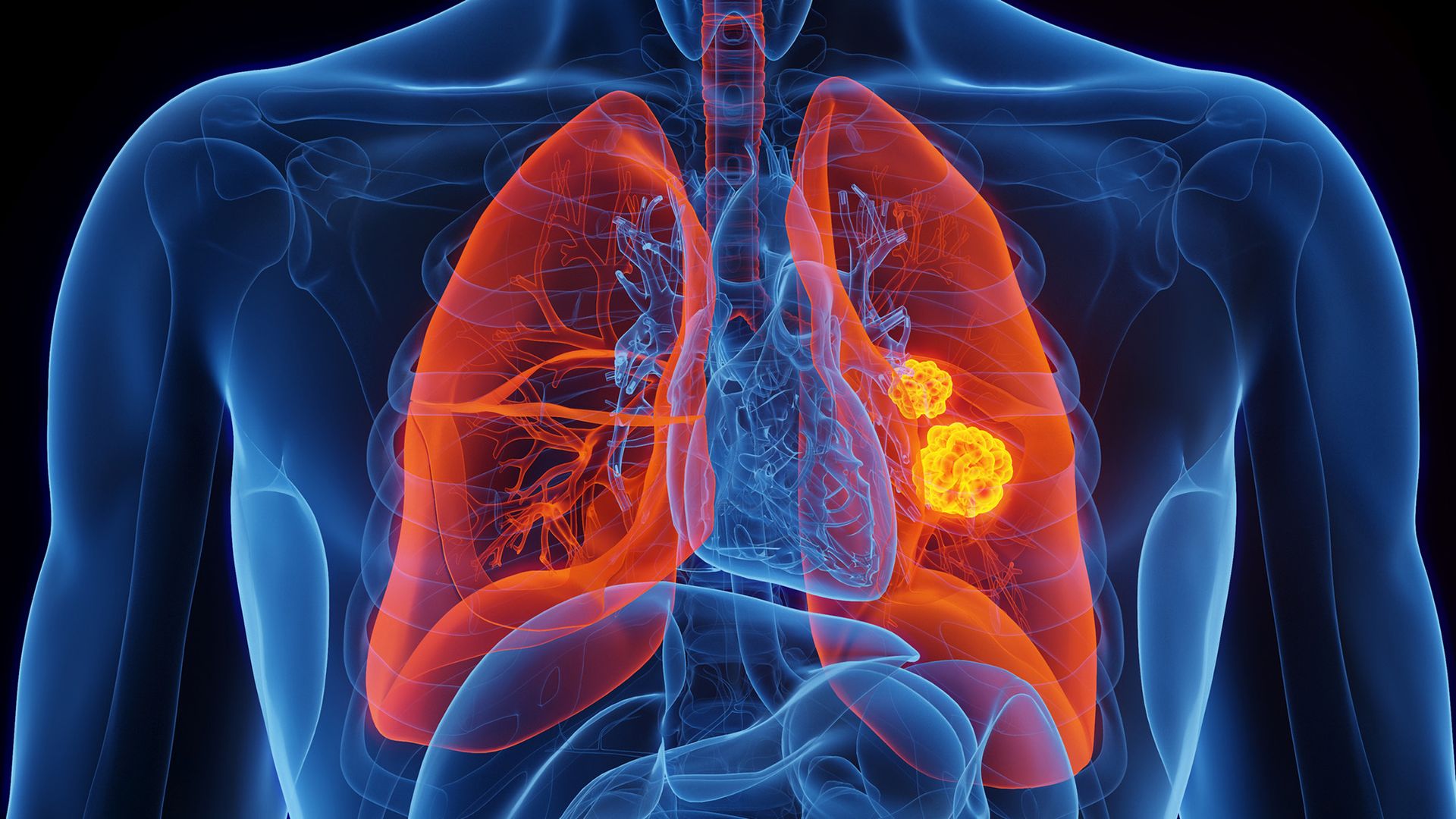
Scientists have identified an inherited genetic mutation that greatly increases the risk of lung cancer, even in people who have never smoked.
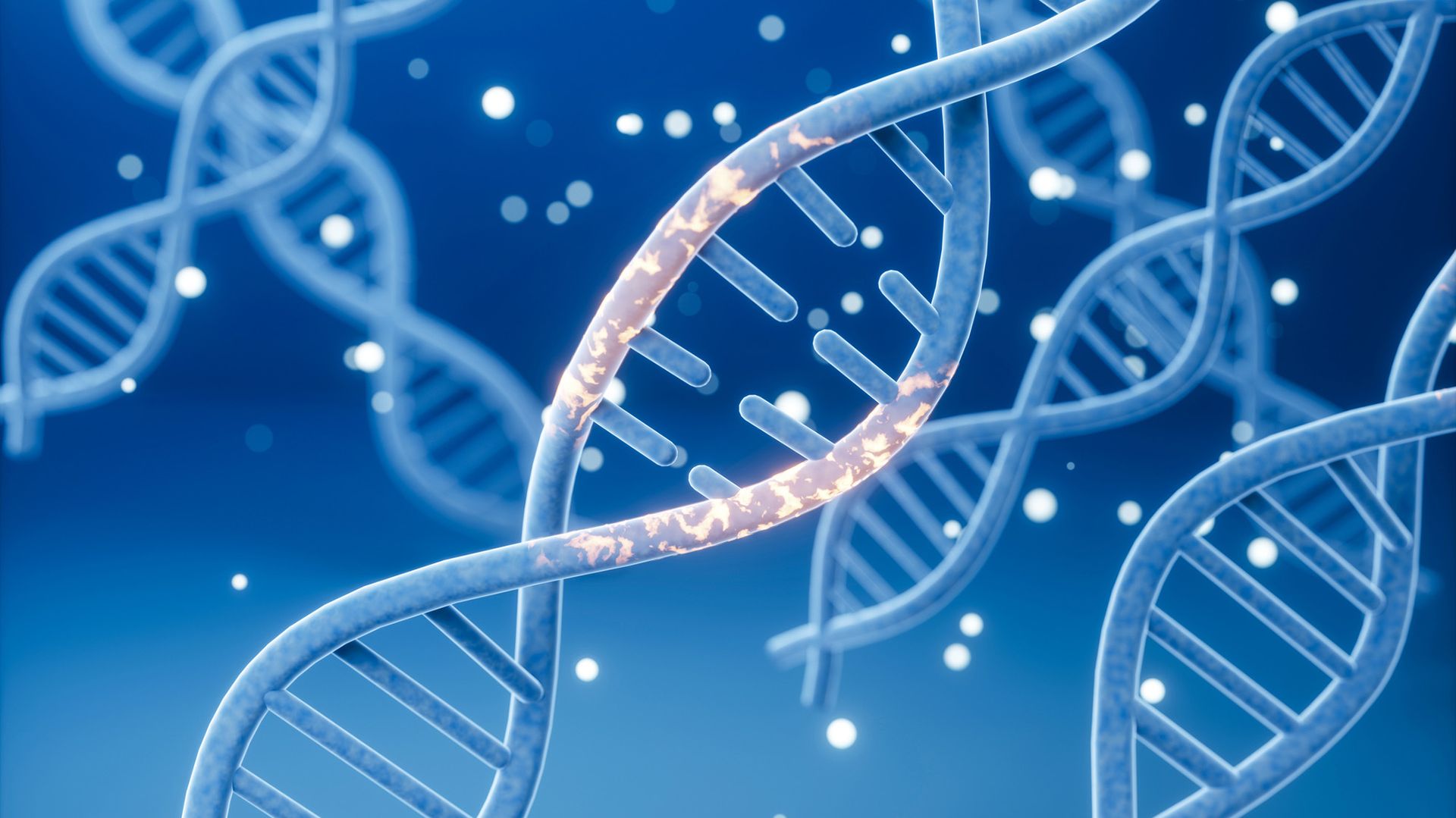
The mutation involves the EGFR gene, which helps control cells' growth, division and survival. People who had never smoked and who had the genetic mutation — called EGFR T790M — were 62 times more likely to develop lung cancer than nonsmokers without the mutation, according to the new study, published Thursday (Sept. 17) in the journal Science.
By comparison, people who smoked but didn't carry the mutation were four times likelier to develop lung cancer than nonsmokers, so the mutation alone carried a higher risk of the disease.
Among people in the study who smoked and carried the mutation, T790M increased their cancer risk 11-fold compared with other smokers.
This is a "very important finding," said Chris Amos, a genetic epidemiologist at the Baylor College of Medicine who wasn't involved in the study. "The prevalence of the T790M variant and its impact on lung cancer risk has previously been poorly understood."
The study included over 3 million people of European ancestry, and the mutation showed up in 1 out of every 15,850 people. Given that it's relatively rare, it likely doesn't account for a large percentage of overall lung cancer cases, Dr. Stephen Chanock, director of the Division of Cancer Epidemiology and Genetics at the National Cancer Institute, who wasn't involved in the study.
However, Amos argued that it is important to test whether a patient has this mutation when they have a family history of lung cancer in nonsmokers, or when their relatives are known to have the mutation. Having the T790M mutation not only influences a person's risk of lung cancer, but also affects treatment decisions for those who already have cancer, he said.
Combining genetic, geographic and historical data
For the study, researchers analyzed DNA and health data from over 3.3 million people who used 23andMe's at-home genetic testing kits and who gave consent for their personal data to be used in research.
Two of the largest public genetic databases to date — called All of Us and the UK Biobank — contained just 19 and two individuals with the T790M mutation, respectively. But the 23andMe cohort included 641 individuals with the mutation, giving the researchers enough data to run reliable statistical analyses.
On average, people who had the mutation had about 25 times the odds of developing lung cancer compared with people who didn't have the mutation. That statistic includes both smokers and nonsmokers. T790M was not linked to any other type of cancer or noncancerous lung condition.
When the researchers looked at where the study participants were born, they found that the T790M mutation was much more common among those born in the Southeast, especially in Alabama, Mississippi and Tennessee. In those three states, the mutation showed up in 1 out of every 2,078 people who'd contributed data to 23andMe.
By referring to historical records, the researchers pieced together when and how the mutation likely spread. They think settlers from the British Isles first brought it to the U.S. in the early 1700s. Later, families with the mutation moved to southern Appalachia, where they were relatively isolated — so the variant got passed down again and again within that area and became unusually common there.
The concentration of people with the T790M mutation in the Southeast may help to explain why this region of the U.S. experiences elevated lung cancer rates, Chanock said. Statistics suggest that people in the region also have higher smoking rates than the U.S. average: approximately 20% of adults in Appalachia report smoking, compared to 16% of adults elsewhere in the U.S. So it's possible that those two factors interact.
Ongoing and future studies
Certain populations with a history of smoking are recommended to get screened annually for lung cancer using low-dose CT scans. A key question, Chanock said, is when and how often people with the T790M mutation should be screened.
The study found that people with T790M developed lung cancer about five years earlier than people without the mutation, on average. That finding highlights the "need to begin screen[ing] at an earlier age and irrespective of smoking status," Amos said.
A clinical trial is now underway to evaluate CT-based lung cancer screening in people with the mutation. The trial will also determine whether lung cancer risk increases with age in this population.
RELATED STORIES- 'I've never seen anything like this': Scientists hijack cancer genes to turn tumors against themselves
- BRCA only explains a fraction of breast cancers — genes tied to metabolism may also up risk
- Quitting smoking by age 35 brings your risk of death in line with 'never smokers'
The researchers recommended that future studies unpack why the T790M mutation increases the risk of lung cancer, as well as investigate environmental risk factors that might interact with this genetic risk. Exposure to particulate-matter pollution in the air is one key factor to explore, they suggested. Future work could also look for other genetic mutations that might contribute to the inherited risk of lung cancer.
"Time will tell" whether additional lung-cancer-linked mutations will be identified, Chanock said. But personally, he fully expects scientists to find other very rare mutations that contribute to the risk.
"It is likely there are other variants of EGFR that increase lung cancer risk, but these may be even rarer than the one studied in this publication," Amos said. Finding these variants is important because it could enable people who carry them to proactively manage their risk for developing lung cancer, he said.
This article is for informational purposes only and is not meant to offer medical advice.